

Episode 130 | Bivy Sack Camping

Episode Summary
In this episode, Ryan shares his approach to bivy sack camping above treeline using a waterproof-breathable system built for stealth, weather protection, and minimal impact. He explains why tents aren’t always practical in alpine terrain, what gear he trusts (including his full summer bivy kit), and the skills that make bivy camping both functional and immersive. If you’ve ever wanted to sleep under the stars - without giving up shelter - this episode’s for you.
Listen Now
together with Vaer
Today’s episode of the Backpacking Light Podcast is sponsored by Vaer Watches, home to beautifully designed, extremely durable, expedition-worthy wristwatches masterfully crafted in the USA.
Show Notes:
What’s New at Backpacking Light?
- Masterclass: Ultralight Gear & Strategies for Search and Rescue
- Find information about all of our upcoming Member Q&A’s, Webinars, Live Courses, other live events, and more on our Events Calendar Page.
Featured Brands and Products
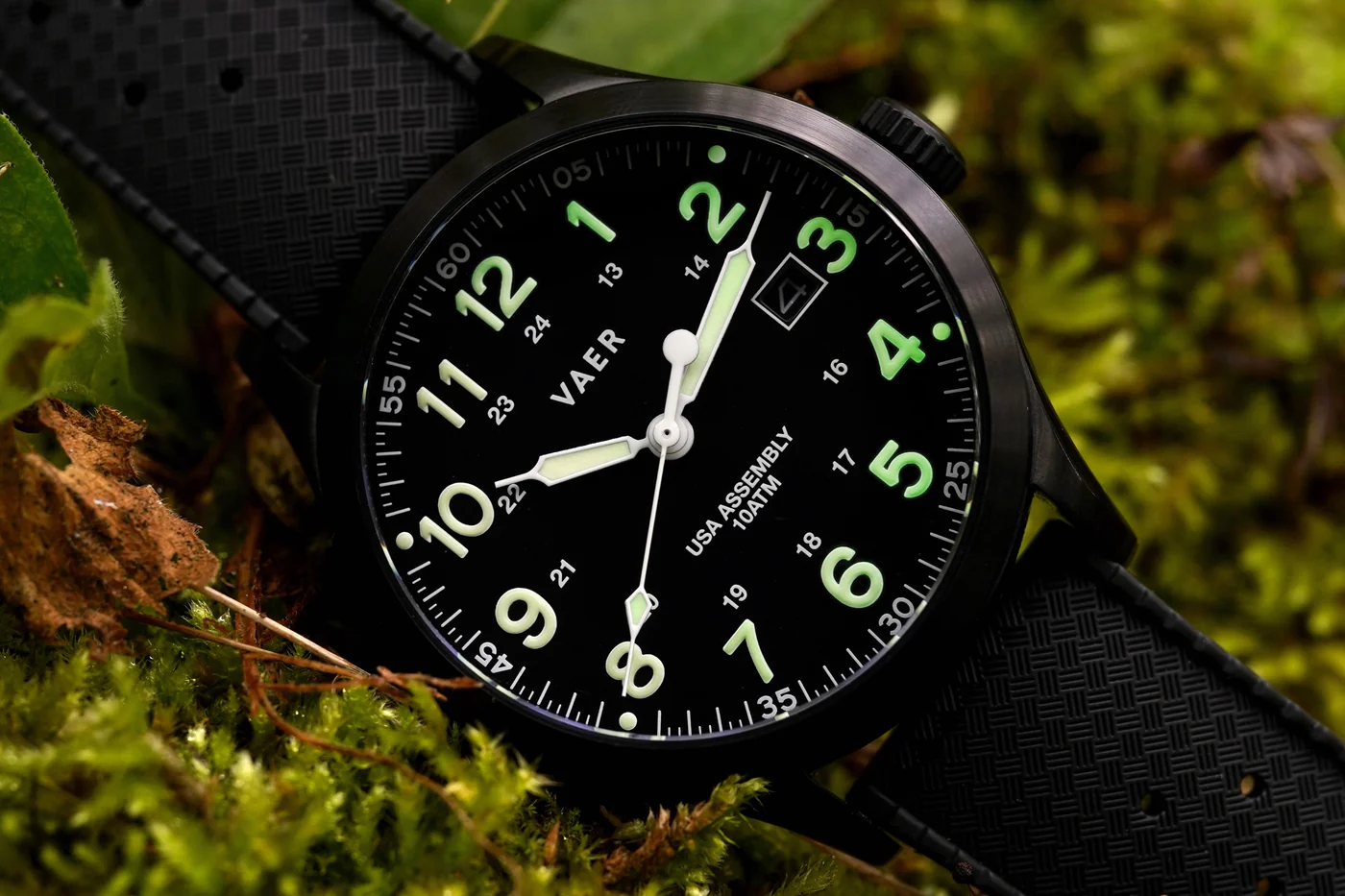
From Day 1 Vaer has had a simple mission: build watches that can be trusted anywhere, including the most extreme outdoor environments. Over the years we've had the opportunity to continually put this ethos to the test, working with explorers and athletes who have continued to showcase the unique appeal of extreme durability, and timeless design.

The Mountain Laurel Designs eVENT Soul Bivy is a fully enclosed, three-layer bivy featuring eVENT waterproof/breathable ripstop upper fabric and a 1.3 oz 20d Pro SilPoly floor with >3,500 mm HH rating; it weighs ~11 oz (310 g) in medium and includes a full‐width waterproof zipper, overhead hang loop, hang loops at corners, and a wire hoop that holds the upper fabric off the face to reduce condensation.

Oversized volume for large pads, larger people, or winter sleeping bags. Easy-entry exit and ventilation options with a fully-retractable top. Storm window at head end can be operated from inside to control ventilation and views. Three-stake pitch with overhead pole improves livability and breathability.
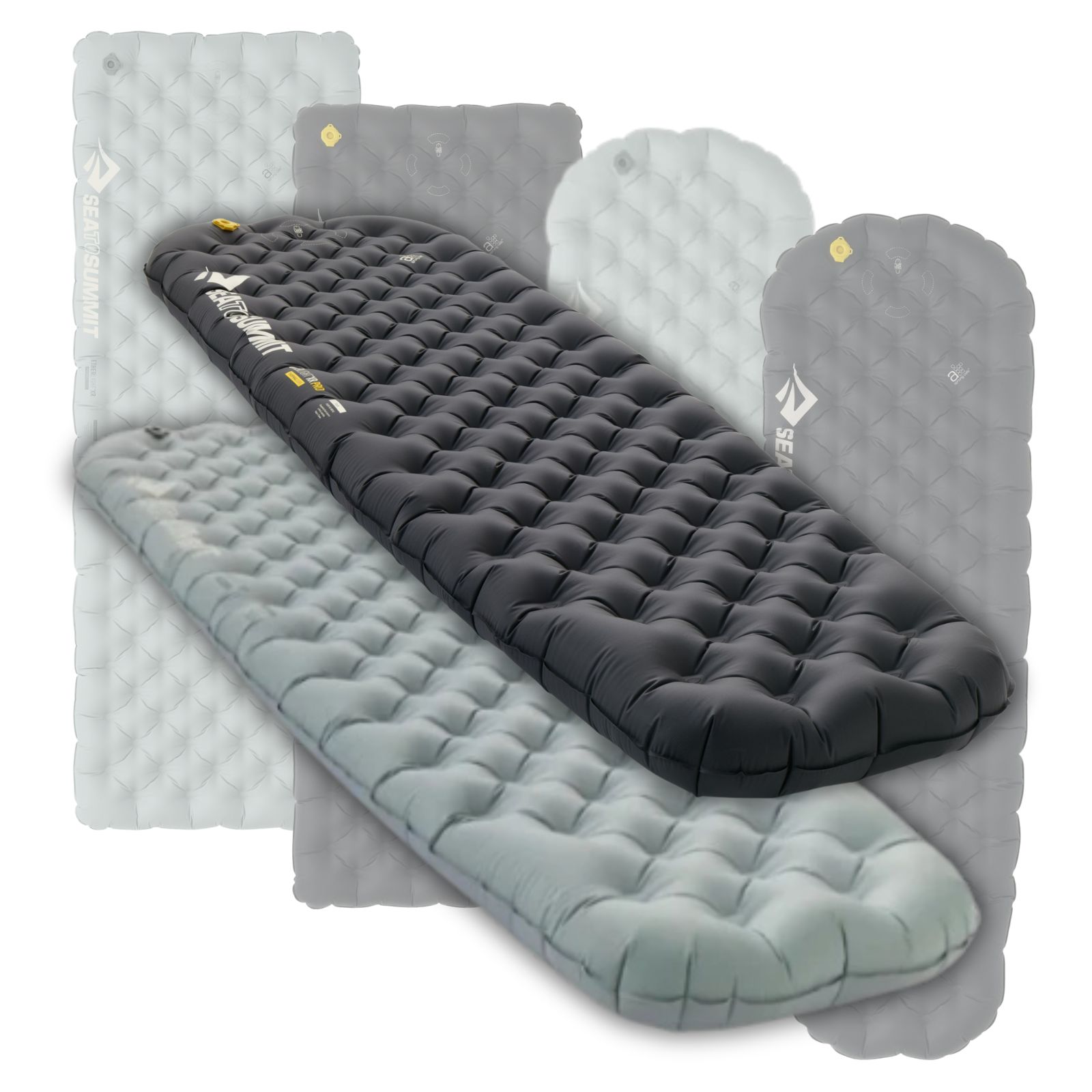
The Sea to Summit Ether Light XR Insulated ASC Sleeping Pad is an insulated air pad with Air Sprung Cell construction, ThermalCore insulation with a suspended TRM reflective layer, 10 cm thickness, 4.1 R-value, XPRESS valve, integrated pump sack, and 470 g Regular weight.

The Hyperlite Mountain Gear 40-Degree Quilt is an ultralight backpacking quilt unique for its combination of 1000-fill power RDS-certified goose down, a 7D ripstop nylon shell, sewn footbox, vertical baffles, generous girth - and very light weight.
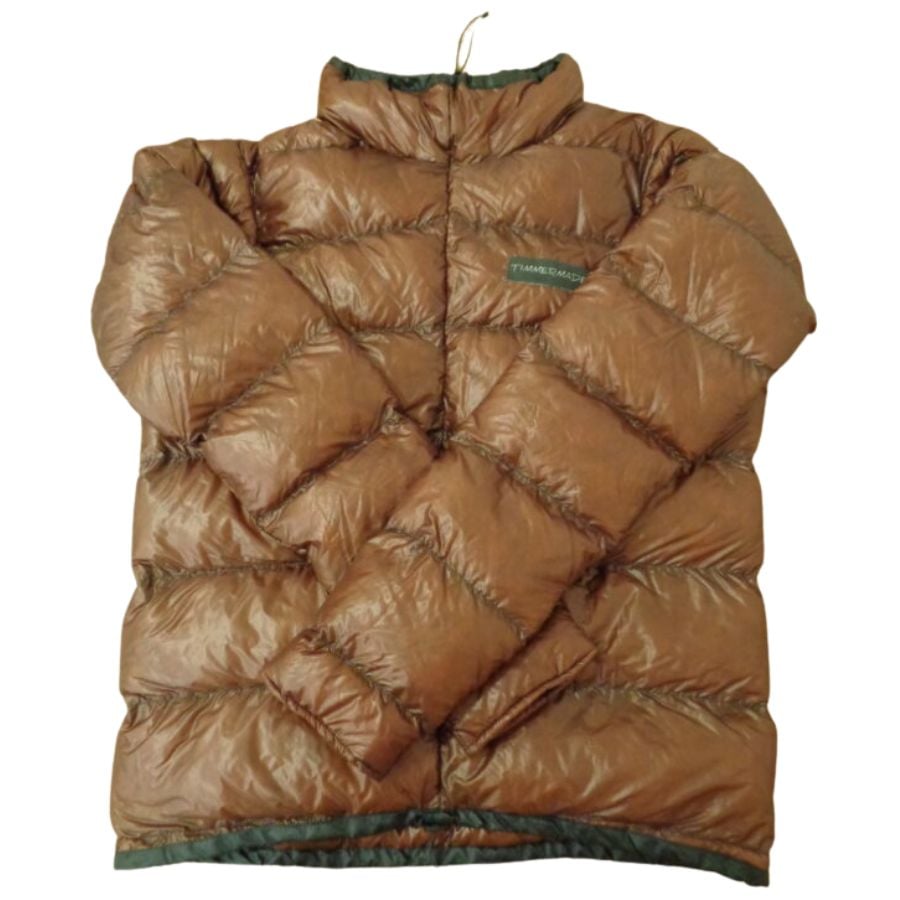
The Timmermade SDUL 0.75 Down Sweater is filled with 1000 FP down, is made with 7d fabrics, and forgoes pockets, zippers, etc. to minimize weight - while still maintaining 3-inch baffle chambers to achieve about 0.75 inches of loft. Cinches at the neck and hem can be removed if draft control isn't needed. Generous baffle sizing and the lightest possible materials/design make this one of the highest warmth-to-weight designs available.
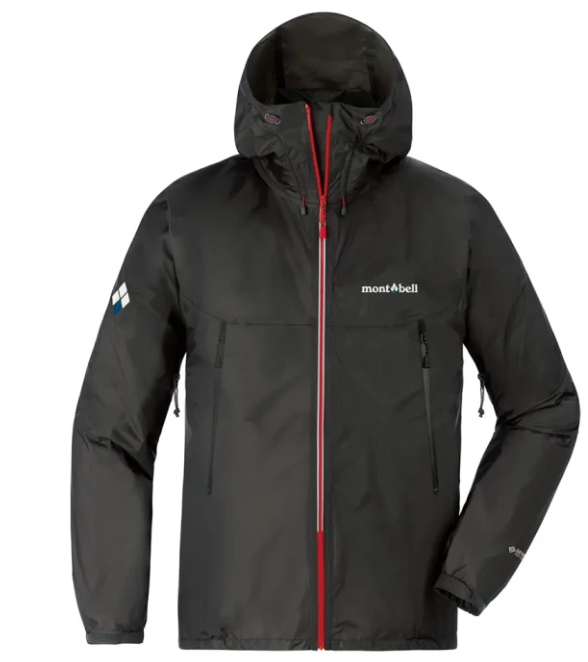
The Montbell Versalite Jacket Men's is a pocket-free 3-layer rain shell using Montbell SUPER DRY-TEC with a 7-denier Ballistic Airlight nylon ripstop face, K-Mono CUT patterning, Smooth Pit Zips, Triaxial Hood, Aquatect zipper, stuff sack, and 5.9 oz / 166 g listed weight.

The Zpacks Vertice Rain Pants are minimal‐feature, waterproof overpants made from 1.50 oz/yd² three‑layer Vertice fabric (7D ripstop nylon with a waterproof membrane and tricot liner), weighing approximately 3 oz (85 g) for men’s sizes and 2.5 oz (72 g) for women’s. They include a drawcord waist, dual ankle snaps, pack down tightly with no stuff sack, and are made in the USA.

The Arc'teryx Beta SL is the lightest rain jacket on the market that combines a full feature set (generous fit, extensive ventilation, high breathability) AND durable (40D+) fabrics.
Camping in a Bivy Sack
- When to Use a Bivy Sack – Above the Treeline, Stealth Camping, Flexibility to Camp Anywhere, Philosophy
- Core Features – Waterproof & Breathable Fabric, Structured Hood, Ventilation, Room for Lofted Insulation
- Dealing with Storms and Insects
- Gear Considerations for Backpacking in a Bivy Sack
Links, Mentions, and Related Content
- Gear: MSR Pro Bivy Gear Review
- Masterclass: Your Tent, Your Campsite, Your Comfort


Discussion
Become a member to post in the forums.
Companion forum thread to: Episode 130 | Bivy Sack Camping
Discover Ryan’s discreet bivy sack camping methodology for alpine environments, encompassing essential gear, requisite skills, and a critical analysis of tent practicality. Embrace the experience of open-air slumber.
I absolutely love bivy camping exactly as described- fully waterproof and breatheable, with bug protection. It really is my go to. The awe I feel when waking up in the middle of the night to an incredible starlit sky when I’m way high up in some wilderness area is so good for my soul, and like Ryan says, the freedom of knowing you can find a campsite anywhere lets me go on more fun adventures that take me further away from the well beaten trail.
Re: thunderstorms before you’re ready to zip up for the night- depending on the trip, you can time your hiking above treeline to be able to hunker down under a great tree during an afternoon storm. It’s amazing how dry you can stay if you pick the right tree- have a snack, enjoy the rain, and hop right back up and keep on walking when the rain dies down.
I carry the OR Stargazer Bivy, which has one integrated pole that stays behind your head; I’m not sure why they stopped making one like this, but it works excellent. I have hundreds of miles and scores of nights on this bivy, including many above treeline rainstorms, and it’s served me excellently.
And this is why I subscribe to BPL. I love this. Reading about it, listening about it and I wish you would record even some short amature videos on these kind of trips, but I get it. I love the bivy. I use mostly synthetic quilts with my bivies to deal with rain, humidity and moisture and compression. This made me want to grab my bivy and get back out there NOW! Thankyou!!!!
I would have bought a Big Agnes 3 Wire Bivy long ago if it wasn’t for the loud red color. The large side entry with plenty of mesh is a must. Clamshell front entry designs (like OR Helium) are miserable to get in and out of and don’t have enough air flow.
I’ve considered the Bach Heads Up Bivy which is nearly the same as the 3 Wire but has a stealthy sycamore green color. Weighs 23.3 oz without pegs and bag, so about 2 oz more. Have to order from Netherlands though. https://www.soscentral.eu/en/products/bach-heads-up-bivy-bag-bivouac-tent
Ryan, just curious what size MLD bivy do u have. I have the large size and my 25 wide pad fits in there. Maybe compression can be an issue if using a lofty low temperature down quilt, like you mentioned? But size wise I feel the wide pad fits well inside there with me and my gear, and I do use synthetic quilt so again, maybe some compression not as much a concern? I have also, lately, been ditching the inflatable pad and just using my Nemo Switchback to keep it even more simple and hassel free.
I’m not quite ready to jump onto this bandwagon. I’m live in Colorado Springs about 150 miles south of Ryan. I too solo backpack in the Rockies west and south of here and my three season camping arrangements are an large MLD Soul Bivy accompanied with an MLD DUO Grace Tarp. At 78 years old I like the extra risk buydown that the 7.5 oz tarp affords. Couple of examples where I think a tarp helps. One, the weather can change almost instantaneously dropping 50F with accompanying golf sized hail. And two, given my age and if I am sick or seriously injured, I’d rather sleep, rest, and cook under a tarp when it’s raining, sleeting or hailing. Thats my two cents.
So I have my MLD EVent bivy for a few years now and always use it and I love it. I always said I need to buy another one for my son and just to have in case something happens to mine or it gets discontinued.. after reading this post, I decided to pull the trigger and order 1 more.. Thankfully so. I just looked at MLD page and the price has gone waaaay up and new material is on order and not to be in until October. I think I got my order in just in time! It says the new eVent fabric will be the same if not better. I cant imagine better because for me this bivy has been on point every time I used it and every time I needed it, in pretty much all 4 seasons and conditions, so much that I wanted another one on hand..
It’s interesting that some backpackers reject good tents for not having enough ‘living space’. Often these tents weigh the same or less than a bivy/tarp set up. And then there’s bivy campers who will carry a WP bivy that weighs as much as a dcf tent, because they love all of its other advantages.
I’m almost in the bivy camp here, in terms of space. Almost. I usually only sleep in my tent, so interior space is less important to me. Who cares? I’m sleeping. Interior space is down on my checklist of priorities. But it still matters.
I’m just pointing out how different hikers have different priorities in shelters–as if we didn’t know this.
My other priorities exclude bivy camping with a tarp. But that’s me!
If im in an actual tent I want space. I use a 3p tent in winter by myself, or with someone else ( BD Highlight 3P ) if im riding out a snow storm, I need living space to be in there for extended period of time. Really, winter changes everything. Otherwise, I don’t like being enclosed be it mesh or silpoly or dcf.. yeah you can open doors and flies but C’mon.. who we kidding? Waiting for it now.. ” But you are more enclosed in a bivy then any tent.” Yes true, but I am sleeping so I don’t mind, laying down relaxing or snoring away. My bivy and tarp keep me outside and in the elements where I came to be. I know this is a dead end debate and discussion, it can go back and forth either way. The weight of the set up means very little to me. If I have to haul 30 or 40 lbs for multiple miles up and over mountains, across streams and boulder/ root hopping, i can do it without a doubt, so the weight theory of this verse that for me personally, is nill. Its just a personal preference and about my comfort. Depending on the conditions and season, if im camping, i might want a tent. If im backpacking long days, I most likely want the bivy.
“Often these tents weigh the same or less than bivy/tarp.”
Yes, we’re aware of that, but every shelter is a compromise. As Ryan states, above tree line a bivy shows its full potential. Usually the ground is solid rock so staking a tent can become a real challenge. I know you can often tie lines to rocks, however it requires time and effort. Secondly a bivy has an extremely small footprint which means there are far more places to quickly set it up. Some 1P freestanding tents can have pretty small footprints, but the weight greatly increases. Also with its low profile a bivy handles strong winds infinitely better than a tent, especially above tree line where winds are the most powerful. And lastly a bivy sets up many times faster than a tent when you’re dead tired after an all day brutal slog. Granted it’s not good for hanging out in sustained rainfall (when not sleeping). I personally pack a sub 3 oz mini tarp with 0.5 oz of 1.25 mm spectra lines when I use my Montbell Breeze Dry-Tec WPB. It often takes some ingenuity to set up tarp, yet it provides me shelter when outside of the bivy.
Here is a ZPacks 52″ square .5 DCF tarp (2.3 oz) over head end of Montbell WPB (six .2 oz ti shepherd hooks). An MLD 52″ X 108″ DCF Monk Tarp in .5 only weighs 3.2 oz without LineLocs and would provide double the square footage.
DCF mini tarp also serves double duty as a rain kilt.
I’m not trying to convince anybody one way or the other! I was just struck by the wide variety of answers concerning the importance of living space in a shelter.
One of the other criteria of a shelter is “ease of set up”. tossing a WP bivy on the ground certainly wins in this regard. But add a tarp? If a tarp is involved, the whole ‘throw it down anywhere’ advantage goes out the window. Suddenly all of the downsides of a tent concerning set up are matched by the set up needs of a tarp, including staking. and frankly, the trekking pole set up for suspending a tarp looks iffy to me, compared to trekking poles incorporated int a tent set up.
sorry, I couldn’t help myself. Ex high school debate team member here. You can imagine all the dates I had.
–gorgeous high school girl: “gee, Jeff, are you free on Friday night?”
–me: “that depends on your definition of ‘free’. Are any of us free, given the war in Viet Nam, the riots in Chicago and elsewhere, the prevalence of poverty nation wide. No, I’m not “free” as you say, but I would like to go out with you
–gorgeous girl: “never mind.”
I’ve tried a small bivy sack, open top (so just a condom for your sleeping bag), and had a miserable night on a beach.
I’m more experienced now, less worried about ‘comfort’ (ie. emulating a house with a bed), and am looking at making a bivy sack myself, in exactly the style discussed – waterproof, fully enclosed.
It seems to me you’d want the zipper low, along the bathtub rim, to minimize the risk of leaks. But most designs I see (with a side opening) has it curving across the top fabric at the head end. Is there an advantage to that which I’m not seeing?
I’ve made my own bivy and used it for years
I don’t find a bivy comfortable if it’s raining. Rain in your face. Or fabric over my face. Better to have one of those designs with the fabric suspended over my face, but still, if it’s raining, getting in and out of bivy is difficult. If I’m getting into bivy, I’ll take off my rain gear and stow them, during which time I’ll get wet because it’s raining and that will get inside my sleeping bag. If it’s really raining, I’d just rather have a tarp over me. I like a mid.
Given that, I like the zipper to be down the center. Easier to unzip and tuck both sides out of the wat to get in. If the zipper is down the center, that’s the top of the hill caused by my body. And drips of water will flow away from the zipper. But zipper to the side would work too.
The bivy is more to protect against dew and frost. Maybe just a bit of mist. For that, I just like a DWR breathable nylon. Something like a WPB fabric like event doesn’t breath as well so I’m more likely to get condensation inside.
Just one perspective.
I have a couple of objectives with making a bivy.
Given the frequency of rain and the guarantee of wind on the coast (ie blowing sand) demanding some form of shelter (not above but outside the treeline), and the wild camping laws meaning tarps are out, I really do need an ‘all-weather’ bivy. I don’t think it’ll be comfortable, but I think use might be comfortable enough to enable great experiences.
All that said, my first attempt a few years ago did not go great, and I’ve only recently decided to give it another go. This podcast came as on cue.
The podcast also fed my growing interest (too tame a word – fascination, perhaps) with bivy camping. The wpb kind.
I have lots of reasons to justify it – including being able to find camp/sleep sites more easily, and being less wind-vulnerable in high places….but, mostly, it’s just because I WANT to 😏.
I also like making things, so have been designing one in my head.
Dueurt, have you seen this myog one? Not sure why you’d be carrying 3 trekking poles, however I really enjoyed reading his thought processes.
https://gerald-zojer.com/blog/diy-bivy-bag-breathable-waterproof-and-windproof-with-patterns-myog/
Cheers
That’s an interesting bivy design. I don’t think I’ve seen anything like that before.
Yes, it’s an interesting design. I’ll probably go with small internal pole(s) instead though.
I’m still far from settled on a design. In fact I’m still thinking through my use cases to understand what I really want to design it for.
Today I’ll test sewing fabric to EVA foam (glueing or taping might work better though). If I can make it work, I’ll try using an evazote pad for the bottom of the bivy. It’s waterproof, more rugged than the fabrics I’ve been looking at – and I’m sleeping on a big piece of foam anyway.
It’s a really interesting challenge, reducing the shelter to its simplest form.
So EVA sews easily (at least on my industrial), but the stitches severely reduce its strength, even at 5 stitches per inch (the longest my machine can do). Glue seems like a better way to go.
The ultimate tarp to use with a WPB bivy is one with the shape and dimensions of the Lightwave Starlight 1. Weighs 2.7 oz in .5 DCF. Dimensions are 70″ wide head, 40″ wide foot and 92″ long. It’s very quick to set up because foot tieouts can be staked directly to the ground and then all you need to do is use trekking pole and stake out middle tieout along with 2 front sides.
Hi Ryan,
I’ve read your Bivy Sack Camping Gear List for Summer Alpine Trips in the US Central Rockies with great interest—thanks for sharing.
I was curious about the Petzl Leopard FL crampons: how do they fit on your Scarpa Ribelle Run trail runners? I’ve read they can slip off shoes with softer soles.
Cheers,
Davide
Hello everyone,
I am now looking at either a Big Agnes Three Wire hooped bivy or an OR Alpine ascentshell. It looks like the BA has greater volume (I am a side sleeper, knees up) – anyone tried out both for comparison?
Thank you
Megan
Regarding bivy size, are there any downsides to bigger beyond the weight and bulk?
I’m an active sleeper, often side/knees up like Megan, and wouldn’t mind the weight penalty of extra width. But there would be more dead space, where fabric is just lying on itself. Could that compromise condensation management?
If not for the exorbitant price, this is absolutely the bivy I would buy. Trail weight 21 oz and is 16 cm taller at the head end than Big Agnes 3 Wire. Granted the foot end is narrower and lower so might bring condensation contact with your bag/quilt. https://www.lightwave.uk.com/product/shop/stormchaser
I’ve fooled around with structures like that, but moved to a mid.
Making it a little bigger provides more room which makes it more livable. Also, there’s less condensation.
My mid weighs 15 ounces. No floor so you also need a groundcloth. My polycro weighs 1.5 ounces. You also need a pole – my lightweight one is 4.5 ounces. If it’s windy I need a stronger pole – 7.5 ounces.
I am wondering if one can just use their tent as a Bivy? I have an Altaplex and I am going to try it as a Bivy one of these days – don’t stake it..drape the rainbow net part over you and move everything to the side etc and see how it does with respect to condensation etc. And if it starts raining, then move the rest of the tent over you….best part is if you come to a campsite when it is raining, you have a tent….
Become a member to post in the forums.