

Episode 128 | The Metabolic Cost of Carrying a Backpack

Episode Summary
What does it really cost your body to carry a backpack in the backcountry? In this episode, we explore the science behind the metabolic demands of load carriage - how pack weight, load distribution, terrain, and walking speed impact energy expenditure. (included: interview with pack designer Dan Durston.)
Listen Now
together with Vaer
Today’s episode of the Backpacking Light Podcast is sponsored by Vaer Watches, home to beautifully designed, extremely durable, expedition-worthy wristwatches masterfully crafted in the USA.
Show Notes:
What’s New at Backpacking Light?
- Masterclass: Backcountry Hunting: Ultralight Gear and Strategies
- Newsletter: Why the Metabolic Cost of Carrying a Backpack Is More Than Just the Weight, Backpacking Light Email Newsletter, June 22, 2025.
- Events: Find information about all of our upcoming Member Q&A’s, Webinars, Live Courses, other live events, and more on our Events Calendar Page.
Featured Brands and Products
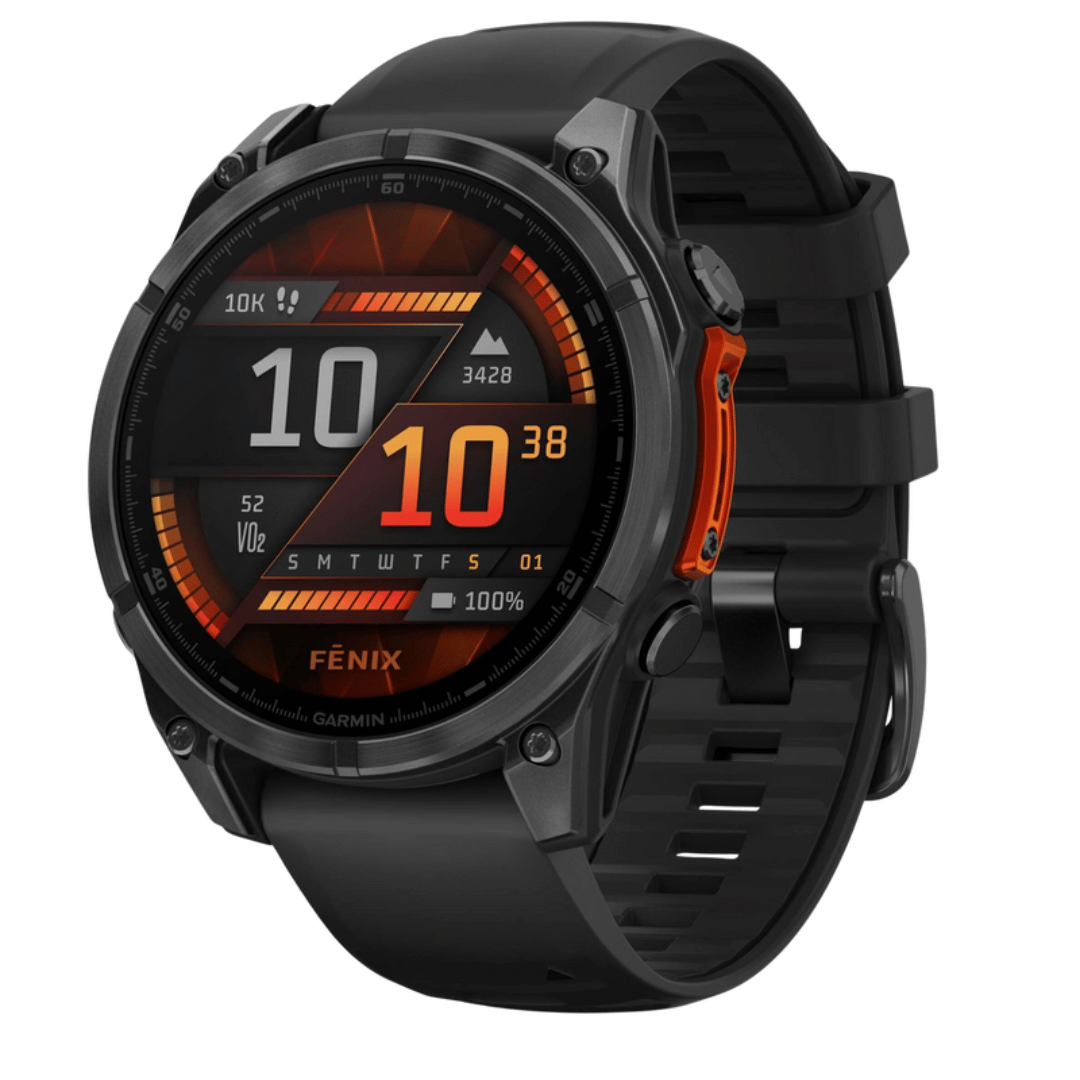
The Fenix 8 AMOLED is the current standard-bearer of ABC/GPS fitness watches. It offers similar guts and sensor technology as the Garmin Epix Pro 2 (including multiband/L5), but with a modified (simpler) user interface and a new codebase. Recent firmware updates in late 2024 have improved responsiveness, battery life, customization features, and usability.
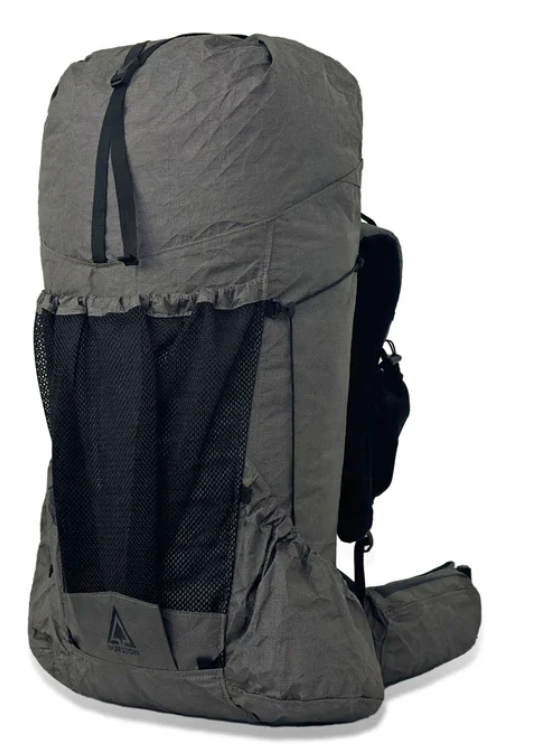
An ultralight, high-capacity pack designed for serious backcountry adventures—built for comfort, durability, and efficient load carry.
The Metabolic Costs of Carrying a Load
- Interview with Durston Gear founder, Dan Durston.
- Metabolic Cost – the energy your body uses to perform a physical task
- Load Placement & Energy Expenditure
- Load Distribution, Footwear, & Gait
- Individual Factors
- 5 Practical Applications – reduce base weight, optimize load placement, use lightweight footwear, train with a load, choose suspension wisely


Discussion
Become a member to post in the forums.
Companion forum thread to: Episode 128 | The Metabolic Cost of Carrying a Backpack
What does it really cost your body to carry a backpack in the backcountry? In this episode, we explore the science behind the metabolic demands of load carriage – how pack weight, load distribution, terrain, and walking speed impact energy expenditure. (included: interview with pack designer Dan Durston.)
In what ways do you consider pack design as it relates to your metabolic efficiency or biomechanics – beyond just the weight of the pack or the weight of gear you’re carrying inside of it?
Very thoughtful topic well covered.
Although not a popular view, I agree with Gear Skeptic that shoe weight doesn’t much matter much until reaching 4mph or greater. Something to do with the frequency of the reciprocating weight. The famous army study was for boot weight when running, not walking. I still use lighter weight footwear that I did long ago, but I doubt it’s 1 lbs = 5 lbs as commonly believed. It’s probably much less.
During the episode several articles where referenced. Would it be possible to share a list of these references?
this is pretty gold content here. Dan is spot on on a plethora of subjects, from keeping the load high (most of the time). to the unique challenges of running an Aarn pack (I have had two). Aarn is dead right about his penchant for even distribution. the issue of front bags is that every time one mounts the pack, you sort of have to pre-flight the dang thing or an arm shoots thru the wrong place amongst the necessarily over-numerous strappings. tired and wet .. front bags get old fast. Dan also sideways mentions that he is not exactly sure of the how and why a hipbelt works in relation to our bodies. nothing to be ashamed of there, in my experience, NoBody really knows quite how they work. success at it, is to a great extent, trial and error. I have for decades figured that heart rate is a close-enough variable to measure for “efficiency”, but here is what I question… for example, ever been packing along and nearing the end of a tough day thought to one’s self, “boy, it’s been a long one, and I think I may have over used my statistical daily average acceptable caloric expendature …” ? I ask that because I have toted some way stupid weights over some also way stupid long distances, over any number of decades, and I have never asked myself any such question. but I have very often thought “ya know, I could go a few more Ks but I HURT, and that spot right there is flat and has water.” so, it is, at least for me, not inefficiency, but the deleterious effects of pain that end the day that limit performance. that’s all. it’s a lovely article, but I think missed the main point of excessive weight, which is that of induced pain, not energy costs.
not being dismissive, just think there’s more to the subject.
cheers,
v.
Speaking entirely personally, a hipbelt “matters” because if fitted properly it takes weight off my shoulders and displaces it towards my legs. The leg muscles are by far the strongest muscles in our bodies.
But there’s another thing. Packs with no or poor structure can require weight be carried by the shoulders and/or spinal column. The spine isn’t designed to be an integral aspect of pack structure. Hence, hip belts and frames that can easily transfer weight off the shoulders and spine to the hips and legs–without sagging off the back and throwing the backpacker off balance.
I think it is too difficult to generalize. There are just too many factors.
I have seen people doing 30+ miles day in and day out with both frameless and framed backpacks (1.5 lbs, 2 lbs, 3lb backpacks) on the PCT – for days/months without any issues. I am assuming you will not be able to do this if you were spending too much energy every day that made you tired more than usual.
Personally, I carried a frameless and 5 lbs in hip packs/fanny packs and didn’t have any shoulder pain or spine issues with 27-30 miles every day – multiple multiple days on the trail. I have been using a frameless for the past several years. The only comparison point I have is the hills on JMT were easier with frameless compared to framed (Sierra Designs Flex Capacitor – which is a 2.5 lbs backpack). That was my observation.
There are no rules. It is more important to have something that fits you properly which will prolong the joy of carrying the backpack. I had several frameless packs that I could have chosen – 12 oz Nero, 14 oz MLD Prophet etc. But, I took a 25 oz XPAC frameless pack because it carried better with 4 liters of water. Conventional wisdom would have said – take the lighter backpack.
There was a craze in biking as well – where bicycle frame weights were getting very low using carbon fiber and I spent multiple thousands of dollars getting the lightest frame, lightest components, lightest wheels. When a person goes to a lower weight bicycle – the first few rides you will notice the weight difference and all the reviews are written during that honeymoon period. But in a month, your average speed will be the same as before. My average speed has been the same irrespective of what bike weight bike I ride. In fact, with a heavier bike which was *fitted* properly to me, I did better averages with less effort.
I don’t like tapered packs which become wider and deeper at shoulder level – it seems counter-intuitive. Our spines are S shaped and go outward near the shoulder blades – so having something deeper, wider will mean more stuff hanging away from shoulders – which is probably why such backpacks need load lifters to pull it back in towards your back. And if you are carrying heavier weight near the shoulders, it will be amplified more. Which is when load lifter are so crucial for such backpacks.
so on Murali’s load lifters, a strange name for them if ever one was devised … if one is to have any kind of wrapping of the shoulder strap around the top are of the shoulder, then for the pack to be held against the body, one needs to have at least some amount of tension on the shoulder straps (sans load lifters). that sounds like a hurt to me, so we have LL’s and they work ok, as long as one adjusts them constantly and every time the shoulder strap length is changed, that gets old when you’re tired and thusly hardly nobody does it. to counter that and help explain the situation, one can look at a McHale pack and see that Dan cleverly (understatement term ) devised a design where he uses an additional independent strap for JUST holding the pack agains the body. it’s works good. one can set the back-to-pack gap/tension and let it sit there all day/week, changing shoulder strap lengths (thusly shoulder load carrying) at will many times a day. all good, especially at loads with like 50# of food, plus a raft, etc.
I suspect I may have shot my self in the foot over the years , because in an effort to load the pelvic area harder, I have bent the McHale stays to pre-load the lower back lumbar area, and this has maybe resulted in making me balance the effect with a bit of excessive pulling-in-the-pack straps tension, which hurts the front of my shoulders more that simply balancing the overhang of the pack might.
I recently returned the to less aggressive curve and we shall see interning how this goes down. the current set-up allows up to 60# to be carried nicely on the hips alone, but as mentioned, does pull on the front shoulders a bit over time.
post trip mods also include reducing the angle of “cant”, or cone angle, allowed by some customs belt mods, in order to gain belt contact area in the rear area of the belt at the lower sides. another thing needing to be tested under load.
cheers,
v.
@ peter v, you should be able to make adjustments to the McHale shoulder straps to eliminate the pressure. I have a McHale pack and have experienced what you are describing, but have been able to eliminate it by making additional adjustments to the straps. Most comfortable packs ever IMO.
With conditioning and adaptation, of course. Without it, or with structural (esp. bone/joint/cartilage) biomechanical issues in the neck or spine, then probably not.
jscott
As we find out in our latter years. Every twist and turn that you make while your spinal cord is under compression adds up.
A framed pack only puts a marginal amount of amount of extra weight on the hips and legs for the belt and frame, while taking taking the majority of weight off of the back. Less work.
(we have strayed from the original thread – where I was arguing – the issues are too complex and too many factors at play to say there are some factors that will somehow reduce the metabolic cost of carrying a backpack).
I feel this is a misconception – that the spinal cord is not designed to carry lot of weight. We know weight lifters can carry enormous weights (2 to 3x their body weight) without breaking their spines. Of course they are doing it for a short period of time and they have specifically trained for this. But the point is, the spine doesn’t break.
Not trying to show off – but I did 800 miles of the PCT desert section this May 9th/June in 34 days with one zero and a few nero’s. I am 58 and carried a frameless packs (25 oz pack) with no hip belt. There was never a day where I felt fatigue on my shoulders or felt I made a mistake carrying a frameless pack. Remember this is the desert where we were doing frequent 15 to 20 miles of waterless sections carrying 3 to 4 liters several times and it was hot! I encountered one other frameless person (didn’t ask his age – probably late 30’s, early 40’s) doing similar miles as me with a Palante pack – he was faster than me and was a day or two ahead after some time. Met one 24 year old guy with a atom+ pack (with a minimal carbon hoop frame) and a 36 year old guy with REI Flash 55 (2.75 lbs) pack doing similar miles. Your body adapts after some time and doesn’t matter what kind of pack you are carrying – frameless or framed.
Of course we are all carrying similar weights probably 2 to 3 to 5 lbs difference between framed and frameless folks – but we all could do similar miles day in and day out without any issues. Of course we all suffered from lots of blisters on feet – but, legs/body were fine.
I don’t think frameless folks are carrying frameless to reduce weight – as after all the difference between framed and frameless is usually 1 to 1.5 lbs and in my book – 1 to 1.5 lbs saving is not a good reason to go to frameless. There are several other advantages of carrying a frameless – breathe better without hip belt – which will help you go up hills with less effort/fatugue, shoulder and hips not tied together – more freedom of movement. In fact on the SHR, one of my hiking partners with a framed SWD pack was complaining of shoulder pain while I didn’t have any carrying a frameless.
You can build up your back muscles,but most folks aren’t weightlifters. Regardless, it takes more effort.
Become a member to post in the forums.