

Introduction
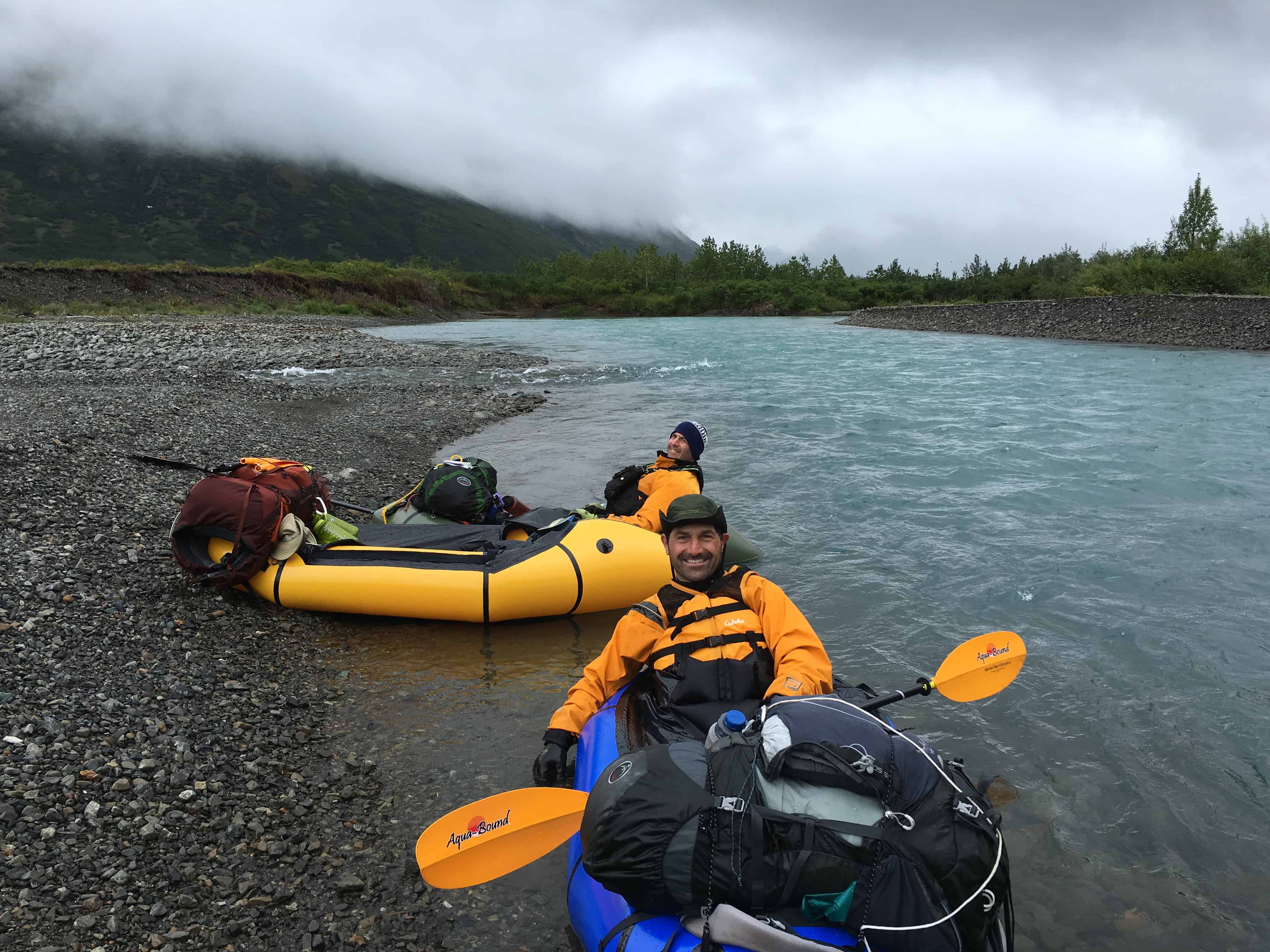
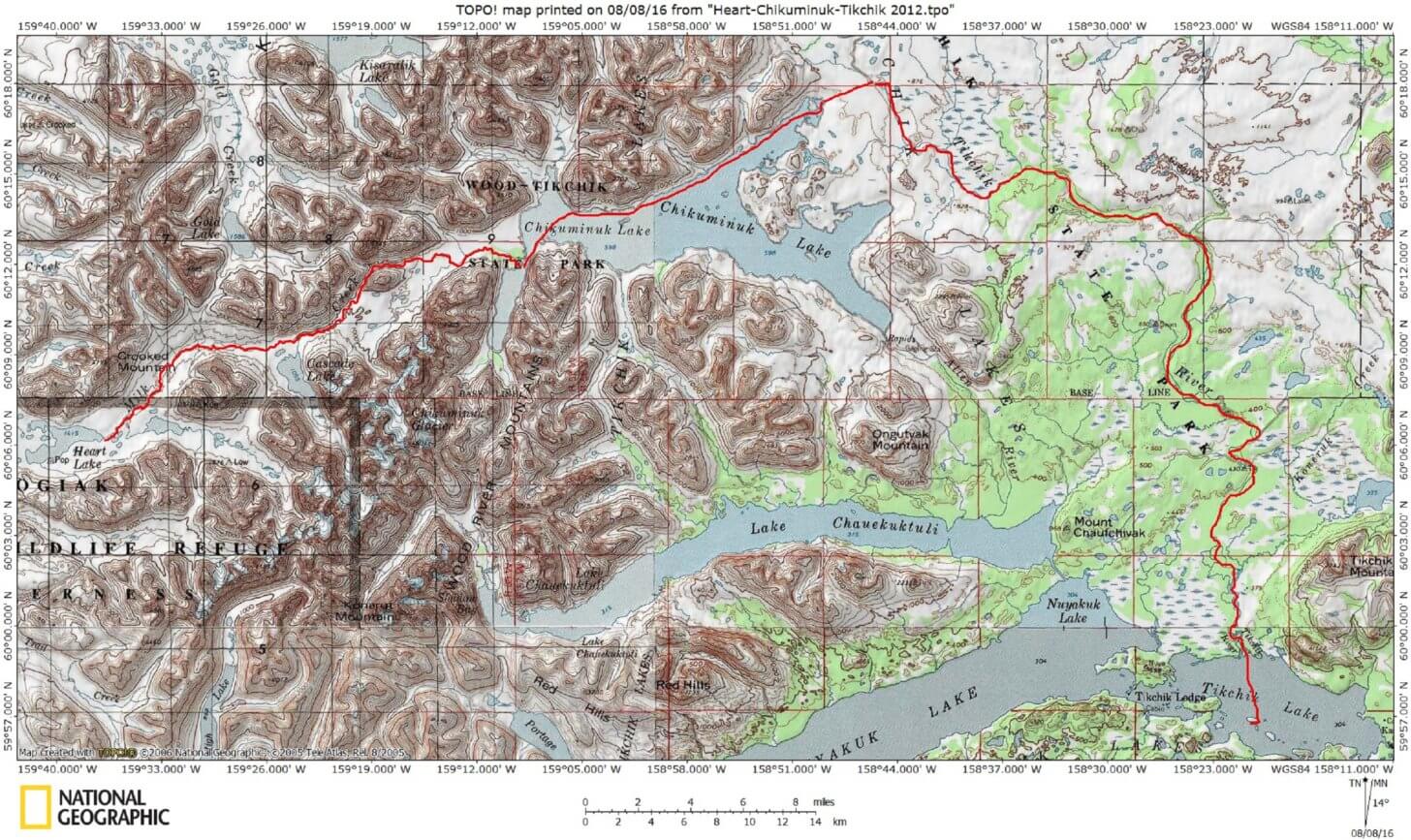
Morry Steinbach, Vince Jajuga, and I completed a trip packrafting Southwest Alaska from Heart Lake in Togiak National Wildlife Refuge to Tikchik Lake in Wood-Tikchik State Park from July 29-August 5, 2016. We ran Milk Creek, paddled Chikuminuk Lake, and backpacked into the Tikchik River which we floated to Tikchik Lake. We covered approximately 82 miles (132.0 km) total over seven days of packrafting and backpacking (Figure 1).
Southwest Alaska is a spectacular part of the state with a diverse geography and ecosystem. For a variety of reasons, it is infrequently visited by wilderness travelers, and is, instead considered more of a fisherman’s domain. It is remote, hard to get to, and information is difficult to find regarding much of its wilderness. Unexplored and isolated territory abounds in the area and is available to any wilderness-lovers, particularly boaters, who are willing to invest the time and energy to go there. Plus, the fishing is great! On our trip, we did not see another person from our drop off until our last day near our floatplane pickup.
Wood-Tikchik State Park is the largest state park in the United States. It is approximately 1.6 million acres in size. It was considered for adoption as a national park as early as the 1960s. The state of Alaska, however, made a significant effort to keep it under state control. This park, more than double the size of Yosemite, is administered by a staff of one. Contiguous with Wood-Tikchik State Park to the west are the Togiak and Yukon Delta National Wildlife Refuges. The three conservation areas combined encompass over 25 million contiguous acres of wilderness. Dillingham is the typical gateway to Wood-Tikchik and the Togiak serviced by commercial flights from Anchorage. Bush flights are available from Dillingham to wilderness destinations, typically by float plane.
Milk Creek
Member Exclusive
A Premium or Unlimited Membership* is required to view the rest of this article.
* A Basic Membership is required to view Member Q&A events


Discussion
Become a member to post in the forums.
Companion forum thread to: Packrafting Southwest Alaska: Togiak NWR and Wood-Tikchik SP
Morry Steinbach, Vince Jajuga, and I completed a trip packrafting Southwest Alaska from Heart Lake in Togiak National Wildlife Refuge to Tikchik Lake in Wood-Tikchik State Park from July 29-August 5, 2016. We ran Milk Creek, paddled Chikuminuk Lake, and backpacked into the Tikchik River which we floated to Tikchik Lake. We covered approximately 82 miles (132.0 km) total over seven days of packrafting and backpacking.
Absolutely fantastic report. Thanks for sharing.
Your trip sounds like a great trip in a beautiful area. My wife and I spent three summers exploring WRT SP in a double Klepper in the 90s; we circumnavigated all the lakes except Aleknagik and did quite a bit of hiking, especially in the western ends of the lakes. Our last summer we spent three weeks in Upnuk, then were flown to Chikuminuk where we spent four weeks. In that seven weeks, the only person we saw was our pilot. Our approach was to set up a camp from which we hiked, fished, and paddled for a few days, then we would paddle on to a new spot and repeat the process. We know someone who floated out of Upnuk, then portaged from the Tikchik River to Chikuminuk, the reverse of your route. Although they had heard that might be a portage trail, they were unable to locate one. It was a brutal up and down tussocky adventure, so I doubt that they could have given you much useful information on that portion of your trip.
Our trips were pre-bear spray, so we carried a Mossberg 12 gauge pump shotgun with 1 oz slugs. Today, we carry bear spray, but would still bring the shotgun for worst-case bear scenarios.
We floated the Tikchik River in the Klepper which was substantially more challenging than using an inflatable. We broke a strut when we hit a snag in the river and put a small hole in the bottom in a short, shallow rapid section. Good ole duct tape fixed both problems.
Reading your account, you’ve got me hankering to get back there. The fly fishing is absolutely incredible everywhere. It’s so good, we were able to eat fish every day and cut down on the food we brought considerably.
Thanks for such a detailed description of your trip and gear.
BTW, I am an Alaskan who has embraced the UL philosophy; however, because many of my trips involve remote wilderness such as this one, one needs to carry enough gear to provide a margin of error in relation to weather, unexpected terrain, etc.
Jonathan,
Thank you for an excellent article!
I sent emails to my adventure group saying that they should each read it and we should follow-up with a group discussion. Having taken similar trips, your commentary illuminates the wilderness packrafting experience from many different but, equally valuable perspectives; all of which resonate loudly.
Thank you so much. Write-ups like this give me a really good sense of how these trips go and what kind of gear makes or breaks the trip. I might be hitting you up with a couple of pre-trip questions for my own packrafting journey this August.
Here’s a few: how successful was the SPOT updating? I am considering a non-updating beacon that would only be used for rescue, as I’ve heard that the SPOT updates can be wonky and the positioning unreliable if you actually need rescue. If that’s true, I’d look at an ACR-PLB device instead.
How much float/packraft/kayaking experience had you had prior to this trip? I’m pretty new.
Thanks again and cheers!
Andrea, in my experience, and it’s been a while, the SPOT units were so wonky on tracking and “I’m okay” messages that it required considerable training of folks back home. Good news (“Okay”) = good news. No news just means no news. No news DOESN’T mean bad news. Some relatives can’t grasp that, in which case they shouldn’t be on the list to get pinged with tracking updates, IMO.
I’ve used my Gen3 SPOT all over the world (Alaska, AZ, NZ, SE Asia) and it has worked just fine. That said, the only people I send SPOTs to are well-versed on the meanings of the messages and the possibility that there may be a length of time with no messages. I like it for the reason that if I am incapacitated the recipients at least have a PLS. For longer, remote trips I carry my Iridium satphone, too. I have just purchased an inReach Explorer, so I may substitute it for the SPOT once I figure it out.
Ken T – Thanks for catching those, will fix. The HMG Ultamid is in the rear right of Figure 13.
Andrea – I have a second generation SPOT. I’ve used it for at least 5 years (prob more, can’t recall exactly), and have used the OK message many hundreds of times. It failed twice, both were my fault – poor view of the sky in one case, and I aborted the signal shorter than 20 minutes in the second case. Like Michael, I’ve used it all over, Arctic Coast of Alaska, New Zealand, Patagonia, etc. I’ve also abused it with cold, water, DEET, etc. Extremely reliable and the OK/Check in feature is really fun for keeping people at home plugged into your trip. You might make it one mile in a day and your friends at home will wonder what challenges you encountered! It allows 10 contacts so you can include family of your travel companions. Even with the high reliability I’ve experienced, I still tell all the contacts that not receiving a message is not a cause for alarm.
Much appreciated answers. I might go SPOT only as my family is crazy worried and 12 days off the grid might produce a few ulcers. Perhaps I’ll load them up with stoic books beforehand. :)
Fantastic Trip report – that sounds quite epic.
Jonathan,
What paddle broke on your AK trip, what broke on it, and what caused it?
Hi Richard:
It was an aquabound paddle. It has a yellow blade and you can see it in several of the pics. It was a rental from an anchorage company (and the guys were really happy with this company overall).
According to Vince, the shaft splintered in a spiral fashion surrounding the blade insertion. He was pulling hard but didn’t hit rocks that he is aware of. It was unusable after that so he used the spare.
Another Aquabound shaft break at the paddle connection
Become a member to post in the forums.