


Introduction
Have you ever been overwhelmed by a place? Been engulfed by its combined beauty, history, and overall spirit? Perhaps it was the natural wonders: beauty, light, or tranquility, or maybe even its beautiful harshness. Whatever it was, it overloaded the senses and filled the body. Hiking through the heart of Tibetan Buddhism in the Nepal Central Himalayas’ Nar Phu Valley and Upper Mustang regions was that place for me. It was magical to walk near the Tibetan-Nepal border along ancient trails blazed centuries ago by traders traveling this north-south route long before it was a tourist destination or even part of Nepal, and even before Tibetan Buddhism emerged.
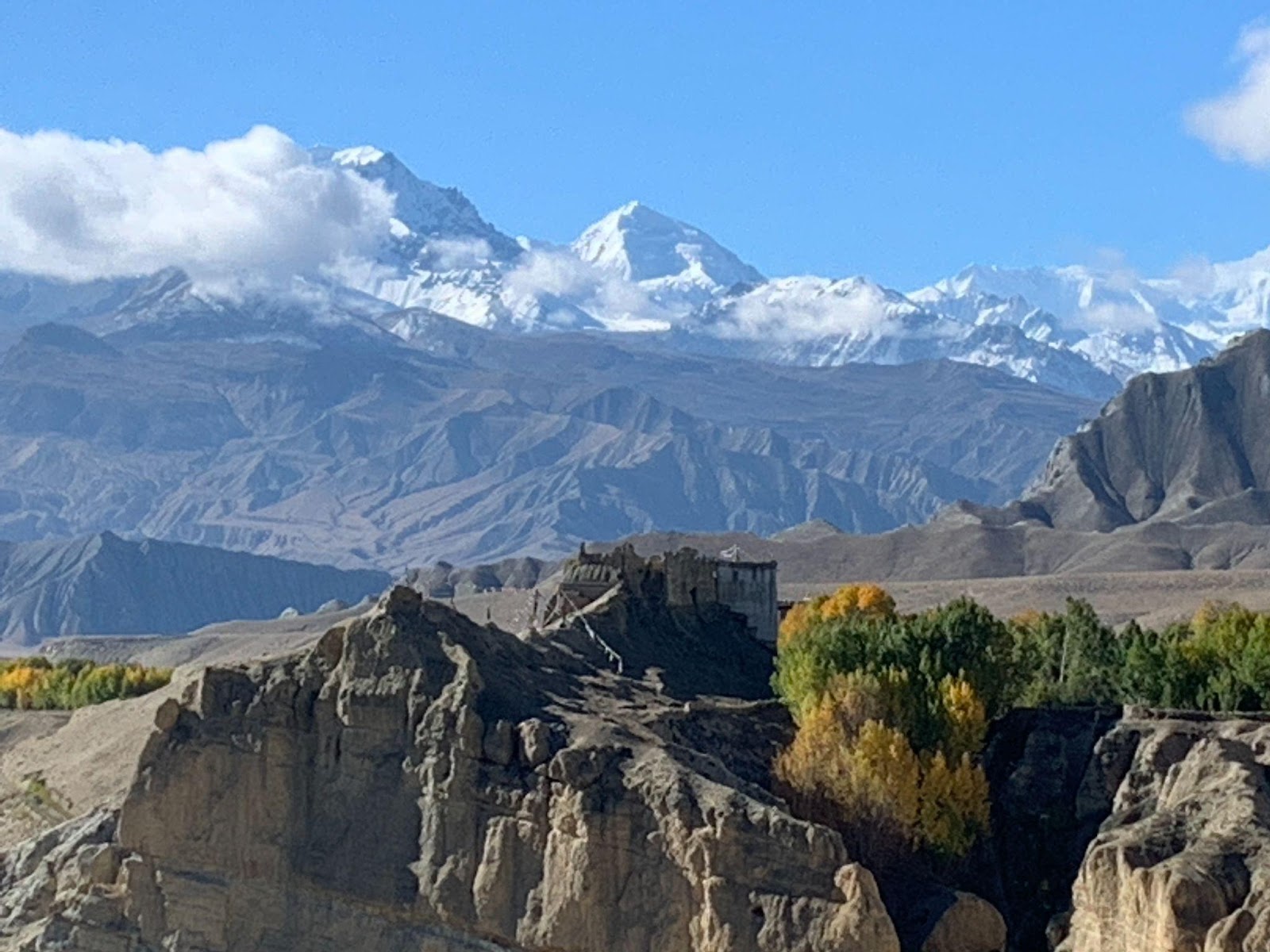
Surrounded by ancient Buddhist architecture and traditions, my wife, Meredith, and I were constantly reminded of where we were and who we are. We often saw chortens, prayer (or mani) walls and mani rocks, robe-clad monks twisting prayer beads and chanting, and prayer flags blowing in the persistent breeze, as a majority of the population continue to practice Tibetan Buddhism and speak the Tibetan language.
The title, Mantras, Mandalas, and Meditation, was selected not only because it’s catchy, but because it was the ready-made theme of our hike. With each trail, pass, village, and person we met, we were reminded of the philosophical meaning and significance of Tibetan Buddhism. The recurring presence – a Mantra in itself – of these important spiritual and cultural symbols mentally and spiritually reminded me of the impermanence of existence and made me contemplate what this experience is about, especially after trekking up and down through the stark and desolate landscape of Mustang. How many times a day did I say, “this too shall pass”?
Member Exclusive
A Premium or Unlimited Membership* is required to view the rest of this article.
* A Basic Membership is required to view Member Q&A events


Discussion
Become a member to post in the forums.
Companion forum thread to: Mantras, Mandalas, and Meditations: A hike through the hidden Tibetan Kingdom of Nepal – the Nar Phu Valley and Upper Mustang Regions
An account of a trek through Nepal’s Central Himalayan Nar Phu Valley and Upper Mustang region near the border of Tibet via an ancient trading route.
Thank you! This trek in Nepal is an interesting substitute for a trek in Tibet. The headline is misleading. I would like to do the Kailash circumambulation, but politics keep getting in the way.
Lovely, Jeff ~ Contemplative walking is not only a longtime transnational Buddhist practice, but something I suspect is close to the heart of many wilderness-goers who are not otherwise intent on the radical liberation the Buddha realized. Eg. the sensory/spiritual vivacities you mention… Did you two go alone or with a guide? I understand a guide, or guided group, is now required for Nepal treks. I’d like to do something like this, but am wary of being guided by someone(s) insensitive to the contemplative way of going. If you have a recommendation, please.
Bruce – I did the Kailash kora a few years ago and was awestruck on multiple levels: there is nothing like it – anywhere. And yes, Tibet is an occupied country with all the nastiness, threat and grief that goes with that.
Nice story, Jeff. Though I’m pretty certain I’ll not make it to the Himalayas in this incarnation, it echoes a lot of the reasons I like to walk in deserts and mountains.
Excellent Trip Report!!
New information for those of you thinking you might like to follow Jeff’s route.
Five years after banning solo adventurers from climbing Mount Everest, Nepal’s government has extended the restriction to the whole country. From now on, travelers who hope to trek in remote regions must hire a government-licensed guide or join a group.
Hi Bruce,
Thanks for taking time to read my post. I am sorry that you felt the title was misleading. I certainly wasn’t try to misdirect. We certainly enjoyed this region and would return for further exploration, as there is plenty to see and do. The upper Dolpo region west of Mustang is even more remote and less visited and is also along the Tibet border.
Hi Mudjester, I appreciate your comments and glad you enjoyed the piece. I agree that contemplative walking is something that many who spend time in the bush understand and appreciate, even if they don’t relate it to Buddhism. Sensory overload is a common experience. This trip was done with my wife and a guide that I have used before. These areas are restricted and a guide and special permits area required to lead a minimum of two people. I use Manoj Tamang (he is on Facebook) he knows the people, processes and areas and will work with you to design the trip you want. Tell him exactly the how you want to go and what it is you want to experience and he should be able to provide that for you. This is my third trip along the Tibetan border, I find it magical. Thanks for reading.
Hi JVD, Thanks for the thoughts. I appreciate you taking time to read the article. Yes, hiking (especially alone) provide the opportunity to think and appreciate much that our daily lives don’t allow us to dive into. Go to Nepal, if you have a chance. I am sure you’d enjoy the experience.
Hi Ken, thanks for the additional information. Yes, Nepal has instituted the use of guides on all trips, which is a drag. However, in many of the areas along the border, they were already restricted and a guide and two people were/are needed. If you get the right guide, it can be a worthwhile experience, as they should do what you want them to do and can make getting permits, etc. effortless. They can engage and provide useful and interesting information or they can stay out of the way and meet you down the trail. As with this trip, if things turn sour (and it can quickly), it can be a bit reassuring to know you have a skilled and experienced native speaking person along to help. It can be extremely remote.
Become a member to post in the forums.