

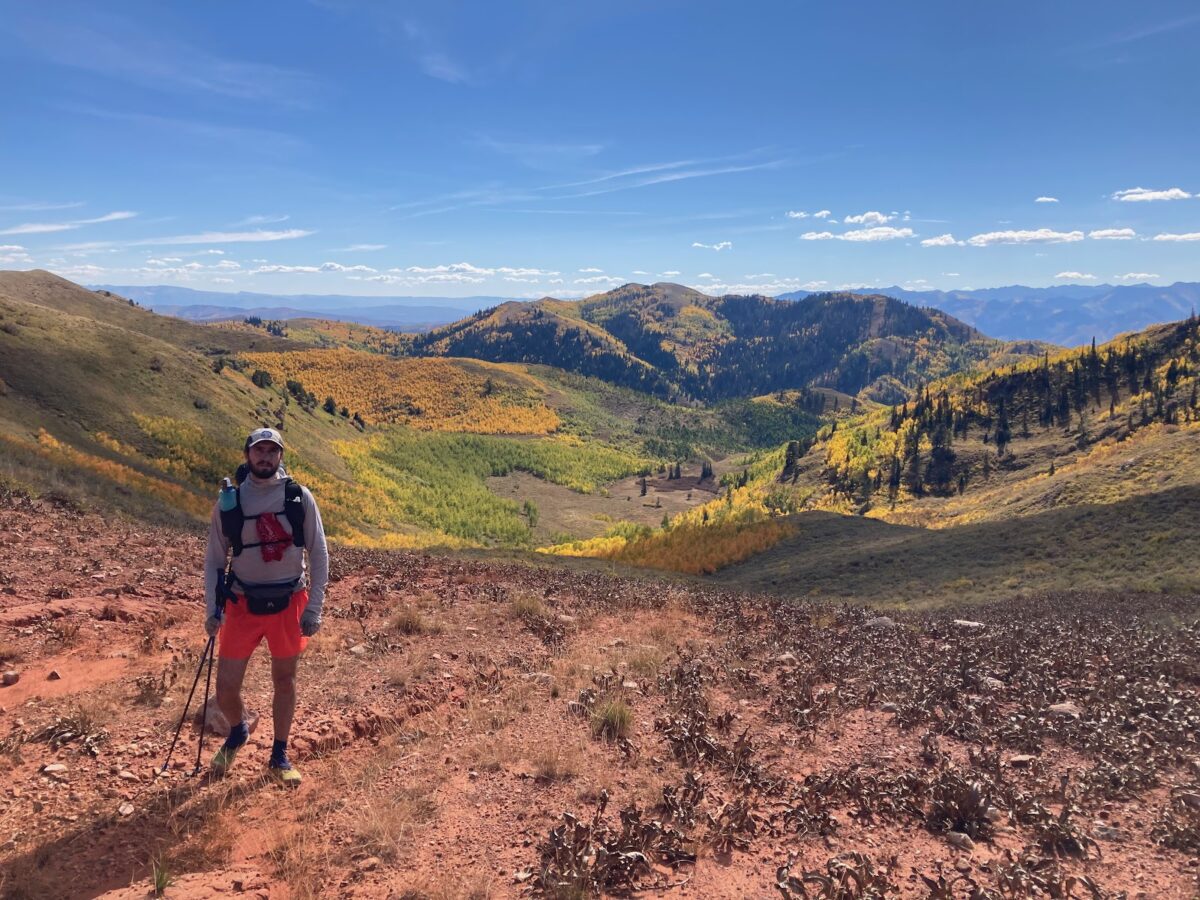
The sun was fully risen for some, bathing the Oquirrh Mountains on the far side of the Salt Lake Valley in an orange light and casting shadows of the Wasatch Mountains’ peaks across the gridded valley floor. The peaks of the shadows pointed to the first place in this landscape to see dawn. My old friend Matt and I would see dawn soon too where we stooped over our packs in a gravel parking lot making final adjustments before turning our faces to the trail north.
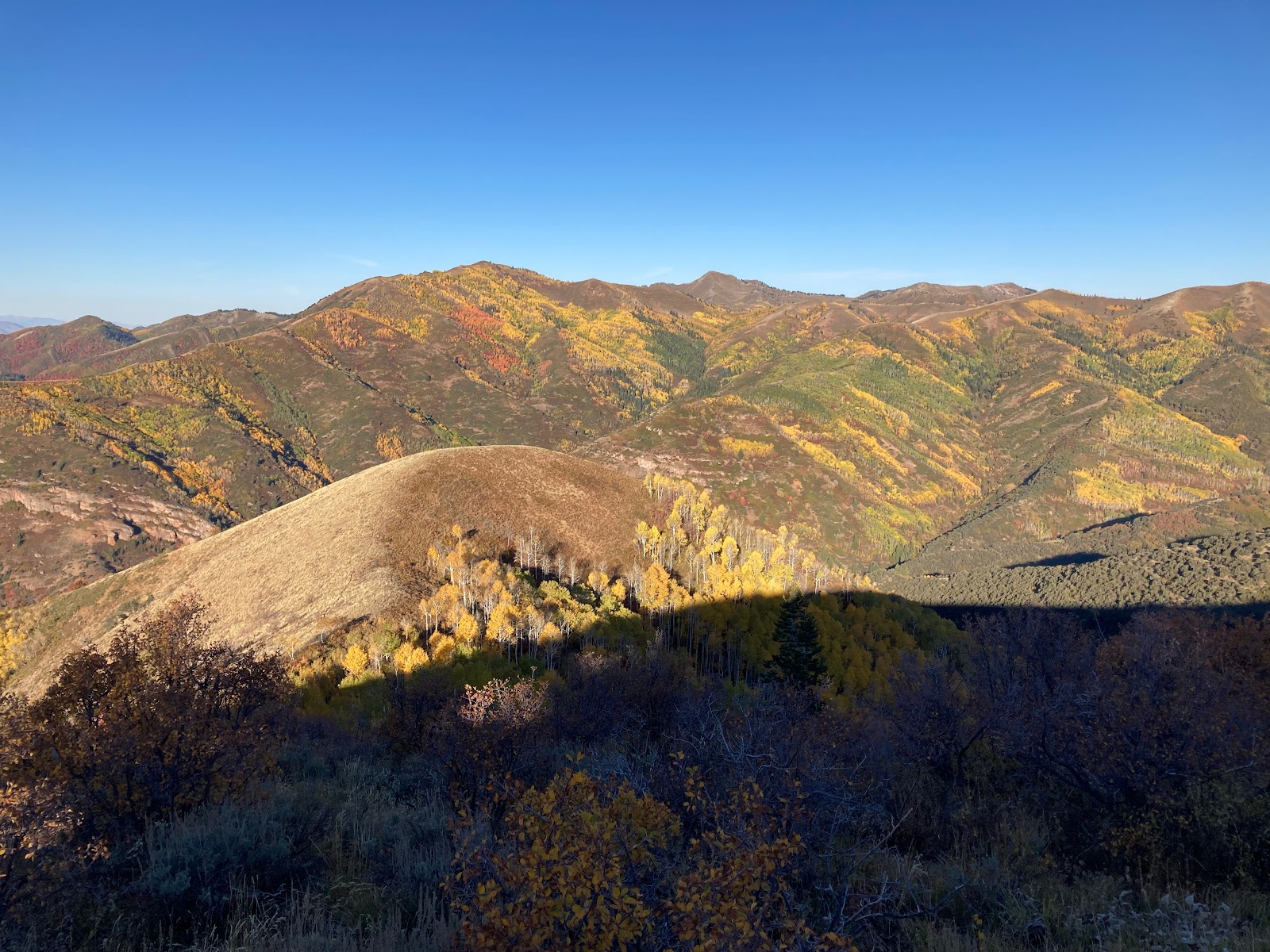
This trip felt like a celebration of Matt’s move from North Carolina back to Utah, but it was also meant to be a near-final weaving of routes for me. Over the previous couple of years I had been running every trail I could get my feet on through the part of the Wasatch closest to my home. I call it the central Wasatch, the lowest point of the range where indigenous paths naturally routed, where the Donner Party came through, where the Mormons, and, finally, ski instructors and restaurant employees on their commute from Park City to Salt Lake followed their progenitors down the constantly-humming I-80.
Before this running exploration stint, I was almost ready to leave the Wasatch foothill ecosystem. I thought I might go back to the Colorado Plateau region from which I formed, but I didn’t; I stuck around. The reasons for sticking around are many, but one of them I can trace back to moving fast.
I’ve been running most of my life, but the habit increased in tandem with an uptick in backpacking. I wanted to be in shape for those longer, more challenging trips, so I’d throw on my turquoise running vest almost daily, and hit the trails. I didn’t know how moving quickly through my local ecosystem would change how I think about moving through landscapes in general.
For starters, I thought that moving quickly over the land would inherently disallow the type of close observation in which I like to engage. I like to encourage my naturalist proclivities: getting to know the birds, getting to know the plants. But moving fast would prove to have other benefits I couldn’t see at first.
Member Exclusive
A Premium or Unlimited Membership* is required to view the rest of this article.
* A Basic Membership is required to view Member Q&A events


Discussion
Become a member to post in the forums.
Companion forum thread to: Lessons from Moving Fast
Ben Kilbourne explores the experience of moving fast through a vast mountain landscape and what you can learn from the experience.
Thank you.
Enjoyed the article thank you!
For me, the slower I go the more connected to nature I experience. I feel the lower the metabolic rate the more you are into a silent state of the mind that allows this connection to occur. In deep meditation the breath rate slows right down. Being goal orientated and going fast like lot of walkers I see on the trail, you miss so much of nature. Each to their own though .I know a lot of runners get high from running.
Different paces for different trips. I really love both, but I think you nailed the personal map stitching aspect that comes when you move fast and are able to connect many pieces in one day. BTW, you probably have more fast years left than you think. In my early 60’s and with just a little more will to put in the daily time on the local trails, I’m finding that I can go just as far as I could in my 20’s. Thirty+ mile days are still happening, and it’s still fun.
Thanks, you nicely captured the experience. I used to scoff / look down of people who were fast packing, or running on truly beautiful paths. I would think to myself, “Why are you in so much of a hurry? Savor the views”. A decade or so ago I was in Yosemite on a family trip and my marathon training program called for an ~12 mile run. I did a loop around the valley floor. What different experience than walking slowly. The faster pace made it easier to build that mental map and I really enjoyed the experience. These days I mix slow and fast trips. Both have their place.
Perhaps the next step up from fastpacking is bikepacking. I am running into more and more bikepackers that used to only backpack. Note that the overall average speed of most bikepacking is only about 8-12mph and most uphills only about 3-5mph. Well within the ability of the humans to take it all in pretty well.
Gary Snyder used to purportedly crawl…literally crawl…through landscapes in order to understand.
I regularly practice sitting meditation. I often go backpacking to often further this end, doing solo “retreats” so I may sit for longer with fewer distractions. I may or may not do some miles getting in and out, I may go fast or slow or bikepack in…but once I’m there, I’m there. I am looking forward to a retreat in the Sierra this coming season; there is a particular place I look forward to sitting alone for ~a week without really leaving a fairly small area.
I find stopping is important, which can be forgotten at any speed.
Some rhythms are so subtle that even walking seems obnoxiously fast.
+1
Add in some binoculars, which I know Craig sometimes does, and look at the micro and macro world around you. “Smelling roses” is optional.
Oh man, I had a downright transcendent experience in the Los Padres backcountry alone last winter…I caught a particularly dark, moonless night by chance and was on my back staring through binoculars at Andromeda and the surrounding sky for hours…
Micro and macro… as a painter who likes to work outdoors I can totally relate to these last few comments. You truly can look into infinity, even if it’s just at a rock or something.
But agreed… I also appreciate moving fast.
Become a member to post in the forums.