



Introduction
Lighter than canisters and less prone to user error or landscape limitations than relying on a traditional food bag hang, Ursacks have become a popular way to keep food safe among lightweight backpackers. Although certainly not the only option for food storage in the backcountry, their relative ease of use and effectiveness against bears, rodents, and other wildlife make them one of the more appealing ones. Effective Ursack use, however, isn’t common knowledge among most backpackers, especially those who don’t read instructions. The purpose of this article is to help the reader learn how to use an Ursack properly.
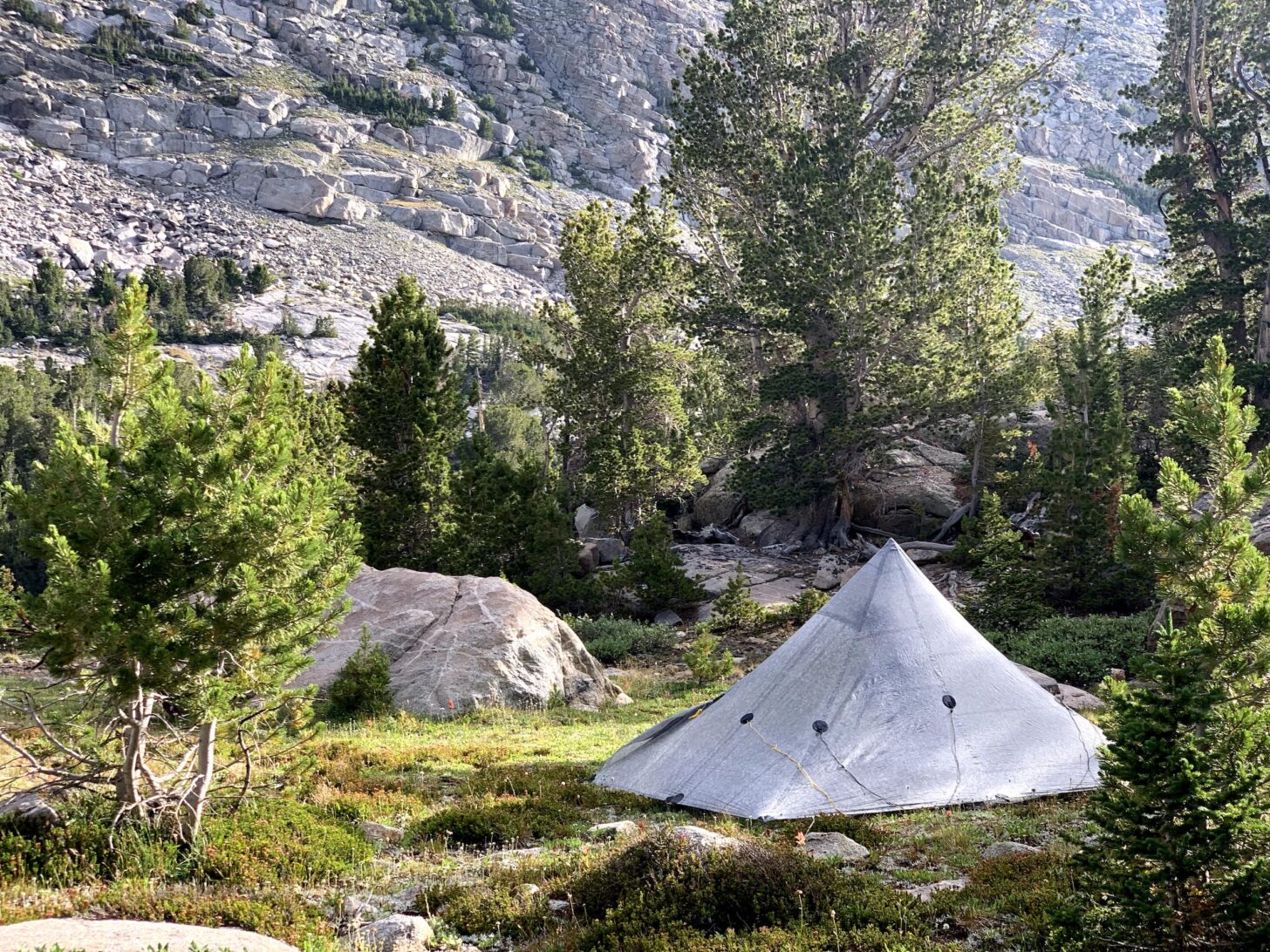
Ursacks are approved as bear-resistant containers in many national parks. This allows backpackers to meet park requirements without having to use heavy and bulky bear canisters. In areas where there are minimal food storage regulations, but the landscape makes the traditional food bag hang a challenging proposition (deserts, areas above treeline, and subalpine areas with thick conifers that make finding a stout and extended limb difficult) an Ursack is often one of the best options.
I had hoped that with a more abundant layer of blubber around my midsection as I approached the beginning of middle age, maybe any bears that saw me waddling down the trail would feel required to secure their food, rather than the other way around. Unfortunately, a wildlife biologist friend of mine assured me that this was delusional so I found myself sticking to more traditional methods of protecting my food from bears.
Why Store Food in a Wildlife-Resistant Container
This article is focused on how to use an Ursack, but the why is of paramount importance. Properly storing food keeps wildlife safe, keeps other humans who camp in the same site after you’re gone safe, and can keep you from having to hike out on an empty stomach after your food gets acquired and eaten by wildlife. And wildlife aren’t picky – you won’t find that they simply high-graded your trail mix and picked out the M&Ms, or only went for the Banana Nut Bread Clif Bars. They will eat, or attempt to eat, as much as they can. Hard-sided canisters, Ursacks, or food storage lockers provided by land managers are the most effective options for protecting your food in the backcountry. Ursacks are lighter than bear canisters, which makes them a compelling option for backpackers. Making sure your food is stored securely isn’t exactly the most glamorous part of backpacking, but it is of utmost importance as the use of public lands increases.
Why You Should Learn to Use an Ursack Properly
As with many things in the lightweight backpacking realm, acquiring the appropriate gear is just one piece of the puzzle. Learning how to effectively use the gear – or skill acquisition if you want to use a spiffy-sounding name – is just as important. The snazziest Dyneema Composite Fabrics tarp won’t do you much good if you have poor site selection skills and end up pitching it on a windy spot that pools water right before a thunderstorm rolls through. Likewise, tying an Ursack to a scrawny tree using a jumble of random knots won’t allow it to function properly and protect your food if a hungry bear stumbles upon it.
Unlike climbing or mountaineering, where your life literally depends on tying a proper knot, you almost certainly won’t die if you mess up tying a knot on your Ursack. However, improperly tying a knot greatly increases the chances of a bear (or smaller critter) being able to access and eat your food. At this point, the animal may progress down the dark path of habituating its behavior with a predisposition to easily-accessible food provided by humans. That has unfortunate consequences for a bear especially, including but not limited to relocation or euthanization. And it increases the risk of harm to campers exposed to that bear before management measures are taken. There are consequences to yourself and others if improperly using an Ursack, so take the time to practice the basic knots and make sure you can properly use it before heading out to the backcountry. Or just use a canister if you find an Ursack to be too technically burdensome.
How to Use an Ursack
While the instructions on how to use an Ursack from the manufacturer are sufficient, a bit more depth and detail on how to properly use this piece of gear is warranted.
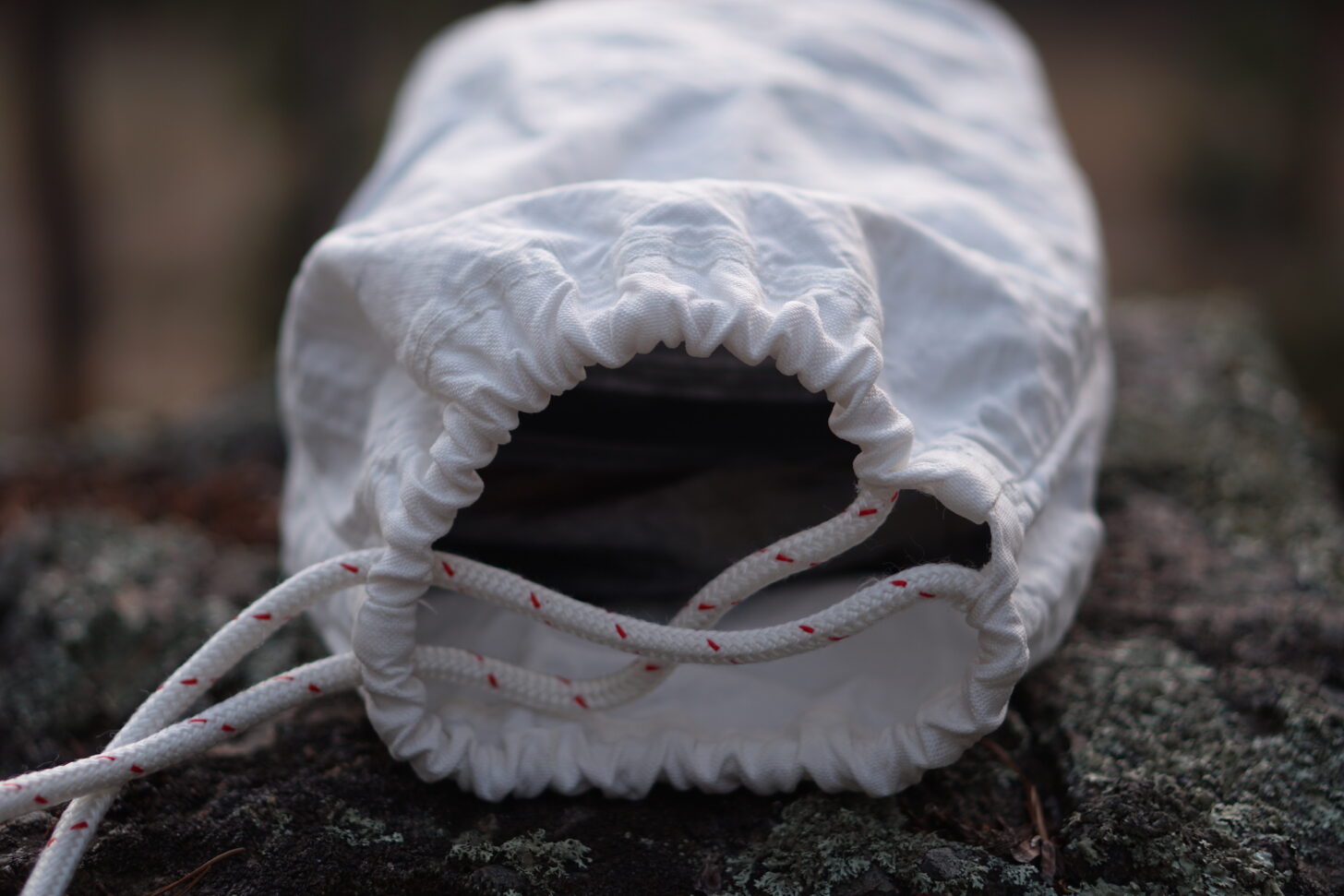
Once your food has been stored inside the Ursack, you need to close the bag to prevent bears or other animals from getting inside, make sure to not be sloppy here as providing the space for a claw-hold can compromise the effectiveness of the bag.

To close and secure the bag, use a simple double overhand knot.
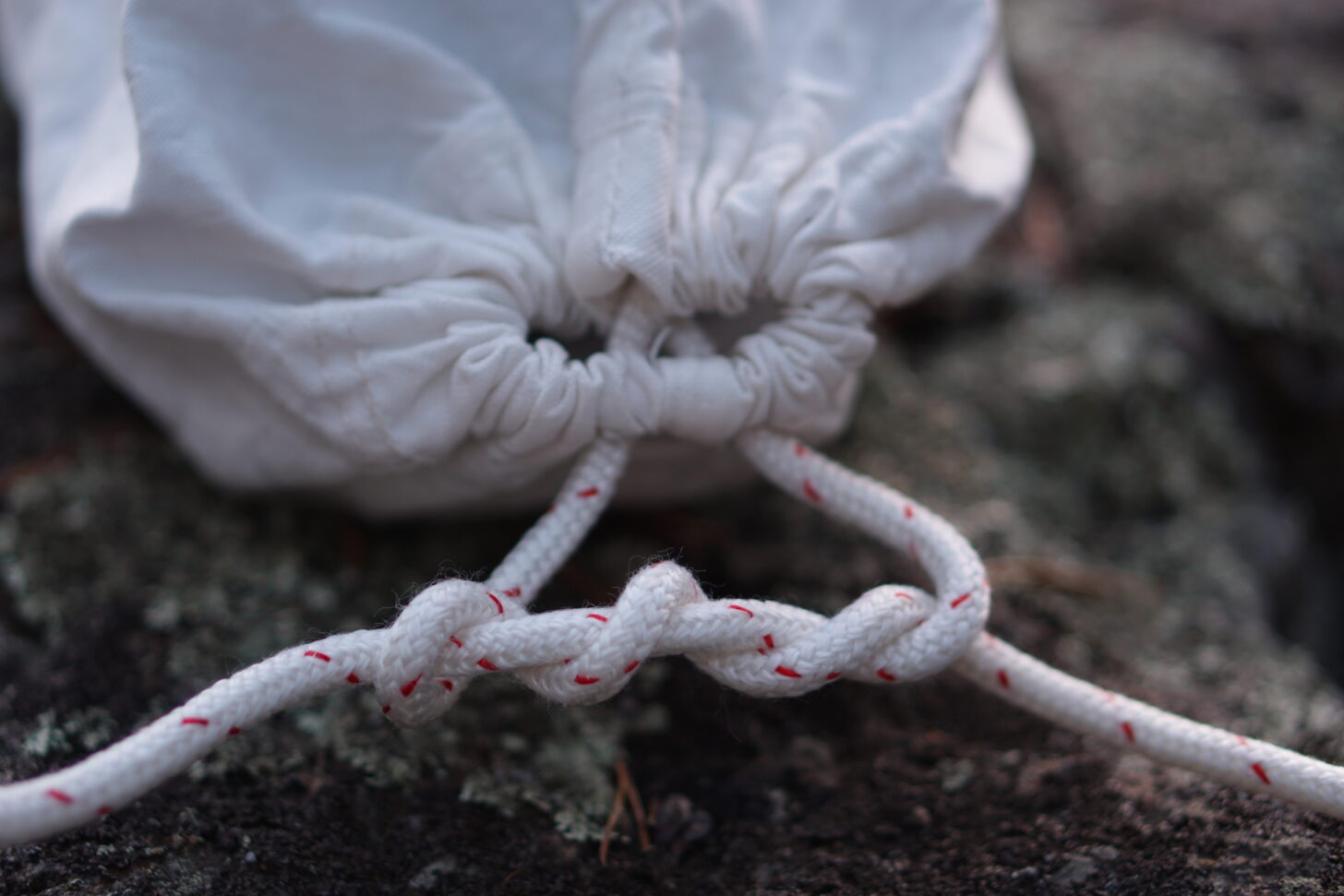
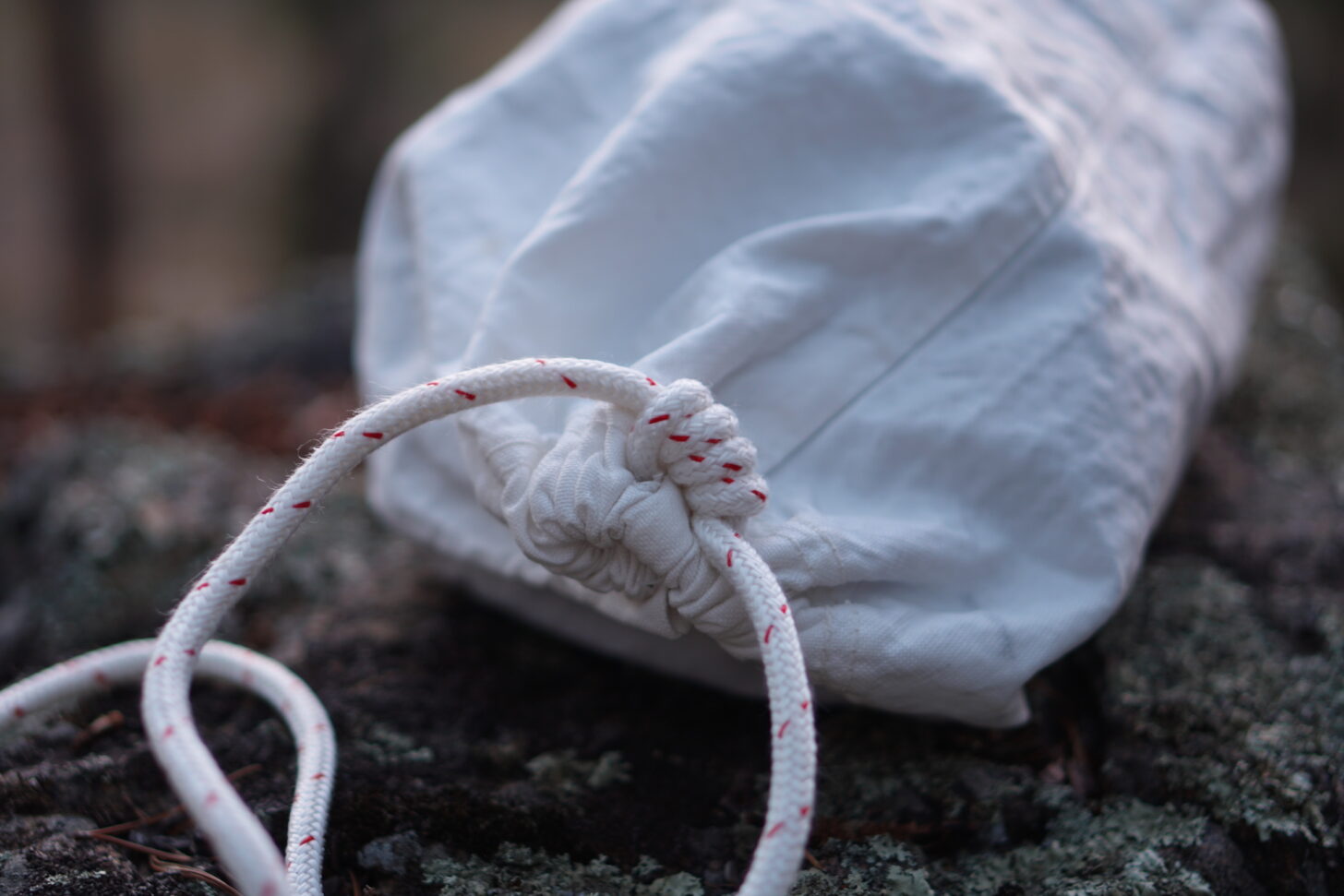
But first, make sure the strands of the rope in the drawstring cross and form an X. This video does a great job of showing the steps to do this. Practicing the knots at home a few times before going out for the first time with your Ursack is a good use of time. Don’t be lazy and rely on the facetious aphorism of “Don’t know the knot? Just tie a lot!” and think that a random rat’s nest of loops will somehow be easier than learning the correct way to close your Ursack and secure it to a tree.
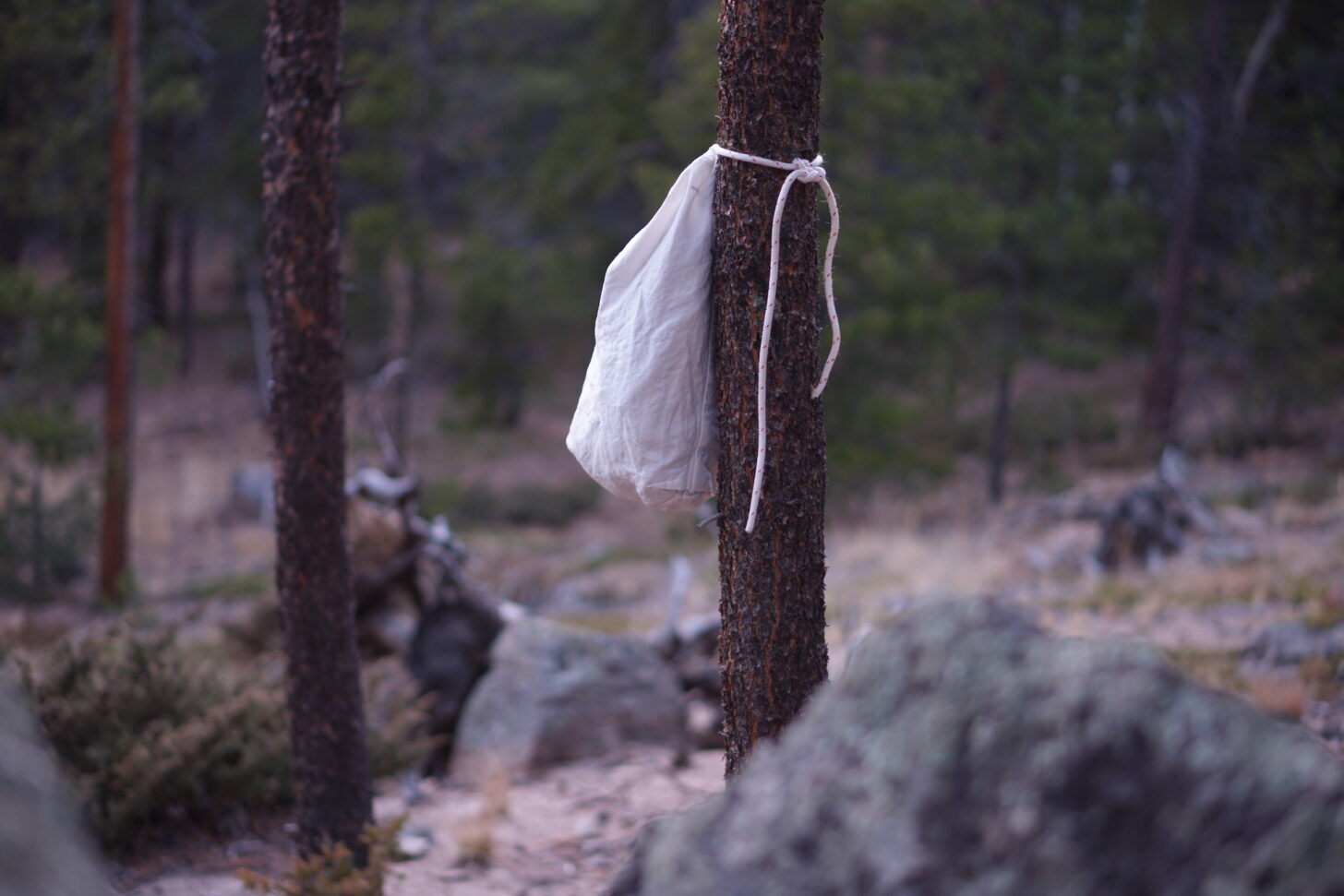
After you’ve closed the Ursack as tight as possible using the proper knots, you should secure it to something substantial to prevent it from getting dragged away by a hungry animal. The best option is a sturdy tree limb or trunk. Don’t underestimate what “sturdy” means, as bears have chewed through limbs to get food. Here are some guidelines:
- Aim for something five inches or thicker.
- Pick a location away from your camp to store the Ursack. The further the better, but aim for at least 200 feet.
- If using multiple Ursacks, split them up and keep at least 75 feet between them.
- You can also use a counter-balance method to hang your Ursacks, but since the security of the Ursack lies in its fabric and not any particular distance from the ground or tree trunks that could be scaled by bears this is generally going to be overkill.
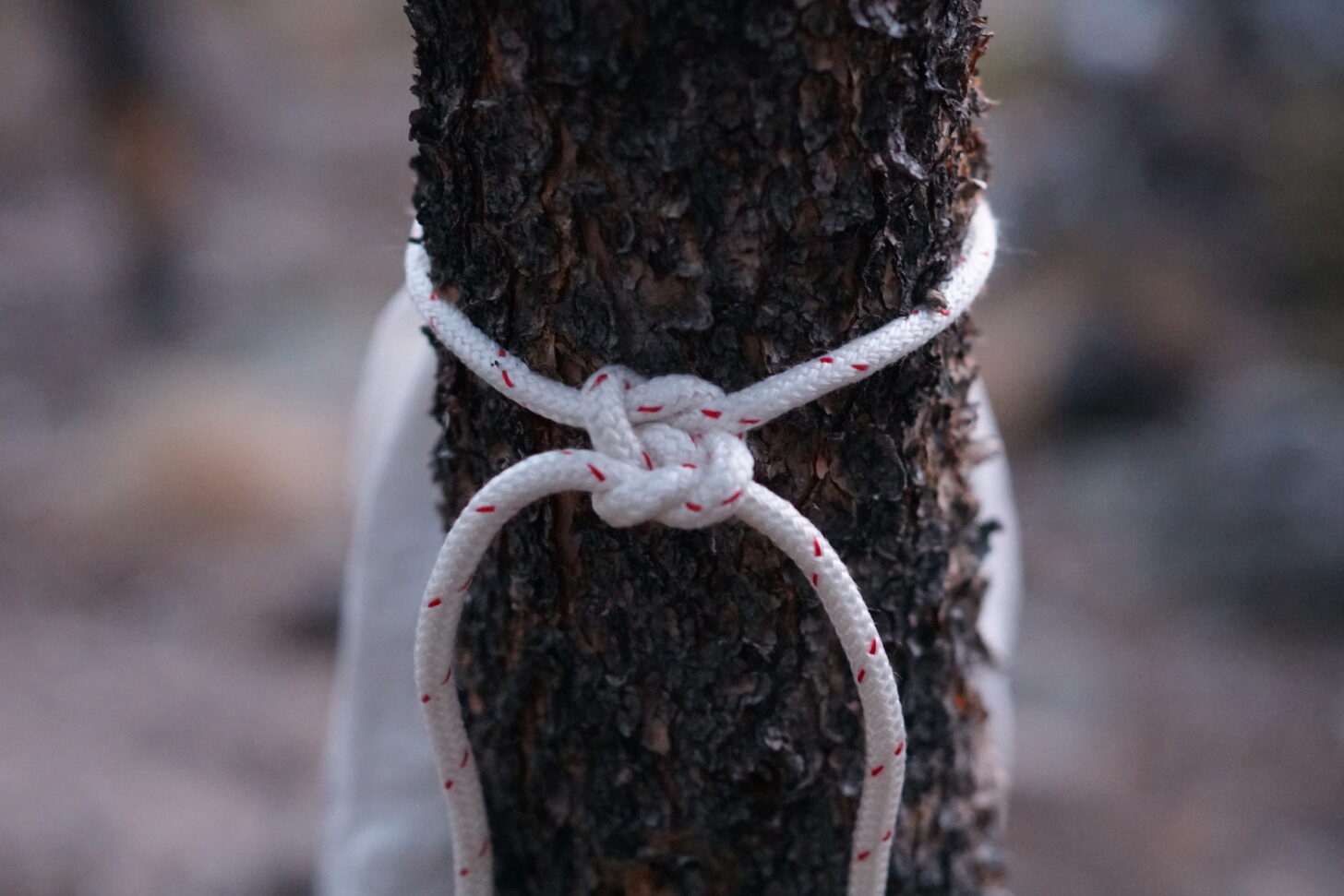
- When attaching your Ursack to a tree, use a figure-8 knot, at least three half-square knots (e.g., one full square knot plus one additional half-square knot), or another knot that resists clinching so that it won’t be a struggle to untie it the next day. Ursack has a video of their recommended knot on their website, and in my experience, this truly is the best knot for tying an Ursack, in terms of both ease of untying and security (caveat: it requires a carabiner or other secure chock).
What if you’re using an Ursack in an area where there are no trees?
If no trees are available to attach your Ursack to, like in a desert or alpine tundra environment, you can bury the Ursack under rocks to discourage animals from investigating it. In alpine environments where bears are present, tying the Ursack into the crevice formed by two immovable pieces of talus lying against each other may be a viable option. Just be aware that a grizzly bear can easily move a rock that weighs a few hundred pounds, even if you can’t.
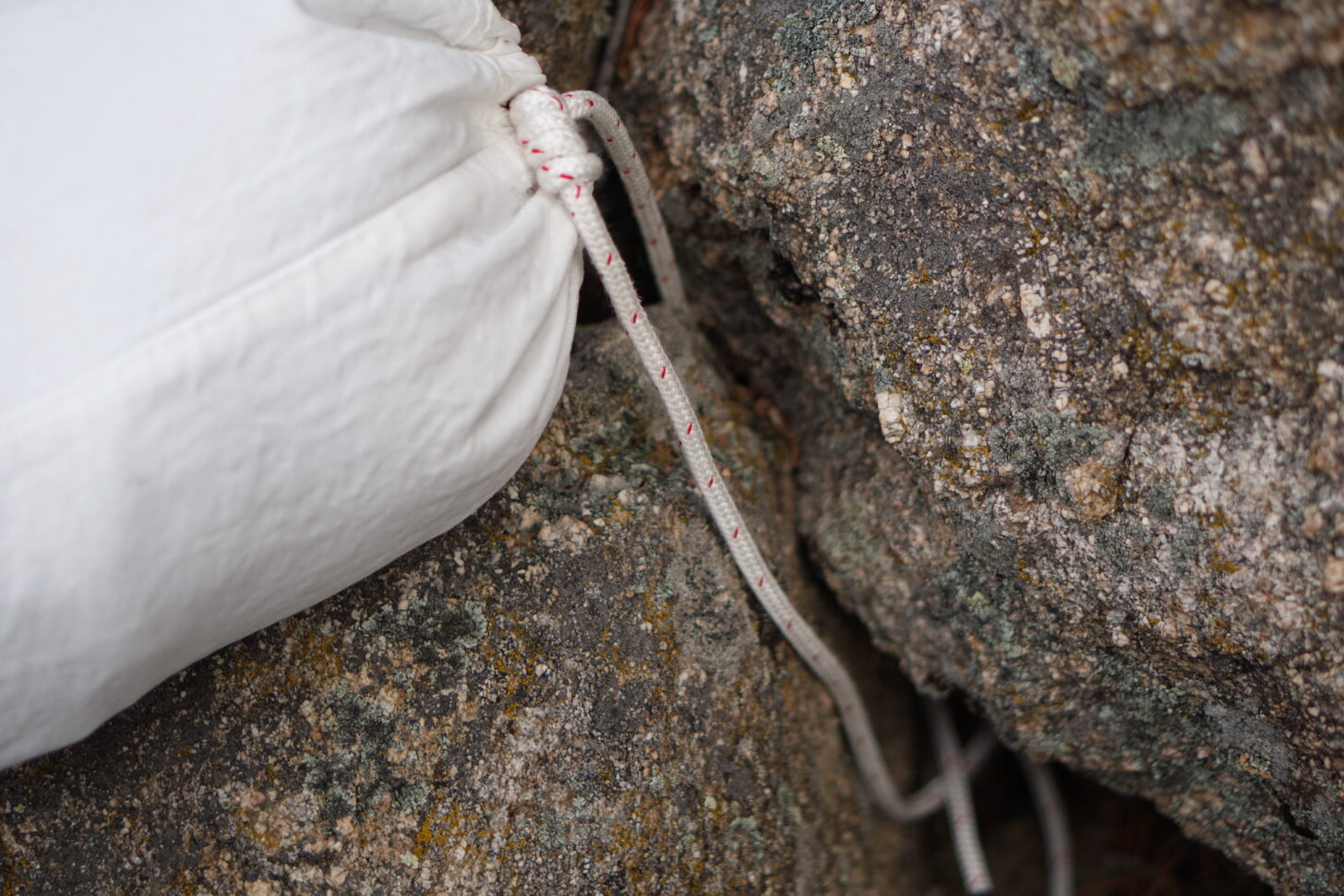
One trick Ryan Jordan has used when hiking in a large group above the treeline and no talus is available is to tie everyone’s Ursacks together (they often carry a dozen or more on long trips) in a big Circle of Ursacks. This is not ideal. Food odors are concentrated into a single area, and loose Ursacks that aren’t tightly secured to an immovable object may be more prone to failure since animals can gain better access to the drawcord opening. However, it may be one option for expeditions to save time. In addition, large groups concentrate human smells that are not attractive to bears, so there may be some benefit to keeping your Circle of Ursacks inside your camping area in some situations where regulations allow it.
Caveat: this technique (the Circle of Ursacks) won’t be endorsed by Ursack or most land management agencies. We don’t endorse it where regulations prohibit it.
What about using an odor barrier bag with an Ursack?
In addition, if you find yourself frequently in areas where the ideal Ursack tie-up isn’t available, or areas frequented by habituated bears, you may want to protect your food with an odor barrier. Storing your food in OPSaks or zip-closure 5-mil mylar bags (we recommend the Shield Pro brand) will reduce the chances of a bear or other animals smelling your food to begin with.
How Not To Secure an Ursack
1. Don’t just prop an Ursack up in a tree. Secure it to trees using the methods described above. Black bears, raccoons, and other animals can climb trees and can easily access your food.
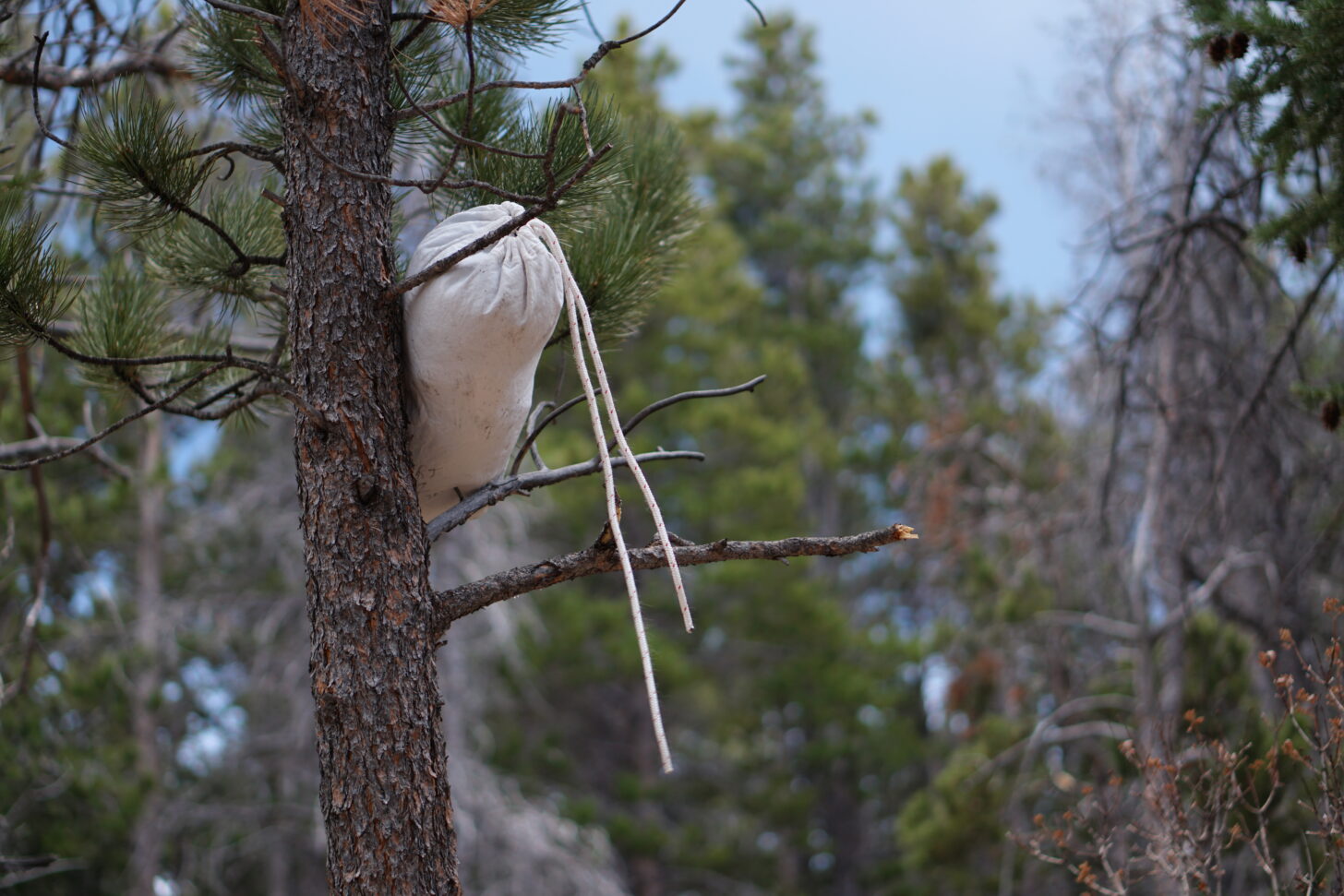
2. Don’t tie it to a tree with slack drawcord. This exposes the opening to animals and increases the chance for an Ursack failure.
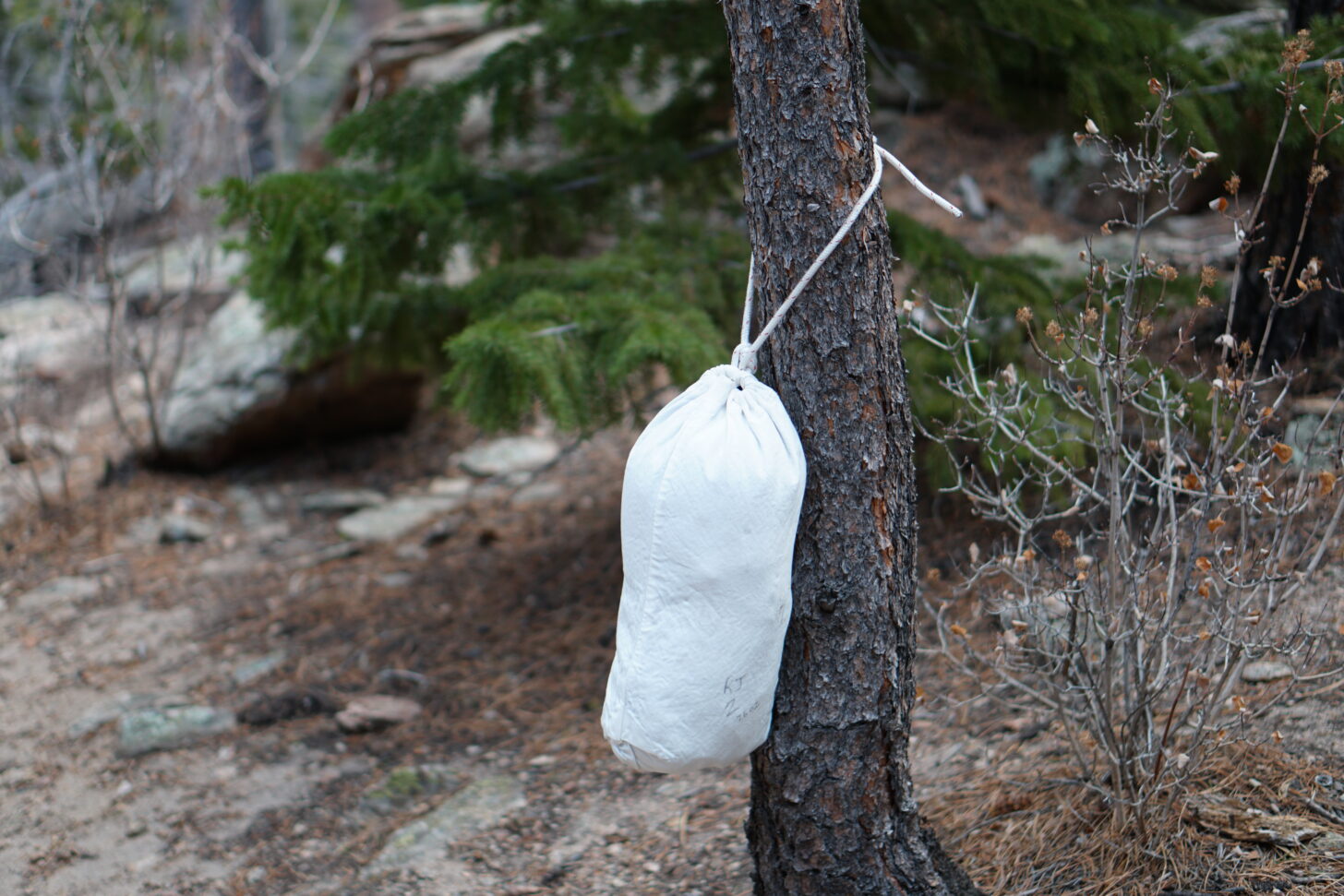
3. Don’t tie an Ursack to a thin-diameter tree (less than four inches in diameter). Bears can chew through, or push over and break, thin trees.
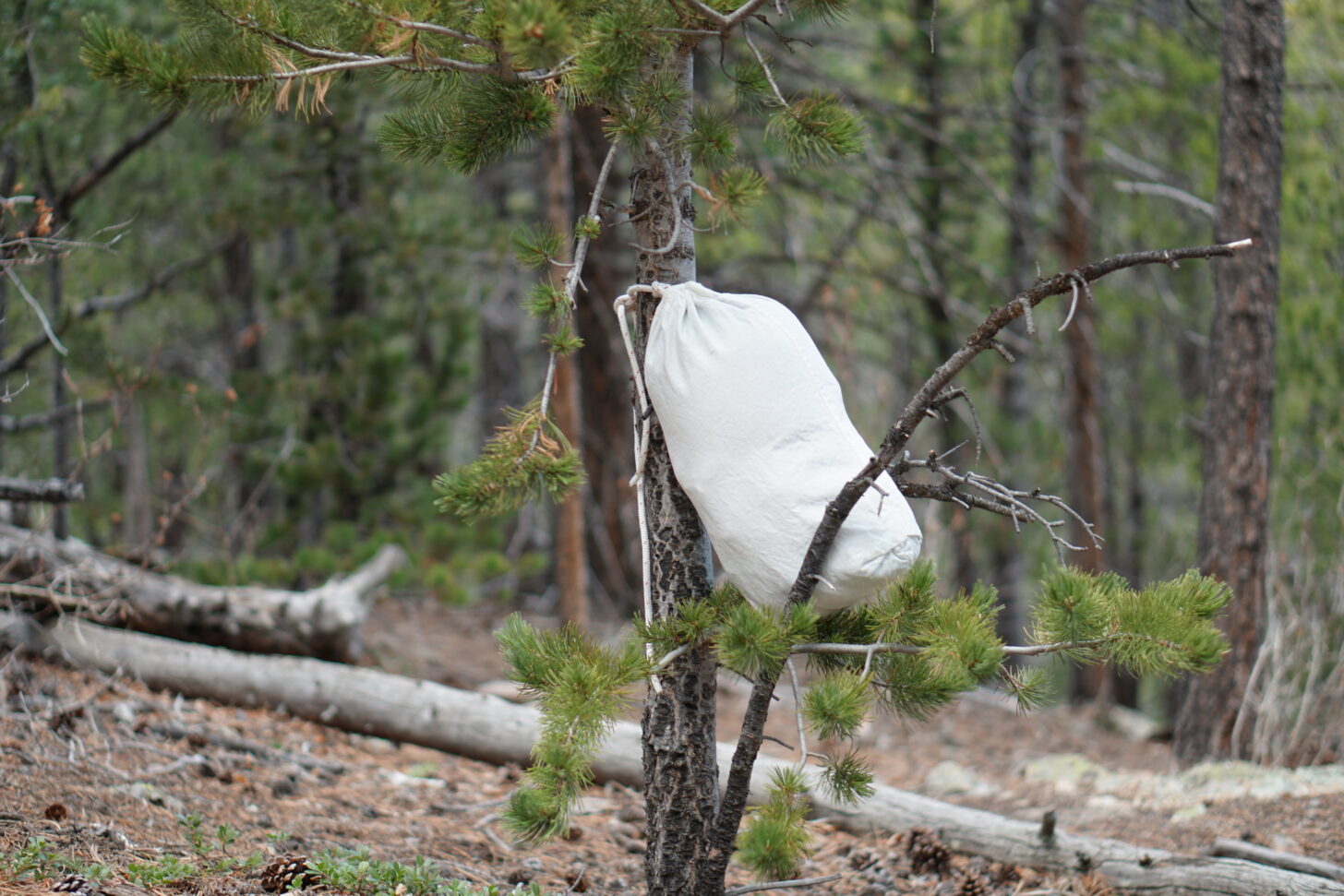
4. Don’t tie your Ursack to a tree near a trail corridor, keep your camp discreet from other users – consider LNT Principle Number 7: Be Considerate to Other Visitors. In addition, don’t tie your Ursack along trails, game trails, rivers, or other obvious big game corridors.
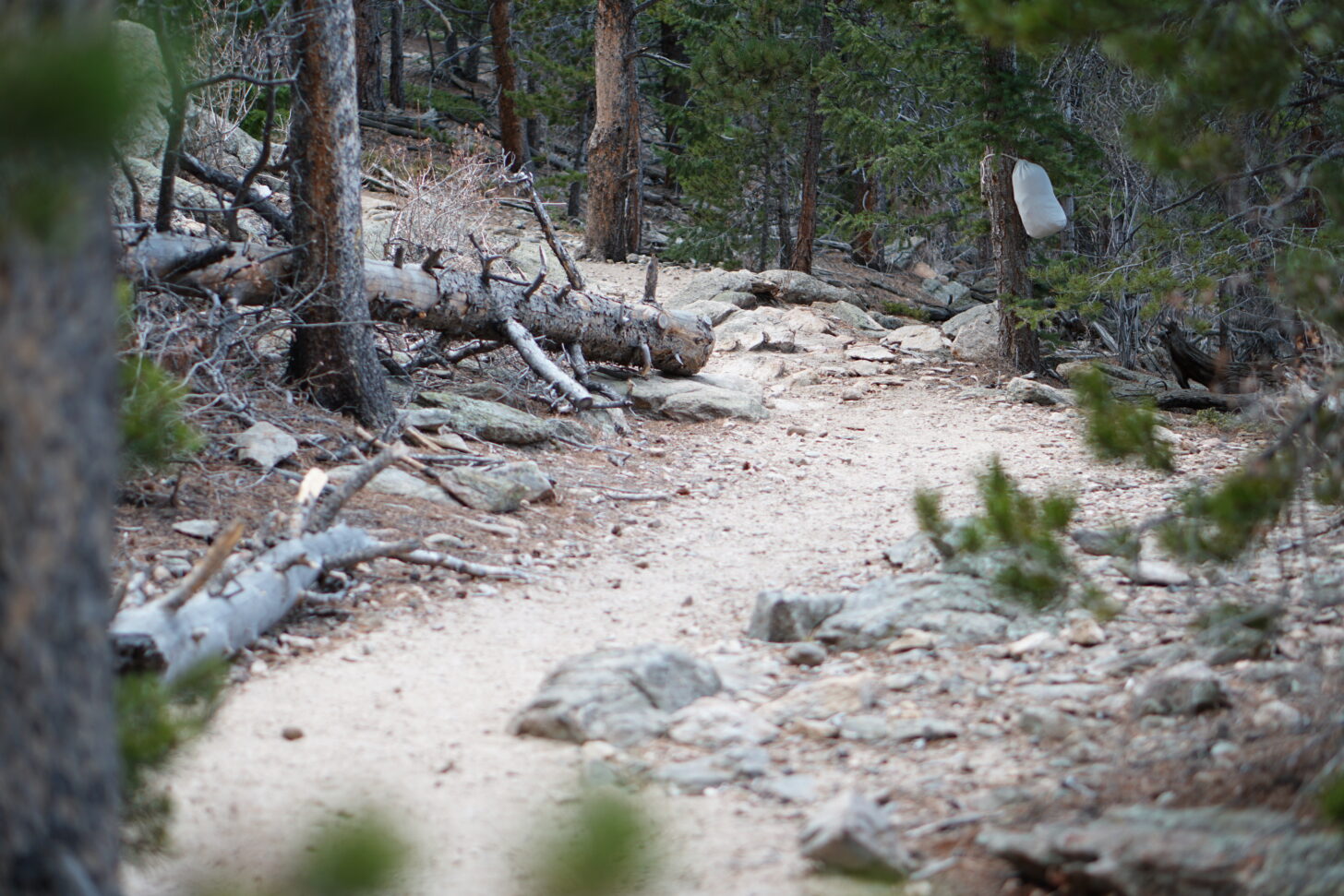
5. Don’t just “hide” your Ursack. Just because it’s hidden from view doesn’t mean animals like bears can’t follow the scent of food emanating from your Ursack and find it.
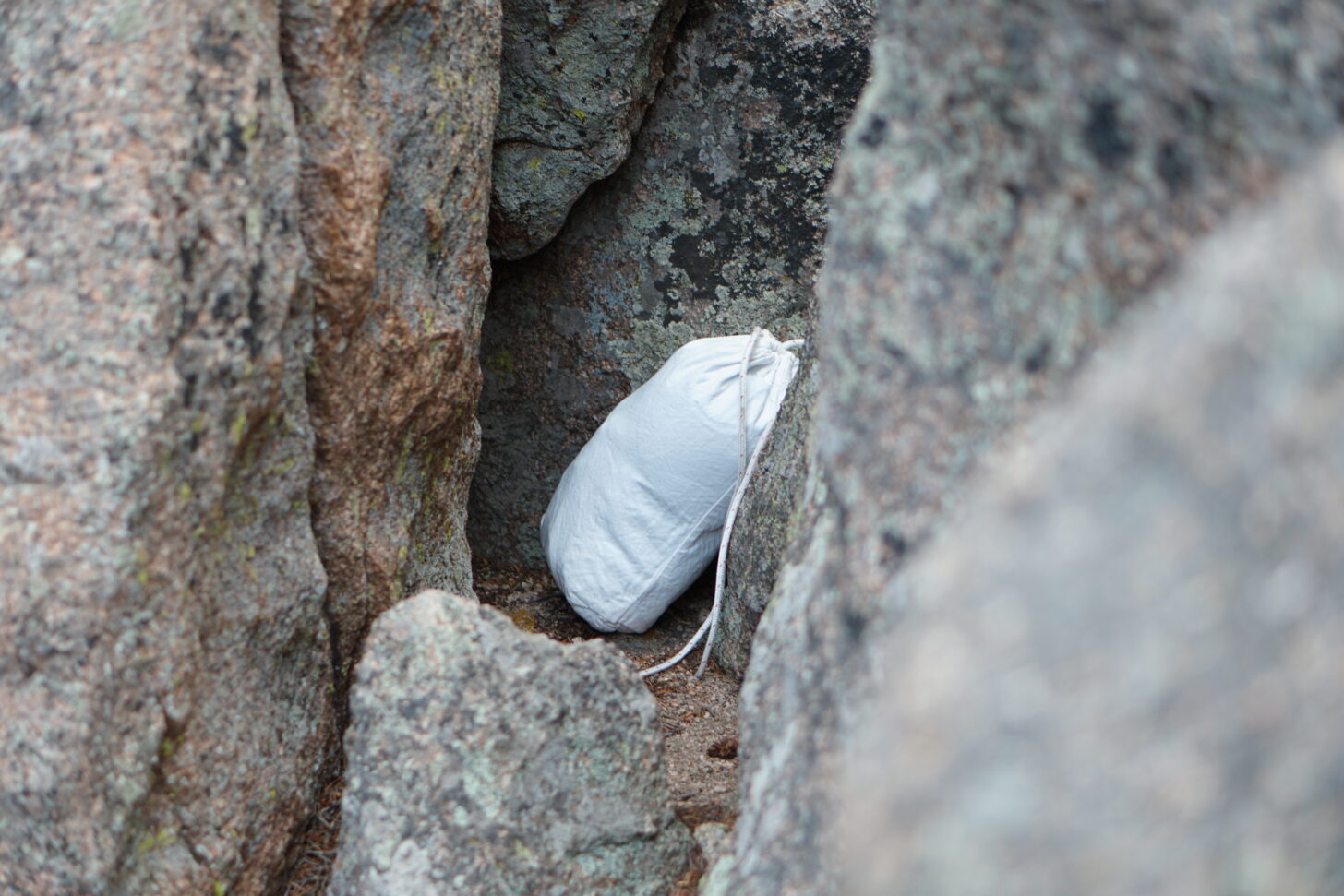
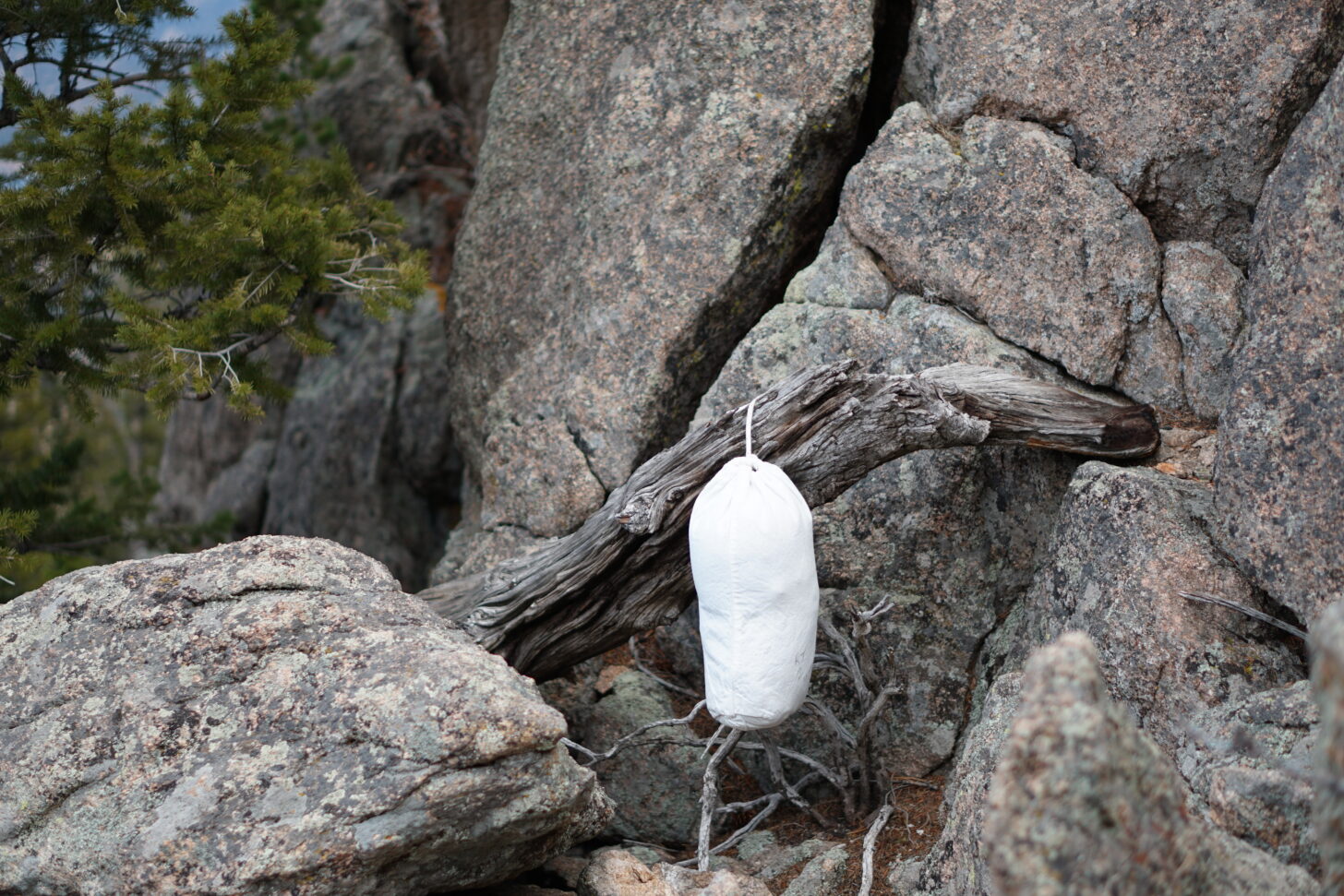
6. Don’t tie your Ursack to a deadfall. A bear can easily move it, chew through it, and steal your food bag.
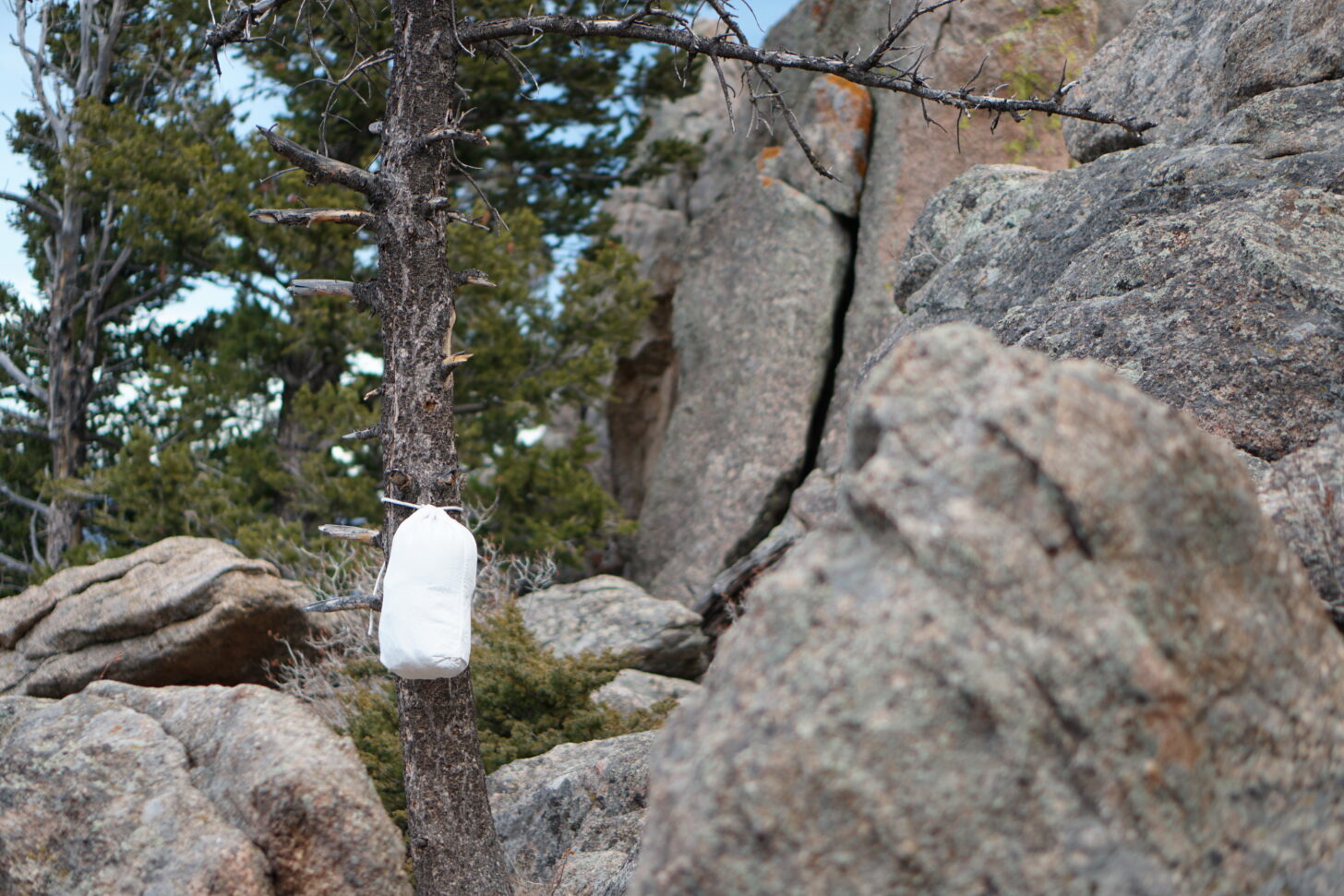
7. Don’t tie your Ursack to a standing dead tree. Dead trees are weak and can easily be toppled by a bear.
Learn More
Browse our curated recommendations in the Backpacking Light Gear Shop – a product research & discovery tool where you can find Member gear reviews, Gear Swap (used gear) listings, and more info about specific products recommended by our staff and members.
Gear Shop » Bear-Resistant Food Storage

Related Content
- more by Mark Wetherington
- improve your life in the backcountry by exploring our deep skills article catalog
DISCLOSURE (Updated April 9, 2024)
- Backpacking Light does not accept compensation or donated/discounted products in exchange for product mentions or placements in editorial coverage. Some (but not all) of the links in this review may be affiliate links. If you click on one of these links and visit one of our affiliate partners (usually a retailer site), and subsequently place an order with that retailer, we receive a commission on your entire order, which varies between 3% and 15% of the purchase price. Affiliate commissions represent less than 15% of Backpacking Light's gross revenue. More than 70% of our revenue comes from Membership Fees. So if you'd really like to support our work, don't buy gear you don't need - support our consumer advocacy work and become a Member instead. Learn more about affiliate commissions, influencer marketing, and our consumer advocacy work by reading our article Stop wasting money on gear.


Discussion
Become a member to post in the forums.
Companion forum thread to: How to Use an Ursack
Ursacks are lighter alternatives to bear canisters for food storage but require the right knots and tying locations to protect your food.
You missed out “don’t tie you Ursack around a tree but leave it resting on the ground”
I learned how to tie an Ursack right after the raccoon got in.
Chris R – this may be one of the myths of Ursack use, that’s why we didn’t include it. When I visited the Grizzly Discovery Center in West Yellowstone and watched some Ursack tests there, the “height” of the Ursack didn’t seem to matter – bears became equally bored whether the Ursack was tied near ground level or tied up high (if they couldn’t access the contents). This may be one of those issues where it makes sense to tie it higher on a tree (requires more effort?), but IRL probably doesn’t matter that much.
I think if it on the ground they are able to do the “front paw stomp” that a lot of mammals use when dealing with non compliant potential food. It’s a great way to apply a huge amount of force to an object so reducing the ability of bears to do that would seem to make sense.
I’ve used ursacks on some trips, trying to lighten up from the weight of the Bearikade Weekenders we also have. When we got our Ursacks their web site didn’t have the slip-knot/carabiner video linked above. I’ve always just followed their original instructions to tie the ends of the cord around the tree with a figure 8 knot. A figure 8 knot is easy to tie and untie, like they say, but I’ve always found it a major hassle to tie while holding cord cinched tightly enough around the tree with the sack of heavy food. Without 3 hands, the cord always seems to develop some of that forbidden slack during the process of tying the figure 8. After watching the video, I tried the slip knot method at home with the ursack and a fat table leg. In the video, the actor shows the two cord ends that go around the tree, but he doesn’t have anything standing in for the tree. The way this method is configured, the final tightening of the second knot, after the carabiner is inserted, lengthens the standing end of that cord just enough to produce that forbidden slack again. The three half-square-knot method, like the figure 8, is hard to tie while holding the cords taut enough against the weight of the food. However. I next tried a slip knot on one cord, ran the other cord through it, pulled that tightly around the table leg the other way, and then tied the 2 ends with the three half-squares. No slack! Yay! The table leg isn’t as thick as a suitable tree would be, so a real hang would take more of the cord for the second trip around the tree, but there should be enough cord to work with an 8-inch tree.
On our last trip I took the Bearikades because of the hassle of getting the slack out of the cord with full sacks. Maybe I’ll try the Ursacks again with these new ideas about tying.
I’m probably in the dark, but the “Dreaded Slack” I thought just had to do with never leaving an opening into the storage cavity for bruin to hook a claw in and work into it. I would agree with leaving little to no slack tying it to a tree also.
The photo that accompanies item #2 in the part of the article about How Not to Secure an Ursack shows slack in the cord around the tree, and suggests that this exposes the sack opening (even when well-cinched as shown) to animals, increasing the chances of failure. The weight of food in the sack makes it very difficult to eliminate around-tree slack without an interim method of holding the cord taut while the final knot is tied. While my efforts normally do not result in the large amount of slack shown in the photo, I have struggled to get the cord as taut as, for example, is shown in the photo earlier in the article, of the three half-square knot.
When using the Ursack for the little guys, I tie it like this. It seems to make a better closure for the mice. It has worked well in the main corridor campsites in the Grand Canyon. That is where mice and ravens go to get their PhD in thievery.
I’ve given up using the Ursack, although not so much that I’m willing to part with it just yet. It gets filthy and absorbs smells, ends up with sap all over it, and just doesn’t feel as secure to me. It’s easy to tie though, and mine has the instructions sewn in. But the bear canister is just so secure and easy. I’d rather give up a pound somewhere else and have a seat to sit on while cooking, and know that my food is safe and so are the bears.
Bear slobber is really sticky and nasty. I wouldn’t want to try to eat food out of a slobbered sack. It would be pretty crushed anyway.
I forgot to mention that bears are more common and habituated in much of the Sierra, where I hike, so more likely to find and chew on an Ursak (which isn’t allowed in most parks). Certainly there are plenty of other places and scenarios where they would be a great option.
As I found out, Ursacks are not particularly useful to the user in situations involving a determined bear. On the CT this summer, I had a black bear thoroughly chew-up my Ursack. Even tied to a tree trunk and with all of the knots tied and intact, the bag was punctured in numerous places and my food and cook kit were thoroughly crushed, punctured and drooled-on. All of the food and equipment inside were destroyed, even though the bag was never actually ripped-upon. For me, this was a huge setback. For the bear, it was probably tantalizing and enough to keep him coming back. I suppose that it is good for public wildlife management policy that the bear didn’t get to enjoy the contents, but I didn’t either. As a product, the Ursack was a very modest success.
Ursack was good enough to replace the bag, so now I can potentially repeat this scenario. In the future, I plan to hang the Ursack as I would any other food bag, albeit with a significant weight penalty.
Michael,
Wondering:
1) did you make any attempt to chase the bear away from your UrSack?
2) did you have your UrSack lined with a plastic bag of any kind that might have reduced smells or reduced the bear slobber on your food?
thx
DWR…
if you plan to hang the Ursack.. I dunno, I would leave it home and just PCT style my food bag.
“if you plan to hang the Ursack.. I dunno, I would leave it home and just PCT style my food bag.”
I agree. A bear would just carry your Ursak off and you wouldn’t find it. If you did, once again, it would have become the remains of a chew toy for the bear. So what’s the point?
From what I understand, lining the Ursak with a plastic odor bag is mostly an exercise in wishful thinking. The bear will smell you, know that you have food, and then find the Ursak at close proximity, odor liner or no.
Again, the bear slobber on the bag is sticky and nasty. There’s no way to protect what’s left of your food from becoming contaminated. Sure, you could wash the bag in a stream. It won’t get all the slobber and germs off. And some will have penetrated the bag. Hey, maybe a good boil of the food will do the trick. I wouldn’t want to risk it.
As for chasing the bear away…well. plan to stay up all night. the bear will be back, again and again. More, trying to chase off a bear that now ‘owns’ your food can be dangerous.
“”“if you plan to hang the Ursack.. I dunno, I would leave it home and just PCT style my food bag.”
I agree. A bear would just carry your Ursak off and you wouldn’t find it. If you did, once again, it would have become the remains of a chew toy for the bear. So what’s the point?”
*** Some areas REQUIRE and Ursack or Canister… so that can be a ‘point’…
“From what I understand, lining the Ursak with a plastic odor bag is mostly an exercise in wishful thinking. The bear will smell you, know that you have food, and then find the Ursak at close proximity, odor liner or no.”
*** Bears can can distinguish between a lot of food smell and a little food smell… they are not stupid, they will go to the camps with the most food smell… If you use and odor proof bag, that might not be your camp…
“Again, the bear slobber on the bag is sticky and nasty. There’s no way to protect what’s left of your food from becoming contaminated. Sure, you could wash the bag in a stream. It won’t get all the slobber and germs off. And some will have penetrated the bag. Hey, maybe a good boil of the food will do the trick. I wouldn’t want to risk it.”
*** I would. If the choice is starving or eating, I would eat. The doc can give you antibiotics when you get home :) Wash it off and boil the food. And I doubt all packages will be penetrated.. .
“As for chasing the bear away…well. plan to stay up all night. the bear will be back, again and again. More, trying to chase off a bear that now ‘owns’ your food can be dangerous.”
*** Staying up all night is better than going without food IMHO.. It can be done. I throw rocks, bang pots… bears don’t want to be hassled and if they haven’t yet got anything out of your bag, they may just walk away to easier pickings. Just don’t try top grab the bag out of the bear’s paws… throw rocks from a distance. I’ve done it and been successful. Defend your food!!!
Defend your food!!!
Or just carry a Bearikade Scout and not have any issues. It’s simpler. No issues with starving and protracted bear encounters throughout the long night and ICU units when you get home. Sheesh.
Yes, I used an OPSack inside the Ursack, and yes, five of us screamed at the bear for about 20 minutes before he ambled off into the night. The OPSack was pretty well shredded, as were the contents. Smokey was a real pro. I found out later that there were a couple of Forest Service campgrounds in the vicinity, so Smokey was probably just making his usual rounds. It might be easier to defeat or scare-off a non-habituated bear, but this one was pretty determined and not at all intimidated by humans. He also chewed some holes through an adjacent camper’s Bear Vault, right around the rim of the lid. He knew exactly what his best chance at the BV was. The food and gear inside the BV wasn’t ruined, but that BV is now a real conversation piece. IMHO, this is the kind of bear that the Parks Department folks should consider a real hazard to humans..
“IMHO, this is the kind of bear that the Parks Department folks should consider a real hazard to humans..”
Or.. a situation created by humans that is a real hazard to bears… perspective
Situation and situational awareness is everything… important to pick the right tool for the job…
Some Ursacks have their uses.
I backpack mostly where bears are not a problem, but smaller animals are. So I carry an Ursack Minor with a small wad of steel wool to plug the nearly-impossible-to-close opening. And I usually suspend it from a handy branch using a short cord, to further discourage small rodents. Never bothered with OPSACKs or similar.
Many “official” campsites require using their food lockers, which mice found ways into the day after installation. So the Ursack goes into the locker, and various Murinae don’t get into the Ursack.
It’s worked well so far, in campsites frequently visited by humans and rodents. The Ursack Minor is much lighter and easier to carry than my Bearikade, and much easier to safely store at night than various bear-hanging methods plus my laughable rock throwing skills.
Different gear for different environments.
— Rex
Here is another story reminding that the design intent of Ursack is to protect bear from your food. It is NOT designed to protect your food from bears.
AT hike. 2017. New England. A bear attacked my Ursack at first light near designated tent camping.
Prior evening, I had leaned a log against tree to hang extra high, and then removed log. It was very tightly tied. (Spoiler: it was not torn apart by bear.)
None of my care in hanging mattered to an apparently habituated bear — or to most of my food, stove etc.
He climbed up and went to work. Jaws. Claws. Climbing above bag and doing WWF drops with full weight. Everything.
After 20 minutes watching my bag being pulverized, fang punctured, and slobbered upon, I armed with hiking poles, branches, and rocks. Bear was dissuaded — about 10 yards. Then he huffed, moved me back, and went to work again on Ursack.
After another 20 minutes, an accomplice showed up and helped me scare away bear for good.
After all, the bear was not getting anything for all his efforts except for strong scents through the Kevlar.
The Ursack did its job. It protected the bear from my food.
Alas, my food, Jetboil, sunscreen, etc. were not protected.
Despite having no bulk packaging inside, just individual snacks & meals, > half of small packages were ruptured and grossly slobbered.
I was on short rations for 2 days — and cold soaking dinner. Inconvenient, but not the end of world along AT in New England.
That was last Ursack use for me. Have used hanging or cannister ever since.
However, those methods have faults too. I am thinking about using Ursack again for hikes where I can surely return to food within 2 days without aborting longer goals.
I do not view any food containment system as absolutely bear or animal proof. We had a bear canister the barrel looking one and one morning in the adirondacks I watch a chipmunk chew a hole threw it, took him under 45 minutes. We stopped him before he got to the food but it now had a nickel size hole in it. The company immediately replaced it for free. They all can fail. I like the ursack the best. It can be compressed as food supply is used and is easier to get into a pack. Bears can kick, drag those round items a long way and if they end up in water your food may be toast.
Forest Service personnel chase bears away with air horns. REI now wisely sells mini air horns that fit in my hipbelt pocket. Everyone within a quarter mile will hear it, too, warning other hikers of an active bear.
Michael D, could you please give specific detail on the location of your bear encounter. Thank you.
Summer 2021, mid June, Betty Cr Gap, NC on AT, 2 brothers I know were camped w about 17-20 other hikers. The brothers had an Ursak, as did a few others. Bag hangs others hikers used were traditional and PCT. Two hikers used BV500s. A quite large black bear started foraging. He chewed up the Ursaks, punctured a few food bags. The brothers threw their slobber covered bag away at the next stop. The bear climbed trees, shimmed out the tree limbs above the food bags, then dropped onto the bags taking them to the ground. Type of hang didn’t matter. Next, Mr Bear repeatedly stomped on a BV 500 deforming it until the lid detached. Apparently having eaten enough, he batted the other BV500 downhill into a laurel thicket. All the hikers made noise, banged pots, blew whistles while their food was being destroyed. Mr Bear slowly rambled away. Many hikers freaked out and called shuttles for next day pickup since they were by a FS road. More ppl in the wild, more bears under pressure from human development. I expect an increase in encounters. I have an Ursak and been happy. But after this encounter and that more areas in NC are going to require bear cans, Im thinking the Bearicade is the only surefire option.
Become a member to post in the forums.