

Introduction
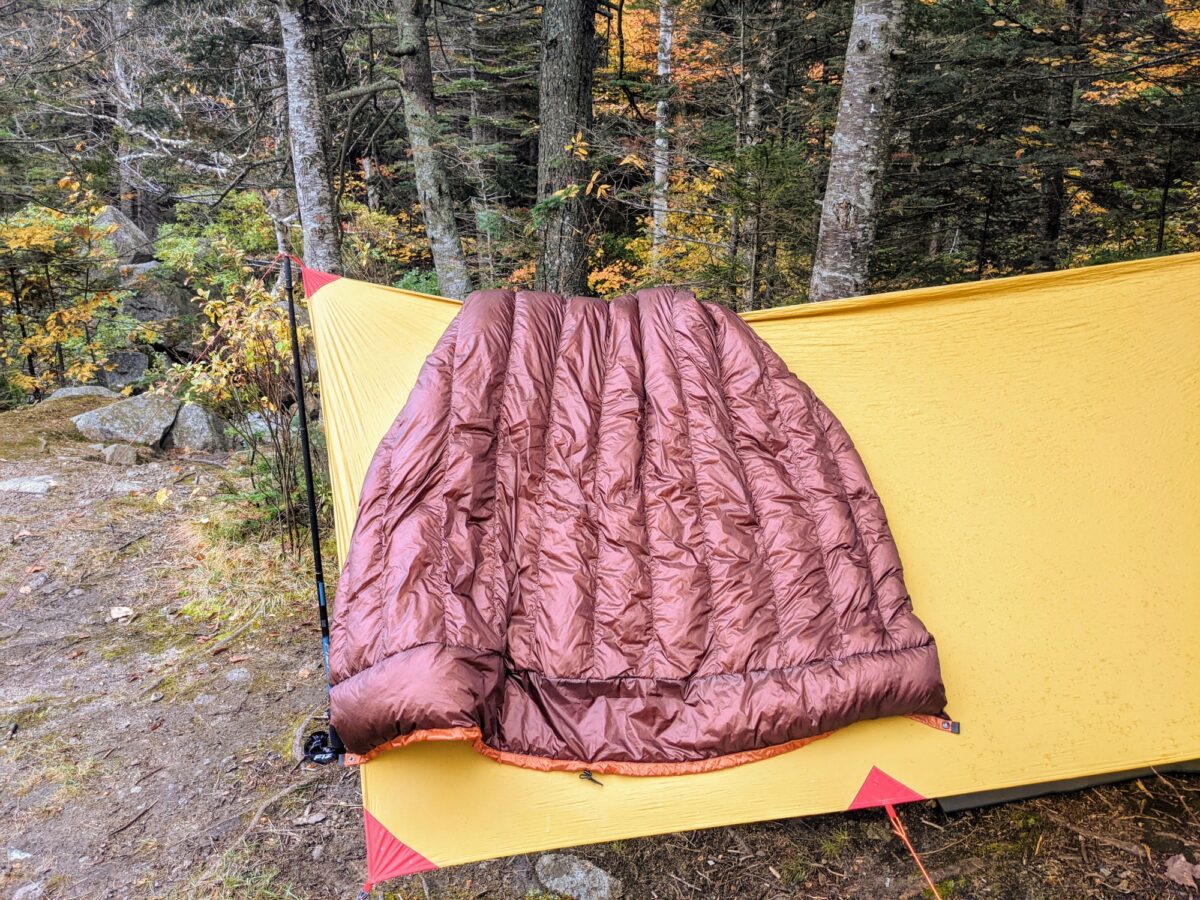
The Hammock Gear Premium Burrow Quilt (MSRP from $239.95) is a down-filled backpacking quilt that is highly customizable. Hikers can modify the length, width, temperature rating, footbox style, fill power (FP), and color. As a point of reference, the 30 °F (-1 °C) standard width, standard length version with 950 FP and a sewn footbox weighs 16.72 ounces (474 g).
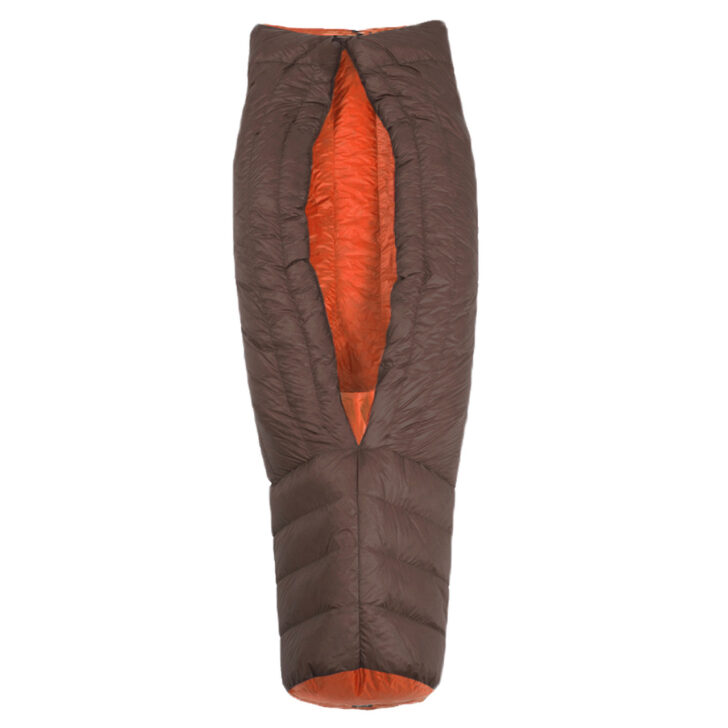
The Hammock Gear Burrow Quilt is also available in an Economy model, which is a little less expensive and a little heavier. Read our Hammock Gear Economy Burrow Quilt Review.
Highlights
- high performance-to-cost ratio
- highly customizable with premium material choices
- quality craftsmanship
- functional pad attachment system, improved from previous versions
- optional draft plug for zippered footboxes
- accessible collar cinching to seal drafts
Review Context
A down backpacking quilt is one of the most recognizably ultralight pieces of gear in the backpacking world. Quilts are known for their economical use of materials and versatility but sometimes suffer (depending on design) from draftiness. The inability to seal drafts in cold weather seems to be the main complaint from users who try sleeping quilts but then go back to sleeping bags. We discuss this issue at length in the Unconventional Sleep Systems Manifesto and our Backpacking Quilt Q&A Video.
Personally, I use quilts exclusively with hammocks or when using a bivy. These shelters provide enough of a barrier to the elements that drafts are no longer an issue. I find having no zipper less claustrophobic and I do not like sleeping bag hoods. While there are several offerings in the market for hoodless sleeping bags, I do not own any of them, so I reach for quilts whenever my comfort level is not likely to be threatened by temperatures or crawlies. One observation about layering clothing in both sleeping bags and quilts is that it is generally easier to modify girth and volume in quilts than in most commercially available sleeping bags, which have a fixed girth. Thus quilts can make it easier to add clothing to extend its comfort range well below its original rating.
While there are many quilt makers in the ultralight space, Hammock Gear’s quilts are perhaps most easily compared to those of Enlightened Equipment in terms of customizability.
Backpacking Light reviewed the Hammock Gear Economy Burrow Quilt previously, and while our opinion was generally favorable, we found that the pad attachment system left something to be desired. Hammock Gear upgraded their pad attachment system recently, so we were particularly interested in examining that feature of the Premium Burrow Quilt.
This is a Performance Review based on using the quilt in a variety of environments on several multi-day backpacking trips. Read more about our types of reviews here.
Features
- half-tapered design
- vertical baffles in the torso and horizontal baffles in the footbox
- two footbox options: sewn and zippered
- optional ground pad attachment kit (recently revised from the previous version)
- separate draft plug for zippered footbox
- stuff sack
- cotton storage sack
Specifications
When buying a Hammock Gear Premium Burrow Quilt, one has the option to order from the in-stock offerings or follow the link to the premium burrow custom builder. When looking at the custom options, one realizes that while not a full custom build, one gets to choose from different inner and outer shells, temperature ratings, length and width options, sewn or zippered footboxes, two down fills, the option to overfill, and whether to purchase the pad attachment kit or not. Of course, these choices are going to affect the weight of the quilt one ultimately receives.
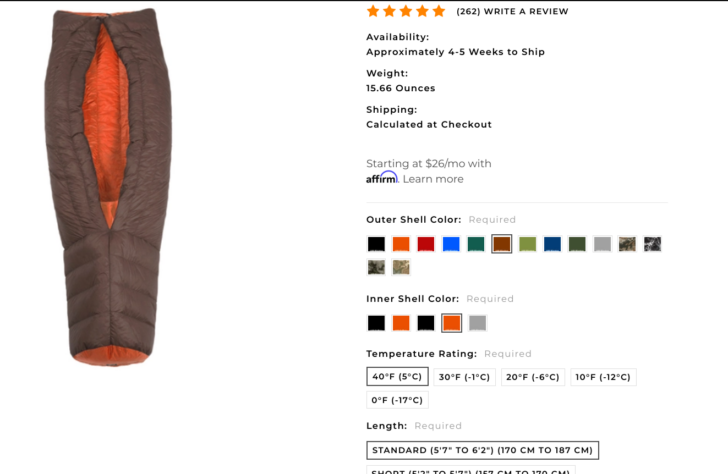
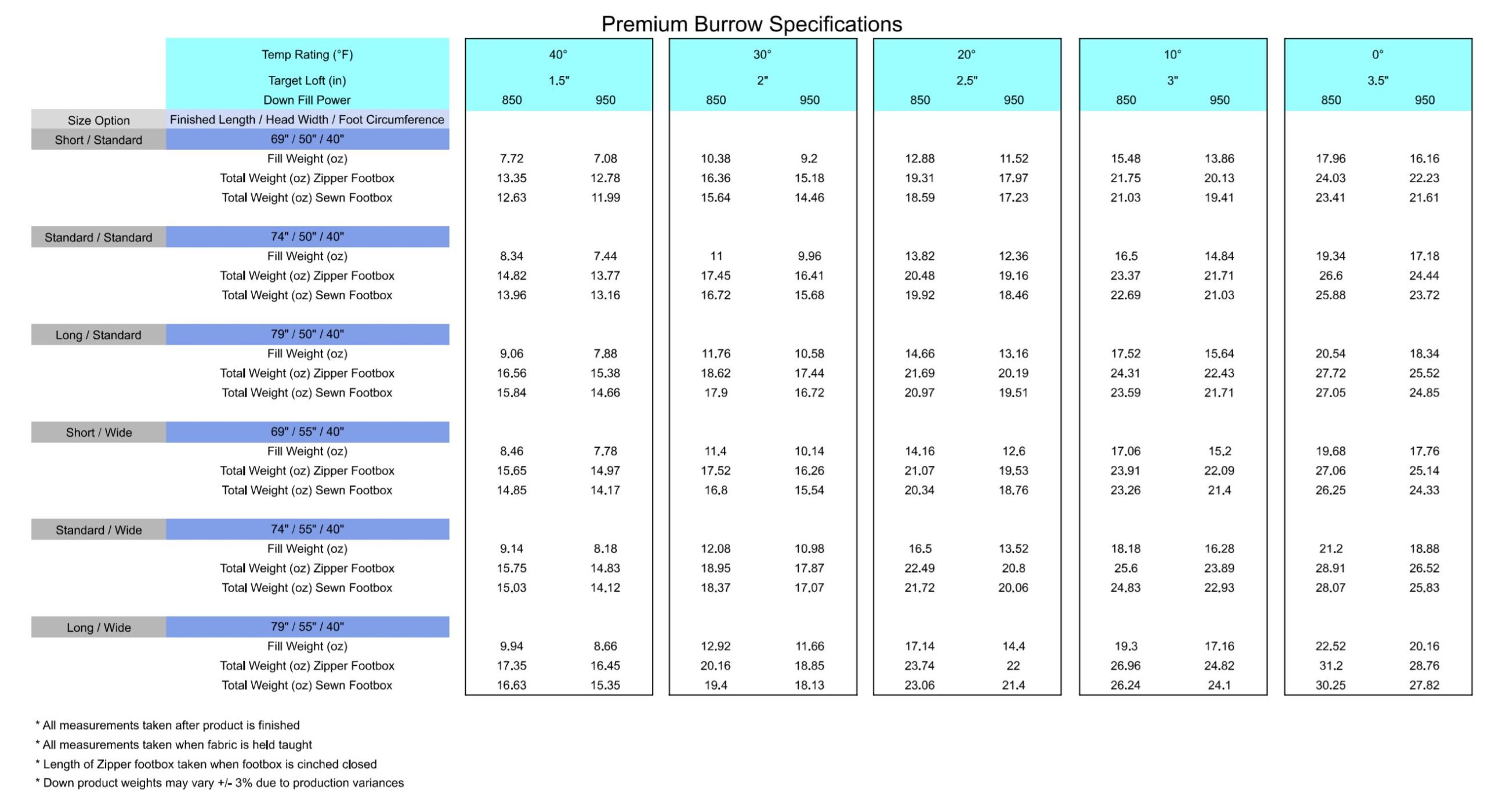
The Premium Burrow Quilt I ordered for this review has the following specifications:
- outer shell: 10 denier ripstop nylon (cinnamon brown)
- inner shell: 10 denier ripstop nylon (burnt orange)
- temperature rating: 40 °F (4.5 °C)
- length: standard
- width: wide
- footbox: sewn
- fill power (FP): 950
- overfill: standard
- pad attachment: yes
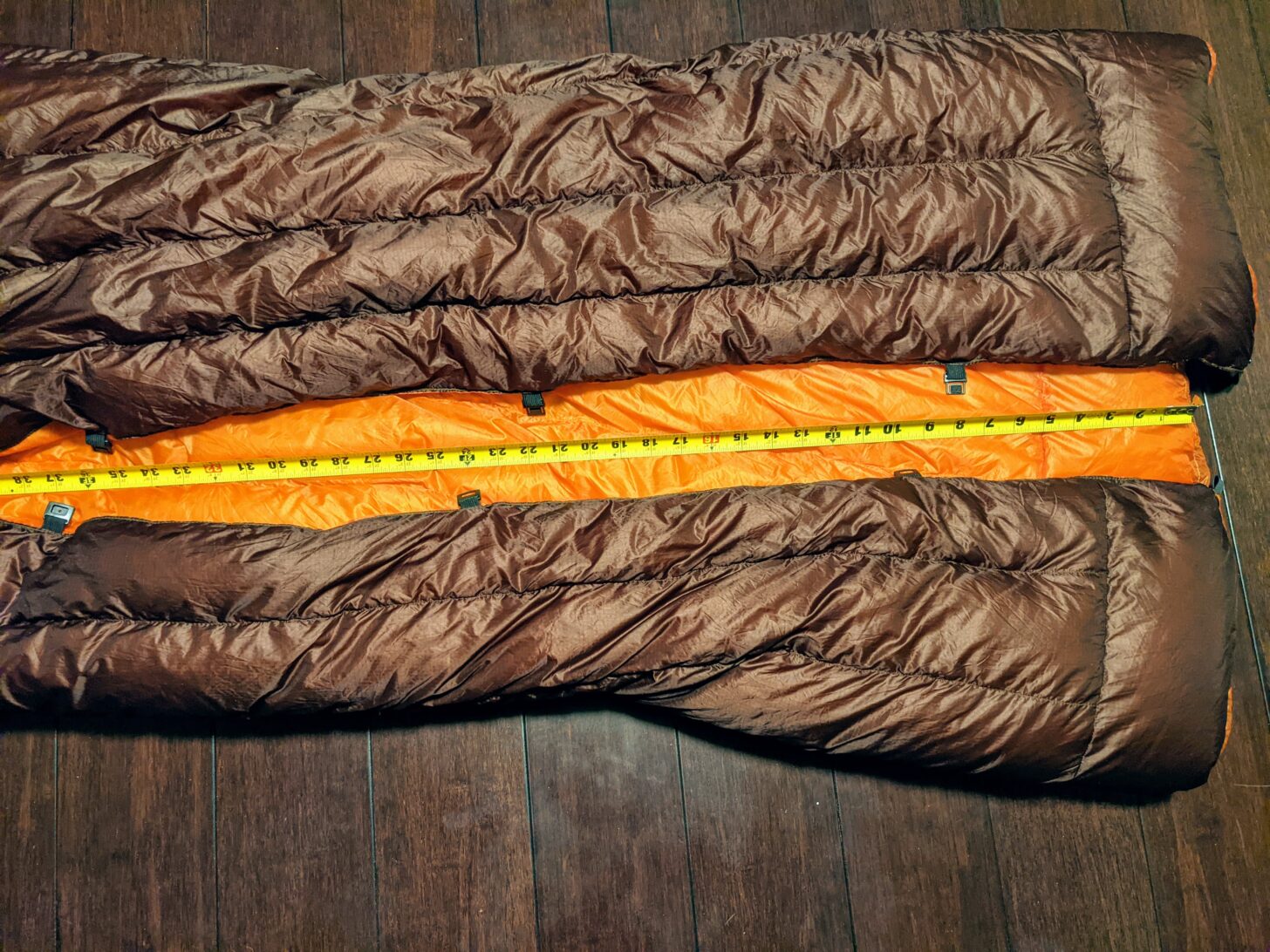
Hammock Gear has a reputation for excellent customer service. While ordering, I wondered why they offered so many more 10d ripstop fabric options for the exterior fabric, ten in total, but only three of those are featured as inner shells (the other two inner shell options are taffeta). In my communication with Hammock Gear, they explained that it was simply to streamline production. But they also said that if a customer were to contact them about using one of their other fabric offerings as an inner, they would be happy to oblige.
Description of Field Testing
I used the Hammock Gear Premium Burrow Quilt about fifteen nights in the summer and fall of 2021 in forested areas in Massachusetts and New Hampshire while sleeping in both hammocks and tents. Temperatures ranged from 55 °F to 26 °F (13 °C to -3 °C).

Performance Assessment
My performance assessment of the Hammock Gear Economy Burrow covers the following:
- Warmth
- Draft Collar
- Pad Attachment System
- Other Observations
Warmth
I find the Hammock Gear Premium Burrow Quilt true to its temperature rating. Moreover, a look at the amount of down per volume of the quilt seems to be in line with most market competitors, which should give prospective buyers peace of mind about the expected warmth of the quilt.
Member Exclusive
A Premium or Unlimited Membership* is required to view the rest of this article.
* A Basic Membership is required to view Member Q&A events


Discussion
Become a member to post in the forums.
Companion forum thread to: Hammock Gear Premium Burrow Quilt Review
The Hammock Gear Premium Burrow Quilt is a customizable backpacking down quilt with a functional pad attachment system and high-end materials.
Good review.
I’m still using my HG Burrow that I purchase in 2014. I cannot think of another piece of gear that is still in my gear closet from that era (other than my HG underquilt). I have been totally satisfied with this quilt. I could save a small amount of weight or gain a feature by switching but I really don’t have any impulse to move on from this quilt. Highly recommended!
I have both the 20 and 40 prem burrow’s and like them a lot. I admittedly sleep cold so I sent mine back for 2oz overstuff on the 40* and 3oz on the 20*.
I think HG uses 20% overstuff as standard. I decided I hate down shifting so I like to overstuff until down shift is minimal. For an average or warm sleeper I think their standard fill is ok, but for a cold sleeper I recommend you overstuff to about 40% (1-3oz extra depending on warmth rating)
I personally find the faux draft collar to work well at preventing drafts. Not 100% like with a true huge WM draft collar, but it works well enough that I’ve never missed a true DC. Alternately I tried a Zpacks quilt and returned it because the vertical baffles run all the way to your head and I noticed significant drafts in the valleys of the baffles, or I had to cinch the neck down a lot to prevent that, which I didnt like.
Also I’ll add, my 40 is a zip footbox and 20 is sewn. I have never unzipped the 40 and would never order a zip quilt again. “Venting” the footbox just = cold feet to me.
Also I’ve been a difficult customer to HG on occasion (changing my mind, adding and subtracting items, asking for custom fabric) and their customer service is second to none. Im a loyal customer.
I’m with you Marcus – I thought a zippered footbox quilt was awesome until having actually used one for years now. I guess I thought I’d be using that sucker as an open blanket/wrap around at camp way more than I ever actually have.
Good review! Like Iago, I use quilts only in my hammocks. If I do use a tent, I take a sleeping bag. I originally owned a 30D Burrow (a long time ago before Premium/Economy existed) and while I found the temperature rating accurate, I found that drafts from the sides were a problem as the temperatures approached freezing. Same problem with the Jacks-R-Better Sierra Sniveller I inherited along the way.
As for the side draft problem, a tension system on the sides eliminated any issues I had. Mid-Atlantic Mountain Works developed the side tension system and I found it to work well. There is mention of a few vendors who have employed this now in their top quilts. Should I ever have to replace one of my MAMW top quilts, I probably would look to one of those vendors.
I did modify my old Jacks-R-Better Old Rag Mountain quilt to use the same tension and it has works great in the hammock in single digits.
I do own several Hammock Gear under quilts and for gathered end hammocks never had a reason to look further. They are a quality product, work great and temperature ratings are spot on IMO.
How important is differential construction to the performance of these quilts? This seems to be a differentiating factor (pun sort of intended) between the top tier brands and the mainstream manufacturers.
I’ve never been cold in my HG Burrow 20° quilt with the older horizontal baffles. I don’t think quilts that lack a differential cut are bad but they are slightly less optimized. I’m guessing differential cuts are more important in colder weather quilts with thicker baffles.
I have found differential cuts really important in underquilts, but no much in top quilts. My experience with HG underquilts is that their differential cut is well designed.
Others experiences may vary
Yeah. That makes sense to me. My HG UQ stays really nicely snug under the hammock with no weird gaps. The shaping fits well for me. I’m not sure how much of that is due to the differential cuts versus the overall patterning (or if you can really separate the two). Irregardless, the result is the UQ stays right there under me in a way it would not if it was a simpler flat shape.
As I mentioned in the review, I took the quilt well below its rated temperature on several occasions and I had no concerns for cold spots. I think the Burrow is a great top quilt.
@Matthew, I think the need for a dialed differential cut on underquilts stems from the amount of pressure under one’s derriere. I experienced cold butt syndrome on another underquilt from a different manufacturer, and after checking things and fiddling with the suspension, I came to the conclusion that the issue was a faulty differential cut. I could reach with my arm over the side of the hammock and feel that the insulation was compressed under my buttocks. I observed the same issue if I had my son or wife lay in the hammock. I have never experienced this with either of my two Hammock Gear underquilts.
As Iago said, the differential cut is designed to keep the down from being compressed. For example, I do not believe Enlightened Equipment uses a differential cut. I watched a video of a review of one of their quilts and when the reviewer was in the quilt the entire top of the quilt seemed to be stretched tight making it look like it was a synthetic quilt, which would be compressing the down to some extent and not allowing it to loft to its intended maximum. How much does it matter in practice? I don’t know.
It’s my understanding that only the 850 down is treated whereas the 950 down is untreated as per their website and tech support.
Hi Shane,
You are right, the 950 fill is untreated and the 850 is treated. Thank you for bringing it up. Good catch! I am not sure how I missed that in my notes… Totally my mistake. I really think this quilt is a fantastic option. Mine keeps performing really well with the caveats included in the review.
Looks like HG upgraded their premium offerings to 900fp and 950fp. They are using treated 900FP until they run out, then they will most likely switch to untreated. 950fp is already untreated.
Iago – nice review!
Become a member to post in the forums.