


Just saw this in my e-mails. Duplex with zip doors, peak vents and magnetic door toggles. https://zpacks.com/products/duplex-zip-tent?aff=2&utm_source=yt&utm_medium=video&utm_campaign=duplex-zip&utm_term=social-media&utm_content=open

Topic
Become a member to post in the forums.
 .
.
Just saw this in my e-mails. Duplex with zip doors, peak vents and magnetic door toggles. https://zpacks.com/products/duplex-zip-tent?aff=2&utm_source=yt&utm_medium=video&utm_campaign=duplex-zip&utm_term=social-media&utm_content=open

I thought Zpacks always marches to its own drum….:-) If only those doors can come close to the ground for winds….can they?
If only those doors can come close to the ground for winds….can they?
I really liked my old Hex solo…but the door panel wouldn’t come down anywhere near the ground. I never had any issues with winds. But for me this remains the worst aspect of these tents. I’m sure the design is to help relieve condensation issues, which are more of a concern for single wall tents than double wall. Still, when you’re camped in an upsloping mountain canyon, and can hear the next blast coming 5 or 6 seconds before it hits your tent—you want to pitch low. Or I do. It may be that studies show wind speeds are much reduced at ground level, and the Zpacks design is fine.
Durston’s tents, and many others, can pitch all walls very close to the ground, if needed. Zpacks, not so much. Unless the design has changed—but in the video, it would appear not. I do like the generous bathtub floor.
I have loved my Duplex for 8 years and never had a problem with storm worthiness. But the Durston 2P Pro is better in every single regard except two, those being that both the footprint and weight are ever so slightly larger. IMO a very small price to pay for a vastly superior design and construction. I am certain that ZPacks will continue to iterate on and improve the Duplex design, and I am keeping mine as a very nice backup, but it is skating around where the puck used to be.
Looks like a direct reaction to HMGs Unbound tent, which incorporated many of the Duplex designs with the exception of their door system. The zippered door system offers a significant improvement over the OG Duplex in my opinion.
The zippers add 1.9 oz weight over the last gen Duplex (20.4 oz vs 18.5 oz))

Lower poles to put edges closer to the ground.
Lower poles to put edges closer to the ground.
With my old Hex solo plus, it wasn’t that simple. Lowering the single front pole to bring the front beak closer to the ground threw off the geometry of the tent. It made the whole tent sag and the inner bathtub floor flatten out. No, the tent was designed to have the front beak up higher off the ground than the surrounding walls. The design is sewn in, so to speak.
Lowering the poles on a duplex similarly has the effect of loosening the floor and flattening out the bathtub. The shelter is designed to be pitched that a certain height, if that doesn’t work for the weather, then you’re sort of stuck with it.
I actually “solved” this problem during one very strong storm by placing 6 inch diameter limbs that I found on the ground around the tent, effectively sealing it off. Non-optimal solution, but a solution that was available nonetheless.
Looks like they had to respond to how amazing the XMid pro is. Good to see this kind of competition.

I may be missing something, but the zipper doesn’t seem to solve the biggest problem with the tent: quick ingress or egress from the tent. The same old clips secure the loops at the bottom of each door. With the new zipper, you must unzip the doors and then fiddle with the clip to escape the tent. When you return, you must fiddle with the clip again to secure the doors and then close the zipper. One of the great joys of the Durston tent is the ease of entry or exit by simply zipping or unzipping the door and then walking out without evasive maneuvers around the support poles. I also wonder how rigid the two ridge guylines are, compared to the original design. It appears that the on the zip tent, the guylines attach to the tent at what appears to be a relatively flimsy vent cover fabric rather than the apex loops used for the standard configuration. They did sew some reinforcement strips to add some stability to the vents. It is unclear whether this will be an adequate substitute for the direct attachment of lines to the tent apexes. It also appears that the peak vents cannot be closed. I think none of these changes solve any of the fundamental drawbacks of this tent. The duplex design still has some benefits, but the market will decide if those are sufficient as newer tent designs appear.
Mr. Seeber makes very good points, and I agree with all of them. After more careful examination, I believe the design changes of the Zip are actually a step backward. It takes exactly one entry/exit of the Durston tent to realize what an unfortunate design placing the poles in the middle of the door is…a fundamental (if not defining) design feature of the Duplex. Moving the side guyline attachment from the peak apex to the fabric of the vent is almost certainly weaker and more prone to failure. Not being able to close the vents is a serious design faux-pax. Finally, the catenary cut of the new door zippers is stealing massive volume from the vestibules.
I have a Duplex and a Xmid2 (not the DCF, but the double wall solid version for cold weather). I love that they made the Duplex better with all the new tricks like magnetic doorlocks and waterproof zippers. The top vents are very welcome as well. Then again, getting in- and out of the Xmid is a lot easier (which is great when you’re getting older and your back hurts sometimes), the Xmid offers a lot more space and the fact that the mesh doors don’t drop down, means that it’s more difficult for midges to get inside, if you’re hiking in Scotland or Scandinavia in midge season. The bathtub floor of the Xmid also holds its shape better. So overall, I like the Xmid more. Then again, the Duplex will fit in a smaller space and in very tight spaces if you don’t use the vestibules and just let the doors hang. With the flex-option you can put the Duplex almost anywhere like in a parking lot or on a platform if there’s no other option. Been there, done that. Great that the new Duplex Zip still offers that option. The X-mid is a more comfortable and liveable tent, the Duplex is more versatile and flexible, in my opinion. But yes, it clearly no longer reigns supreme like it once used to.
I just realized all Zpacks and HMG did was create a DCF Lanshan.

I just realized all Zpacks and HMG did was create a DCF Lanshan.
Well to be fair, I think ZPacks came out well before the Lanshan arrived on the market. I had my first ZPacks Hexamid Twin around 2012, and the Duplex was just an evolutionary step beyond that in a time when there were similar 2-pole Silnylon tents on the market like the TarpTent Stratospire 2 and the Six Moon Designs Haven.
It’s hard to find original release dates for products like this, but I think it’s more accurate to say the Lanshan 2 copied design elements from US cottage tent makers.
3F UL Gear are the biggest copycats of them all. And being in China they are virtually immune to patent laws. The Lanshan 1 is a straight up copy of the SMD Lunar Solo. Yet for the price 3F quality is actually pretty good.
Joe at ZPacks simply took an A frame design which has been around for centuries and smartly applied DCF to it. The GG Two is basically the same. However, Joe did improve the cat cuts on the Duplex a couple of years ago and now with zip doors and peak vents it might be able to regain some of the market share taken up by the X-Mid.
Joe did improve the cat cuts on the Duplex a couple of years ago and now with zip doors and peak vents it might be able to regain some of the market share taken up by the X-Mid
Duplex: $699 – $729
XMid Pro 2: $679
I’d rather pay more for the XMid.

I’d buy a Durston 2 P today if there was some way of covering the netting on the upper half of the doors.
In the mean time I’ll stick with the Big Sky. They have zippered coverings on the window netting.
I have no doubt the X-Mid 2 is an excellent trekking pole tent, however no shelter is perfect in every category. Every design has it’s compromises. For example, the Duplex has much more head space width over the X-Mid 2 and that becomes especially important when 2 people are inside. You can see what I’m talking about at 6:36 in the video below.

That’s just factually incorrect. Even the maker of that video said he was wrong.

“the Duplex has much more head space width over the X-Mid 2 “
As Mike mentions, this is not correct. The X-Mid Pro has more headroom because the two poles are further apart (53 vs 60″) which must give more volume in the upper part of the tent (aka headroom). What happened in that video is that the maker measured “headroom” in such a way that is most favorable to the Duplex and then applied that Duplex optimized method to the X-Mid Pro, which left a lot of the headroom in the X-Mid Pro uncounted. The X-Mid Pro was also pitched quite poorly in the clips with two people so the roof is hanging inwards. Most hikers that have used both tents agree the X-Mid Pro 2 has more headroom. For example, someone on reddit wrote yesterday:
“My wife and I used the duplex on the Pct in 2019. It’s still going strong. But ditched it for the Xmid Pro 2…much better head room. “
There are advantages to the Duplex (e.g. slightly lighter, they recently dropped the price to cost $10 less) but headroom isn’t one of them.
“Joe at ZPacks simply took an A frame design which has been around for centuries and smartly applied DCF to it.”
The first A frame with DCF was the Six Moon Designs Refuge X. I had one back around 2010 and it was originally came out about 2007-2008. The Refuge X was a small batch tent though (I think they only built about 45) and it had a lot of construction issues. SMD must have some regrets about it, because instead of fixing the issues they killed it off and then the Duplex showed up a couple of years later with improved construction and a proper bathtub floor and it took off.

MyLifeOutdoors gets a lot of things wrong. He seems like an honest, hard-working, guy, but he’s not an experienced backpacker. His vid about rainwear missed ShakeDry/Outdry and the entire point of ponchos.
“Joe at ZPacks simply took an A frame design which has been around for centuries … ”
Agree, but almost all of these tents are A-Frames, albeit some are gussied up to make what are essentially A-Frames less obviously so. Why? Because all have flat walls that slant suffocatingly from a peak ridge to the ground. This is the product of supporting tents with trekking poles at all costs. What else but an A-Frame could be the result? And not only are these tents suffocating; much of the lower walls take up weight and space and give back very little.
What is a poor hiker to do to get more spacious and comfortable interiors? Obviously, use some bendy poles in the design so we don’t constantly bump against the walls, and so are more comfortable. The makers of the Jansport domes knew this long ago. So why aren’t today’s tents more spacious? The answer is the makers are lazy and A-Frames require no intelligent design; but also, those awful bendy poles add a little weight that can’t be replaced by a trekking pole. The best bendies are less than a quarter ounce per foot of flexible multi-layer carbon tube. But can’t have that! Weight rules.
Realizing this, and seeing how popular Pyra-mids are, one approach could be to use just a teense of bendy pole to open up valuable space that creates some comfort; and to boot, get rid of the upright pole(s) in the way of everything. It might be called a “stretched mid,” with not a flat wall in sight.
Some may roast me for this heresy; but no mind, something better might come of it. Just one question, if you had to choose one tent, would it be an almost 2 pound comfortable bomber that could resist the worst; or a one pound 3-season tent that in near hurricanes, prefers more sheltered areas below tree/timber line? (Add a few ounces if you tent with a companion, even if it be Fido.) Would love to know your answers, sans projectiles please. Happy Trails.
“Just one question, if you had to choose one tent, would it be an almost 2 pound comfortable bomber that could resist the worst; or a one pound 3-season tent that in near hurricanes, prefers more sheltered areas below tree/timber line…”
I tend to not go backpacking in near hurricanes. And if those conditions arise, yes, I head to below tree line. In other words, I prefer the one pound tent that provides plenty of shelter 99% of the time. But I hike in California! I grew up in the PNW. There, I would take a Durston two pound solo tent.
So why aren’t today’s tents more spacious? The answer is the makers are lazy and A-Frames require no intelligent design; but also, those awful bendy poles add a little weight that can’t be replaced by a trekking pole.
I disagree with this. TarpTent’s patented struts on tents like their Stratospire and Notch, and Durston’s unique offset trekking pole outer and rotated inner have done a lot to maximize interior space without having to resort to a “dome” style tent that requires a full set of poles.
Sure, there are other tents which don’t exhibit much innovation in their A-frame trekking pole design, including, IMHO, SMD’s Owyhee and Lurar tents, Gossamer Gear’s trekking pole tents, and MLD’s ‘mids, and HMG’s Unbound 2 as well as mids. They’re all pretty basic A-frames or symmetrical A-frames (aka pyramids). And I agree that these designs offer a poor amount of interior volume for the required footprint, which is why I don’t own any of them.
EVERY tent is a compromise, where the designers choose cost, weight, storm worthiness, and complexity. That includes trekking pole tents AND dome style tents that use aluminum or carbon fiber poles.
I’m not a free market capitalist but in this regard, customers are free to vote with their dollars to choose a tent design that works for them. I own a Durston XMid 1P (the original “Massdrop” version), a Stratospire 2 (before the switch to Silpoly), and a Big Agnes Copper Spur UL3.
You’re right that a lot of tent manufacturers are REALLY conservative and don’t innovate much. That includes a lot of big brands, whom you’d think would have the most capital to invest in researching tent designs.
It’s my perception that in the free-standing, aka “dome” tent world, that Big Agnes is a dominating force, kind of a Toyota of tents. The Copper Spur series seems to be wildly popular as lightweight but still mainstream tents. But even they’ve made some real market clunkers. Who remembers their Scout series? They never did well in the market and quickly went away. With all their clout and resources, the best trekking pole tent that BA could come up was something that looked like my A-frame tent from the early 80’s? The same with the Tensegrity series of tents from Sierra Designs: weird design that was a big flop.
The BA Copper Spur and Tiger Wall tents aren’t radical designs but rather fairly traditional dome tents with a series of small refinements that occurred over time that have led to a strong position in the marketplace.
Become a member to post in the forums.
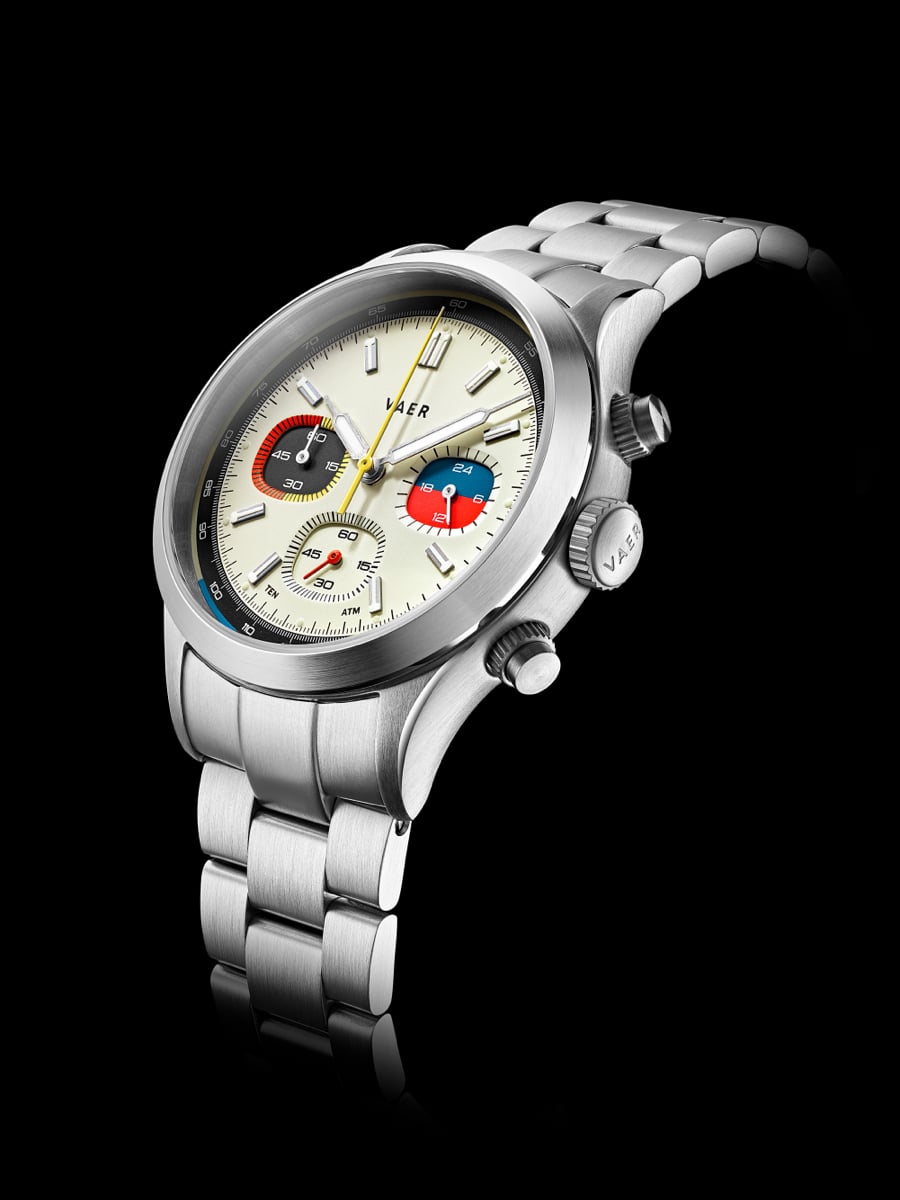 Retro Racing Character, Built for Everyday WearDrawing on the colorful racing chronographs of the 1960s and '70s, the RS1 Rally pairs vintage motorsport style with the durability expected from a Vaer. Its 40mm case houses a Japanese VK63 meca-quartz chronograph movement, complete with stopwatch functionality and an integrated tachymeter scale, while contrasting subdials give the watch its distinctive retro character. Sapphire crystal, 100 meters of water resistance, a screwdown crown, and strong BGW9 lume make it far more than a style piece. At under $300, it's an easy pick for the car enthusiast or chronograph fan.
 © Beartooth Media Group Inc.
 Loading...