Topic

Wicking, yay, nay, or "it's relative" to the importance?

Viewing 25 posts - 26 through 50 (of 77 total)
PostedMay 31, 2016 at 3:58 pm

Yep, capillary action is the technical phrase, but i thought it was more practical to give a simple “visual”.  I’ve seen some synthetic garments advertised as “wicking”, but didn’t do that, and it’s easy to tell the difference visually.

Bringing air permeability, or the lack of same, into it, probably complicates and confuses the subject a bit as far as wicking in and of itself.

Thank you for the link Matt.

Re: Cap 4 type baselayers, to me, the great benefit of same is not so much “wicking” (it’s not actually that great at wicking, compared to some thin, one layer polyester fabrics), as that it constantly maintains a thin layer of air between your skin and the fabrics over it.  That’s about as close to “warm when wet” as you’ll get with a baselayer. As mentioned by others, water is much more conductive than air, and when you wet out a baselayer with sweat or you get wet some other way, the water fills up the spaces between the fibers (which otherwise traps insulating air) and you’re just left with the material that the shirt is made out of to act as a buffer between you and the cold.  The conductivity of different common fabric materials range from about .1 to .25 W m-1 K-1.  Much higher than air.  If you’re wearing a decent insulating layer over the baselayer, you’ll be ok, but your perceived warmth and comfort will go up with a baselayer that maintains a thin layer of insulating air no matter how wet it gets.

Fishnets accomplish similar, and wick very little.   In some ways, i prefer fishnets, particularly a polypropylene one.  But comfort and aesthetic wise, i prefer Cap 4 type material.

I think highly efficient wicking can be a detriment in extreme cold or cold and wet situations.  Because it does speed up evaporative cooling through increased surface area (your skin + the baselayer).  One of the reasons why i prefer a fishnet over wicking baselayers for the above conditions, is because it doesn’t do that, but still allows evaporation to occur (in a more natural, slower manner, almost solely from the skin) and again, provides that thin layer of mostly air, rather than wet, conductive fabric.

Like i said, i think all in all, it’s probably more about perceived comfort and warmth, especially if you are wearing layers over the baselayer.  But i’ve found, that at least psychologically, it does make a difference. Especially when wind is blowing hard and it’s bitterly cold.  Ever wear a wetted out, thin, well wicking polyester baselayer during that?   It’s like instant refrigeration or aka “flash freeze”.  I find that doesn’t happen as severely with Cap 4, fishnet, or Merino or Alpaca baselayers.

Obviously rate and efficiency of evaporation also depends on the humidity outside of your system, as well as the net air permeability of your system.  Wearing a typical WPB system, really slows that down.

Otherwise, and in most conditions, i think wicking is beneficial, especially in heat.

jared h BPL Member
PostedMay 31, 2016 at 7:22 pm

But how does the sweat get cold?   The answer is, almost entirely by evaporation.

nope. evaporating sweat takes excess heat energy with it, but only what is required to vaporize the moisture, leaving behind all the heat energy from your body that was insufficient to cause vaporization (still warm sweat). the rate sweat cools beyond that is directly related to the ambient temperature and its exposure to it. of course when you sweat it is ~body temperature. but once it is on your skin, it seeks equilibrium with the two forces around it–your body and the outside air. when it is hot, sweat will not cool much, and not below the temperatures of the two heat sources around it, just evaporate as it heats up from your activity (and ambient heat and solar irradiation). when it is cold, sweat cools too fast and does not evaporate as well. that is why things (people, base layers, laundry, paint, etc…) takes longer to dry out in cooler weather.

When you say that the wind cools a wet surface more rapidly than a dry surface in wind – yes it does, by making the water evaporate faster.

not quite. wind does aid in evaporation, but on a micro level. the convection of air over a surface replaces the relatively humid micro layer of air around the wet object with less humid air, accelerating evaporation. but in cold conditions, wind cools the water by convection (heat transfer of passing cooler air molecules over warmer water molecules). and because vaporization of water has to do with waste heat held in the moisture on your skin and relative humidity, if it cools too quickly, or is too cold to being with, it will not evaporate well. and in this case where it will not evaporate as well (which is common in cold weather, and more common in humid cold weather), the sweat (and therefore you) cools even without much evaporation. why? because of convection.

Sweating causes a decrease in core temperature through evaporative cooling at the skin surface.

never argued against this, but thanks for bringing wiki into it.

James holden BPL Member
PostedMay 31, 2016 at 9:03 pm

Folks its pretty simple

  • at warmer temps wicking can cool you down as you arent wearing anything over it … Thats why a certain fabric is called COOLmax
  • however at lower temps the water next to you skin will significantly cool you down … Anyone who has had a soaked base layer in winter will know this …
  • In winter these wicking base layers arent designed as stand alone garments … You wear em with some brethablr shell and create a “microclimate”

Its pretty funny that some folks are arguing the wetter you are next to your skin at cold temps the “warmer” youll be

not to mentions folks thinking that a cap4/r1 is to cool you down …. I can guarantee you that no one who uses em seriously expects to be “cooled” by them … They arent summer pieces

the “air gap” on cap4 is quite minimal compared to even classic fleeces … The entire purpose of powerdry is wicking

theres a reason why they made it out of bi component fabric … This is easily verified by using a few drops of water

Now whether all this matters if yr simply walking is a good question … Folks can usually get away with anything

i mean some old grandma did the AT in tennis shoes and a shower curtain half a century ago

;)


Jerry Adams BPL Member
PostedMay 31, 2016 at 9:08 pm

does it take less heat to evaporate warm water?

to calculate heat required, do you have to figure out how much heat it takes to warm the water to, say, boiling, and then add the heat of vaporization?

Clue M BPL Member
PostedMay 31, 2016 at 9:22 pm

I heard some old guy grandma did on the AT in tennis shoes and a shower curtain half a century ago liked wicking fabric.

PostedMay 31, 2016 at 9:50 pm

“the “air gap” on cap4 is quite minimal compared to even classic fleeces … The entire purpose of powerdry is wicking”

It seems to be near ideal (could be a little bigger)*, and the point is is that air gap is more directly noticeable by the skin, when directly next to the skin.  People don’t typically wear regular fleece as their baselayer.   Fishnets barely wick at all, and yet they provide the same kind of skin and “warm when wet” comfort. It’s not all about wicking when it’s cold.  As mentioned, in both my experience and in theory, with bitter, very dry cold and high winds, very efficient wicking can be a detriment and flash freeze can and does happen.

Have you been been out in 5 degree F*, 10% humidity, with strong winds and with a wetted out, thin, well wicking/quick drying polyester baselayer?  I have, and i’ve learned that i much prefer fishnet, Cap 4, and Alpaca or Merino-synthetic blend in that order of preference.  Precisely because of the air gap next to skin and/or not as well wicking and super quick drying as the above.

“theres a reason why they made it out of bi component fabric … This is easily verified by using a few drops of water”

Cap 4 aka PPDHE fabric, does wick some, but it’s not near as quick and efficient as my cheap, thin, single layer polyester polo’s and baselayers (like Cap 1).  With the latter, the moisture is instantly absorbed and spread across a large surface area very quickly.  With Cap 4, it absorbs more slowly and doesn’t spread as much or as quickly.  I’ve done the simple water drop tests with both.

“i mean some old grandma did the AT in tennis shoes and a shower curtain half a century ago”

And likely mentally and emotionally tougher than the majority of folks here.  Put her in younger Skurka’s body, and she probably would have raised some real cain as far as records and what not, if she was so inclined.

Btw, there doesn’t seem to be too many people here arguing against the relative importance of wicking.  The only one who seems to think its not important or necessary at all, is Jerry.  As usual, i tend to see things as more relative shades of gray than most (at least when it comes to physical reality stuff, i’m a little more black and white when it comes to ethical and spiritual issues [ok, ok, also politics and government]).

James holden BPL Member
PostedMay 31, 2016 at 9:52 pm

Jerry …

its not about “evaporation” when we talke about temps

put on a soaking wet shirt and walk around during a warm day …

now try it on a cool 40F night …

its all about the temps at which water next to your skin will chill you, dangerously so

as i said anyone who has had soaked base layers in winter knows how dangerous it can be

In winter to sweat (beyond the ability of you system to move it out) is to die …

;)

jared h BPL Member
PostedMay 31, 2016 at 9:52 pm

liquid substances freeze and boil at specific temperature constants (or phase change values/constants); the latent heat of vaporization (phase change from liquid to gas) of water is  2257 kJ/kg. so yes, warmer water takes less total energy to vaporize than colder water, all things equal, but both reaching the same threshold of [heat] energy.

if you want to calculate values for yourself, check out http://www.engineeringtoolbox.com/fluids-evaporation-latent-heat-d_147.html.

if you really want to go down the rabbit hole, you can jump off from https://cnx.org/contents/Xyta70lI@8/Phase-Change-and-Latent-Heat.

James holden BPL Member
PostedMay 31, 2016 at 10:20 pm

10% humidity justin?

Try 100% humidity in the freezing rain … Youll discover how minimal the “air gap” is on a cap4

its hilarious that folks are arguing against “wicking” yet some wear that the cap4 is the best thing since bbq marmots …

the entire reason why they use powerdry and not another unform material is wicking !!!

lets ask anothet sinple quesion why is the cap4/t2 designed to fit snug? … You guessed it … To promote wicking !!!!

if you dont believe it then simply ask patagucci why they made it from BICOMPONENT fabric …

and trash you cap4s … Get something with a uniform fabric

as to your “test” justin have you considered the fact that yr comparing a THINNER material against a THICKER one?

;)

jared h BPL Member
PostedMay 31, 2016 at 10:29 pm

for a discussion about relative absorption/evaporation rates of different fabrics, i recommend watching a video and looking over a table Prolite Gear put out a few years ago (before Patagonia switched from cap 1-4 to the new light/mid/expedition). they tested several types of materials (cotton, different weights/blends of wool, synthetics) to get a baseline. does not test real world absorption rates (wool for instance absorbs vapor better than liquid), evaporation, insulation values when wet, or saturation performance, but it is handy to see.

Justin–good luck my friend. i wish i could offer some guidance, buy my last classes in thermodynamics/env’l science were audits a few years ago.

PostedMay 31, 2016 at 11:21 pm

“Try 100% humidity in the freezing rain … Youll discover how minimal the “air gap” is on a cap4”

Been there too Eric. The southeast of the US is kind of known for that also (late Fall to early Spring)–much more than the occasional near 0’s and minus 0’s *F we get.  Re: Cap 4, i’ve even worn regular fleece over it too :0 ;)   I do think it (the air gap) could be a little bigger, but i have an oversized MEC hoody for that purpose, with non tight fitting over layers. This helps to keep the air gap a little more gappish.  Too big an air gap, and then convection does a number on the insulating layer though.

I will just briefly say that i agree that wicking is mostly a good thing, most of the time, but not necessarily always.

“its hilarious that folks are arguing against “wicking” yet some wear that the cap4 is the best thing since bbq marmots …”

Not really arguing against wicking per se, just saying it’s a little more relative and complicated than wicking always equals good and non wicking always equals bad.

And again, i find the value in Cap 4 is not solely in the wicking, but in a combo of air gap, light weight, comfortable, and somewhat well wicking and fairly quick drying but neither extremely so.  A “confluence” of good factors for the conditions i most prefer.  But again, i also like my fishnets, and to a lesser extent, my Merino synthetic blends and Alpaca stuff.  My ideal baselayer for colder weather stuff (whether dry or wet), would be an Alpaca-Synthetic blend Fishnet and with a thin, well wicking, quick drying baselayer over that.  That with a windjacket (and WPB poncho), could do me good in a wide range of conditions and temps.

PostedMay 31, 2016 at 11:25 pm

Thank you Jared for the link and info.  What you’re shared in general, has been interesting to read.

Matt Dirksen BPL Member
PostedJun 1, 2016 at 5:38 am

“I think highly efficient wicking can be a detriment in extreme cold or cold and wet situations. Because it does speed up evaporative cooling through increased surface area”

Justin, in this particular scenereo (extreme cold and wet), evaporative cooling IS NOT the primary form of heat loss. If your base/mid layers are saturated from sweat, and your outer layer has wetted out, the greatest risk is from simple conductive cooling directly to the outside air. I believe this is what Eric is saying. Cold humid is the worst, since the air itself is saturated and there’s no room for evaporation to occur. The cold humid air is effectively an energy conductor.

I might be speculating, but I believe the primary reason why the SEALS throw a dry layer over their wet clothing is to short circuit the energy transfer between their wet clothing and the outside air.

In extreme cold/humid, staying dry and safely drying off is of the utmost importance – period. (unless you are wearing a protected and insulated wetsuit, or going the VBL route). Wicking base layers aid in moving moisture away from the surface of the skin. Just like the rule of thumb:  “you can never have too much insulation underneath you”, I just dont see any scenereo where not having any form of wicking layer would technically prove more beneficial than having one, if I had the choice.

Bob Moulder BPL Member
PostedJun 1, 2016 at 6:47 am

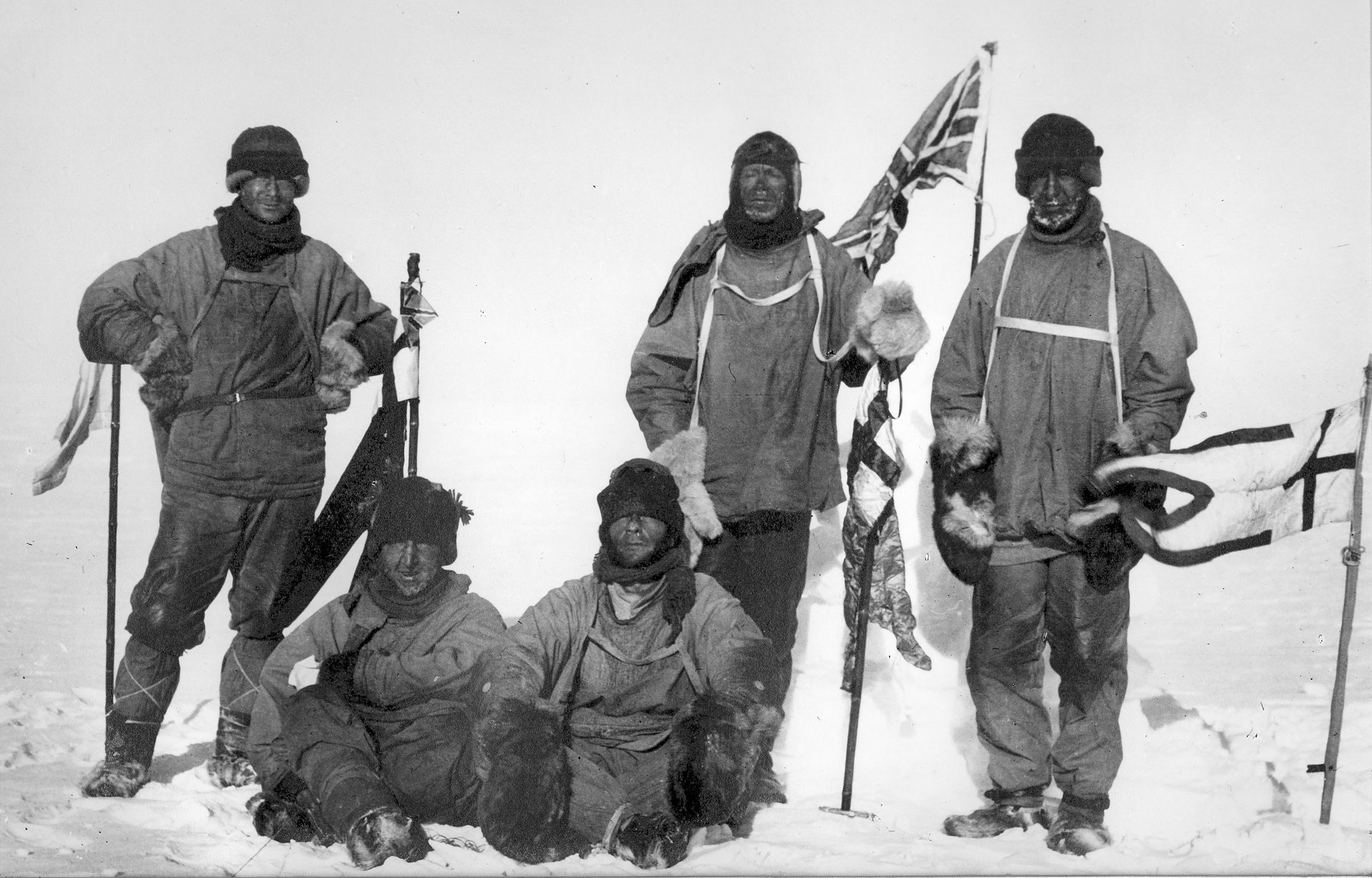
I don’t think Amundsen put this much thought into clothing before heading to the South Pole. :^)

(He just learned it from Greenland Eskimos.)

Matt Dirksen BPL Member
PostedJun 1, 2016 at 7:02 am

I do recall being told many years ago that polar bear fur was the best insulator – even over down.

I bet the Eskimos taught us that one, for sure.

Don’t think they cared much for Gore-tex, wetsuits & VBL, though.

Jerry Adams BPL Member
PostedJun 1, 2016 at 8:17 am

This is somewhat unrelated to this thread, but anyway

“so yes, warmer water takes less total energy to vaporize than colder water,”

From engineeringtoolbox (great site by the way) It takes 2257 kJ to vaporize 1 kg of water, and 4.184 kJ to raise the temperature of 1 kg of water 1 degree C

So let’s say I have 1 kg of water that’s 90 C.  It takes 41.84 kJ to raise it to 100 C and then 2257 kJ to vaporize it = 2299 kJ total

What if the water goes directly from being 90 C to being vaporized?  Does it take 2257 kJ or 2299 kJ?

PostedJun 1, 2016 at 8:26 am

“Don’t think they cared much for Gore-tex, wetsuits & VBL, though.”

  1. The correct term these days is Inuit.
  2. Don’t lock them in some steriotype from the movies. They buy all the modern products that we do…. guns, snowmobiles, and, yes, Goretex.

billy

Jerry Adams BPL Member
PostedJun 1, 2016 at 8:40 am

“The only one who seems to think its not important or necessary at all, is Jerry.  As usual…”

Heyyyy!  I’ve tried to stay out of this.  Wasn’t it Ralph or someone?  He’s totally right though.  I’m just trying to answer a thermodynamics question I’ve had for a long time.  (stupid humor on my part, sorry)

The value to doing the theory is it saves iterations in making prototypes to get to a solution.  It’s often easier to calculate the performance of a prototype, than to actually make it and then evaluate it.  Outdoor clothing is probably simple enough it’s not that important, so it degrades to geeky people solving puzzles.  And trying to impress each other with their technical expertise, sorry : )


James holden BPL Member
PostedJun 1, 2016 at 9:01 am

Bob …

amundsen did indeed put alot of thought into his clothing

he uses the very best at the time which was mostly from the “eskimo” …. This he learned for several years on his traverse of the nw passage and fixing of thr north magnetic pole

however not everything was eskimo … He used grass from lapland for his boot insulators

he took the very best at the time and tested it for years

two other examples are that he made his own pemmican and sledges, finding what was available at the time not up to snuff

if he was around today he woul do the same … Find the best and test it for years before a big expedition

no BPL theorizing from him

he proved it works before trusting his life and the lives of his men to it

the brits on the other hand were doing alot of theorizing and not enough practical testing

they brought ponies to the antarctic of all things …. All the ponies died

i have to look up what happened to the primitive motor sledge they brought …. Its been awhile since i researched it

;)


Jerry Adams BPL Member
PostedJun 1, 2016 at 9:17 am

I don’t think extreme cases like dunking in ice water are all that useful because none of us ever do that.  Although it might be a once in a lifetime event so it’s worth having a contingency plan for.  If someone was, say, packrafting in the winter then this would be much more likely so would deserve more planning for.

A better example would be hiking in the winter.  If I wear too much, which I occasionally screw up and do, then my base layer will definitely get wet from sweat.  The best solution is to not wear too much so the base layer only gets a little wet and quickly dries out when I stop.

Once my base layer gets wet, it takes the same amount of heat to evaporate this water whether the water is against my skin, or wicked to a mid layer.  If the water is against my skin, it will feel cold.  But regardless, the water eventually has to be evaporated which takes heat which cools the body down.

I could argue it’s better to have the water next to my skin so I know I’m overheating.  If the water wicks away, there might be more water accumulate in the mid layer before I realize I’m overheating.  It is unpleasant to have wet fabric against my skin, unless I just accept that and ignore it.

I was just on a rainy trip.  Rained solid for two days.  Non wicking base layer and WPB jacket.  The front of the base layer stayed fairly dry.  My pockets stayed dry which was good.  It was 50 F and I did 4000 feet elevation gain and 9 miles.  This might be a worst case situation for getting wet, but not bad for getting cold.  The back of my base layer and shoulders got very wet.  At least I knew it so I tried to unzip the front of the jacket, walked slower,…

I got to camp spot, put up tent, got into tent, drank a bit of adult beverage and then ate some food for two hours.  My WPB jacket and base layer were quite dry.  When it’s colder it’s a little harder to stay warm enough wearing just base layer and jacket during this drying out period.  I’ve dried out a little, then got cold, then put on synthetic mid layer and finished drying, sort of like that Seal dunking in ice water video.

I’ve tried a polyester wicking base layer.  That worked too.

The only thing I didn’t like about the wicking base layer, is I want it to be multi-purpose.  When it’s sunny I wear just the base layer and I want it to give sun protection.  And bug protection.  And be as comfortable as possible in heat.  I don’t think these wicking base layers do that so good.  I like loose fitting supplex nylon.  I haven’t noticed anyone that advertises Supplex material, it’s always some proprietary name, but there are many that are equivalent.  Like I tested some ExOfficio Roamr pants for backpackgeartest.org.  It’s advertised as nylon and if you feel it it has a cloth like feel, as opposed to a slippery nylon feel.  If they advertise sun protection and bug protection that’s good.

This is just one person’s opinion.  What I like about BPL is diverse opinions.  People can pick and choose what works for them.

One thing I don’t like is selecting equipment based on extreme conditions.  Like “if a tent can survive an Everest expedition, it will work for you”.  No, I need a tent that is just strong enough to survive the worst condition I’ll experience, with a bit of margin.

“Any idiot can build a bridge that stands, but it takes an engineer to build a bridge that barely stands”


Jerry Adams BPL Member
PostedJun 1, 2016 at 9:21 am

“the brits on the other hand were doing alot of theorizing and not enough practical testing”

good point

you need a combination of theorizing and practical testing

at least they could eat their ponies?


James holden BPL Member
PostedJun 1, 2016 at 9:48 am

Jerry …

these are brits your talking about … Eat horseflesh???

never mind dogs ….

Amundsen ate his dogs and lived

as to “extreme conditions” … Modern fabrics are lighter and better than “old school” ones

They are also tested from the himilayas to the arctic, and used every day by thousands of athletes pushing the limits

now whether you push the limits or not is up to you … But itll work just fine regardless

the thing about walking is that its generally a pretty mild activity, and especially if one stays on trail

anything will work ….

in winter for example climbers do sweat to a certain degree … When yr chugging up hill with 30 lbs (including climbing gear) its pretty hard not to … And if you slowed ur pace to the point where you didnt sweat you would get caught in a storm or need an extra bivy night or two

the trick is to manage it with proper modern layers

note that the military uses the same wicking systems in all climates and conditions

they brough in a climber (mark twight) many years ago to advise em on clothing

theyre just walking … But with heavy packs and off trail

;)


PostedJun 1, 2016 at 10:11 am

Not sure where Eric’s previous post went, but yes, i had a cuben poncho(-tarp).  I sold it for several reasons, including i wanted something with better abrasion resistance. I did like how the cuben material draped differently than silnylon–i’ve had a silnylon poncho tarp too.  The cuben allowed a bit better air flow because the material was stiffer.  It also seemed to stay drier and not gain as much weight when sopping wet.  However, i imagine silpoly would be similar in that regard.

Re: Richard Nisley’s testing, well funny that you should bring that up.  From what i remember reading, after testing many different baselayers, including fishnet, there were only differences in perceived comfort, but when it came to overall affect on body core temp, both during exertion and after cool down, there wasn’t any appreciable difference between any of the baselayers.  However, i don’t recall that the testing conditions were outlined.

And that’s mostly what i’m talking about, perceived comfort.  During extreme cold and dry conditions, and during cool or cold and very wet conditions, i feel more comfortable wearing Cap 4 and fishnets than i do thin, all polyester, very wicking and very quick drying baselayers.  Since fishnets don’t wick much, then the only thing which explains this greater comfort, is the air gap directly next to the skin.

Pretty simple eh, and based on my repeat experience.

Jerry Adams BPL Member
PostedJun 1, 2016 at 10:27 am

If you feel more comfortable, great!

I noticed that in hot weather, I used to not wear a shirt because I didn’t like a sweaty shirt against my skin.

But then I started wearing a shirt.  Mainly, for sun protection.  After a while I decided a sweaty shirt against my skin was no big deal.

What I considered more comfortable changed.

Viewing 25 posts - 26 through 50 (of 77 total)
Loading...