Lowell K,
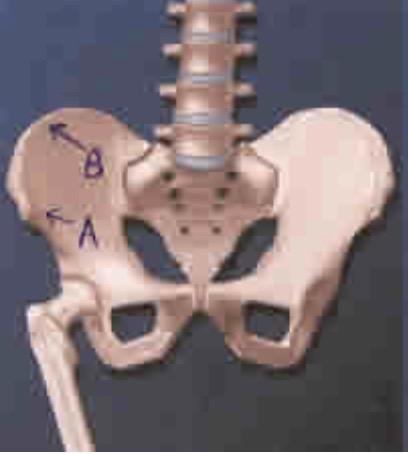
The fanlike bone, one of which you mark at ‘B’, and is the same on the other side, is what most people think of as the hips. But as your diagram shows, the legs join the hips at a lower point. The crest at ‘B’ is called the Iliac crest, and the musculature is quite indented above it, so it is natural to call it a ‘hip,’ so I will too. It certainly can provide a place to rest the hip belt for many; but not everyone agrees.
A thread was posted last year in which the author felt his MYOG pack rested on the sacral area, which is centered just below the spinal cord. Am not sure this is the best place to rest most of pack weight, compared with the Iliac crests. And to place pack weight over the sacral area, it would tend to slide downward, and pull the hipbelt against the tummy, especially for those without well developed musculature.
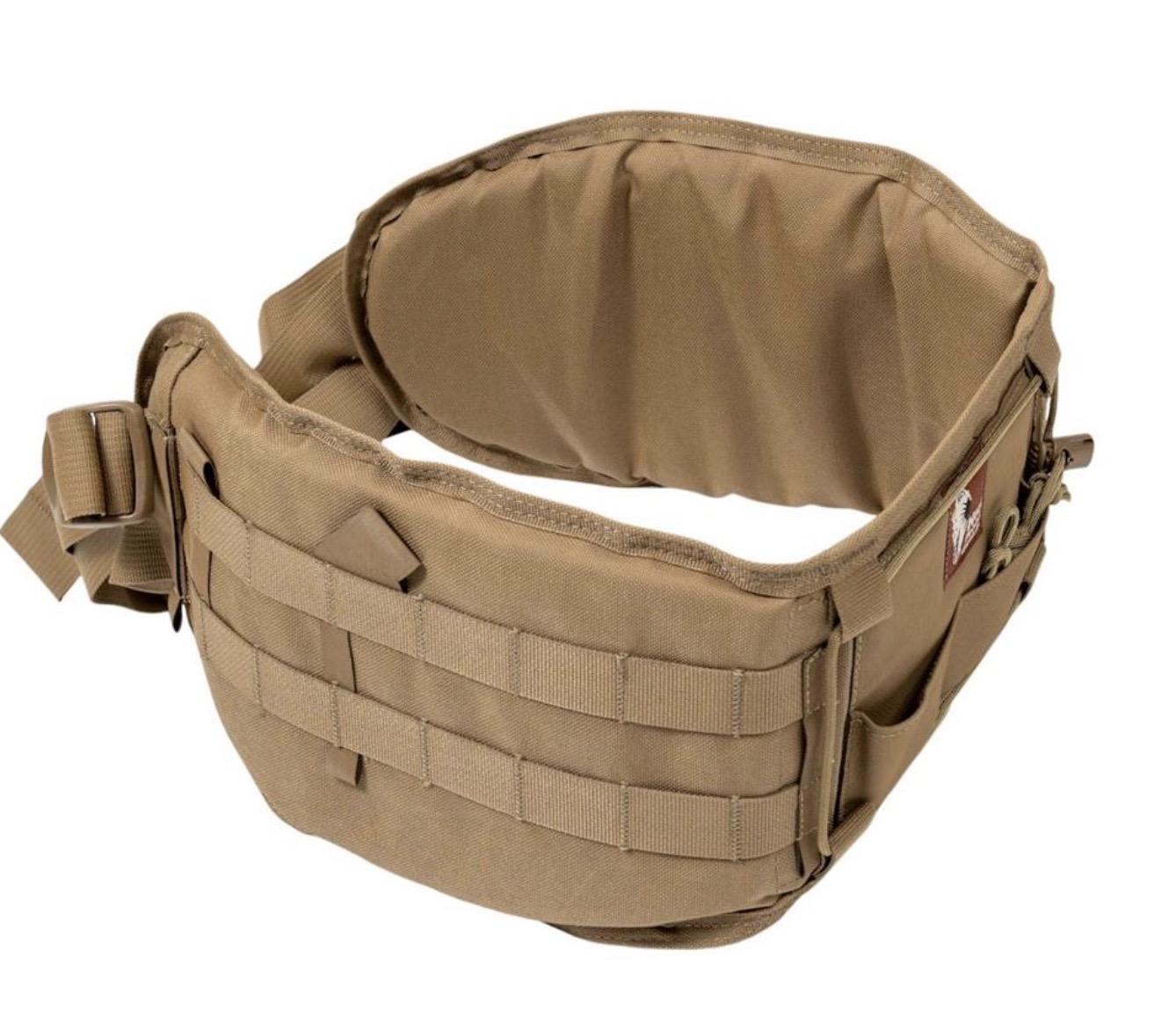
After much pondering, I decided that the best place to place pack weight was evenly above the crests. So taking some ideas from the late Jack Stephenson at Warmlite, packs were designed that rested the pack weight as evenly as possible around the torso just above the crests. To accomplish this sidearms were made that eliminated the front buckles, and could be tightened to just the right point to spread the belt pressure over as much of the muscle mass as possible.
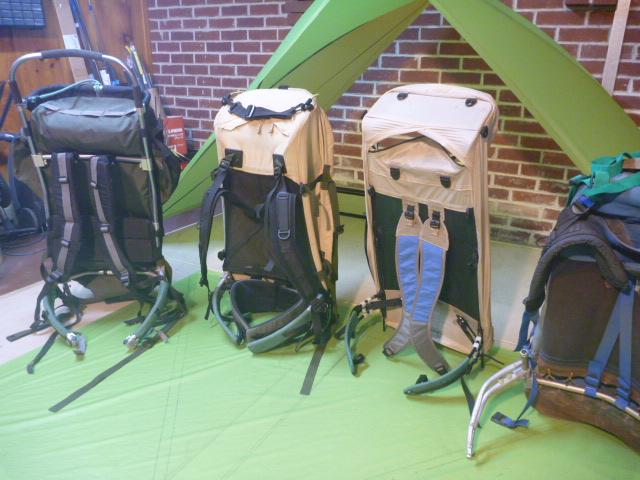
The design eliminated all slipping at the back, and made my long backpacks far more enjoyable, especially in earlier years when packs and gear were much heavier. Side-arm packs were often found in shops years ago; however, none of the designs seemed to effectively keep the center of pack gravity close to the back, with the ability to tighten the belts on the fly to the most comfortable grip. With lighter packs nowadays, this may not be as important; but packs used to be much heavier, and something had to be done. Now I still enjoy these packs, and am working on an even lighter one. Here are a few of the older, heavier ones:

Note the suspended mesh backbands that protect the spine and were also a big help.