to make them rehydrate and cook quicker
There are two limits to the speed of cooking:
* conversion of the original form of material into a digestible form – a process which requires heat and moisture
* diffusion of moisture from outside the outer shell into the interior of the lump
The conversion process takes very little time, but the diffusion process can be extremely slow. Compare the cooking time in a microwave with the cooking time in a conventional oven. With a microwave the energy goes straight into the core of the item, and cooking time depends on the power input from the microwave itself. For a conventional oven cooking speed is limited by the diffusion of heat into the object. Mind you, that is for instance how you get a crust on bread.
An example may help.
In Australia we used to be able (can still?) buy heat-dried chopped vegetables and sometimes dried meat. You might think that because they were chopped up they would cook fast, but they didn’t. Eating them before they were properly rehydrated meant that unrehydrated material got into the lower gut, where it actually fermented. This led to quite recognisable dehi farts. (How else can I put it?)
The reason for this was that even the small chopped bits of vegetables and meat were encased in a thin layer of dried protein which had come out during the drying process from inside the lump. This thin layer resisted the diffusion of moisture. The process could be accelerated with a pressure cooker, but one able to take the required pressure (to get a higher temperature and faster diffucion) was always very heavy.
Beans and lentils are often sold dried, so they have the same problems.
This led to the use of freeze-drying. When something is freeze-dried there is no migration of protein from the interior to the outer surface, so reasonable rehydration happens much faster. But the freeze-dry process has been a lot more complex and needed more complex equipment than just sticking stuff in a hot air drier.
I note that equipment described as ‘domestic freeze-driers’ is now commercially available for only a few K$. I do not know how well this new gear works.
So, to your question about pulverising the beans: you would be reducing the diffusion time very significantly, so the cooking process would be a lot faster. But there are a few downsides to this. Your food would miss out on the chewing, which mixes saliva with the food and starts the digestive process. Also, you would miss out on chewing solids and texture. A thought here is that for a few days of backpacking this would not matter in the slightest: just go for a large hamburger when you get out.
Bottom line: try it and see. And let us know?
Cheers


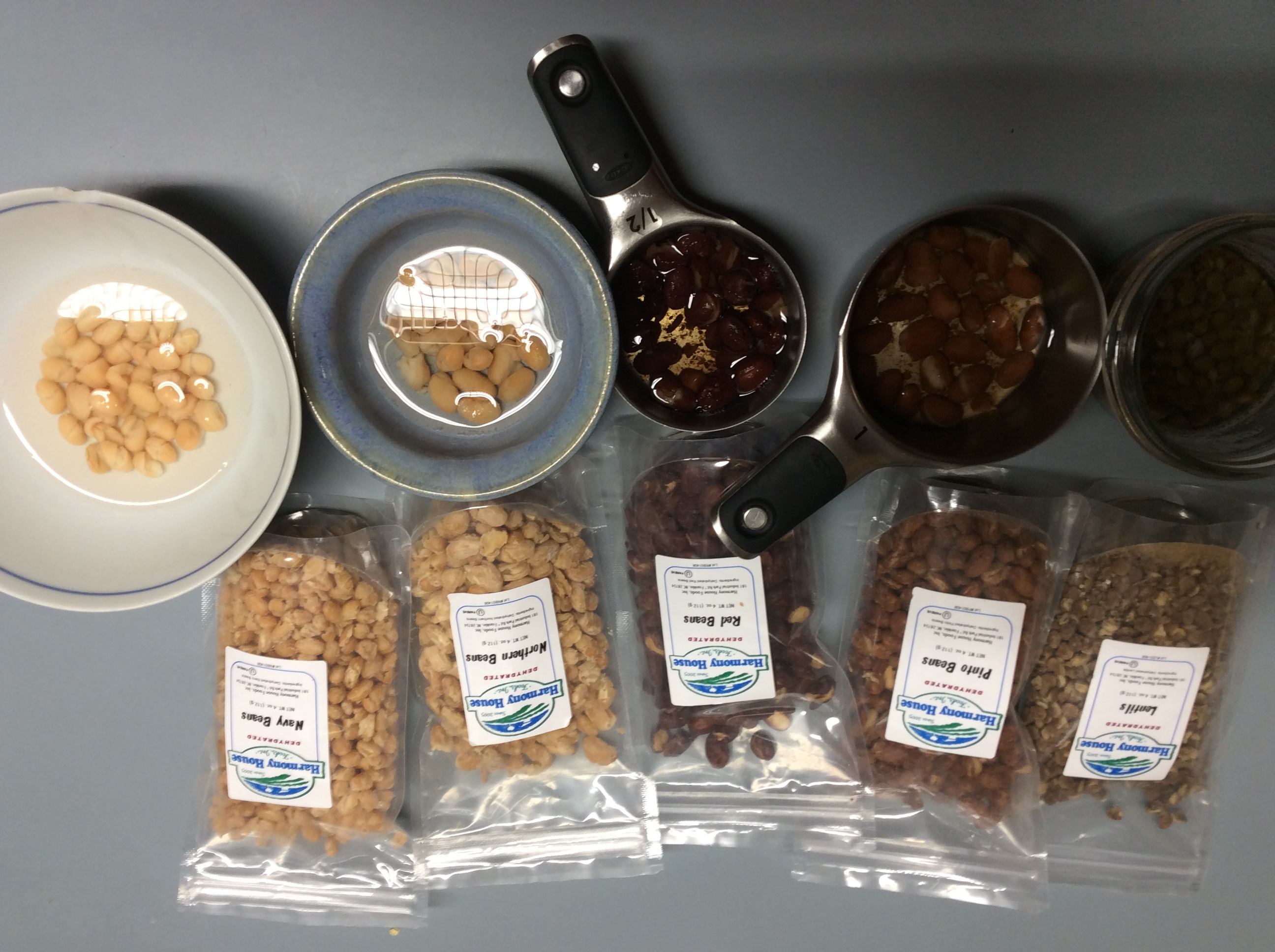 Thanks for all the tips, guys. It’s Saturday and minus 20 F, so I decided to go ahead and make a mess in the kitchen and postpone walking the dogs. I poured out 1 T of each of the 8 types of dehydrated legumes I have, all Harmony House dehy, and poured 4 T boiling water on each. I was not terribly methodical about containers so that could make a difference in reconstitution. But on trail I will use only my pot to prepare food; I’m just not interested in messing around with baggies, and cozies, and this and that. My food and water go in a pot and I cook and eat it. Or I boil water and dump something in and eat it. I also don’t eat out of plastic, because I just don’t like it, and use as little as possible. So this test is really about how I will cook beans in the field.
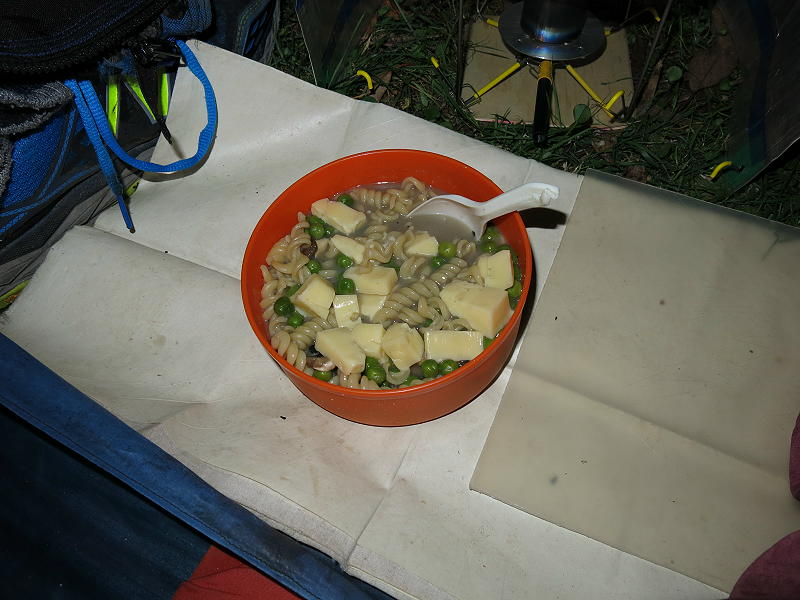 Noodles, dried peas, Jahlsberg cheese (NOT processed stuff) and chopped MUSHROOMS! (plus some ‘instant’ mushroom soup)