When it comes to knitted or woven textiles thermal insulation is primarily affected by 3 factors in connection–fiber diameter, thickness (“loft”), and density of weave or knit. The smaller the diameter, if you keep the other two constant, the more air it will slow down thus increasing thermal insulation values.
Probably next factor in importance is hollowness or lack thereof of the fibers, but ultimately this takes a back seat to fiber diameter. It will make a difference if all other factors are similar, but not by huge degrees.
When I first started learning about fibers, I temporarily believed the marketing hype of various sites, for example talking about Alpaca vs Merino, and people saying Alpaca was 2 to 3 times warmer. Such claims don’t stand up to closer scrutiny. It’s basically impossible for different animal fibers to result in such large differences, especially when diameter sizes are relatively similar and everything else is also similar. At most, you may see from about a 20 to 35% difference in thermal insulation values, and if towards the latter end–that’s with extremes being present (say unusually small diameter AND hollow fibers vs thicker and much less medullatted/hollow fibers).
And there are definite trade offs either way. Those super thin fibers tend to not be near as durable as the thicker ones. Or, hollow fibers tend to be more stiff and less compressible than solid ones and also tend to come out of the yarn more. Ultimately, for real world durability, you need a balance of factors. There are some differences in tensile and bending strengths between different fibers, but they are not huge differences. For example, per similar diameter size, alpaca fibers tend to have higher tensile strength than merino wool fibers, but have less bending strength and resiliency (so merino holds it shape better, but alpaca will deal with abrasion and pulling stresses a bit better).
All this to say, is that the exaggerated claims of specialty fibers and sellers of same really tend to be quite exaggerated in their marketing.
I’ve not tried or even held possum down made materials, but from what I’ve read about it, it seems fairly similar in properties to angora rabbit fur. Both tend to be rather fine/small diameter and rather medullated (hollow), both of which contribute to an increase in thermal insulation values but decreases durability. Both are often blended with larger and more durable fibers.
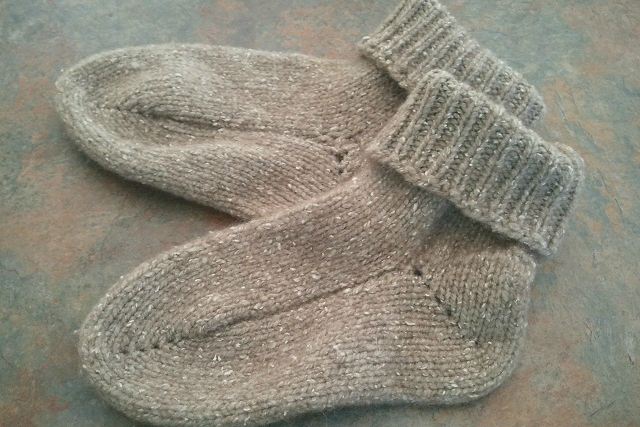
I have a pair of socks with a high angora rabbit fur content and they are pretty warm for their weight, but need to be hand washed (or the equivalent) and non tumbled dried with gentle and ph balanced soap (all animal/protein based fibers do not deal well with high ph).
All animal based fibers have excellent odor control and prevention. For optimal balance of properties, I would consider something like 40 percent angora rabbit or possum fur to around 40% at least baby alpaca and about 20% nylon as far as content. Or, 30% angora/possum fur, 30 percent baby alpaca, 20% silk, and 20% nylon which will be a bit more durable, but slightly less warm.
If there are not products out there to such specifications, you will find that there are many different specialty yarns out there, and you could have a knitter combine two or more to get something similar.
As Darn Tough has shown though, knitting techniques also make a big difference with these fibers which by nature tend to be somewhat fragile compared to synthetics (one slight exception is silk. For a natural, protein based fiber, it is fairly tough and strong).
Btw, the nice thing about alpaca vs merino is that it has half the moisture regain of the latter. I suspect this is probably somewhat true of other highly medullatted and yet still can be fine/small diameter type fibers. It makes sense–there is less solid material to absorb water.
(Edit to add, there is some variation along the above lines, but the difference between alpaca and merino seems to be widest. This does not apply to the cellulose based fibers, which by nature are very absorbent, whereas alpaca, merino, and some of the other animal based fibers tend to also have outer fiber water shedding properties).
Another option for even colder temps, is taking an inner layer of tightly woven mostly animal/protein fiber based fabric (probably hard to find, except for silk) and a typical outer tightly woven nylon or polyester fabric and using Kapok fiber as a fill. Kapok has similar thermal insulation values as around 500 fp duck down. It’s highly hydrophobic because of the thick wax layers on each fiber. It doesn’t compress as well as even low quality, high feather content down or even Apex, but in a booty or the like, not really that big of a deal. Odd side benefit of using Kapok fiber as a fill: if you happen to somehow drop it in a stream or the like, it will float (and downside is because of the wax coating on cellusotic based material, it’s also highly flammable).