


First post
Topic
Become a member to post in the forums.
 .
.
First post
Most of my 3 season hikes currently involve an 8×10 tarp and a bivy (waterproof bottom, breathable top with mosquito netting for face).
The idea of a more robust fully waterproof bivy, i.e., OR, Borah Snowy Sude, MSR, etc., sounds appealing from a weight and simplicity of setup standpoint, but setting up and breaking down in the rain, not to mention bathroom needs in the night, sound much less appealing. Here’s a half-baked thought:
What if you used the more robust bivy plus poncho combination….leave the lower 2/3’s of your feet and torso completely exposed and dangling out, but create overhead space and a spray zone with the poncho/tarp and trekking poles for the upper 1/3 of your torso and head? Is anyone successfully employing a setup like this?
may not be exactly what you are imagining but it made me think of this JAKPAK ALL-IN-ONE GARMENT REVIEW .

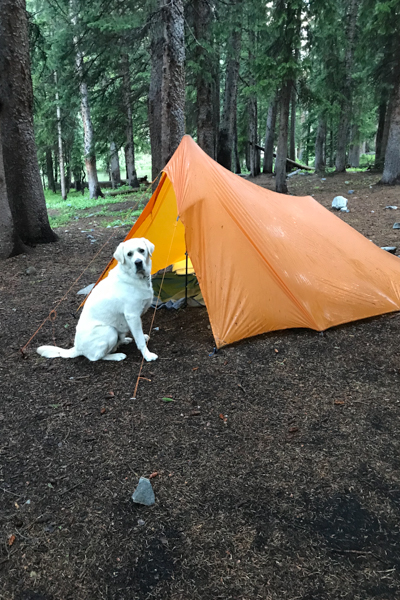
Not sure how a bathroom need mid-night will be simplified by this arrangement and maybe I’m not getting this visually given your description . . . but I often use a 10×10 tarp, with the Holden pitch, and the OR Alpine bivy with great success. I do a lot of 9K-13K BP where typically no bug net is needed. Last month encountered serious rain a few nights and setup was quick tho condensation on tarp was an issue. The Alpine is excellent cool to cold weather 3 season bivy IMO.
Pic is after an all night rain.
It would have probably been more helpful if I had described this as a vestible for a bivy. I tried to mock up with a MLD bivy and Gossamer gear tarp. Idea is to protect the upper third with a bit of added protection, less than full tarp:
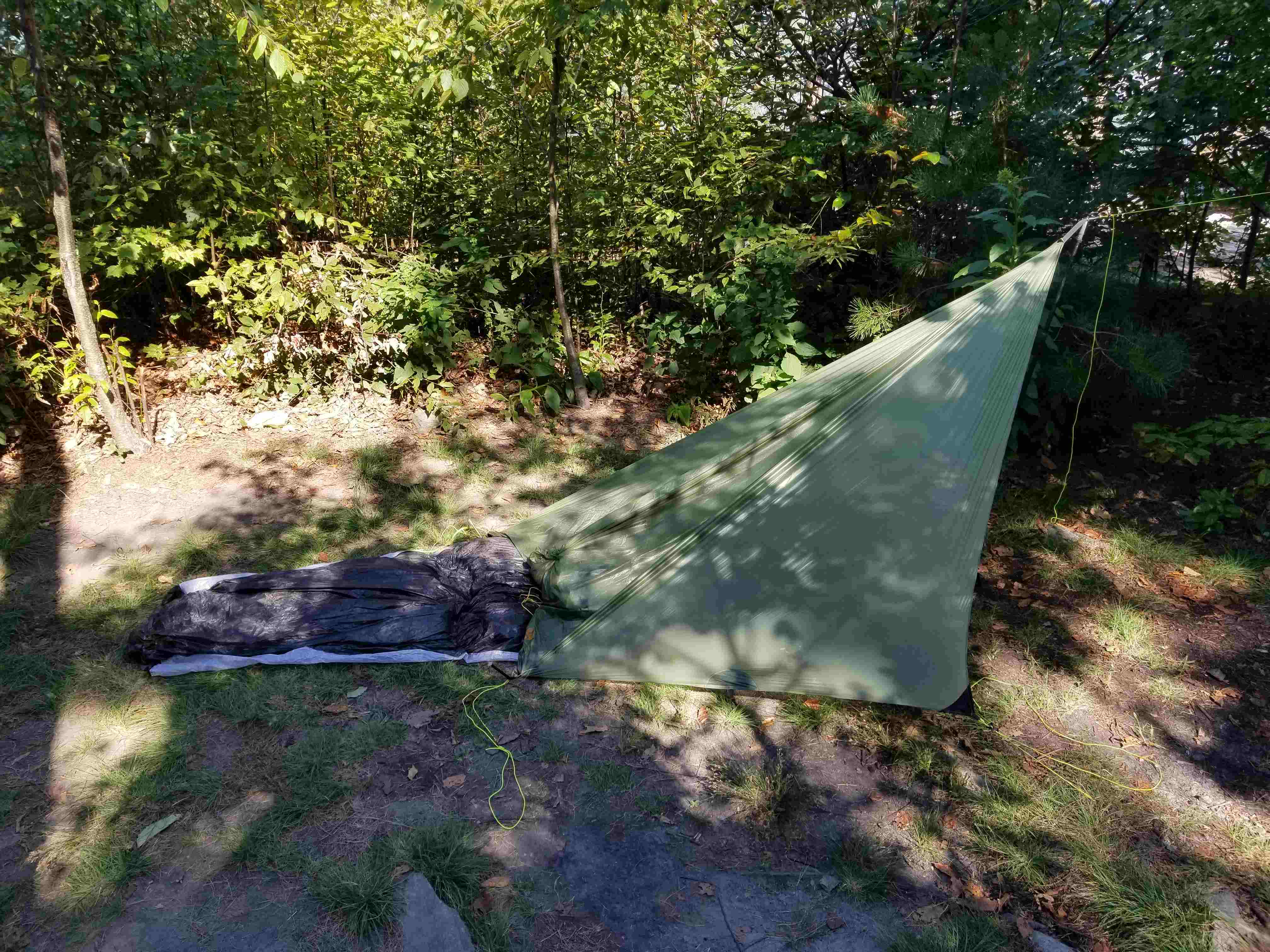
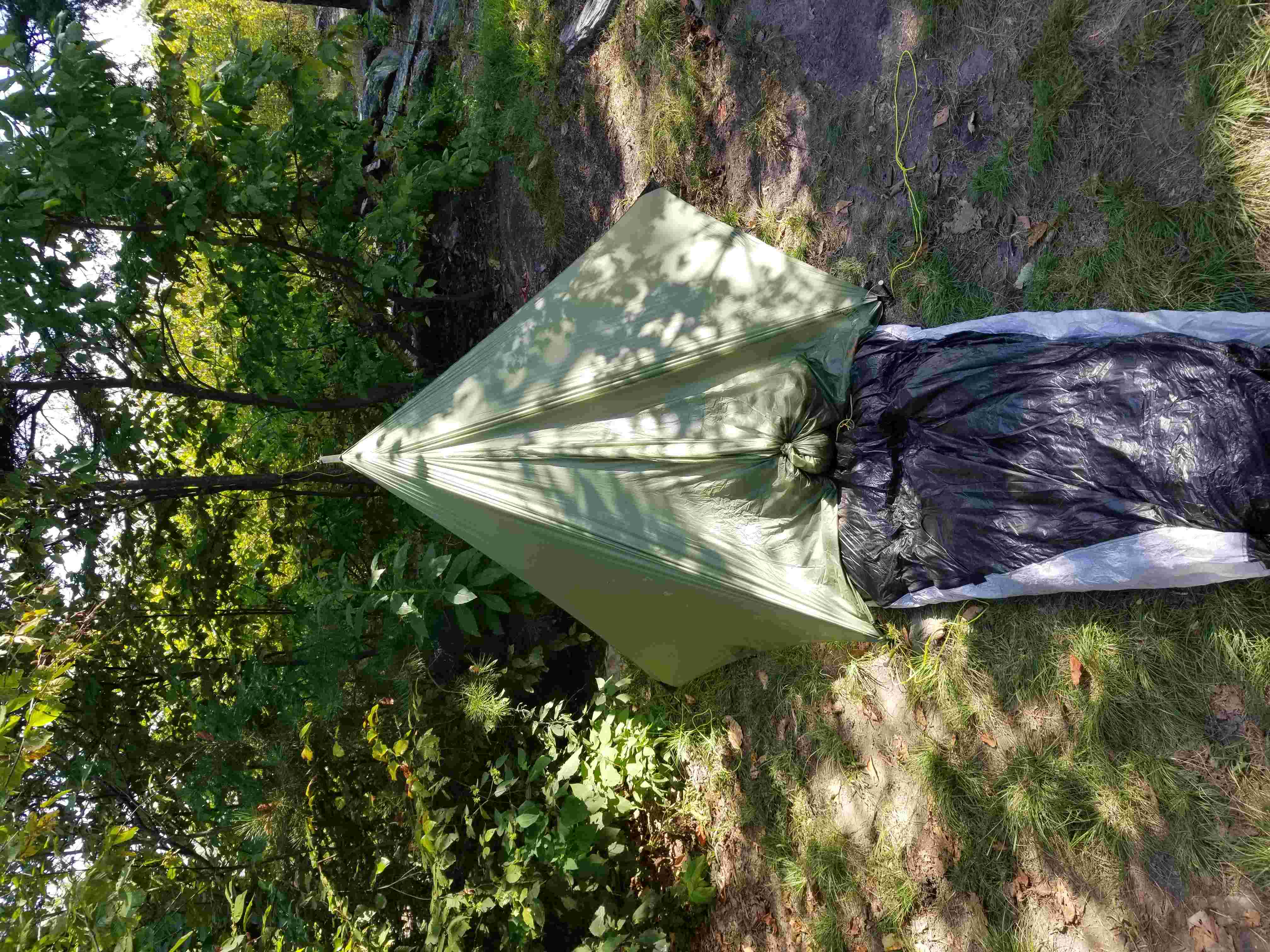
Like this? Sierra Designs A.S.A.P Bivy and Tarp .
HW – I’m just trying to figure out how you could get in and out of a waterproof bivy during storm conditions without soaking your equipment. A full tarp would certainly work but would seem to be weight redundant….chasing those grams. That said, the GG tarp in the picture above only weighs 8.5 ounces so maybe I’m trying to split frog hair by going smaller. Nice looking pooch ya got there!
Link – You’re getting really warm. I’ll definitely check it out….I think the magic number here is going to be around 4 or so ounces to make it work over the GG. I appreciate your interest and input.
Russ –– to clairfy, my lab accompanies me on all my BP trips and I’ve learned he prefers to be under a roof at night so to accommodate him I have the tarp. I think a security thing for him. I accept that extra weight. But it serves a nice purpose when it rains so I can be under roof in the bivy and keep my other stuff dry.

This is where the Gatewood Cape rules. Better than poncho coverage and 360 degree shelter protection. Team it up with a Titanium Goat Ptarmigan bivy and you get the insect protection and can cowboy camp as the weather allows.

I used a waterproof bivy system for awhile and understand about wanting “entrance overhead protection”. Did a tarp “entrance” once, though I would just jump in after changing nearby.
At a certain point, any add-ons complicate one main benefit of these bivies, in that they are supposed to be easy to lay out and get in with a very small footprint. Add too much overhead shelter, may as well just go for the old water-resistant/tarp combo IMO.
Could go with an MLD monk tarp in 0.5 cuben set up as a “half-mid” or even something lighter like window film – not like a waterproof bivy requires any added protection.
Another thought is do what the late Colin Fletcher described in later Complete Walkers by setting up a bivy “overhang” .. except with modern ultralight materials. Iirc he hanged the contraption on an old type external frame though.
A PCT hiker and REI employee using an REI brand bivy, also used a Tyvek bivy cover as a “mini A-frame” about the 4th paragraph down.
https://www.rei.com/blog/camp/how-to-pack-for-a-pacific-crest-trail-thru-hike
Reading some of the other blog posts, the bivy combo was a kind of last minute affair, however.
I’m glad for this thread as its something I’ve thought about for a long time but never executed.
WPB bivy (or at least bottom ~3/4 WPB, top DWR/mesh) with a small flying diamond square poncho tarp? With Cuben you could do this with no seams or joins, just ~4 corner tie outs at a minimum. In this case, the poncho would be diamond shaped with the hood in the centre, your arms would run across a diagonal to opposite corners. You could enhance the wrap in the wrist area perhaps with a couple of snaps or elastic ties.
The width of cuben is 54inches. If we assume half an inch edge bonding seam, then 53 inches by 53 inches. The length across the diagonal is thus 74.95 inches… 6f’2″. Thus, it will come down appx waist length, and be just the right width across on a 6’2″ person to go from hand to hand with opposite corners.
54*54inches of cuben results in 2.25 sq yards of material, or, 1.15oz in 0.51 cuben. Plus hood and accoutrements, but, pretty light! Its also exactly 1.5yards of fabric, so $48 plus post from RBTR. Plus hood material but you could vary that, eg go for light WPB.
Negatives I can think of
Positives:
Become a member to post in the forums.
 DS2 Meridian: Vintage Dive Style, Everyday ReliabilityInspired by the streamlined "skin diver" watches of the 1960s, the DS2 Meridian combines vintage proportions with the durability of a modern everyday tool watch. A reliable Japanese Miyota quartz movement delivers set-it-and-forget-it accuracy, while 150 meters of water resistance, a locking screwdown crown, sapphire crystal, and strong Super-LumiNova make it ocean-ready. Available in multiple case sizes and starting under $250, it's an approachable way to get classic dive-watch styling without sacrificing everyday practicality.
 © Beartooth Media Group Inc.
 Loading...