@Paul — I’m somewhere around 155 (give or take) and bought the 177 length ones. This was a pretty each choice. I was too heavy for the shorter skis, and while I would fit into the longer ones (from a weight perspective) I figured it wasn’t worth the bother. I really don’t care about speed when I’m using those skis, so less weight and better grip suits me fine.
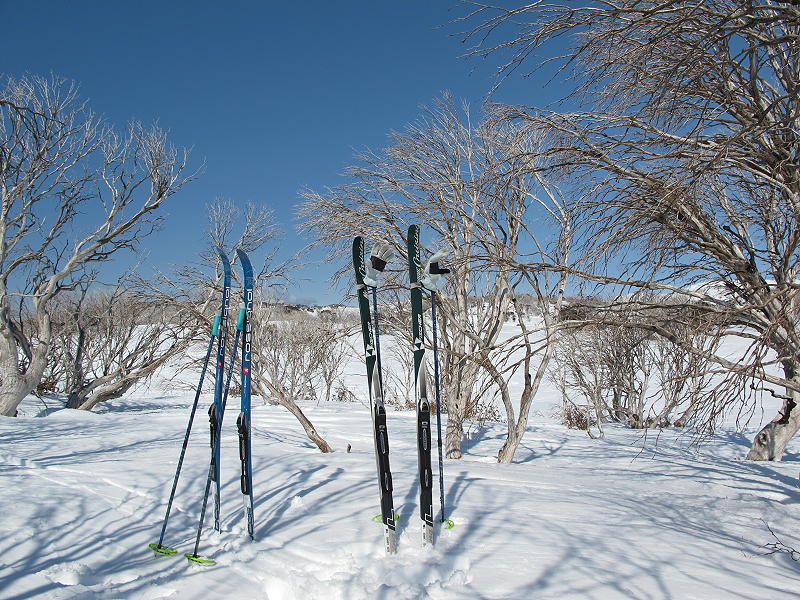
I agree with your other points. There are basically three ways to propel you up a hill (well, four if you count skating): grip wax, fish scales, or skins. Grip wax is usually a real pain in the butt on the west side of the Cascades or Olympics. The weather is often very close to freezing, and varies during the day, which means that you would have to apply different types of kick wax several times. Skins are fine, but are best when you just go up all morning, and down in the afternoon. Even then if it is a shallow enough grade, I prefer the speed of fish scales. But where fish scales really shine is when you are going up and down, up and down, several times. I’ve done tours where I’ve passed much younger folks in lighter gears, just because they are spending a lot of time taking off and putting on their skins. It is a trade-off though, as Serge said; going down tends to be a bit slower. But again, that has a lot do with where you are relative to the camber.
I also do a lot of cross country skiing, sometimes on an area that is occasionally groomed. I use skis that are not the fastest, but are pretty good on deep snow. I’ve noticed that I move very fast uphill, but unlike a lot of people, I have to push my way downhill. I always thought it was due to my skis (having fish scales) but then I realized my brother, with the exact same skis, had the opposite situation. He was backsliding occasionally going up, but just flew going down. Trade-offs.
I also want to second the recommendation of Maxiglide. It really prevents the glop. I also haven’t noticed my “rock skis” glopping more than my pristine skis. Glop just happens, and when it does I either push through (hoping conditions change — sometimes they do) or stop and apply the goop.
One thing worth noting in all of this is that there is an interesting trend in high end cross country skis. For a long time now, fish scale classic skis have been available for expensive (super light, fast) cross country skis. No one races in them (because waxing is faster) but there is a market for areas like the Northwest. What really caught my eye this year, though, is that a lot of these skis now have built in skins. Fischer, Rossignol, Madshus, Solomon and Atomic, all have skis of this nature (very expensive, very light, permanent skin). There may be others. So far as I know, this hasn’t made it up to bigger skis (by these makers, or other companies, like Viole). Fischer does have bigger skis that have both fish scales and special attachments so that you can easily attach and detach skins (“Easy Skin”) bus so far the trend of using permanent skins hasn’t made it up to bigger skis. It wouldn’t surprise me, though, if we see it in a few years.