


omg… thanks Richard. This has happened a few times to me (traveling not backpacking). I thought I was losing my mind.
Topic
Become a member to post in the forums.
 .
.
omg… thanks Richard. This has happened a few times to me (traveling not backpacking). I thought I was losing my mind.

Friesen Gear sells a 3D-printed cap for the NB-10000 that prevents accidental button-pressing in the pack.

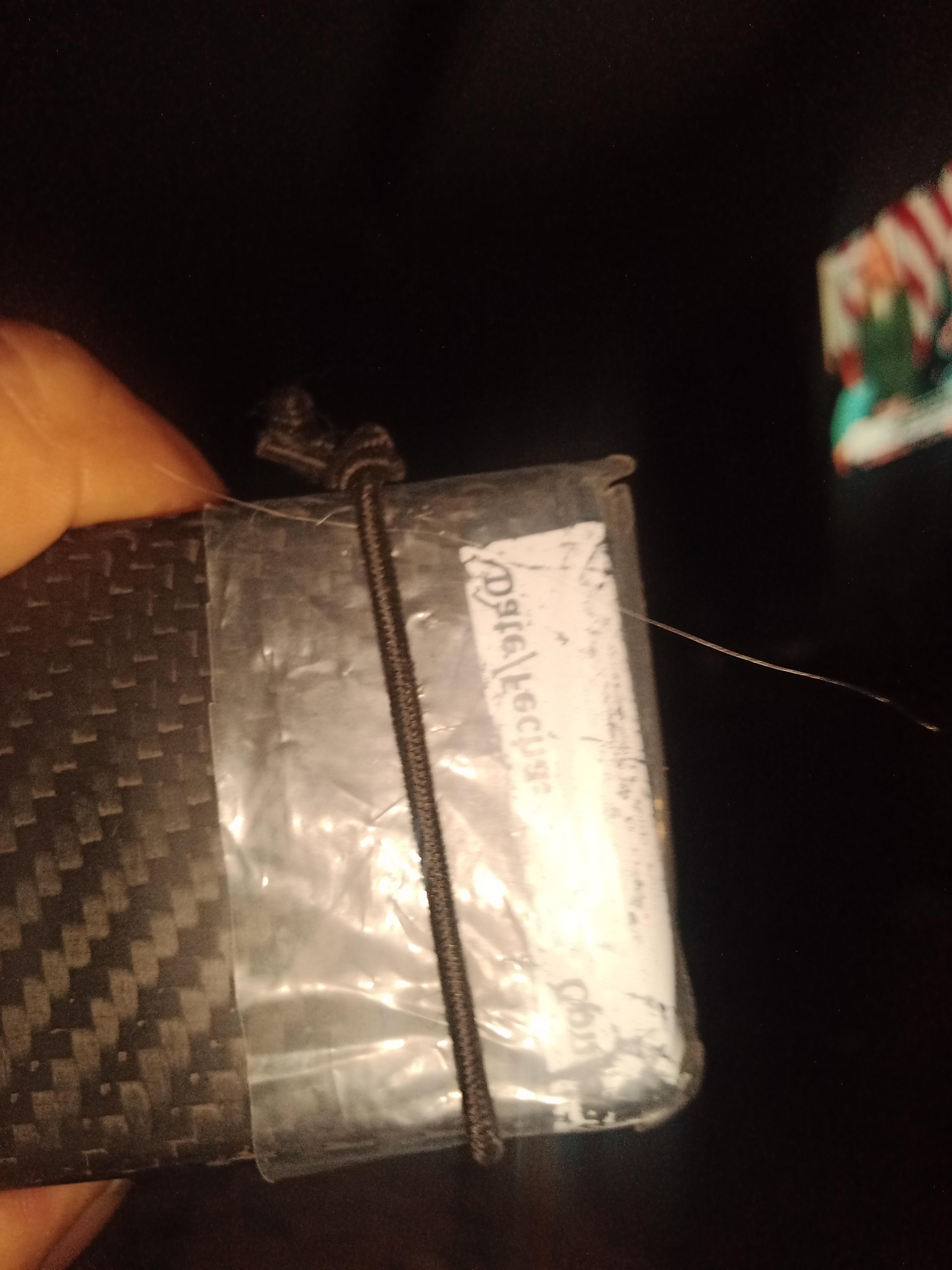 Seal a meal cap.
I just pressed and held the button on my Gen 3 Nitecor 10000 power bank for > 20 seconds, and it did NOT lock down to hibernation mode.
Has anyone observed otherwise or a different hibernation instigation on the Gen 3 version?
I hope that some well-known reviewer will tell Nightcore that the hibernation mode would be swell if it could be re-awakened without wall power.
USB chargers are rated at the capacity of the battery, which is 3.6 volts
This has to be converted to 5 volts for USB, so there’s an inefficiency of 3.6 / 5 = 72%.
10,000 mAh battery will yield 7200 mAh of USB voltage to charge devices
Plus, there is inefficiency added so it’s less than 7200 mAh
This is true, but the conversion is unnecessary as the device you’re charging is likely to be 3.6V as well. Stepping the voltage up to 5V and regulating it down to a 3.6V charge current will ofc cause energy loss through heat dissipation at both ends, but using a non-voltage specific unit of energy measurement is perfectly fine as both endpoints of our charging circuit will usually be 3.6V for most consumer equipment these days. Using a less ambiguous energy measure, like Wh would be preferable and potentially cause less confusion, but is rarely of any importance anymore.
In other words, despite the output being stepped up to 5V, if we could make a perfect charging circuit with no heat dissipation, a 10’000mAh power bank would deliver a 10’000mAh charge on the destination device.
<p style=”text-align: left;”>Most of my electronic devices I use in the backcountry would be significantly bulkier if they used replaceable lithium batteries. Worse, the waste and cost would be ridiculous. Most in the lightweight backpacking community don’t seem to care too much about cost to save weight, but some of us care about reducing waste.</p>
While true for a lot of devices, I don’t think this is true across the board. The move to rechargeable technology in most of our devices has created a whole industry of accessories (power banks, chargers, cables etc.) that follows a similar upgrade (and waste) cycle as other consumer electronics. And not only that – many of our electronic devices now comes with embedded Li-ion cells that are more expensive/difficult to replace than to buy a new device – leading to premature retirement of otherwise fully functional devices.
And when it comes to the mentioned safety devices that we have to depend on in any weather or temperature, I think it’s reasonable to consider something based on a more resilient battery technology.
Something like the Jotron SA20 PLB has 11 years of battery life and the battery can be replaced when the time comes. I’m not sure a re-chargeable satellite messenger with it’s supporting eco-system will create less waste over the same time period.
https://jotron.com/product/tron-sa20-plb-personal-locator-beacon/
Nitecore power banks are compelling, but how do they hold up in the long run..especially compared to Anker batteries?
Ive heard a number of anecdotes from the thru-hiking community that Nitecore batteries aren’t reliable (notoriously hard on gear to be fair), but I can’t tell if that reflects a kind of reporting or confirmation bias or not. Perhaps their manufacturing has gotten better over time, too.
I have taken a Gen2 Nitecore 10000 on the PCT, the Te Araroa, and the AT. We also have a Gen1 Nitecore 10000 in use when both of us hike together.
Both our Nitecore 10000 (Gen1 and Gen2) have seen hundreds of days of backpacking and have not had any issues so far.
Become a member to post in the forums.
 Vaer C4 Tactical Field SolarDurable timepiece for wilderness users - 20ATM (200m) water resistance, 120-click bezel, 316L SS casing, sapphire glass, solar-powered, Epson VS-42 Japanese movement, C3 Lume, USA assembly.
 © Beartooth Media Group Inc.
 Loading...