This summer I was blessed to have time for two trips to the Wind River Range in Wyoming. While I’d love to do the Wind River High Route as a through hike, loop hikes are so much easier to plan and provide more flexibility.
One of the main objectives of these two trips was to capture the beauty of these two parts of the Winds on video. Below are links to both videos:
Central Wind River high route loop: https://youtu.be/yS18cmB8yB8
Northern Wind River high route loop: https://youtu.be/veOI96qlQbQ
The first trip was over August 2-7, 2022 following fairly close to the Skurka High Route from Fall Creek Pass and Hay Pass to East Fork valley. The Scab Creek trailhead was used to access the middle of this loop, and the Fremont Trail and others were used to connect the North and South ends of this high route segment.
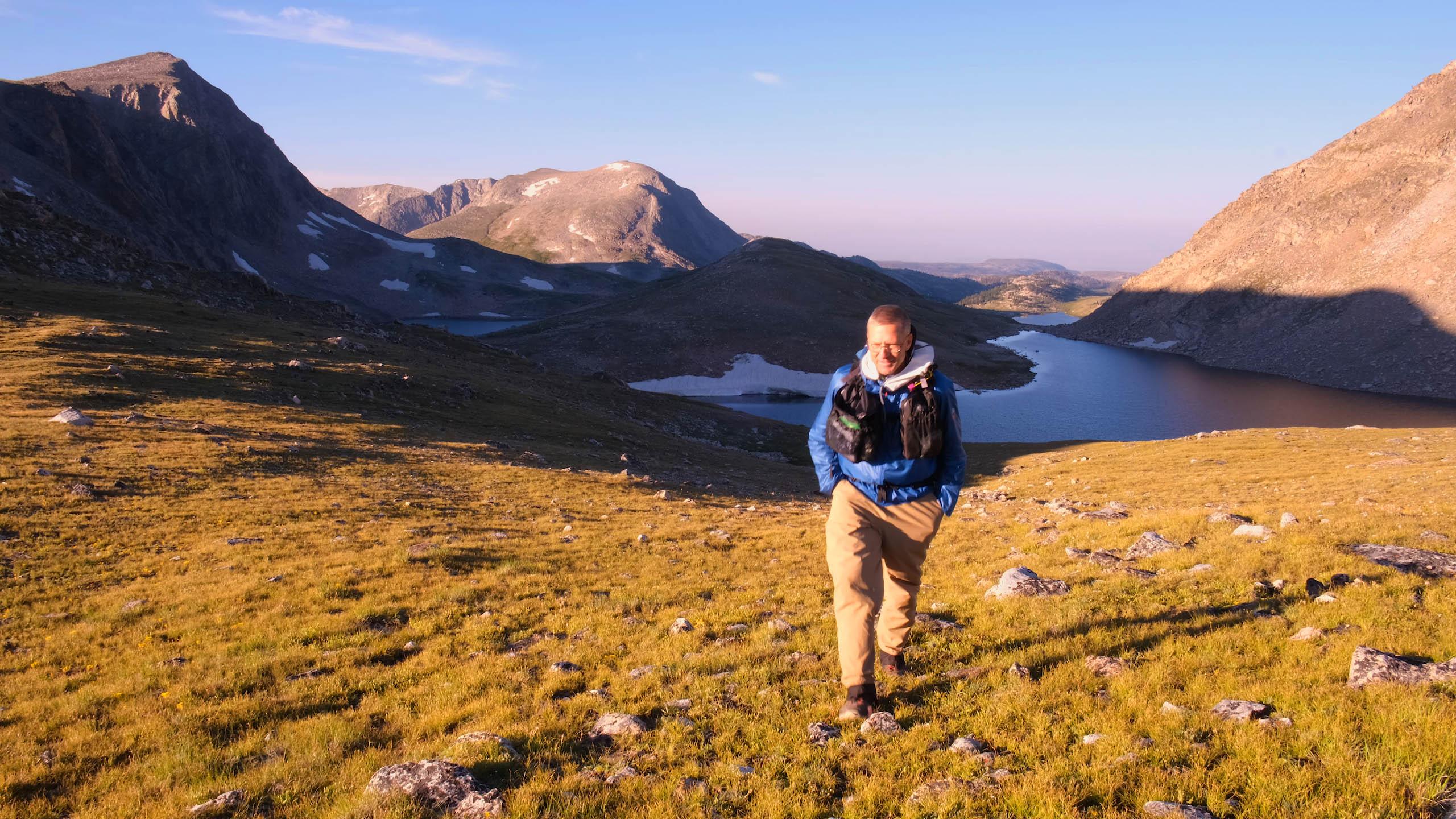
The second trip was from August 22 to the 26th and also followed the Skurka High Route from Downs Mountain to Dinwoody moraine, with the addition of Shale Mountain and Continental Glacier as well. The Glacier Trail was used to hike from the South end of this high route segment back to the Glacier Trailhead.
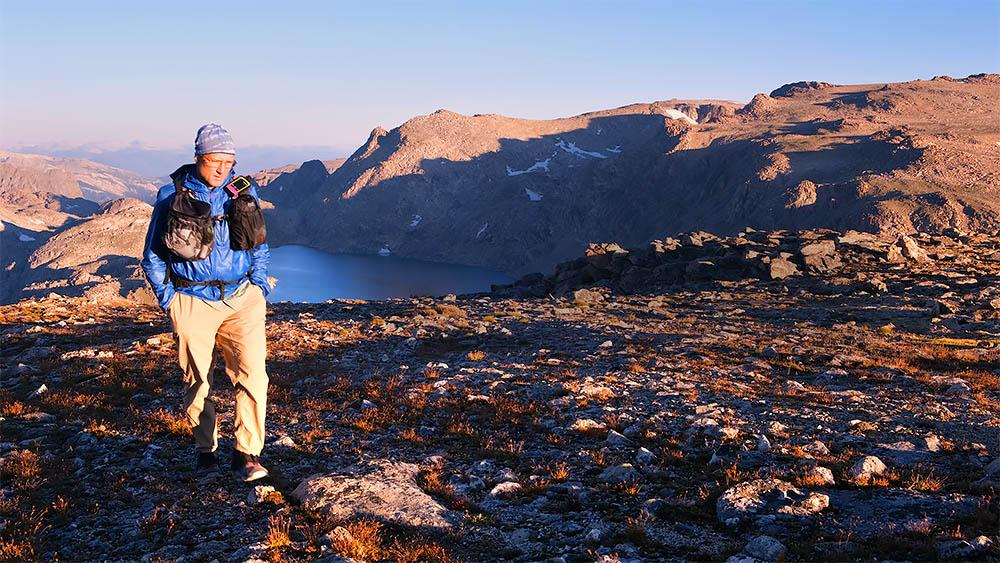
While both trips were in the same mountain range, they had completely different characters. The Central high route has a lot of variety, including high mountain passes, valleys with large open meadows, many lakes at or near treeline, some forest travel and some maintain trail here and there. In contrast, the Northern high route is entirely above treeline, most of it is very exposed and there are no trails. Instead of many lakes, the Northern high route has many glaciers and permanent snow fields, which are continually visible in one direction or another along all of the high route.
There was a lot of route planning and research that went into both trips. I don’t know how many dozens of hours were spent over the last few years pouring over maps, exploring Google Earth and digesting details from dozens of trip report online. As mentioned above, both high routes followed fairly close to the Skurka variation of the Wind River High Route, with a few deviations. Maps for both of these trips are lined below:
Central loop: https://caltopo.com/m/C04F8
Northern loop: https://caltopo.com/m/JGB35
Both routes have a lot of off trail travel and rough terrain, especially the Northern loop. So keeping weight down was a key goal. Two other goals were to be safe and comfortable and also to shoot good quality video. The later of these goals added significantly to the weight of these trips.
The base weight for the Northern loop was 15.6 pounds, which included nearly 4.5 pounds of camera gear and over a pound of technical gear for the glaciers (ice axe and microspikes). The total pack weight on day one, including all food for the trip minus worn items, was 23.5 pounds.
Much of the gear used on this trip is MYOG (Make Your Own Gear), including the framed backpack, front packs, hiking pants, bug bivy, gaiters and rain jacket/pack cover combo. For video, a Fuji X-T4 mirrorless camera with 18-55mm lens was used. I also carried a MYOG tripod adapter to turn three trekking poles into a tripod. Also included with four camera batteries, a polarizing filter and a Rode VideoMicro hotshoe microphone for the camera.
Below are the gear lists for both trips:
Central loop: https://lighterpack.com/r/92a5lz
Northern loop: https://lighterpack.com/r/xu8jkm
All of the gear choices for both trips worked out quite well. The camera gear was noticeably heavy, at 30% of the total base weight, but the video quality it provided was far superior to what a GoPro, phone or pocket camera could have provided. I was particularly pleased with the MYOG rain jacket/pack cover combo as both trips had a fair amount of wet weather. The MYOG 50 degree synthetic over-quilt/parka combo was a welcome addition to the Northern loop gear list, although I only used it as a parka twice as the temperatures were fairly mild. The ice axe for the Northern loop was not really needed, although I was happy to have it while descending Grasshopper Glacier, where it got a little steep with nearby crevasses for a few hundred feet. And while the sandals are somewhat heavy at 6 ounces, I love them every time I ford a stream, take a walk around camp or swim in a lake.