Topic

TT Notch vs SMD Deschutes + inner

Viewing 13 posts - 1 through 13 (of 13 total)
Swammy BPL Member
PostedApr 15, 2018 at 9:54 pm

So I’m in the market for a new tent. For the most part I’ve narrowed it down to the Notch and the Deschutes/inner combo. I live in California and need a tent that can handle 3 season abuse(possibly occasional light snow?).

Ive used the notch before and really like how easy it is to pitch. The vestibule space is nice as well but I tend to only use one side. The part I don’t like is the space inside the inner. Would like something slightly  more roomy… hence the Deschutes. I have never seen one in person but from what I can gather it has more space inside the inner nest than the Notch.

My question is which tent is more worthy for windy/inclement weather. The notch having two apex guy outs plus the option for staking out each panel in addition to each corner(totaling 10 stakes)makes me think it could handle more extreme weather. I could be wrong. The Deschutes’ shape is better designed to shed wind, but has a single apex guy line and two addition guy lines on the side panels. Not sure how many stakes can be used total. Was thinking of adding on an additional guy line to the rear panel or apex.

Hoping someone can chime in and help me make a decision. Thanks so much!!

Lester Moore BPL Member
PostedApr 15, 2018 at 10:54 pm

You can’t go wrong with either shelter IMHO. As a tarp-only, I’d pick the Deschutes. As a tarp plus inner tent combo, the Notch may win out depending on your needs. Both have similar 30d silnylon fabric tarps, so the differences boil down to features.

Both shelters have the versatility to use the fly-only when the weather’s nice, which you may appreciate in California in July and August. However, the Deschutes is probably more taylored as a standalone tarp than the Notch Fly. That being said, the Notch fly (tarp) is very roomy and you can use either door, depending on wind direction, which is a nice benefit provided by the Notch.

As for inner tent, the Notch’s inner is wider in the center and narrower at the head and foot. In contrast, the Serenity inner net for the Deschutes has a more “normal” rectangular floor that may fit wide pads easier. Also, the Notch gives you a little more head and toe room while sleeping than the Deschutes does. However, the two Deschutes side panel tie outs can be used to greatly increase room above your head and feet, at the cost of two additional stakes.

Another difference between the inners of these two shelters is that the front door panel on the Serenity inner is vertical, whereas the Notch’s inner is angled slightly. What that means is that if it’s raining gently with no wind and the tarp’s doors are wide open, the the Serenity net tent under the Deschutes will remain dry. In contrast, when the Notch’s doors are open all the way in light rain, you can get a little moisture hitting the bottom corners of the Notch’s inner net tent (at least on TarpTent’s 2015 version of the Notch). This minor issue with the Notch can be mitigated by not zipping the door all the way closed (stop about 12 inches or so from the top) – although this can stress the zipper and it’s not meant to operate in this way.

Another benefit of the Notch is the availability of a partially-solid inner net tent. The combination of the Notch’s tarp or fly by itself plus the Notch with partial-solid inner provides quite a bit of versatility for different weather conditions. You can also achieve the same versatility with the Deschutes tarp by making your own (or having somebody make) a partial-solid inner similar to the Serenity inner. This is the route that I took, making my own inner for the Deschutes, which also saved 3.5 ounces compared to the 11 oz Serenity.

Matthew / BPL Moderator
PostedApr 16, 2018 at 2:14 am

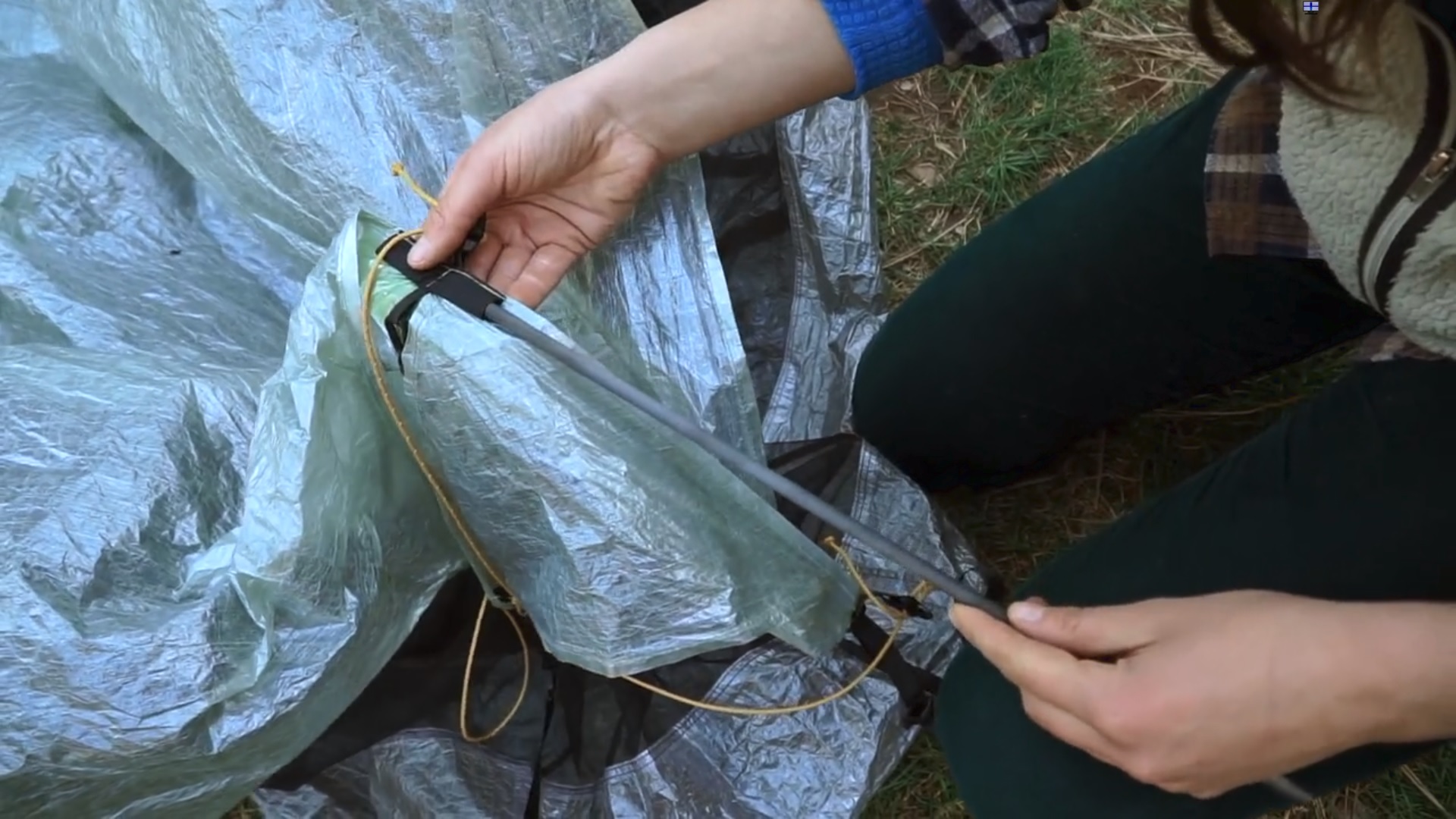
Is packability an issue for you? I don’t care for the long packed size of the Notch although the current version seems to have an easier mechanism for extracting the pitchlock struts than my 2015 model did.

I moved on to a Deschutes after that which is far easier to fit into a low volume pack.

I have grown to prefer the rectangular pitch of mid which is much faster. Not to confuse things but have you considered a Solomid?

PostedApr 16, 2018 at 3:15 am

Removing the struts .
This is how it’s done with the 2018 versions :

from the Notch Li set up video.

Swammy BPL Member
PostedApr 16, 2018 at 5:53 am

Thanks for the great reply Lester!

Matthew, I sort of was considering a Solomid… How does the space inside the inner net compare to the other two? I imagine it would be even more bad weather worthy?

Matthew / BPL Moderator
PostedApr 16, 2018 at 12:47 pm

I can’t answer that. I have a Duomid and a solo XL inner but honestly I keep taking my bivy and have only set up the inner in my yard.

Details I like better about MLD mids:

  1. Rectangular pitch
  2. Linelocs rather than webbing adjusters (better for rock loops, modifications, repair)
  3. Superior materials (I think?)
  4. Made in USA
  5. Interior gear loops
  6. Vastly superior tension setup on the front door (although a ZPacks door hook helps on the Deschutes)
Bill BPL Member
PostedApr 16, 2018 at 3:29 pm

I’ve been having the same internal debate (weight, roominess, cost), but have been looking at the TT Stratospire 1 and the SMD Lunar Solo.  TT claims the Stratospire interior can be adjusted from 19-25 ft2 and SMD says the Lunar Solo has a 25 ft2 interior (the Serenity inner for the Deschutes only has 15 ft2).  I do like the flexibility of the MLD mids and interiors, plus it looks like you can put together a combination that would weigh less than the Stratospire or Lunar Solo.  I know I’m not adding anything in regard to answering Swammy’s question, but I am also very interested in the advice provide here.

Swammy BPL Member
PostedApr 16, 2018 at 5:05 pm

Bill, the interior space of the stratospire 1 and lunar solo are quite tempting… do you know what the interior space of the solomid net is?

Having a removable inner for myself is a must have. Hmm. I’ve given some thought to a bivy but I really like having an inner with the ability to sit up/change clothes etc

The lighter weight factor is really attractive as far as tarp/bivy combos go. Having never used a mid, I may go with a solomid as Matthew suggested.

Thanks for all the input so far!

Paul S. BPL Member
PostedApr 16, 2018 at 5:28 pm

Square footage of Pyramid style tents can be misleading since the last 6 inches are generally not usable space due to the sloping wall.  TarpTent designs tents to maximum usable floor space with struts that pull the fabric out near the ends but makes packing a little more involved as mentioned.

I use a Deschutes Plus when bugs aren’t a big concern.  The interior feels bigger than many 2P tents but that’s with no inner net.  I guy out the wall over my face but usually don’t bother with the foot-side but that would help in high condensation.

M B BPL Member
PostedApr 19, 2018 at 1:43 am

My deschutes is cuben. Its a small shelter. Very cramped inside in the net.  But versatile. Great in wind with rear to wind.   I like the tarp alone for waiting out thunderstorms in day.  I like the net with bathtub for deluges or bugs. Always been bone dry and sleep great in storms.


But i really miss ability to pack up my pack easily with everything but shelter like i can when  inside hexamid twin. Exit shelter, stuff it in pocket, and go on wet morning.

Basically got to get out of deschutes to pack the pack, or rub my back all over inside of wet tarp in morning.

PostedApr 19, 2018 at 4:47 am

Swammy, re: ” I sort of was considering a Solomid… How does the space inside the inner net compare to the other two? I imagine it would be even more bad weather worthy? ”

Thread drift from the OP.  OK, nothing wrong with fishing for info, and although many of your questions can be answered from the companies’ websites, the experience of users will often reveal issues that the websites don’t show.  The sites do show, however, that inside the inner tents, the Notch is actually more spacious than the the others mentioned, except possibly the plus-size models, which may take a solo tent out of the SUL category; and that is not what you appear to be looking for.

Having bought a couple TarpTents, my experience was they offered the best designs to optimize interior space, and are regularly improved by TT.  Not at all a case of just one original tarp design being forever offered without the type of innovation offered by TT.  The Notch is not just a shaped tarp with a lot of stakes, with a separate inner that requires more stakes, and stakes worth using contribute greatly to carrying weight.  The Notch requires just 4 stakes to create the support structure for the tent, so it goes up quickly without a lot of fiddling that is a curse in storms and/or the dark.  Yes, additional stakes can be used to guy the tent in high winds or provide more anchoring  – but that’s your option.  And yes, the carbon struts that support the ends of the tent do make packing a challenge, and have been difficult to install and remove for packing.  But as Franco notes, TT has been working on that as well.  Those struts not only make the tent structurally more stormworthy; but also add a lot of interior room that would be missing if the the tent walls just sloped directly to the ground.

I’m not a great fan of TarpTents, as BPL regulars surely must know by now; because I like to make or mod my own shelters.  But as against the others mentioned here, for a long solo trek of several weeks or months, where it is often not possible just to bail to the nearest civilization whenever the going gets rough, I’d choose the TarpTent hands down.

Swammy BPL Member
PostedApr 20, 2018 at 11:49 pm

Thanks for the reply Sam, really appreciate your honest take and detailed info. Leaning towards getting a Notch again. Why the dislike of Tarptent? Do you have any tents you would recommend? I’d love to make my own shelter but I’m still a novice when it comes to sewing. Currently practicing though! Thanks again everyone!

PostedApr 21, 2018 at 3:33 am

I really like my solomid so far. Took me a while to figure out the pitch (somehow the simplicity made it more confusing), but its very easy once I figured out the basic things to look for. The small footprint was a godsend last weekend when I found myself walking for several hours further than I expected to find a campsite at dusk. Eventually I set up in a tiny patch that would’ve only been possible with a bivvy (turned out there was a good campsite 10 minutes further down the trail, but the sun had just set and I was in pretty dense bush so I didn’t want to be night walking – I’d spent the last 2 hours on the look out for a viable pitch spot).

If you’re after space.. the inner feels cramped for me. I wouldn’t want to wait out a storm in it, or be fluffing around trying to keep dry. It’s appeal was in its storm worthiness, but in reality the comfort it might provide in a storm that I actually need something this stable might not be a worthwhile trade off.

If space is what you’re after, you could also consider a YMG swiftline. Bit more complicated of a set up, might be too heavy (28g with lines and stuff sacks), but has much more usable space due to steep ends. The square footage might be misleading. I’ve never used one, but Gen reckoned it was more storm-worthy than my old cirriform.

LHG Solo was real roomy when I had it.

Viewing 13 posts - 1 through 13 (of 13 total)
Loading...