


Modifying is the secret, imagination works wonders. ;)
Topic
Become a member to post in the forums.
 .
.
Modifying is the secret, imagination works wonders. ;)
** When I use a woodstove in any configuration I like to have it “air tight”—…
The WiFi, for instance, is far from air tight. There are permanently-open breathing holes in the face below the door, and the door is nothing but a loosely-fitting flap. If your fire gets cold or your stove pipe doesn’t extend above the highest peak on the ‘mid (this is important!) then you can get some backdraft. Just don’t skimp on pipe and keep the fire going. I can hardly ever remember instances of backdraft.
** What is the lifespan of the stove pipe?
The bottom edge of the pipe can slowly erode from heat and combustion gasses. You can just trim off an inch with a sharp pair of scissors and you are good to go again. Since you unroll the pipe each time you set the stove up, it tends to break loose anything building up on the inside. But then this totally depends on your local wood. We have low-pitch softwoods here mostly. Sitka spruce, alder, cedar driftwood, some willow bush and we don’t get any buildup. As long as you are nice to your pipe (roll it carefully the first time!) it should last for years, but ymmv.
** What is the lifespan of the bottom of the stove—its floor?
The bottom and top plates of these box stoves use pretty thick Ti (relatively speaking). They heat warp, but I have not seen one wear out. On the WiFi the sides are much (much!) thinner Ti foil. Like, even thinner than the pipe. That can crack at stress points like around the door opening from rolling and unrolling, having bad aim when shoving wood through the hole, etc. And you can get pin holes in the Ti foil over time like in the back where the real heat is generated. It’s easy to replace, and I’ve thought about making a new body with Ti pipe foil. But even with long daily use and nasty/salty beach wood you should surely get more than 60 days out of the lighter components. I’ve thought about using a pair of super light Ti shepherd hooks as pipe support to take the weight off the damper on the WiFi. The damper dies first for us. Have a spare.

To my knowledge, we have never had a bottom burn out. We have had people use them daily through an entire winter before. Likewise pipe doesn’t really wear out, it may take a shape you don’t like but you can sort or restart the process by rolling it backwards and then putting it on a grill at say 450 degrees and then start with a new shape.
Resetting the pipe’s ‘memory’ by rolling it backwards and baking it is a super interesting idea. I will have to tell PS about that once since he rolled one of his pipes for the first time out in the field and it looks completely mangled, lol.

Thanks for the info.
from Dan : Modifying is the secret, imagination works wonders. ;)
Great ! You buy one of those 2 foot square, one foot high, 57 lbs Ooni and cut it down in size and weight to fit a backpack.
Send me a PM when you have finished .
Just a wild guess on my part but I think the reason why the Ooni works has to do with the wall thickness and those heat tiles.
Make a small LW version without the tiles and it will not work like that.
BTW, this is an outdoor oven I built :
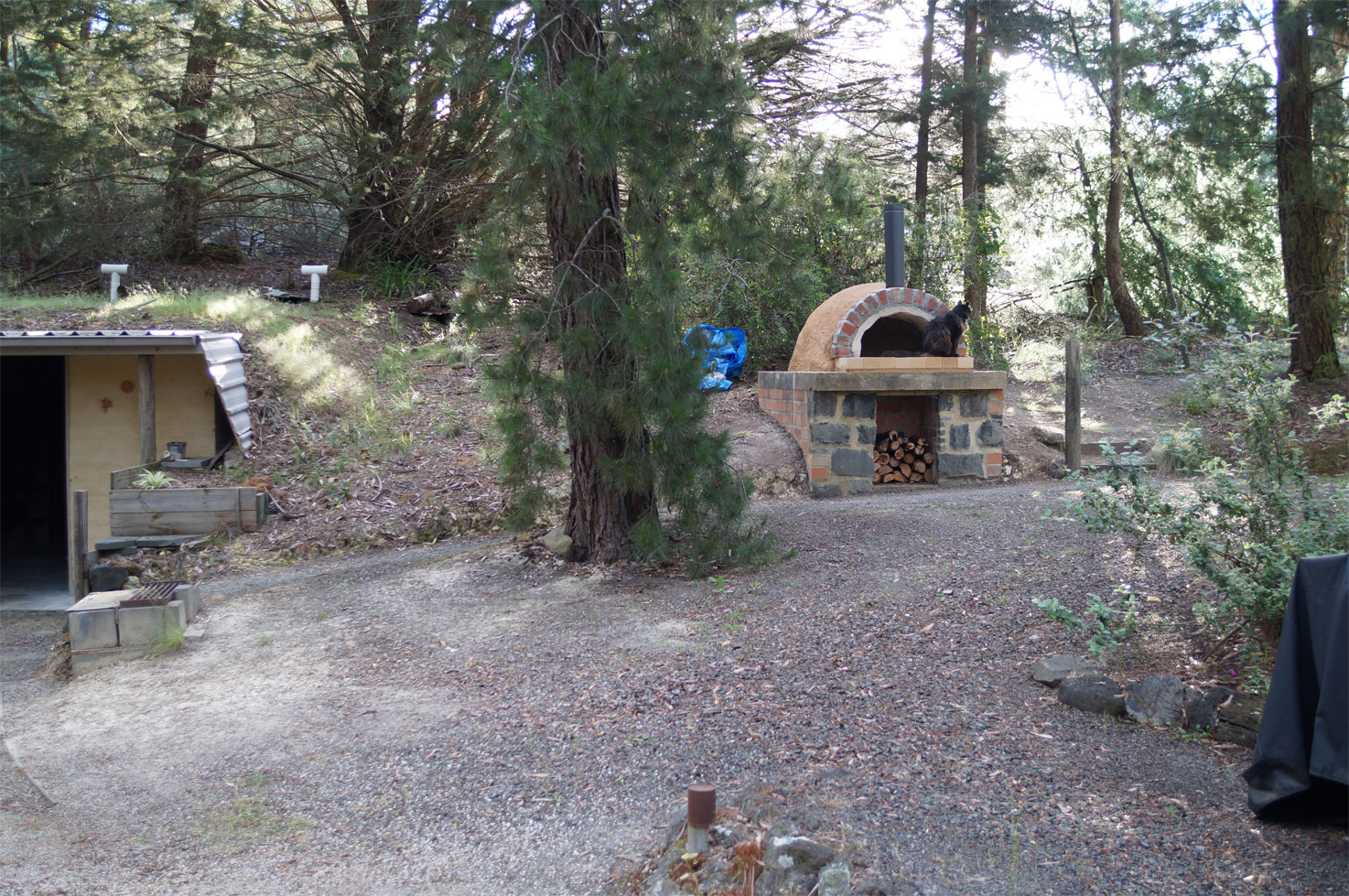
It’s about 260 lbs plus the base. No, a 4 lbs scaled down version will not work
Make a small LW version without the tiles and it will not work like that.
Removing the tiles is the 1st mod. Remember what I said? Use it as a broiler. The tiles are for a pizza oven :) It will heat water also:) Modify and then modify again.
Your oven turned out really nice, I like!!!
But what does that have to do with the OP’s question ?
How are you going to get that thing down to a packable size and light enogh weight ?
I found a user video showing the assembly of the 3W stove :

But what does that have to do with the OP’s question ?
NOTHING
How are you going to get that thing down to a packable size and light enogh weight ?
No worries, the OP is going to use a pulk because of the large amount of snow he’s going to have in his Wisconsin winter coming up LOL

Pulling a new stove out of the packaging and putting it (partially) together is not the real test.
Putting an old, beat-up stove together that is all warped from heat and getting squished in a pack is the real test. It seems that every stove enters non-euclidean geometry the first time it gets really hot, and it never comes back.
I’ll also mention that the WiFi has 1/2 as many firebox parts as most stoves (top, bottom, single continuous wall) and the U-Turn has 2/3 as many (top, bottom, front, continuous sides/back).
Philip,
yes true that. That was the great part of the WiFi that the top and bottom don’t have sliding /locking sides so if and when those panels get out of shape it does not matter that much. Another advantage is that the curved sides reflect the heat better towards the middle. cylinder stoves do that well but are not good for cooking or just boiling water. This reminds me of how a member here was going to use a Ti bottle next to a cone type stove to melt snow ….(and yes , some thought it was a good idea)
Digging up old threads …
Anyone try out one of those Korean stoves , the Wild Wild West titanium?
Franco posted about it on this thread. The price sure beats most alternatives.
Anyone?
Some have mentioned a concern over the glass breaking at the wrong time…others say it’s the best feature. Looks good here

Become a member to post in the forums.
 How to Plan with Decision GatesKeep going, change your route, or turn back? Watch how decision gates help structure these choices in our YouTube video.
 © Beartooth Media Group Inc.
 Loading...