Topic

Time for a rain gear upgrade? Questions about Z-Packs Challenger jacket

Viewing 25 posts - 26 through 50 (of 50 total)
Nick Gatel BPL Member
PostedOct 3, 2016 at 10:23 am

At ~12oz, the Packa sounds appealing, but also weighs almost as much as my entire shelter!

Well, yes. I haven’t use one so I can’t recommend it. But remember:

form follows function; weight has nothing to do with it.

Assuming the Packa does what people say it does, and it is functionally waterproof and it breathes well via airflow, is it better to have a 12 ounce rain solution that works or a 6 ounce solution that doesn’t work? The 6 ounce difference is much less than a lot of the truly unnecessary gear a lot of people take with them.

Actually the Packa weighs more than my go to shelter!

JCH BPL Member
PostedOct 3, 2016 at 11:06 am

is it better to have a 12 ounce rain solution that works or a 6 ounce solution that doesn’t work?

Nick hits the nail squarely on the head…weight is not the only variable in the equation.

FWIW. I have a 20d Large Packa and after replacing all of the “overly robust” shock cordage and cord locks with 1/16″ cord and mini cord locks, it weighs 8.75 oz.  I especially like the way the Packa can be deployed from, and stowed back to, pack-cover-mode without removing my pack, or even slowing down significantly.

As mentioned by many others, rain gear is a very personal choice…there is no wrong answer if it works for you. At 8.75 oz I’m very happy with the price/weight/functionality equation of the (modified) 20d Packa.

Cedar Tree used to offer both a 10d and a Cuben Packa but I no longer see them on the website.  I’d buy another 20d if something happened to my current one.

HiLight BPL Member
PostedOct 3, 2016 at 11:33 am

Mark – Many people have struggled to stay dry while using rain gear over long periods of exertion, from beginners to backcountry bad boys like Andrew Skurka.. I’m happy to hear this isn’t an issue for you, but it’s not “absolute nonsense”.

jimmy b BPL Member
PostedOct 3, 2016 at 2:57 pm

JCH beat me to the post. My 20d after the same mods as he describes (mediumx) came in at 8.32 oz. That’s lighter than my Marmot Mica and my MYOG sil pants. You could probably remove the rear flap as well but I haven’t seen the need yet. As the packa hangs quite low, just about to my knees, I don’t think rain pants or kilts are necessary in appropriate temps. One additional thing I liked was the extra coverage it offered my quilt zipped up and slipped over it last trip during a torrential downpour where all doors needed closing and condensation with 2 in the Duplex was unavoidable.

Although I AM a mechanic and big on PM I still like that other than normal care I don’t need extra maintenance, DWR.

I still use a nyloflume bag liner as a packa will not keep your gear dry if dunked in a stream and it is used as my mat inflator. Other than a beanie or a pr. of gloves/mittens I don’t usually have dry items in my outer pockets but it is a bit of added convenience if I decide to drop a layer while hiking. You could argue a wet shelter stored outside could drain a little but that would be a stretch. Best thing about the pack coverage was a nice dry harness.

As everything is a compromise the packa probably wouldn’t be a great choice for bushwacking.

There area a ton of different options and I hate to sound like a fan boy but dang when I find what really works good for me I have a hard time keeping it all to myself.

Mark BPL Member
PostedOct 3, 2016 at 3:20 pm

Who wants a garment that requires maintenance beyond washing it when it gets dirty? And at what point do you know when it is time to renew the DWR? In the middle of a long thru-hike when the garment sudden fails? Unless someone hangs out on a forum like BPL or reads the multitude of literature attached to a new WPB garment with understanding and long term retention, they aren’t going to grasp the concept of required maintenance for something as simple as a jacket.

I don’t disagree Nick, but my disbelief was aimed at someone that knows about DWR but chose a jacket specifically because it didn’t have it.

Agree 100% that the DWR is likely to wear off on a long distance hike, but at least it’ll help the jacket work better until then, even then it’ll gain back most of it’s DWR when washed and dried correctly.

Why shoot yourself in the foot before you start by producing (Zpacks) or buying (op) a jacket that you know has no DWR before you start.

With my Zpacks challenger jacket it “wet out” pretty much straight away, my Montane Further Faster jacket only started “wetting out” after weeks or wear even then it recovers most of it’sd DWR when washed and dried correctly.

My FF jacket must have been 3 or 4 years when i purchased my Challenger jacket, yet the old jacket still performed better and took a LOT longer before it “wet out”


The older DWR coatings used be a LOT more durable, but the wooly hat brigade started complaining about the planet again, so this is what we’re stuck with now.

Mark BPL Member
PostedOct 3, 2016 at 3:38 pm

Mark – Many people have struggled to stay dry while using rain gear over long periods of exertion, from beginners to backcountry bad boys like Andrew Skurka.. I’m happy to hear this isn’t an issue for you, but it’s not “absolute nonsense”.

Hi hilight, don’t think we’ve conversed before so pleased to meet you :)

I don’t know why though, i’m British so am used to dealing with a fair bit of rain, i’ve also been living in Greece for a while so i’m also used to hot weather, yet i seem to be able to find a happy balance.

If you visit the UK for more than a few days chances are it’ll rain a fair bit, if you head out onto the hills on these days you’ll see a fair few people out hiking.

The vast vast majority of those people will return back to their cars, hotels, B&B’s or tents and be nothing more than a bit damp.

If rain shells were as poor as some folks on here lead people to believe then most of the hikers in the UK will suffer from hypothermia at least once a year ;)

As i’ve said a couple of times my Challenger jacket was terrible, it leaked like a sieve with wind blown rain and without any exaggeration there was a waterfall running off my chin down inside the jacket, nothing i did with the hood stopped this.

With my Montane further faster jacket in the same sort of conditions apart from a bit of dampness from sweating i was dry.

I’ve been out for multi-day hikes where if it stopped raining it must have been for the few hours i slept because it rained every waking min.

For most of those hikes i returned home dry (again apart from a bit of dampness, mainly on the back, from sweat), i’ve even finished multi-day continuous rain hikes with completely dry socks ;)

I don’t really buy into the blog stuff (i’m guessing the guy you mention is a blogger?) most the time these people either have a vested interest in putting down products or they say dumb stuff just so people post links and talk about their blog.

As i don’t know that bloke i don’t know if either is the case, it might just be he/she hikes in warm weather where sweat levels when wearing a shell jacket are about the same than if you just hiked without a shell.

With shells there are very few i’ve owned that let rain in, most the time in warmer weather it’s a case of balancing sweat levels, as i’m not interested in racing to some stop or point i find if i slow my pace when going up hill it makes a MASSIVE difference to the amount of heat/sweat i put out.

If it’s colder then i often remove any midlayers and hike just in a synthetic base layer and a shell, i find if i’m just a little cold when stood still i tend to sweat very little when hiking.

It’s a balance, if folks understand that and take necessary steps to stop themselves sweating like a yak in a sauna i don’t see why anyone would get any wetter than a bit damp from sweat

Nick Gatel BPL Member
PostedOct 3, 2016 at 10:25 pm

I don’t really buy into the blog stuff (i’m guessing the guy you mention is a blogger?) most the time these people either have a vested interest in putting down products or they say dumb stuff just so people post links and talk about their blog.

As i don’t know that bloke i don’t know if either is the case, it might just be he/she hikes in warm weather where sweat levels when wearing a shell jacket are about the same than if you just hiked without a shell.

The Bloke (Andrew Skurka) is a well known backpacker, adventurer (National Geographic’s 2008 Adventurer of the Year), ultramarathoner, author, wilderness guide, public speaker, and gear designer. You might want to read some of the stuff on his blog, especially the epic winter trips… for Andrew a nice walk is 6 or 7 thousand miles, and walking solo for weeks on end in Alaska’s Brooks Range in the middle of winter is something he thought was a fun thing to do. So we can consider him a subject matter expert.

Now, just because someone is considered a SME, doesn’t mean they have a monopoly on knowledge or that they are always right. I don’t always agree with Andrew, but I sure do respect his knowledge and always take into consideration his opinions; just as I respect and value the opinion of your fellow Brit, Chris Townsend.

Not that we need to defer to the so-called experts, whether they are in the public eye or are self-proclaimed experts writing a blog. One of the great things about BPL is the worldwide membership of people from diverse backgrounds, locations, experience, knowledge, and skills. We can learn a lot from each other. Rain gear has always been a frequent subject here, and for the most part in extended rain with high exertion over a lengthy period of time the walker is probably going to get wet one way or another. The discussion to minimize it and stay warm is always a worthwhile topic.


HiLight BPL Member
PostedOct 3, 2016 at 10:50 pm

Mark & Nick – As both of you mentioned, I believe that personal exertion level is the key to maximizing the performance of rain gear. The harder and longer a person pushes themselves, the more likely the garment’s ability to evacuate internal moisture will be overwhelmed. No secret there. My point was that spending hours moving in warmer temperatures in the rain may lead many people to collect some (or a lot) of internal moisture. For instance, I have a friend that flatly refuses to backpack in the rain, to the point that he nearly cut a trip in Yellowstone short. I suspect that he needs to rethink his clothing choices, but he’s a bit thick when it comes to not letting go of his leaky, 25 year old hard shell.

Each of us needs to learn how to manage that micro-climate for ourselves, and discussions like this can help people find the gear and techniques to make the best of their situation. I’ve noticed that someone covered in sweat sometimes believes that their shell failed them, since it’s “breathable”. What they may not realize is that whatever the fabric tech, it’s made to transport water vapor, not liquid water. Instead of wetting out externally, they’ve sweated out internally, and it may not be possible to get dry until they’re able to peel off the saturated clothes and start fresh. Maybe I’m wrong about that and there’s some tech that’ll slurp sweat right off of you and put it on the other side of the shell, but I haven’t heard of it. That’s also why I think it’s important that a design relies on good ventilation more than whatever magic membrane is used.

Btw, Andrew Skurka has been putting some real effort into his site this year, with regular articles, blog posts, and videos. BPL should be so prolific. It’s worth a look. http://andrewskurka.com/

Mark BPL Member
PostedOct 4, 2016 at 2:14 am

Thanks for the info Nick, i do enjoy reading trip reports and the like i’ve moved away from trusting “reviews” from forums and blogs as in my experience the vast vast majority are incomplete to the point of being deceitful.

I’ve purchased several items this year, every item i meticulously researched yet found them fundamentally flawed, on reading reviews after these experiences i’ve found those that mentioned these flaws either glossed over them or somehow justified the flaws.

Oddly enough i also found out that they either sold them straight after the review or were given them FOC.

So i’m pretty sceptical of hiking reviews these days.

The other thing is that because the US is such a vast expanse of land mass that just because something works in say California for them it doesn’t mean it will work in say the UK.

A LOT of the lighter tents used over there wouldn’t last a night on a Scottish hillside even in summer.

So i don’t really value other hikers opinions or reviews much these days when it comes to choosing the gear i buy, sad but true.


Hilight,

I’ve just been fixing our fence, it’s around 24c here and even without a top the sweat was dripping off me.

I think the folks that write off rain shells tend to overlook the amount of sweat an average person can put out when working hard.

If you’re sweating in say a baselayer and it starts raining of course you are going to sweat more with a rain shell over that said base layer, i don’t see how anyone could believe otherwise.

If on the other hand it’s cool enough that you feel you’d be better with a wind shell jacket on then it’s not much to expect a rain shell to “perform” in those sort of conditions.

Even then it’s still be to vent as much as possible, if the rain hits your back for a section then open the front zip, if you start to sweat too much or overheat then something as simple as rolling up your sleeves helps a fair bit.

It’s a case of having realistic expectations and actively trying to manage your heat output yourself.

If you do this then any half decent rain shell will keep you dry, not bone dry, but even if your base layer is slightly damp it’ll dry out from your body heat pretty quickly once you slow done or stop.

HiLight BPL Member
PostedOct 4, 2016 at 5:55 am

It’s a case of having realistic expectations and actively trying to manage your heat output yourself.

Yarp.

James holden BPL Member
PostedOct 4, 2016 at 6:30 am

how many folks spend a week or more out in the HEAVY rain in cold temps? ….

not to many i suppose

for most folks rain jackets and the DWR arent really too much of an issue if you can maintain it (dryer and reproof) …

lets face it most UL folks dont hike where they need to wear a rain jacket continuously in the bush for several days …

for a few short days of mostly on trail stuff, a refreshed DWR will generally work fine for that period

as to the OPs question …

if its not too cold and a light rain … just wear a light fuzzy fleece …. when active the body heat will push out most the moisture … when stopped put on the rain jacket

if it gets colder use the rain jacket alone when active … an if it gets to freezing rain wear the fleece under the rain jacket

thats really all there is to it

;)

HiLight BPL Member
PostedOct 4, 2016 at 7:44 am

^ That’s what I do, with the addition of a wind shirt and a light, syn-fill puffy in the mix. Works well for me, and it provides a lot of flexibility in three-season conditions. On the move, I suspect I could get by with the fleece, puffy, and wind shirt in winter, too.

Mark BPL Member
PostedOct 4, 2016 at 10:25 am

how many folks spend a week or more out in the HEAVY rain in cold temps? ….

In the UK………………………………….

James holden BPL Member
PostedOct 4, 2016 at 10:56 am

ahhh but mark … you folks basically had your trees cut down centuries ago

so you arent bushwhacking in the rain …

in the coastal PNW we still have many many many trees and the abrasion affects the DWR more

;)

Mark BPL Member
PostedOct 4, 2016 at 11:29 am

What can i say Eric, the sacrifices we paid to beat the French and Spanish ;)

Besides if you’re as crap at map reading as i am every hike turns into a bushwack :o


Where’d the path go again………………………..

Bob Shuff BPL Member
PostedOct 4, 2016 at 12:12 pm

Oh yea…my trees are scratchier than your trees!

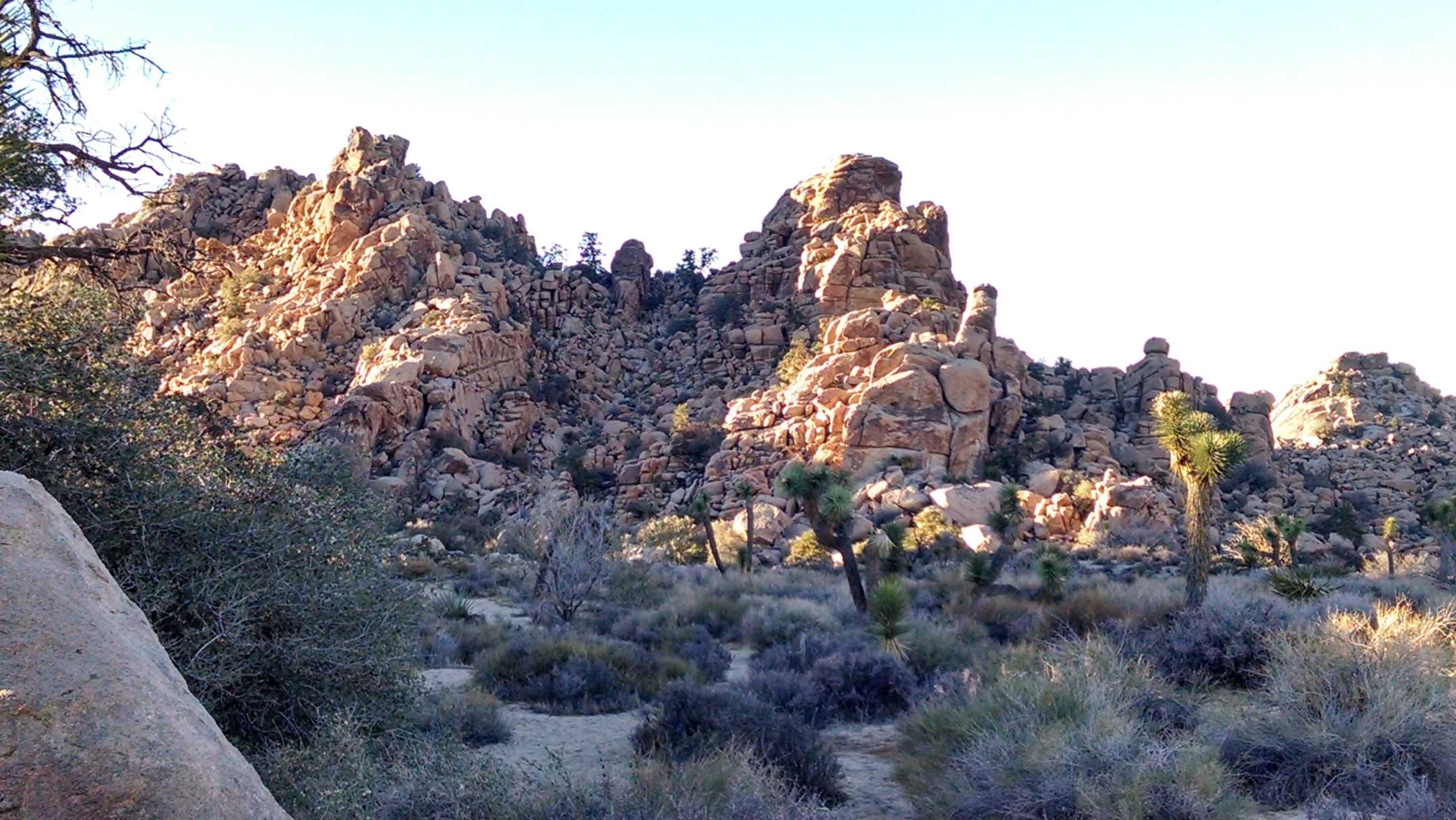
…well, they’re not actually trees, and it doesn’t really rain that much, but no one else posted pics of their bushwhackable trails – or their packas or even a rain jacket.

It is really scratchy out here though.  And windy, which lead me to jackets instead of the packa.  Since the DWR debate is getting a little old, how does the packa work with a little wind?  Better than a poncho?

Slbear  ;-)

James holden BPL Member
PostedOct 4, 2016 at 1:30 pm

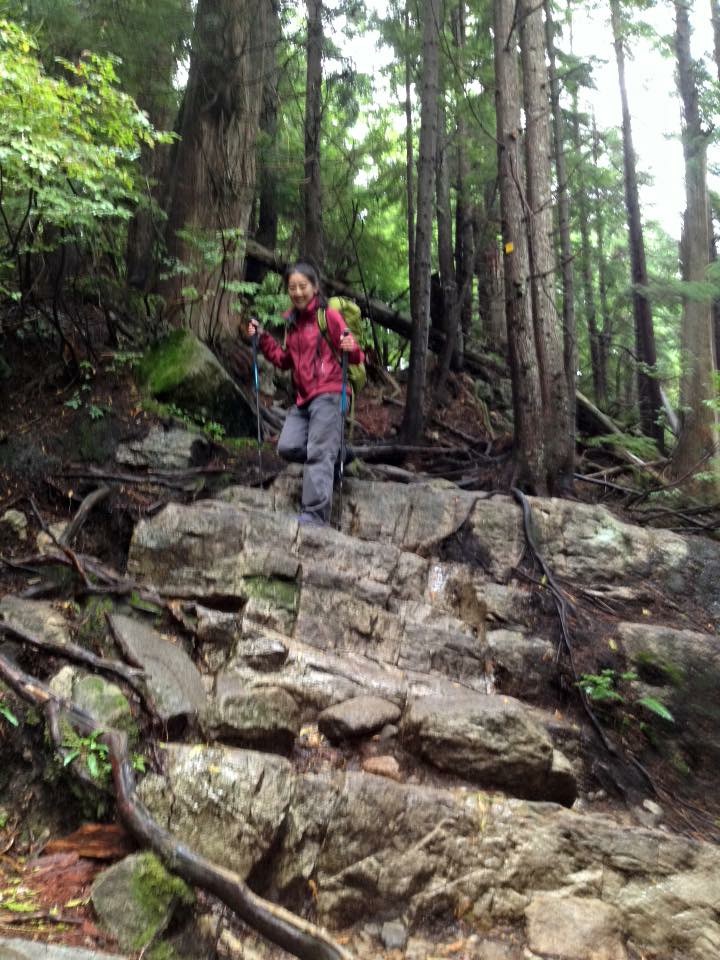
just a few day and overnight well groomed trails rated as “easy” for those who might not be aware of coastal BC conditions and terrain …

note that even when its not raining the ground retains water and theres still puddles and mud pits all around …

and for folks who say goretex socks dont work … this is the trail, it may well be mostly puddles after or during a good rain …

as for ponchos … as you can see there may well be significant things for it to get caught on … one may well be constantly squeezing in between trees/rocks (and grabbing them) even on well groomed trails here …

you can probably make it work, if you tried … but most up here dont use em especially on hikes here that have elevation changes (your grabbing roots, trees and rocks all the time)

this is the easy stuff which hundreds of folks do every week … rain or shine

oddly enough many of em dont use too much UL gear … and theyll still lap you

and NO ONE expects to stay dry … its all about not being cold and hypothermic …

and rewarming yourself at the sbucks afterwards with a pumpkin spiced non fat soy half sweet latte

;)


HiLight BPL Member
PostedOct 4, 2016 at 2:01 pm

I’ve used a military poncho with the sides fastened together into crude sleeves. It’s a great, cheap way to stay dry and well ventilated, but there are some drawbacks. I’d give the PITA edge to Eric’s Devil’s club over Bob’s skritchy shrubbery, but neither would be much fun to wade through in a poncho. Scrambling up & down slippery terrain while tripping over a poncho and dropping your machine gun is less enjoyable to do than it is to watch.

I haven’t worn a packa, but judging from the video, it might be ok for bushwacking since it’s considerably shorter than a poncho, with less fabric to catch on brush. I wouldn’t want to wear one in the wind, though.

Eli Zabielski BPL Member
PostedOct 4, 2016 at 2:39 pm

I used the Challenger jacket to thru hike the PCT in 2015, and I wouldn’t use it again.

Even though it didn’t rain much on the hike, I used the jacket a lot. I slept in it if it was cold, wore it in town while doing laundry, wore it on cold windy days. It got packed and unpacked many many times. Over time, all the fabric panels started to separate where they were glued together. I suspect this may be because of how I washed it on trail. Doing laundry on trail is a matter of luck that some random washer/dryer isn’t going to wreck your stuff. Somehow the glue just started to fail, so the stress points started to separate, creating huge gaps in the elbows and armpits. ZPacks sent me some of their cuben repair tape and that worked to get me through the hike.

But even if that hadn’t have happened, I still wouldn’t use this jacket again because it’s not waterproof enough! I only had one real full day of rain, and it was over 2000 miles into the trip so my jacket wasn’t exactly new. I ended that day feeling rather clammy on my arms, shoulders, back, and where water leaked in through the zipper. I only used wind pants so I was otherwise pretty wet everywhere else, making for a sad day of hiking. If I had more days of rain, or regularly tried to use this in a rainy area, I would really start to hate it.

After this, I am done with WPB fabrics entirely. It’s really just a comment on the rain wear industry in general, rather than just ZPacks. I think there’s something messed up about $200 rain jackets that don’t even work in rain. DWR failing is just a poor excuse for a base fabric that didn’t work as claimed in the first place.

Zack Freije BPL Member
PostedOct 4, 2016 at 5:16 pm

So, what do you think about the idea of a Packa for better rain protection and heavy exertion + a windshirt for light sprinkles or paired under the packa in cold, blowing conditions?

Is a windshirt essentially a rain jacket, except that it has less water repellency?

What about something like a Luke’s UL Argon windshell that is 3 oz? I’m guessing it has next to zero ability to repel water? Are there other good options?

JCH BPL Member
PostedOct 4, 2016 at 5:30 pm

FWIW, I carry a Montbell Tachyon anorak (1.9 oz) with the Packa.  I haven’t used a lot of wind shirts but I gather from comments on this site it is middle of the pack. That said I love it but also admit to being a huge fan of Montbell. It would likely servive misting or brief light drizzle but I wouldn’t push it farther than that.

i wouldn’t make habit of wearing both at once. I think in cold rain a 100 wt fleece or cap4 grid top would work really well under the packa.

James holden BPL Member
PostedOct 4, 2016 at 5:55 pm

a windshirt will soak through eventually and cling like a klingon on blood worm pie

once it does that itll press against yr skin/base, and feel cold and wet

a fuzzy fleece “normal fitting” (not snug) will generally not cling and will dry off somewhat with enough activity

one can wear a windshirt over a fuzzy fleece if its windy …. but by that time you might was well be wearing a rain jacket

a soaked windshirt (no beading) doesnt breath that well …

in a light sprinkle the windshirt will be fine providing its not overwhelmed and has the opportunity to dry out between sprinkles


;)


HiLight BPL Member
PostedOct 4, 2016 at 7:12 pm

Zack – Unsurprisingly, one of the best posts I’ve seen on the air permeability of wind shirts and rain gear is from the esteemed Richard Nisley:

Activity AND environmental factors determine a garment’s moisture transport (air permeability) requirements.

Activity is most commonly defined in METS. Seehttp://onlinelibrary.wiley.com/doi/10.1002/clc.4960130809/pdf 1 MET is your energy expended just resting; .8 MET for sleeping; and backpacking is typically the upper limit for sustained activity at 8+ MET. Like a car engine, about 75% of your energy expenditure is wasted heat which needs to be dissipated to stay comfortable. If the heat generated AND the environmental factors raise your core temperature, your body will generate sweat to cool off. As part of the physiological regulation of body temperature, the skin will begin to sweat almost precisely at 98.6F, versus 95F average skin temperature, and the perspiration will increase rapidly with increasing skin temperature. The sweat only cools you off if it can evaporate and the vapor can move through your clothing ensemble. Sweat removes excess body heat through the heat of evaporation. If a clothing ensemble can’t pass the vapor through fast enough, the moisture stays on your skin in a liquid state. When the liquid sweat stays on about 20% of your skin surface, you become uncomfortable. Also your body temperature will begin to rise.

As the windshirt’s CFM goes up, its ability to pass water vapor increases up to about 35 CFM. After that point, the combined moisture resistances of the base layer, the air gap between the base layer – windshirt, the windshirt, and the windshirt boundary layer prevent further moisture transport increases. Also as the windshirt’s CFM goes up, its wind resistance goes down.

A windshirt not only blocks wind but it also serves as an insulation layer. The air gap between your base layer and a properly sized windshirt provides an incremental .6 clo insulation to your ensemble.

Scenario 1 – If your MET level AND environmental factors result in you being consistently cool, any CFM windshirt (.6 clo), a rain jacket (.6 clo), or insulating layer (? Clo), or combination of the aforementioned, is appropriate.

Scenario 2 – If your MET level AND environmental factors result in you being consistently comfortable, no action is required.

Scenario 3 – If your MET level AND/or environmental factors are varying such that you are sometimes comfortable, sometimes cool, and sometimes warm then a base layer and approximately 35 CFM windshirt is required for optimal comfort. This scenario occurs as you quickly move through varying micro-climates and/or your MET rate varies with the terrain.

Windshirts in the range of 35 CFM provide a hydrostatic head of approximately 400 mm; you need a minimum of 1,500 mm HH to be rain proof. Conversely, rain proof garments, provide a CFM of approximately .5 CFM best case. Contrary to the marketing hype, you will not stay dry on the inside wearing rain gear or a low air permeability windshirt in scenario 3.

That last sentence is chock full of truthiness, and worth keeping in mind while shopping.

Nick Gatel BPL Member
PostedOct 5, 2016 at 11:03 am

Thoughts on ponchos…

  • A lot of material to get caught on brush and thorns.
  • A lot of material to flap around in the wind, although a simple cord around the waist can help mitigate this.
  • Your arms might be exposed to the elements, especially if you use trekking pole. I don’t use poles and often just slip each thumb under my pack straps keeping my arms covered. If I need to extend my arms to keep balance or grab onto something it is easy to do.

If anyone read my blog post on the search for the holy grail, you will see that the zPacks poncho/ground sheet is quite small. In cold driving rain it isn’t long enough and I have to wear a kilt or rain chaps. It is barely large enough to get over my McHale LPB 36, but it is easy to get over my other packs. Since it is made out of Cuben, a laminate, it is much less susceptible to catching on brush or thorns, it usually just slides over them, unlike nylon or other woven materials. A few years ago I had to descend a steep desert canyon that was choked with rocks and catclaw. There was a steady light drizzle (no chance of flash flood) and temps were just above freezing. I was amazed how well the Cuben slid over the obstacles.

When traveling uphill or downhill off trail my Cuben kilt is more problematic than the poncho as it tries to limit my stride. If I overtired, the bottom velcro usually comes loose, which isn’t a big deal.

But, ponchos aren’t for everyone. You wouldn’t want to buy a Cuben poncho just to see if it works for you. For me, ponchos work extremely well in that hellish condition of precipitation that alternates between sleet and snow. But again ponchos aren’t for everyone.

Paul S. BPL Member
PostedOct 5, 2016 at 11:57 am

I have a twin sized ZPacks poncho/groundsheet and it reaches down to the tops of my knees (I’m 5′ 10″).  Here are my observations and experience in bad weather in the last few weeks.

  • Completely waterproof, no DWR needed.  Will never wet out our cling.  If I were to encounter a string of days of a cold downpour I would likely want to wear a poncho over a hard shell.
  • Excellent ventilation, but does NOT trap much heat if you need additional insulation.
  • Performs as pack cover (though only when wearing your pack)
  • The twin size works as rain skirt, though not the full coverage a dedicated solution would provide.
  • Waist belt works well to keep your feet visible.  In really strong winds you do need to use your arms to hold down the sides.

I wore my poncho when descending a 600 ft rocky slope (Sahale Glacier) in sleet and wind.  I was concerned about being able to see my feet as I descended but it wasn’t an issue at all, despite the snow-covered rocks and loose dirt.  It was a pain to get something out of my pack without exposing it to the elements, but I suspect that will improve with practice.  I also used it as a makeshift bivy with my tarp around my feet and my torso covered with the poncho (winds were too high to properly pitch my tarp).

I also wore it ascending a very steep, rocky climb of 3/4 mile and 2,000 ft (Aasgard Pass) in sleet and high winds.  Near the top the winds got very strong and I had to keep my arms at my sides to keep the poncho down.  I really wish I had a proper hard shell at that point.  The sleet had ceased halfway up but the winds were brutal and my damp fleece/windjacket combo wasn’t really cutting it, so I was wearing the poncho more for wind resistance and insulation.  Next time the forecast is 20-30 MPH winds I’m bringing my hard shell.

Viewing 25 posts - 26 through 50 (of 50 total)
Loading...