Topic

tick removal

Viewing 25 posts - 1 through 25 (of 27 total)
Jerry Adams BPL Member
PostedApr 9, 2019 at 11:01 pm

I just got this from Consumer Reports

https://www.consumerreports.org/outdoor-safety/how-to-remove-a-tick/

from CDC protocol

“1. Use fine-tipped tweezers to grasp the tick as close to the skin’s surface as possible.

2. Once you have a firm grasp, pull upward with steady, even force. Don’t twist or jerk the tick, because you might cause its mouth parts to break off and remain in the skin.

3. If you accidentally break the tick apart, try removing the mouth parts with the tweezers. If you can’t, leave it alone and let the skin heal.

4. You can dispose of the tick in one of several ways: Submerse it in alcohol, place it in a sealed bag or container, wrap it tightly in tape, or flush it down the toilet. (Never handle a tick with your bare fingers; pathogens called spirochetes can pass from the tick to you through even tiny breaks in your skin.)

5. Once the tick is disposed of, thoroughly clean the bite area and your hands with rubbing alcohol, an iodine scrub, or soap and water.

6. Check the bite area for several weeks after removal. If you develop a rash there (or have a fever at any point in that time frame), see a doctor about getting tested for Lyme and other tick-borne diseases. ”

“There are several tick-removal devices on the market, but the CDC says that a plain set of fine-tipped (pointy) tweezers or a thin, curved forceps (available at a regular pharmacy) is really all you need.”

I’ve used one of those tools, a tick twister, that worked okay. One time it didn’t work, I couldn’t get my fine tweezers to work, I scraped it off with finger nail. Then the tick twister removed the legs that were still there.

Kevin Babione BPL Member
PostedApr 10, 2019 at 12:57 am

I hike in PA and have come to really hate ticks.  I went on a 3-night trip last April (12-15) and when I got home I had four large ticks on me.  I removed the ticks with my tick key (which worked really well) but the tick bites never healed!  I still have four red lumps where they were embedded.

I think I’m sending my clothing out to be treated before my next trip.  Enough is enough.

PostedApr 10, 2019 at 2:58 pm

1. Use fine-tipped tweezers to grasp the tick as close to the skin’s surface as possible.

2. Once you have a firm grasp, pull upward with steady, even force. Don’t twist or jerk the tick, because you might cause its mouth parts to break off and remain in the skin.

I’ve had ticks that weren’t attached for very long and this works fine.

I’ve also had ticks that were buried so deep that only the end of their abdomen and the last pair of flailing legs were visible. If I use tweezers, all I can grab is the abdomen which squeezes the contents into the wound (bad news) and leaves most of the dead tick behind. Then dig out body parts with a needle over the next few weeks as it fails to heal.

Jerry Adams BPL Member
PostedApr 10, 2019 at 3:21 pm

yeah, that’s the problem, tick deeply imbedded

what do you do?

David P BPL Member
PostedApr 11, 2019 at 11:54 am

Living in Maine, ticks have become an epidemic pretty much. We have the highest rate of Lymes disease. There is a website (there are many websites) but a good one is MaineLyme.com.  If you find a deer tick that is fully engorged chances are it has been on long enough to transmit lymes if it is infected.  Using fine point tweezers getting in as close as you can to mouth parts you should pull the tick straight out trying not to squeeze or squish the body. If fully engorged like bobs case you will have to spread the skin away from tick and carefully push the tweezers into your skin adjacent to tick and try to grab beneath the abdomen, pulling straight out might require a little more force. If mouth parts stay in skin they say to leave them and the skin will eventually expel them. The mouth parts left in skin won’t transmit if you get the rest of tick out soon enough. Don’t put oils or Vaseline or burn tick with a lighter while it is engorged. Even though studies say 36-48 hours after attachment there are cases of transmission in just a few hours, and it is difficult to estimate exactly how long the tick has been there. However not ALL ticks are infected(50-70%) and only ~ 50% of lymes cases present with the tell tale growing red rash or bulls eye. To add to the confusion and frustration, testing for lymes often yields a “false negative” as it takes up to 4 weeks after a bite for the body to produce enough antibodies to be detected by the test. In my opinion if it’s a deer tick, not dog tick, that is fully engorged I would get off trail ASAP and get the full antibiotic treatment to prevent lymes from getting full blown.  Waiting around for symptoms just means it has longer to potentially reek havoc in the body.

my wife was 5 months pregnant and had an attached deer tick, I pulled it out live and in tact thankfully. she had the antibiotic treatment and nothing came of it luckily. But I have two other people close to me who have contracted Lymes, and thousands more…

Prevention is key, like Todd suggests, frequent checks during the day and a thorough nightly tick check is a MUsT.  Even though it might be embarrassing employ a hiking companion to do a thorough check in hard to see areas Or a mirror and flashlight if solo. The hardest part for me to check on myself is my scalp honestly.

Also like Kevin suggests sending your favorite hiking clothes to get professional  permethrin treatment wash is probably most effective. My friend who works in land conservation uses the spray on kind with success but he has to keep doing it every couple weeks. He only treats his shoes, gaiters, and lower half of pant legs. But please don’t wash these clothes in a river or lake during your hike. Permethrin is a potent insecticide. Other products like DEET, Picaridin are seemingly effective as well but don’t kill ticks like permethrin  just dissuade them…

personally I use natural tick repellent (cedar oil, and BUgMace) and do the geeky tuck my pants into dirty girl gaiters And diligent tick checks especially before bedtime. Also for prevention if you have the option, ticks don’t typically inhabit areas ABOVE 1,500 feet elevation. In western Maine it’s not hard to find trails that start at that elevation. On the coast? Not so much. Also staying on marked trails and trying to avoid brush and tall grasses.

Good luck to all dealing with these pesky arachnids that have been around since the Cretaceous period…

Kattt BPL Member
PostedApr 11, 2019 at 12:03 pm

#4 is completely wrong. You do not dispose of the tick. You keep it in a ziplock bag, date the bag and freeze it. Should you develop a rash but not a bulls eye, you take the tick in to get tested. I can’t believe they tell people to dispose of the tick.

Also missing is one of the most important things you want to avoid during removal: squeezing the body, as that pushes the content back into you. They mention getting the tweezers as close to mouth part as possible but don’t even explain why.

Also missing is putting antibiotic ointment at the site after removal and keeping it there by covering witha bandaid. There is more to worry about than Lyme’s disease and the antibiotic ointment is a decent first step,

That is a poorly done list.

Todd T BPL Member
PostedApr 11, 2019 at 2:09 pm

…ticks don’t typically inhabit areas ABOVE 1,500 feet elevation.

That must be a regional thing (i.e., varies by the type of tick)?  Most of the ticks I deal with are waaay higher than that.

David Thomas BPL Member
PostedApr 11, 2019 at 7:25 pm

Katt caught what I was going to say: put it in a ziplock, date it, labelled as to where it was on your body (if you’ve got more than one) and toss it in the freezer.

Todd: Anything that “occurs up to 5,000 feet” (e.g. rattlesnakes and poison oak in the west, a particular tree, etc) is latitude dependent.  They will occur higher in the southern Sierra or Georgia mountains and disappear lower in northern states.  So if that 1,500 feet is for Maine, then for the rest of the AT, their range would be higher to much higher – around 4,000 or 5,000 feet in Georgia.

David Thomas BPL Member
PostedApr 11, 2019 at 8:17 pm

And there are ticks in Alaska, including, at least, American dog ticks (introduced from Outside but now established in the wild) which can carry Rocky Mountain spotted fever so you can’t go far enough north to avoid them.

That 1,500 foot figure does seem suspect.    And/or it’s species dependent.

So far, Lyme disease in humans in Alaska has always been contracted outside the state during travel.

David P BPL Member
PostedApr 11, 2019 at 10:05 pm

<p style=”text-align: left;”>Hi Todd – Yeah it appears there is a big regional difference in where ticks occur! Not sure why  honestly, best guess is lack of larger animals at higher elevation in the northeast (goats and sheep) and temperatures?  Also like you suggest a different species of tick? After seeing your comment I just read they can be as high as 10,000 feet in the Rockies! I did not know that! Crazy, but  in general at least in Maine and Vermont Deer ticks aren’t commonly found in abundance above 1,500.  Although I’m sure there are isolated instances especially with warming trends.  Where I live in northern Maine Deer ticks have not yet been able to migrate this far because of colder weather. Our winters last about 6 weeks longer than central and southern Maine so there is little to no chance of getting a deer tick up here fortunately.</p>
“A tick survey published in the journal Park Science in 2015 concludes that people are more likely to get bitten while hiking than while staying at shelters, and that ticks are more abundant at lower elevations, particularly below 1,600 feet above sea level. The greatest exposure to them is from May to July in states with low elevations, which include Maryland, Pennsylvania, New Jersey, New York, Connecticut, and Massachusetts. The AT in Vermont, New Hampshire, and Maine is generally too high in elevation to support many blacklegged ticks, though there’s still the possibility of getting bit and contracting the disease there.”

This quote might be true for the AT in Maine but along the coast and lower elevation is where most of our population is, ticks and Lyme disease are rampant there…

Thanks for the tick tip from out west, I plan to go back to Crested Butte , CO next summer…


MJ H BPL Member
PostedApr 11, 2019 at 10:09 pm

I usually take a small Swiss Army knife. Are the tweezers on that going to be adequate for tick removal, assuming it isn’t deeply buried?

Jerry Adams BPL Member
PostedApr 11, 2019 at 10:13 pm

tweezers should go to a pointy point to grasp the tick as best possible without squeezing the body?

someone on oregonhikers.org got a tweezer guru so I got one.  That looks like it ought to work.  0.75 ounces. $10 at amazon.  intended application is removing ingrown hairs.

Jerry Adams BPL Member
PostedApr 11, 2019 at 10:15 pm

by the way, prevention is a better solution – permethrin treated clothing especially boots, pants.

do a full body search each day.  If you can catch it the first day it’s fairly easy to remove.

I’m just traumatized because I had a deeply imbedded tick a few weeks ago : )

David Thomas BPL Member
PostedApr 11, 2019 at 10:20 pm

Those full body searches were popular at the UC Berkeley Hiking Club.

MJ H BPL Member
PostedApr 11, 2019 at 10:34 pm

I guess I should find new tweezers. Thanks.

David P BPL Member
PostedApr 11, 2019 at 11:56 pm

2017- David Allen, a biology professor at Middlebury College, spoke to Vermont Edition about his tick research. Allen is trying to learn as much as he can about what landscape or environmental factors affect tick populations.What he’s discerned so far is that there are 10 to 15 times more ticks at elevations below 1,000 feet than above.”We can use this and other landscape factors to predict where ticks can be found and use it for targeted tick prevention strategies or avoiding areas of high risk,” Allen says.

Tick abundance on the trail (AT) was low overall (2.8 ticks per 1,000 m<sup>2</sup> sampled), but exceeded tick abundance in shelters and tenting areas by 14.5 times. No ticks were collected south of Virginia or north of Massachusetts, or above 829 m (2,720 ft) in elevation, which suggests that season and elevation are significant determinants of the risk of hiker exposure to questing ticks on the AT.

My statement isn’t suspect for my bio region.

About Lymes “It is not just the fastest growing vector-borne disease, it is already the second most common infectious disease, right after chlamydia, and ahead of gonorrhea.”

Thanks UC Berkeley :)

A company that does the professional clothing/gear treatment is InsectShield.com

Elliott Wolin BPL Member
PostedApr 12, 2019 at 1:36 am

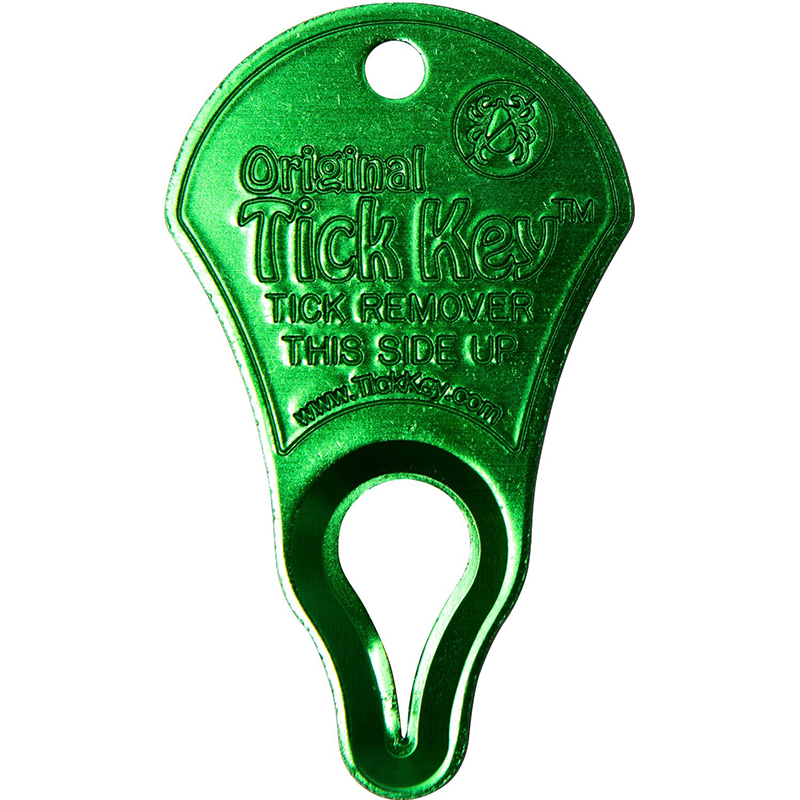
Has anyone tried a “Tick Key”, the ads say lots of good things about them.  I got a few and stuck them in our first aid kits but haven’t had to use them.

AK Granola BPL Member
PostedApr 12, 2019 at 2:04 am

I’ve read before and here again, don’t use vaseline to smother the tick to remove it. That’s what we did growing up, and it works; if the tick is embedded and you put vaseline on it, it pulls right now. So why not use it? I’d like to know why the standard advice is to avoid it.

MJ H BPL Member
PostedApr 12, 2019 at 2:29 am

What I heard growing up was to put a lit cigarette on it. I’m not wondering why nobody repeats that advice anymore.

According to a quick google, the reason covering a tick in Vaseline doesn’t work is because they only breathe four times an hour when at rest. It’s too slow, I guess.

David Thomas BPL Member
PostedApr 12, 2019 at 2:29 am

Karen, just a guess, but maybe they puke up stomach contents before backing out when covered with vasoline?

Today Lyme disease, tomorrow a zombie epidemic. Then you have to quickly amputate the limb above any bite.  That’s some hardcore weight reduction!

Todd T BPL Member
PostedApr 12, 2019 at 3:57 am

…you put vaseline on it, it pulls right now. So why not use it?

…maybe they puke up stomach contents before backing out when covered with vasoline?

That’s what I’ve read, many places.  Anything that irritates the tick risks a premature regurgitation.  They do that anyway, but usually wait a day or so till they’re bloated.

Jerry Adams BPL Member
PostedApr 12, 2019 at 4:16 am

I have heard the tick key doesn’t work as good

The slot has to narrow down to almost nothing.  On the tick key the slot is too wide.

It probably depends on the brand or model

A tick twister supposedly works better.  The slot narrows down to zero width.  Several times I got it to work.  The last time I tried it I couldn’t get it to work because the tick was too far imbedded and it was on my back side where I couldn’t see it, so I had to do it by feel.  After trying about 100 times I gave up.  I tried some tweezers that weren’t real pointy about 10 times and didn’t get that to work.  So I scraped it off with finger nail.  Very likely if it had been on my front side I could have got tick twister to work.  If someone else had been there they could have probably done it.

PostedApr 12, 2019 at 6:13 am

I have a set of Tick Twisters (bought them in the veterinarian’s office). They come in a pair, a larger one and a small one. It worked really well when I had a good sized tick attached to the back of my shoulder, removed it very easily. My friend had to do it, of course, because I couldn’t see back there.

The other time I had a tick attach, it was on the back of my wrist, just inside my shirt cuff, and I somehow killed it before I knew it was there. The Tick Twister wouldn’t remove that one. It just slipped right through. I was finally able to remove it with tweezers, but those slipped off a few times too, and I had to pull hard enough to deform the skin at least half an inch. I’m guessing this was because it was already dead.

Viewing 25 posts - 1 through 25 (of 27 total)
Loading...