See the actual write-up in the second, editable post.
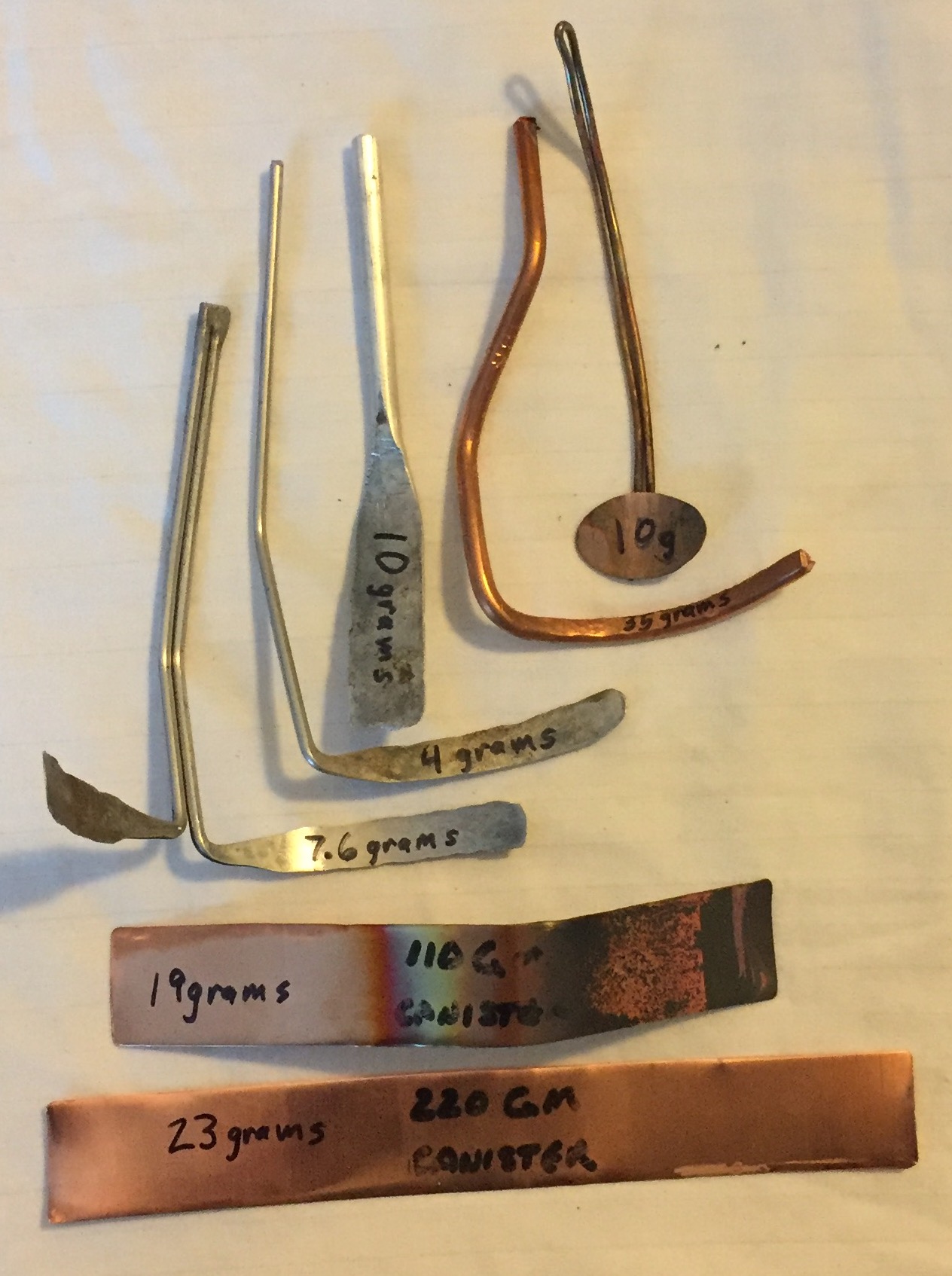
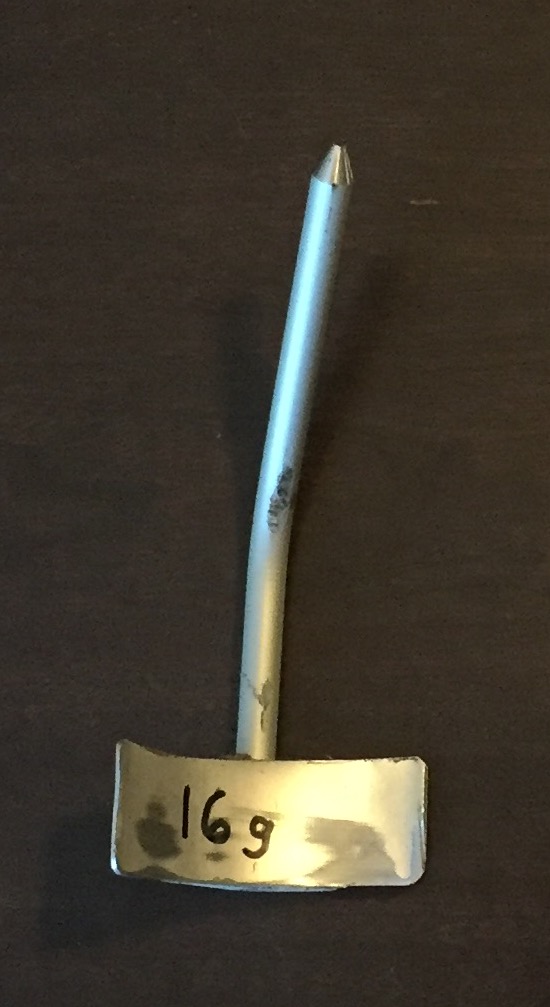
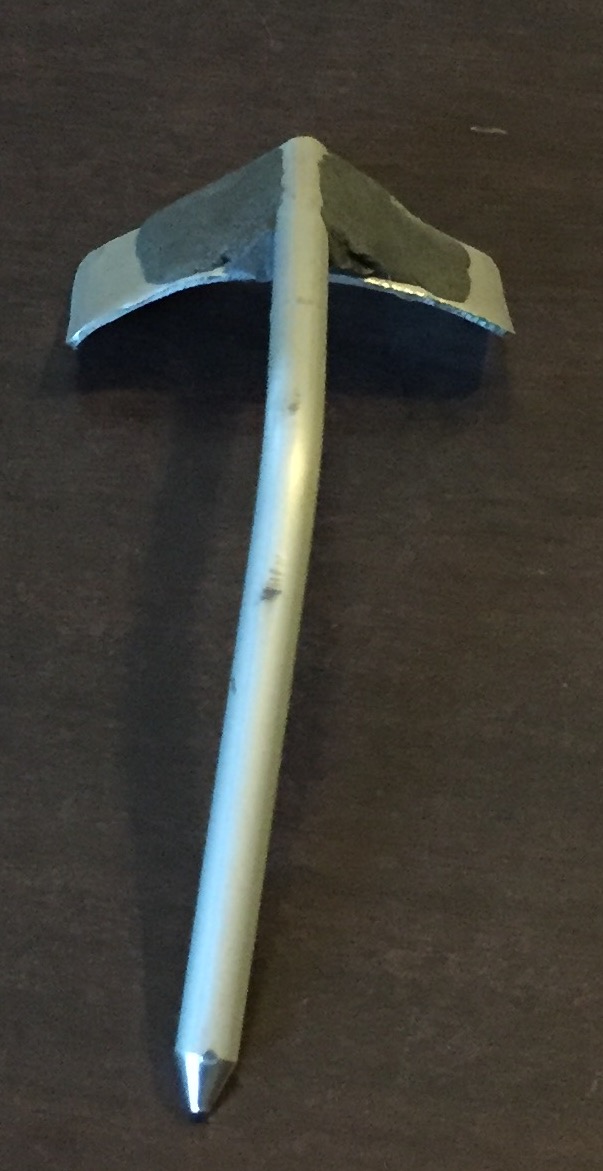
By way of background info, Bob Moulder has been promoting a copper strip strapped to the side of a butane/propane canister and extending up into the flame as a way to maintain the temperature and therefore the pressure in the canister even in extremely cold conditions and while subject to the evaporative cooling of using the butane. David Gardner, Gary Dunckel and I all had ideas about materials (aluminum versus copper), sizes and geometries and assembled our own versions.
I live in Kenai Alaska and, after three non-winters, we had a real winter again in 2016-2017. Snow for skiing. Significantly below 0F temperatures, repeatedly. And February and March have been fabulous with clear blue skies almost every day and clear cold nights almost every night. Mostly, it’s been 20-25F during the day and 0 to 5F at night, but occasionally colder. I got some of my Moulder strip variants tested at my house at -11F.
My son is very, very good at math (this enters the story). I volunteer as a competitive coach math at the middle school and ever since he’s enjoyed and excelled at regional, state-level and national math competitions. He once again did very well at the first-level American Mathematics Competition (350,000 students around the country take this 25-question, 75-minute exam) in February. When I called the local school to confirm dates for last week’s second round (for the top 5,000 students nationally), it turned out they hadn’t returned a critical form 2 weeks prior. Calls were placed and the only other school for 1000 miles around able to offer the test was in Fairbanks which is 500-miles to the north. I debated putting Drake on a twin-prop, then the jet, but while a 17-year-old can take a cab, can he rent a hotel room? There just seemed to be a lot of possible failure points. And we’ve both always loved a good road trip and it was a fabulous time for a road trip: 300-mile visibility, clear days, clear nights, views of Denali from all along the route, snow-covered scenery, 12-hour days + twilight but some dark nights to see aurora, no road construction and NO MOTORHOMES yet!
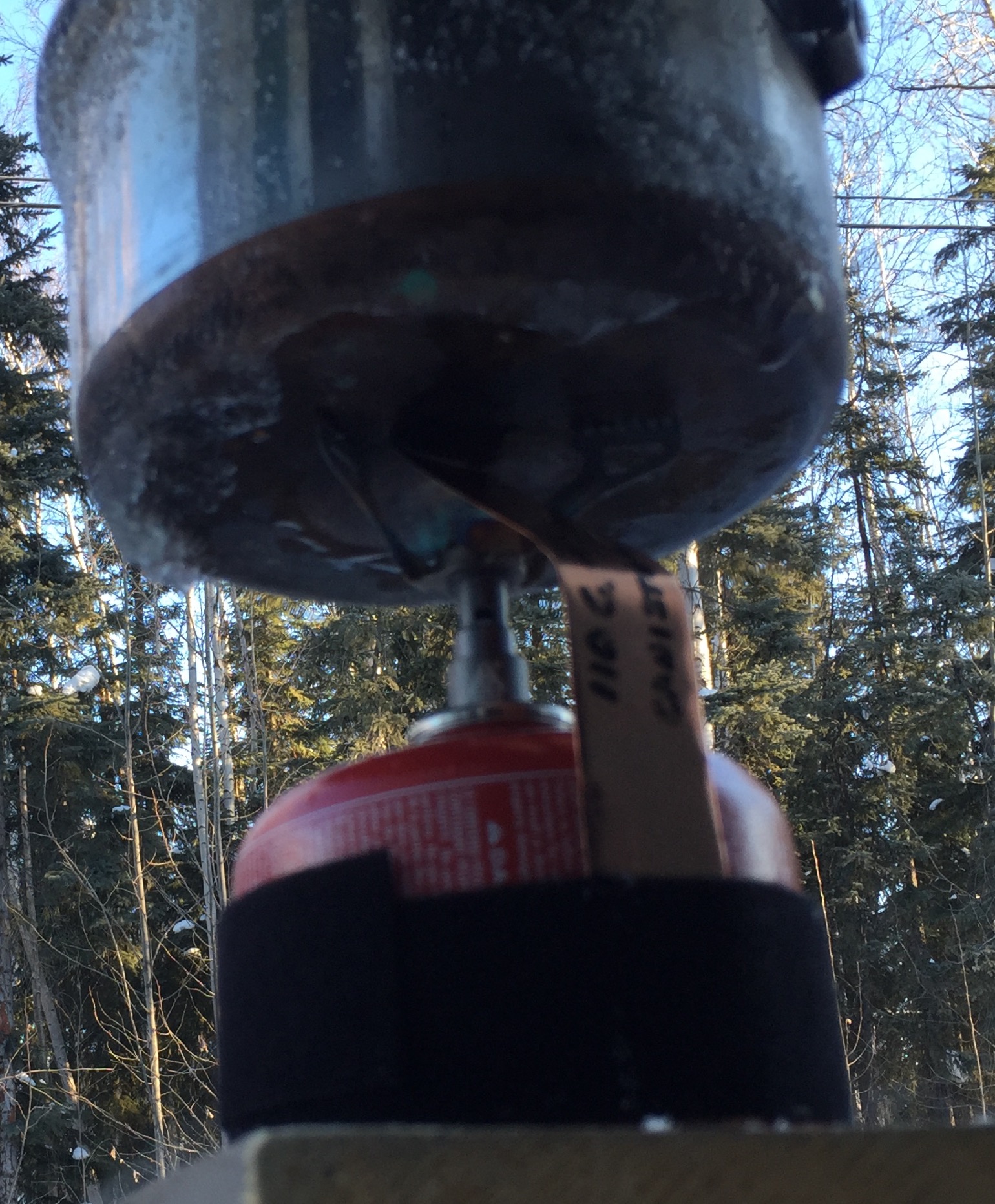
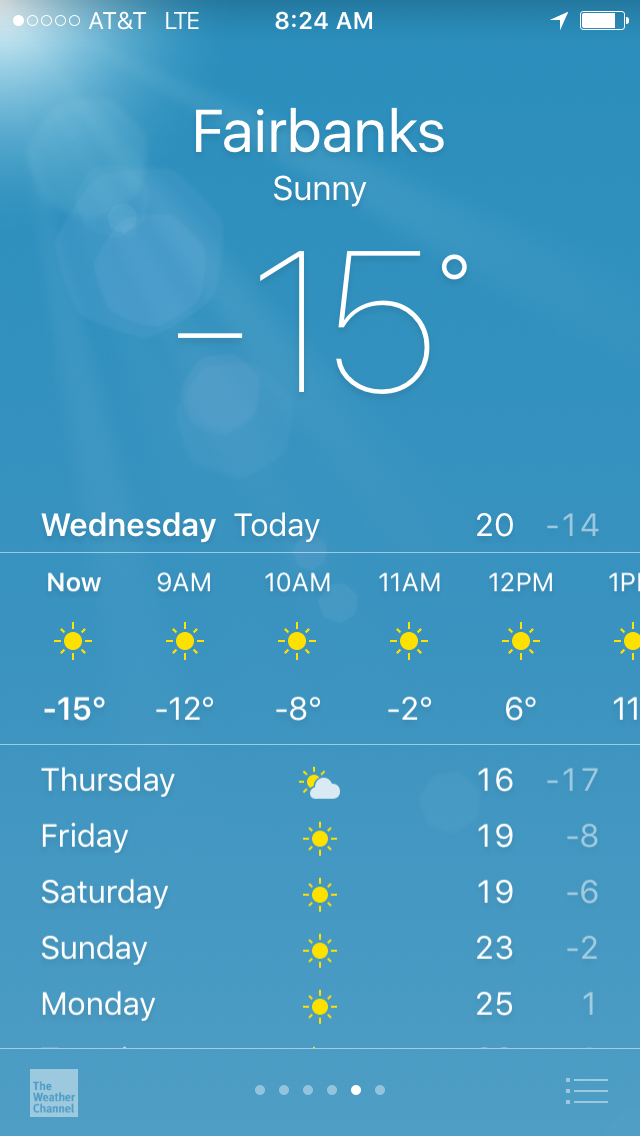
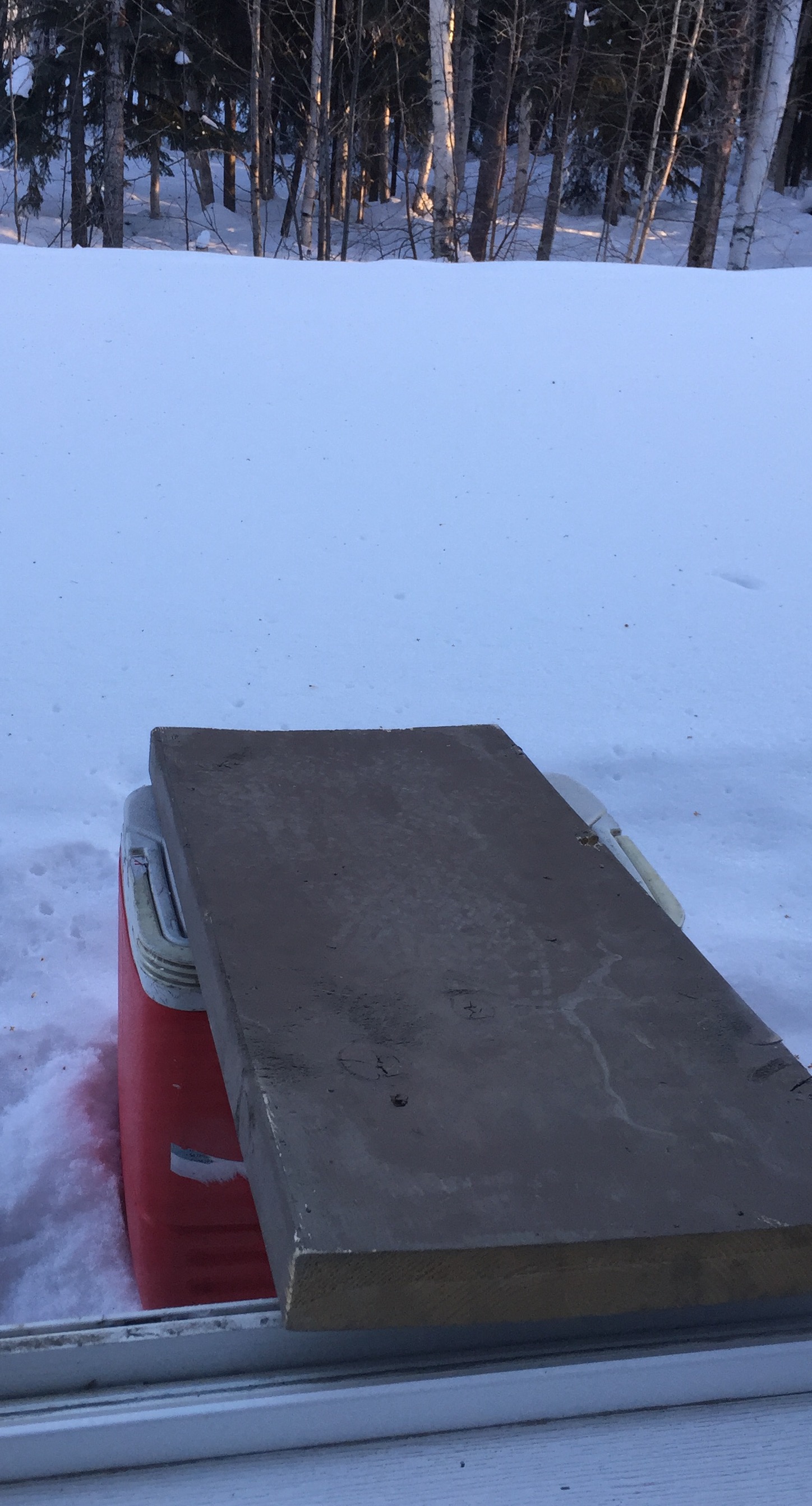
The forecast was for cold nights so I loaded up my, Gary’s and DavidG’s heat-transfer strips, stoves, canisters, and a pot in hopes the forecast was right.
We drove up, had Thai food for dinner (for some reason, Fairbanks has a lot of good Thai places, which my town does not), got to bed early, and got Drake to the local high school for the test. I went back to our hotel room to test Moulder Strips.
Drake did really well on the American Invitation Mathematics Examination (15 questions in 3 hours) that morning, with a personal-best score, therefore a new, highest-ever in Alaska score, about 20th nationally, and easily qualifying in the top 250 who will sit for the USA Mathematics Olympiad: 3 questions over 4.5 hours the first day and another 3 question over another 4.5 hours the next day (they’re hard questions) from whom 30 are selected for an intensive summer program from whom the 6 who represent the USA at the International Mathematical Olympiad (in Rio this year) are selected.
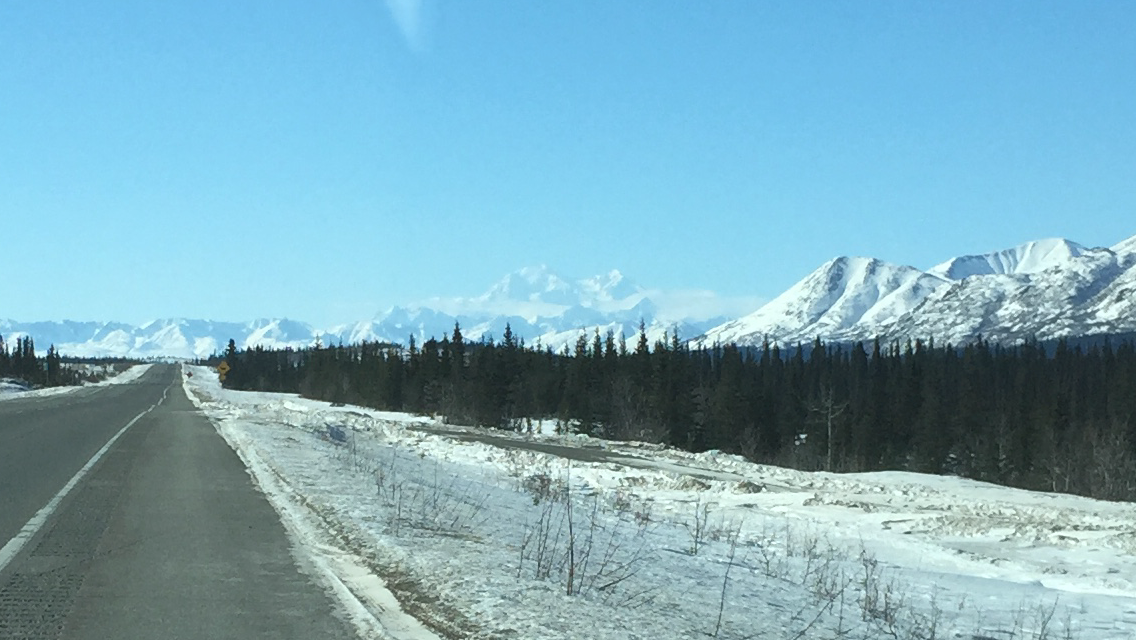
Here’s Denali (in the center) from the north, as we drove south last Wednesday after the testing of math students and Moulder Strips.
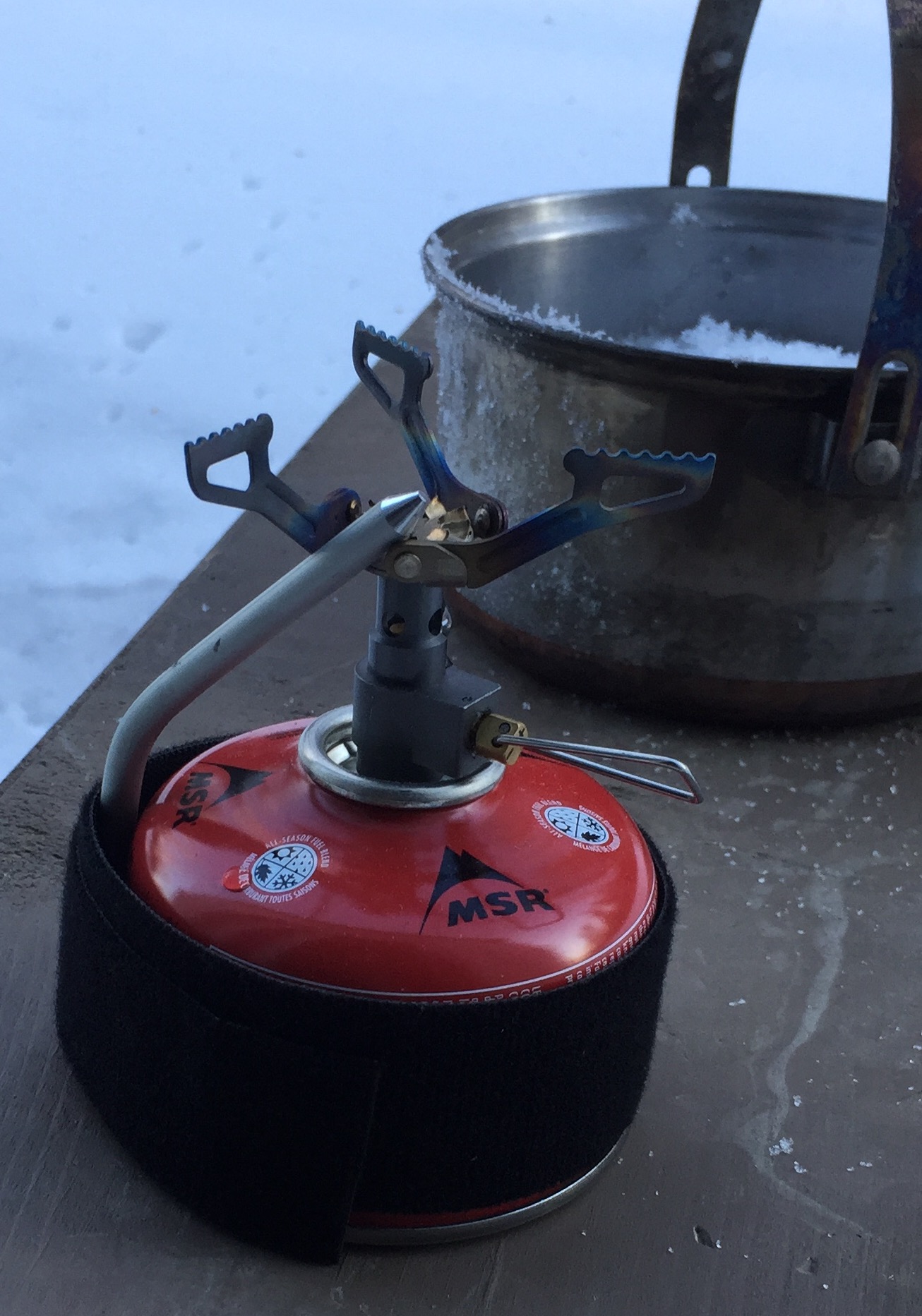
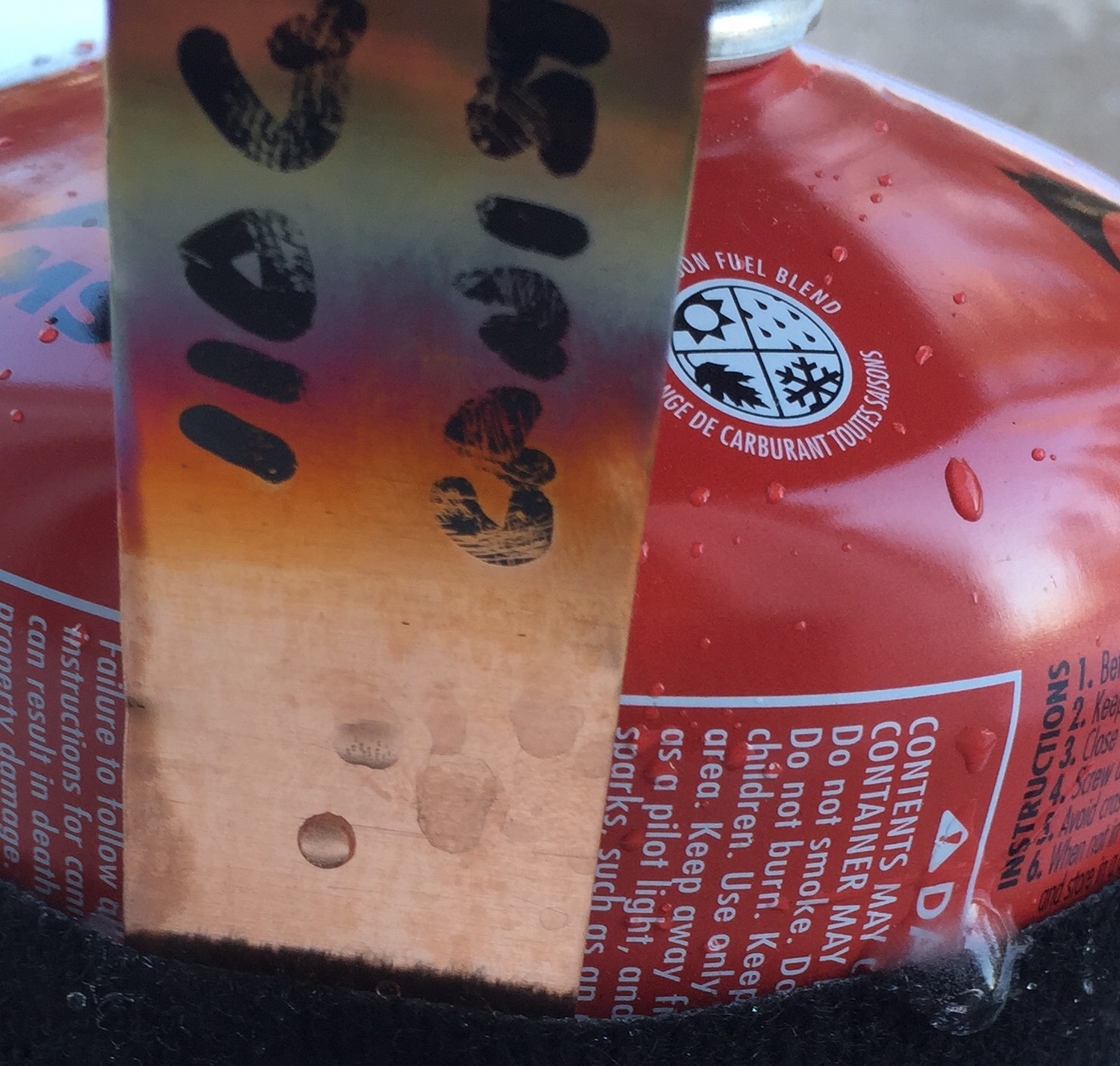
 For all the tests, I used a 30-40% full MSR 110-gram canister. A pretty good mix of fuel and presumably what you’d bring for camping in negative F temperatures. All the Moulder Strips (sticks, wires, etc) were secured to the canister with a velcro strap. The strap is 1.5″ wide, has loops on one side, hooks on the other and is sold to, say, cut to length and secure a length of garden hose or an extension cord in a neat bundle. Not the lightest option (there are far thinner velcro straps for instance), but it is pretty insulating and hence does double duty. 15 inches handles any canister and weighs 9 grams. Even with the high-performing CMS (Classic Moulder Strip), it didn’t melt, but a bit of carbon felt or just a scrap of paper over the strip would eliminate that possibility.