Topic

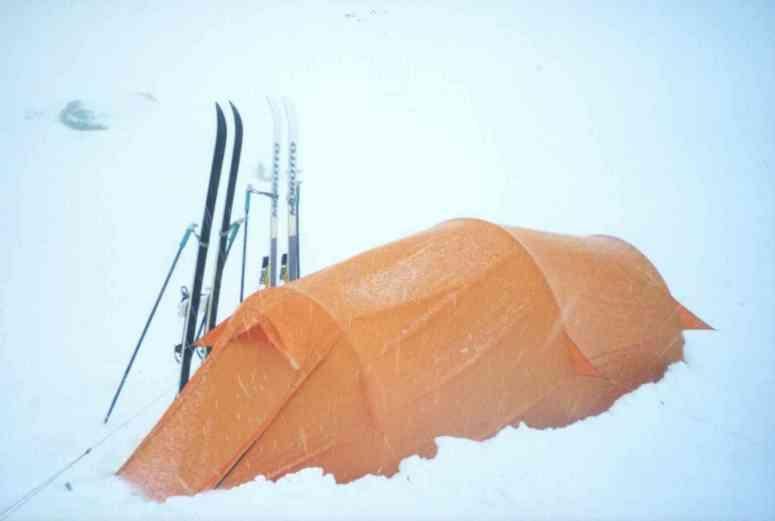
Tarptent scarp 1 or big sky chinook 1 plus? Any opinions/experiences?

Viewing 9 posts - 1 through 9 (of 9 total)
Adam D BPL Member
PostedOct 10, 2023 at 10:46 am

Hey y’all!

I’m in the market for a four season tent and mainly have it narrowed down to the tarptent scarp 1 and big sky chinook 1 plus.

They have a lot in common in terms of weight, fly first setup, the ability to run as more of a bad weather 3 season tent or get beefed up with added poles, and the edges can all be pulled up to improve airflow…

The scarp is cheaper and looks to have a more protected entrance, while the chinook looks quicker to set up, looks a lil taller in the headroom department, and should have less issues with sag due to the pole structure (at least that’s what I’ve read). There’s also the scarp ultra which mitigates any sag issue though…

Does anyone has experience with either or even both of these tents?

Jack B BPL Member
PostedOct 12, 2023 at 10:56 am

I used to have a Chinook (2p) and it was a great winter tent. Really bomber stability and tight as a drum. I eventually sold it because it was just a bit too heavy for my usually-solo winter trips. I would consider buying a 1p Chinook, though unfortunately their prices have gotten sky high in the last few years.

For winter camping I’ve learned that it’s a huge priority for me to have a tent that has the least amount of staking required. When it’s late in the day, the wind and snow are blowing, your core temp is dropping, and your hands are getting numb, the last thing you want to do is mess around with a tent that requires a bunch of snow anchors. For that reason I prefer freestanding tents for winter, which in a desperate situation don’t need any stakes at all (at least before you can get in and warm up a bit). I see that the Scarp has a freestanding pole kit, but from the looks of it I’m inclined to think that the Chinook would be the more bomber tent for winter or high winds.

I also used my Chinook year round in super windy conditions and it was a champ. Might be a bit overkill for normal/casual conditions, though.

PostedOct 12, 2023 at 5:27 pm

Adam, if you are considering a tent that is not ‘free standing’, you might also consider the TarpTent Dipole 1 DW, because it comes with a silpoly canopy.  Due to its design, it also provides greater internal space, especially at the head and feet.

Silpoly does not expand and absorb water when wet like silnylon; so holds its shape in wet weather, yet is elastic, so after buffeting in the wind a tent can snap back to its taut shape.  Noted a recent MYOG post on BPL by Roger Caffin advising that he is now building his tent canopies with silpoly:   https://backpackinglight.com/forums/topic/waterproofing-silpoly-or-pu-poly-seams/ (Scroll down to Roger’s post.)

Silpoly is much less expensive than TNT and other laminated materials like DCF, that have little or no elasticity.  And there have been a number of photos on BPL that show TNT tents that are heavily wrinkled in any weather.

Unfortunately, as far as I can tell, the Big Sky tents also have nylon canopies.  There have been posts on BPL about Big Sky’s ‘Super Sil,’ but could not find the type of thread in the fabric.  If you do settle on a Big Sky, suggest looking at the Soul tent, or others like it that do not have external poles; the reason being that a smooth outer surface on a canopy will fare better in high winds, especially in ice storms.

Hope this is helpful.

PostedOct 12, 2023 at 11:39 pm

Noted a recent MYOG post on BPL by Roger Caffin advising that he is now building his tent canopies with silpoly:   https://backpackinglight.com/forums/topic/waterproofing-silpoly-or-pu-poly-seams/ (Scroll down to Roger’s post.)

Quote from Roger Caffin’s post: “I make all my tunnels with silnylon.”

PostedOct 14, 2023 at 1:14 pm

Touche, William.  But note that with Roger’s tunnel design, unlike many other designs, tension is essential to limit sagging of his tunnel tents; much like the Warmlite tents that use high tension at the front and rear of the tunnels.

The tension on my double cross (XX) design does not work like Roger’s tunnel designs; so must use silpoly, and there are other benefits of silpoly I mentioned.  You are right, and I should have paid closer attention to Roger’s post.

Here’s a link to an old post showing full scale models of  an XX canopy. It was made of best quality silnylon from Quest Outfitters; but in wet weather, would not remain tight enough to support the canopy structure and keep the canopy taut. Hence, the resort to silpoly.

https://backpackinglight.com/forums/topic/45631/ 


Roger Caffin BPL Member
PostedOct 14, 2023 at 3:21 pm

note that with Roger’s tunnel design, unlike many other designs, tension is essential to limit sagging of his tunnel tents;
Correct.
In fact, the significant lengthwise tension is a fundamental part of the engineering design. It is not ‘something nice to have’, it is a core design element.
Matching that tension feature are the pole arches, using poles which are much shorter than found on ‘pop-up’ designs; shorter, stiffer and with much higher curvature. They do not go into S-bends in a storm.

The result is a design which has taken 100 kph storms all night with barely a quiver. We sleep well.
https://backpackinglight.com/when_things_go_wrong/

Cheers

PostedOct 15, 2023 at 11:47 am

Thanks, Roger.  I do apologize to you as well for misreading the beginning of your post on MYOG.  Happy Trails, Sam

PostedDec 4, 2023 at 10:15 pm

I have a SCARP 2 and I like it a lot. Like all Tarptent double wall tents the inner stays attached to the fly and poles go into fly pole tunnels.  Optional “Crossing Poles” clip  into exterior straps for extra fly stability in high wind and heavy snow load. This fly/inner tent attachment means NO getting the inner tent wet on setup or take down in a storm. That cannot be said of most other tents brands.

Also lok at KUIU tents. They also have an attached inner tent setup and are made for harsh weather. A great us company with good customer service.

Viewing 9 posts - 1 through 9 (of 9 total)
Loading...