Topic

SWD Wolverine 90L

Viewing 25 posts - 51 through 75 (of 93 total)
baja bob BPL Member
PostedSep 15, 2025 at 2:37 pm

@Jeff McWilliams – This video has a good explanation/demonstration: https://www.youtube.com/watch?v=93IDVv1NI_k

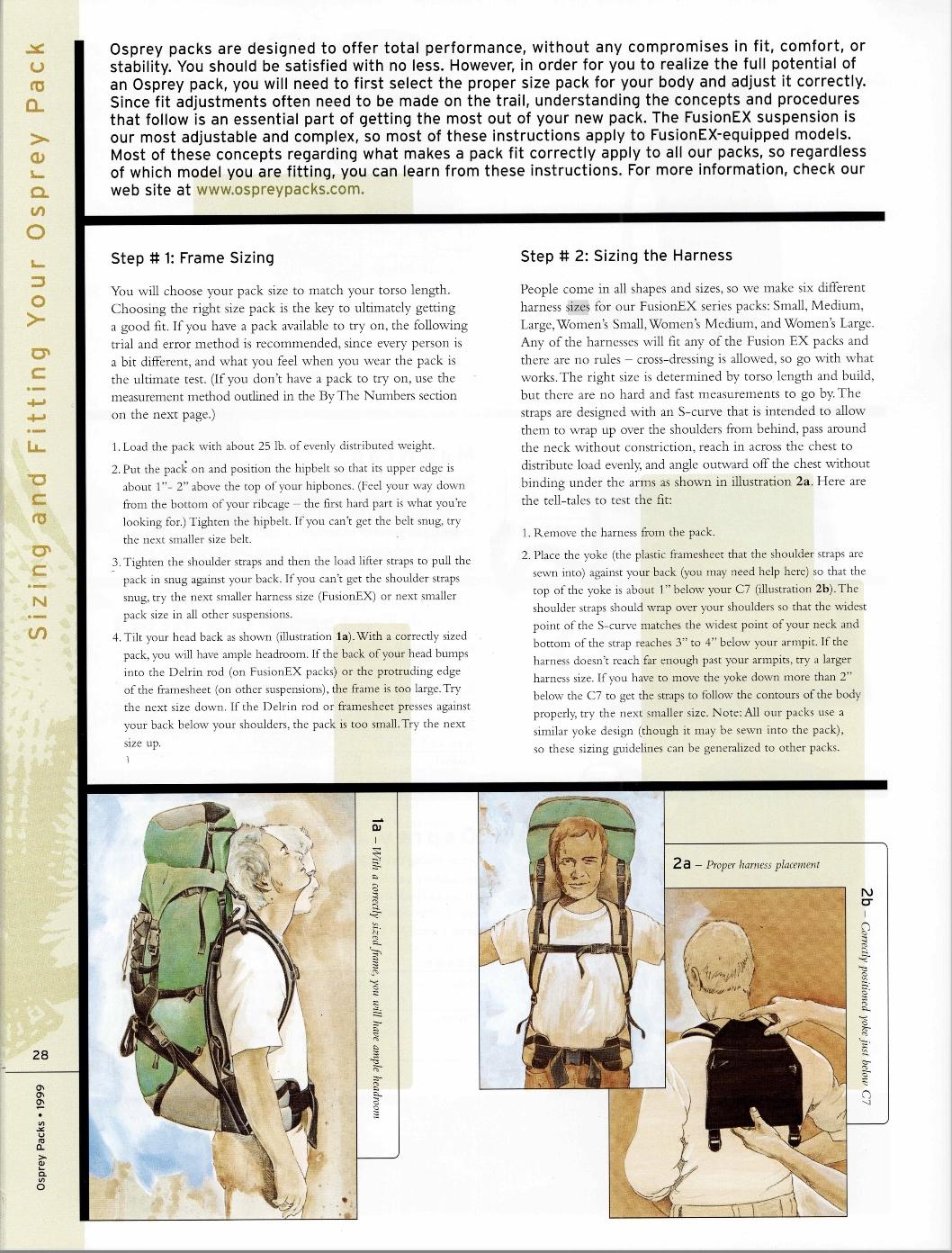
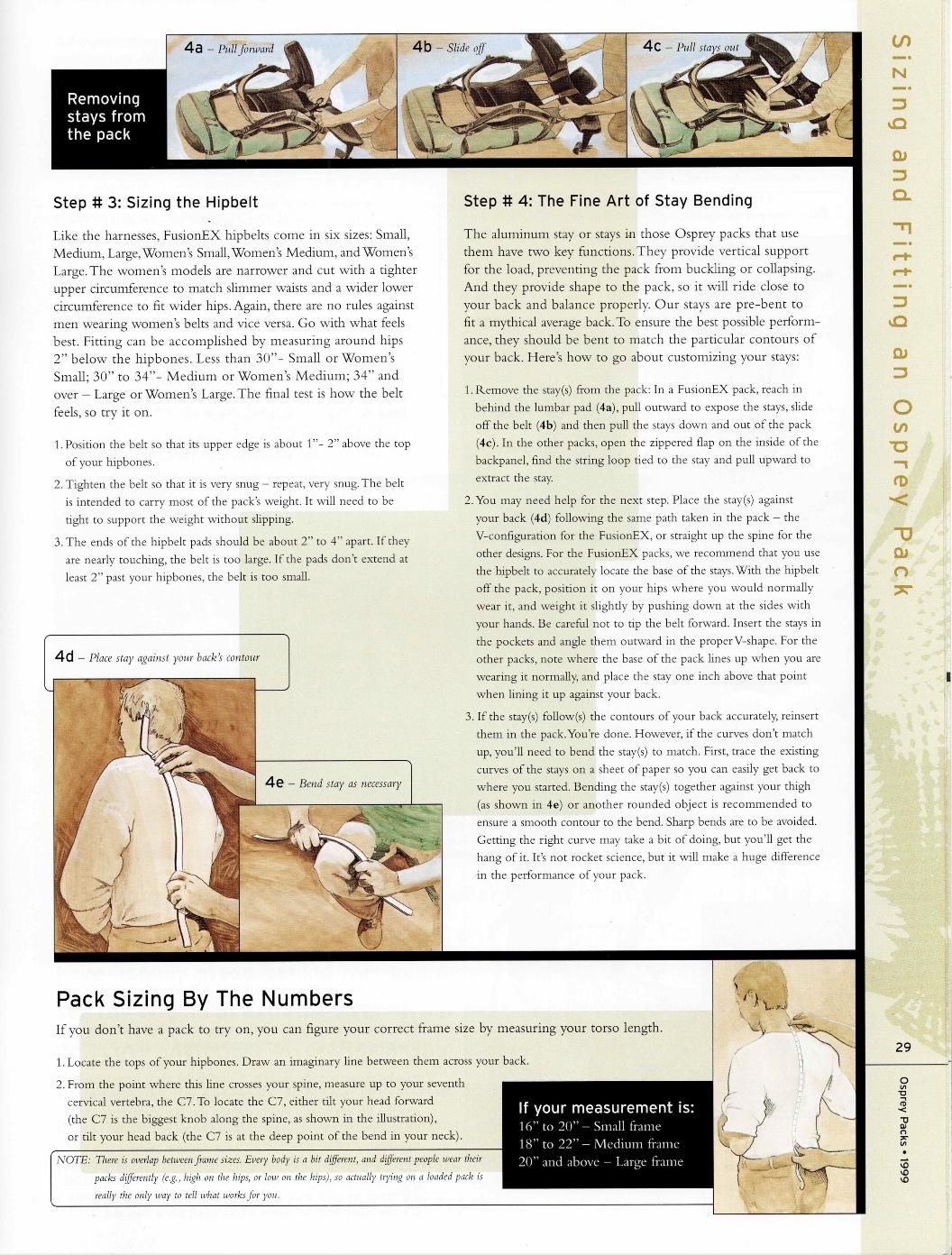
I set the stays on my packs to roughly follow the curve of my back on the lower half and have the stays on the top have bending somewhat away from the top of my back so the load lifters bring the pack in.

PostedSep 15, 2025 at 8:32 pm

Bending stays is something you mostly learn through doing, and it does take some practice, but the rewards of a quality internal frame (SWD!) with properly fitted stays has to be felt to be understood.

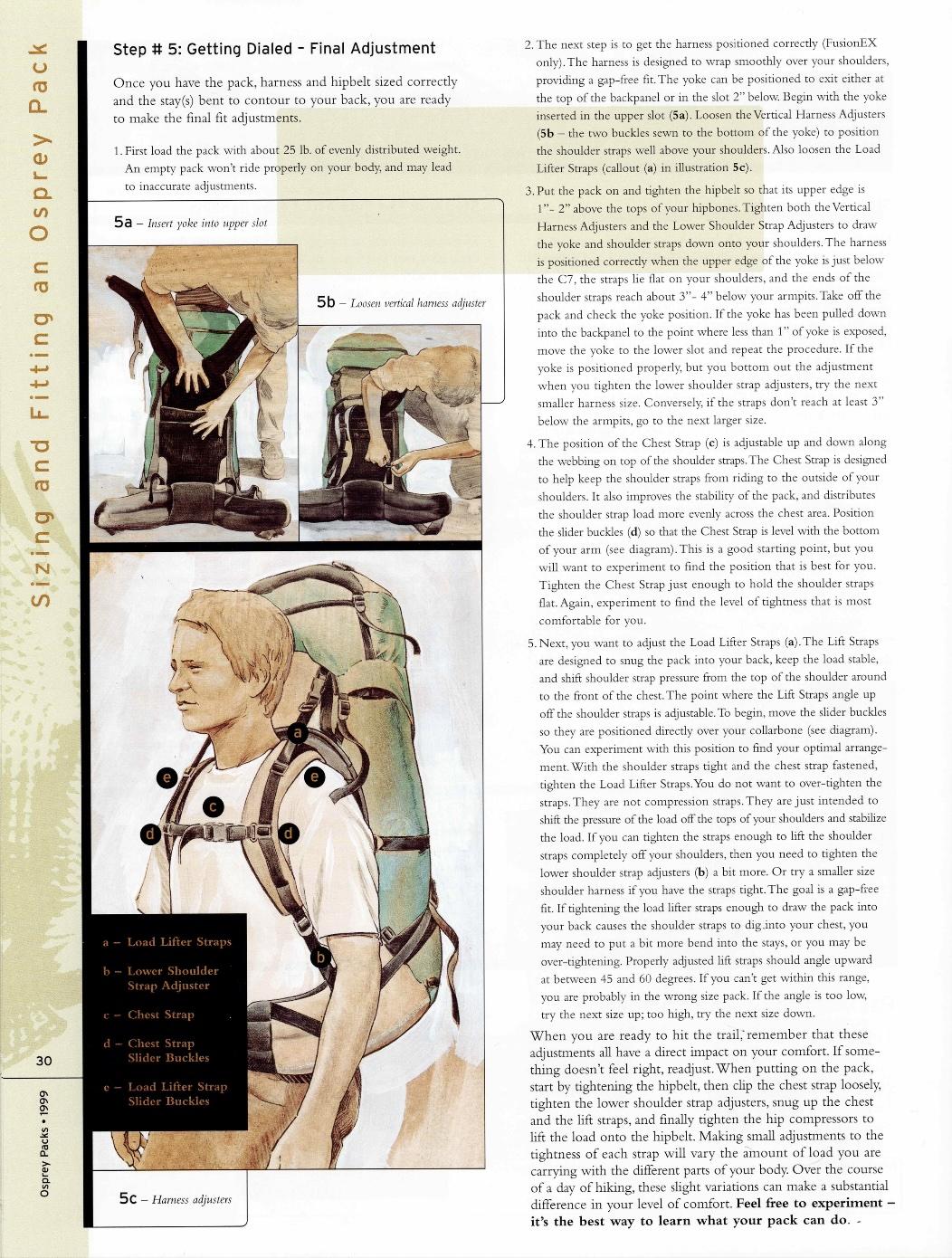
I scanned a few pages on the subject from a 1999 Osprey catalog I had on hand. While some of it is specific to those packs, the general explanation of stay shaping hasn’t changed.

Terran BPL Member
PostedSep 16, 2025 at 5:13 am

A bit of marketing maybe? The tubes are fine. Nobody using them is complaining.

PostedSep 16, 2025 at 5:21 am

The tubes are fine. Nobody using them is complaining.

That’s because they don’t know what they’re missing. If all you’ve ever had is hamburger, you can’t really know what steak is…

PostedSep 16, 2025 at 5:35 am

A bit of marketing maybe?

Any pack catalog of that era, from Dana or Gregory, to Osprey or Mountainsmith had essentially the same directions in them. It’s how to fit and tune an internal that didn’t have a fixed suspension, and applies nearly exactly to an SWD with bendable stays (SWD has fixed shoulder straps).

Those that fall within the standard SWD factory bend will be fine. Those that don’t just don’t know what they’re missing, unless they’ve been at this long enough to have come of age in the “stay shaping era.”

I sat in Dana Gleason’s office 25 years ago and talked with him about this very subject. He had sold Dana to K2 and was in the process of starting Mystery Ranch. He told me he was searching for a way to get away from shapeable stays. For the prior twenty years he had traveled the country giving seminars at every shop that carried his packs on how to fit them. He grew frustrated with the lack of comprehension. He constantly saw ill-fitting packs on the trail and realized the message wasn’t getting through. This is exactly the conclusion Wayne Gregory and  Mike Pfotenhauer arrived at, and why most pack designs of the last 20-25 years have had some sort of fixed/trampoline style, pre-bent, non-adjustable frame. It’s not that a pre-bent/fixed suspension is better, it’s just easier to sell packs with limited adjustment.


Terran BPL Member
PostedSep 16, 2025 at 7:19 am

Flattening the curve will bring the load slightly closer to the body. They can be bent to fit the hips better. Or not. No doubt there are advantages. The tradeoff are stays that are more efficient at carrying weight at a lower weight. It’s up to the individual which one carries better. Perhaps a few different shapes could be offered on a try out basis?

Bill Budney BPL Member
PostedSep 16, 2025 at 10:23 am

Not trying to argue, just trying to understand: If the weight is focused on the belt anyway, what difference does it make whether the pack follows the contours of an individuals back?

A little space allows welcome ventilation. What does removing the space add to carry comfort?

baja bob BPL Member
PostedSep 16, 2025 at 12:52 pm

Bill, I have a lot of curve in my low back. Looks like Bradmacmt does as well. For me, it definitely affects the comfort of the pack and makes a discernible difference vs. have the stays straighter. For one, if the not pack is not sitting at the right angle in my low back, it will irritate the middle portion of my lumbar/hip area and the hip belt will not feel like it is carrying enough of the load because it is sitting on the top portion of my butt and not my lumbar area.

PostedSep 16, 2025 at 3:33 pm

Not trying to argue, just trying to understand: If the weight is focused on the belt anyway, what difference does it make whether the pack follows the contours of an individuals back?

A little space allows welcome ventilation. What does removing the space add to carry comfort?

Bill, some the answer lies above with Bob’s answer above. Would also add, you want a pack as close to your center of gravity as possible for maximum comfort, and that requires tuned stays. However, and please understand I’m genuinely not trying to be snarky, this is really one of those things you have to experience to understand the difference (so you’re just going to have to take my word for it lol). Like the old black preacher said, “it’s better felt than telt!”

A pack like the SWD is not like a fits-all trampoline style that became the go-to design for so many Co’s. and really does require a tuned frame to maximize it’s design. A pack riding in harmony with the curvatures of your back was ALWAYS the point of an internal frame over an external frame. It moves with your body rather than fights it. The truth is most of today’s mass produced “internal frame packs” are just external frames cleverly designed as internals.

Terran BPL Member
PostedSep 17, 2025 at 4:11 am

I think SWD knows what they’re doing. You’re creating a problem where there’s no problem. The tubes are an advancement. I’m happy to see it.

PostedSep 17, 2025 at 6:43 am

I think SWD knows what they’re doing. You’re creating a problem where there’s no problem. The tubes are an advancement. I’m happy to see it.

You’re out of your depth, and that’s obvious.

PostedSep 17, 2025 at 9:11 am

7075 flat bar aluminum is typically 0.125″ x 0.50″ in cross section – SWD’s included. This size becomes quite flexy when the load goes above 35 lbs, making some users feel the weight cannot effectively be transferred to the hips.

The un-tuneable tubular 7075 is much, much stiffer and very suitable for high loads – if the predetermined curve works!

McHale also uses 0.125″ 7075 flat bar, but wider at .6875″. Many advanced design elements, including overlapping frame sections and a wide base spacing makes up for the flex and enable these packs to effectively carry heavy loads, while still having tune-able frames.

But to achieve this balance McHale packs are seldom under 4 lbs, making them less desirable for our crowd here.

Based on online commentary it seems SWD’s load hauler offerings, whether equipped with flat or tubular stays, has achieved a McHale level of carrying ability over the relatively short time they have been in business, while also making the packs half the weight.

Or maybe some reviewers overestimate their TPW?

Chris L BPL Member
PostedSep 17, 2025 at 9:35 am

This has turned into an interesting design discussion! I’m following primarily because I’m a MYOG pack-building enthusiast. I primarily build 70-90L load haulers for packrafting, and have built packs using tubular u-frames similar to Seek Outside, 7075 aluminum flat bar frames, and simple twin stay tubular frames.

I’ve found that the pack design – specifically, the frame configuration and how it transfers the load to the hip belt – make a huge difference in this discussion. My current (and favorite) design uses twin stays that insert into sleeves into the hip belt. They’re in a slight V, 6″ center to center at the lumber, going to 8″ at the load lifters. This design is VERY sensitive to stay shape as it directly impacts how the load is transferred into the lumbar area.

As the stays become further apart, it seems that the load transfer becomes less sensitive to the stay shape. Carried to the extreme with u-shaped perimeter frames (like SO), it matters even less. Hanging hip belt designs may be slightly less sensitive. But, IMHO, unless it’s a trampoline-style back panel, the shape always matters. But like most things, some people are less particular about it. Or aren’t carrying enough weight where it matters as much.

Personally, I haven’t found 7075 flat bar (1/2″ by 1/8″) to be inadequate for larger loads (~50 pounds). But I’ve still been attracted to tubular stays since extra stiffness is still a good thing, and they’re lighter. Relevant to this discussion, I recently purchased some 3/8″ OD x 0.035″ wall 6061 tubing from KS Metals. I’ve just started testing, but what I can say is that it is significantly stiffer than the 7075 flat bar, yet fairly easy to bend by hand. I bent it over a firm cylindrical object (a foam roller), no jigs or tools required. I’ve even been able to make small tweaks in the field. In addition to being stiffer, it’s still 2oz lighter than my twin 25″ flat bar stays. I do think this is a touch larger diameter than what SWD is using, so may not fit in their stay channels if they’re sewing them a little tighter. But if your stay channels fit 1/2″ by 1/8″ flat bar, this should fit too. It may be a good compromise between lightness/stiffness, but still user-tuneable.

John B BPL Member
PostedSep 17, 2025 at 10:04 am

@ChrisL, thanks for sharing the details about your efforts—they’re very interesting. It sounds as though 6061 tubing offers a great combination of stiffness and shapeability. I wonder why others don’t use it. (Or perhaps this is what Durston uses in the Kakwa?)

You also mention the question of where on a hiker’s back stays or frames should terminate. This seems like an important question to me, but I don’t have a good handle on it. That is, I don’t have a good understanding of how positioning of stays—should they terminate near the lumbar or close to the hips—affects load transfer. Do you have ideas on this point?

@GWH, I’d be interested in hearing from those who’ve used both McHale and SWD packs. My impression is that while the craftsmanship may be great for both packs, McHale’s packs have important innovations that SWD (and almost all others) have yet to incorporate. I’m thinking mainly of McHale’s “bypass harness” system and his conical, two-buckle hipbelts. I’d love to see the latter in more packs, but to my knowledge. McHale is the only firm now offering hipbelts that are either conical or double-buckled.

Chris L BPL Member
PostedSep 17, 2025 at 10:16 am

@JohnB I think I read somewhere that the Kakwa uses 6061 tubing.

I’ve played around with where the stays terminate – and I think it depends! I’ve concluded that there is a ton of personal anatomy at play. I started out with hanging hip belt designs – first an SO frame, then a MYOG u-frame, then a simple twin stay design similar to SWD. I feel like I’m the odd duck out in that hanging hip belts don’t work for me. They seem to focus the weight on my gluteus medius (top of the area where the butt wraps into the hip/upper thigh). This is especially uncomfortable for me, and was especially true for the SO frame. For my body shape (larger hips and buttocks, curved back), a design that focuses the load into the lumbar through the stay position/shape and the lumbar pad works better for me. My design draws from hunting pack design (specifically Exo Mtn Gear).

John B BPL Member
PostedSep 17, 2025 at 11:06 am

@ChrisL, that’s helpful—thank you. I just watched an Exo Mountain Gear video about their frames; they’re not light by the standards of this forum, but it’s impressive to see how fully featured they are.

Perhaps you can clear something up for me: exactly what makes a hip belt a “hanging” hip belt? Is any hip belt that’s not sewn to the pack a hanging hip belt?

[H]anging hip belts don’t work for me. They seem to focus the weight on my gluteus medius (top of the area where the butt wraps into the hip/upper thigh). […] For my body shape (larger hips and buttocks, curved back), a design that focuses the load into the lumbar through the stay position/shape and the lumbar pad works better for me.

Is the idea here that sewn-in hip belts are more likely to transfer weight to the gluteus medius, while hanging belts, because they tend to attach to a pack at the lumbar area, are more likely to transfer weight to the lumbar?

Chris L BPL Member
PostedSep 17, 2025 at 11:23 am

@JohnB A hanging belt typically attaches only by webbing to the ends of the frame stays (or the bottom of a u-frame). The belt is then free to wrap around your waist unhindered and with no gaps. There are good photos on SWD and Seek Outside websites.

For ME, it’s the opposite of what you say. Hanging hip belts focus the load where the belt/frame webbing attachments are, and this ends up being uncomfortable. The Seek Outside frame was the worst as these points are about 11-12″ apart and land right on my gluteus medius. But the hanging belt design seems to works well for many if not most people. Anecodotally, it seems to work especially well for those with flatter butts/telephone pole builds who don’t have any anatomy for a typical pack to grab onto.

baja bob BPL Member
PostedSep 17, 2025 at 11:30 am

@JohnB, I have an SWD, a McHale and also one of ChrisL’s packs that uses the Exo Mtn frame stays, which I bought for my son to use.

For me, the SWD cannot carry heavy weight as well as the McHale. The McHale hipbelt has more support for carrying heavy loads. ChrisL points one thing out that probably applies to me. With heavier loads, the SWD places too much load on the glutes, which seems to cause fatigue around my hips. The McHale does not do this. I also have a lot of low back issues (bulged discs and never problems), which is why I decided to try the McHale after having the SWD. If I am not carrying a heavy load, then the SWD is perfectly fine and very comfortable. The padding for the hip belt and shoulder straps SWD uses provides a more plush, cushioned feeling whereas McHale is using a stiffer, dense foam. Both are comfortable, but feel different.

The SWD feels more shaped to my body when wearing it like a vest, whereas the McHale has a little more of a feeling like you are wearing a frame around your body, but it you can still move around with it easily. Loaded with 50-60lbs, the McHale can be adjusted so there is no feeling of pressure anywhere and feels like you are not actually carrying a pack other than the fact you are dragging an extra 50lbs around.

Terran BPL Member
PostedSep 17, 2025 at 12:41 pm

Well, I think Joey got a nice bag, that he’ll enjoy for many years.

John B BPL Member
PostedSep 17, 2025 at 6:10 pm

@ChrisL, thank you—your explanation makes sense to me. For others who come across this thread, here is a photo of an SWD belt that shows how it’s attached to the pack.

@bajab, thanks for the comparison of the McHale and SWD packs. Do you prefer the SWD pack when you’re carrying light loads?


PostedSep 17, 2025 at 9:01 pm

@ChrisL I agree that hanging belts can be more irritating to certain glute areas than regular belts, especially if combined with a wider than normal lower frame spacing.

This point loading also makes them less suitable overall to 40 lbs plus loads, imo.

Have you tried to attach a hanging belt from near the upper edge like SWD did/does? This at first glance seems counter to what should work best.

@baja bob Your findings re SWD vs McHale supports my research.

The fact cottage makers ignore the bypass load lifters (an expired McHale patent) is puzzling. It’s easy to build, adds little weight and works incredibly well, once mastered.  Most backpackers are actually not fully in on how load lifters should work, and the more complex bypass with its un-intuitive user interface might be too much

Chris L BPL Member
PostedSep 17, 2025 at 9:09 pm

@GWHayduke On the other hand, many people seem very happy hauling huge loads in SO packs, and that has the widest spacing I know of. Every body is different!

I haven’t tried a hanging belt attachment as high as what SWD does. I could see that alleviating some of the point pressure. I’ve read about a few belt collapse issues that could be attributed to that attachment location. Seems that a fairly stiff belt would be needed.

PostedSep 17, 2025 at 9:15 pm

@ChrisL maybe SO’s general fit success is the inverted U. I don’t recall many others using that. I’ve had a Divide and Unaweep and they did carry very well, but that was before I got a persistent gluteus area nerve issue from a fall in an Escalante canyon. This changed all my pack fit preferences, lol

Edit: oh yeah very stiff belt indeed. That’s not what you get from SWD tho. It’s I think laminated EV50 with some thin stuff

JG H BPL Member
PostedSep 18, 2025 at 1:53 pm

“ The fact cottage makers ignore the bypass load lifters (an expired McHale patent) is puzzling. It’s easy to build, adds little weight and works incredibly well, once mastered.  Most backpackers are actually not fully in on how load lifters should work, and the more complex bypass with its un-intuitive user interface might be too much.”

This! The McHale concept makes sense and the current execution by everyone else seems incorrect to me. I’ve often wondered why no one has considered replicating what McHale designed.

Terran BPL Member
PostedSep 18, 2025 at 5:51 pm

So if it’s not a McHale, it’s all junk? Great to be an expert…

Can we get back on topic? Joey has a nice bag .

Viewing 25 posts - 51 through 75 (of 93 total)
Loading...