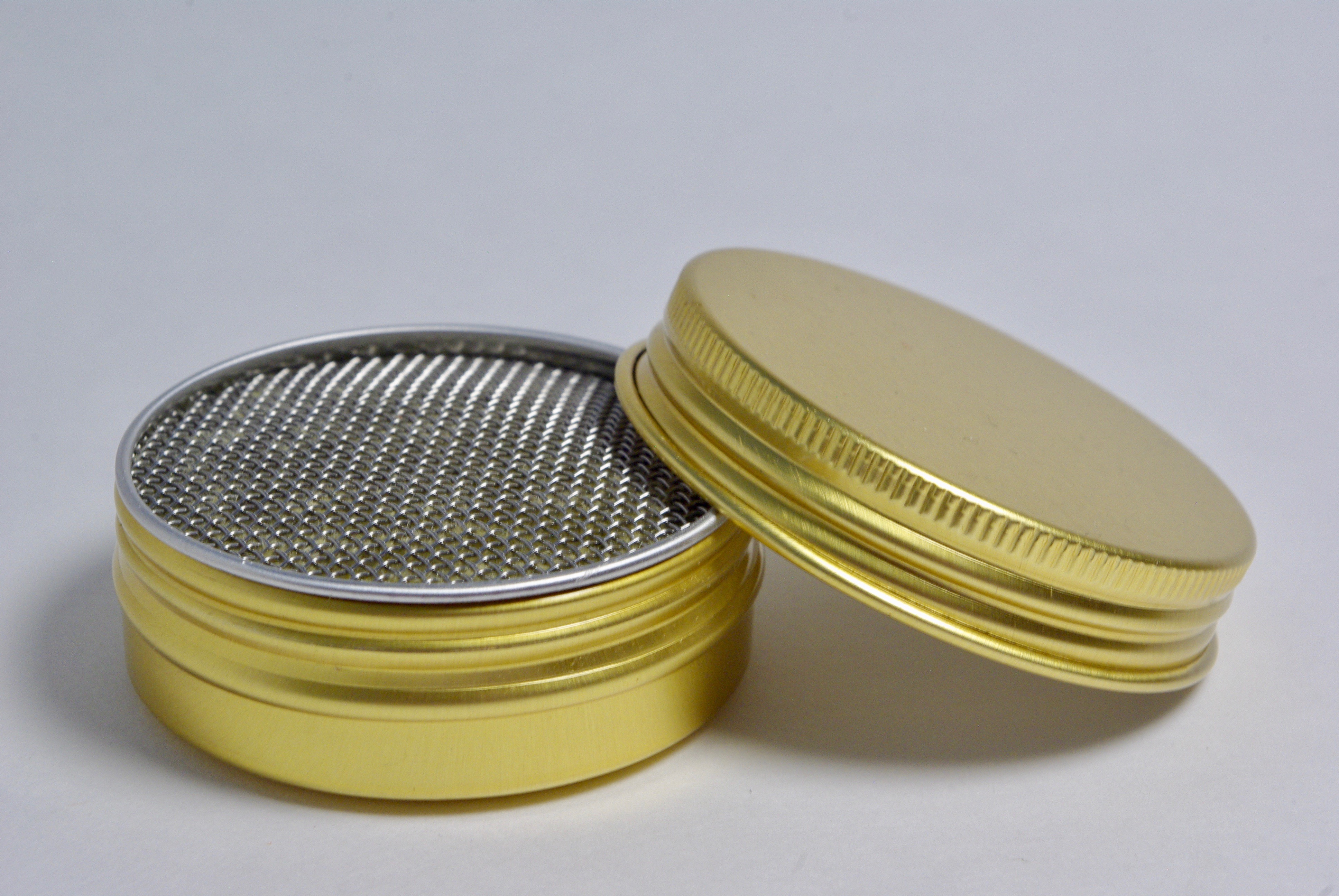
OK, so the XL-3 plot thickens. They say that if life hands you some lemons, you should make lemonade. Similarly, when it hands you some tomatoes, then you make a bloody mary. In my case, life just handed me 2″ of cold, dry snow and a 32* F day. So this would be the time to test the XL-3’s ability to melt snow to fill up a 2-quart juice bottle. I knew that it would take quite a bit of alcohol to melt that much snow, so the XL-3’s 3 fl oz capacity would be the best one to use. I used my MYOG caldera ‘clone’ and a MSR Titan kettle. There was little to no breeze, and the snow and the air were both 32* F.
A little background info here. A year ago I did the same test with a Jetboil pot and a BRS-3000T stove. The ambient air was about the same – right at, or slightly above, freezing. No breeze. It took 22 grams of canister fuel to melt the snow to get 2 quarts of water, and the time to do so was right at 20 minutes. The fuel consumption was just a slight increase over the 5 grams/2 cups to raise the water temperature from `45* F to boiling (which is 202* F here at my elevation of 5440′). A general rule is that it takes about the same amount of fuel to melt snow as it does to bring the water to a boil. There of course are a few variables that can alter the performance, such as ambient temperature, wind, and starting water temperature, as well as all the other factors we have discussed in the past. The 5.5 gm/2 cups to melt the snow is close enough.
Now, the XL-3. I placed 2 fl oz into the stove, hoping that it would give me maybe 30 minutes of burn time. This stove is a slow burner, and it seems to put out less heat than the Starlyte or various other alcohol stoves I’ve had experience with. I figured that a slower burn could prolong the burn time, giving me enough time to melt 2 quarts worth of snow. It turned out that it did, as flame-out was about 45 minutes – wowzers! The trouble was that it took that long to melt the proper amount of snow. Just barely.
What I learned from this little test was that, no, an alcohol stove probably isn’t appropriate for melting snow. At least not one that burns as slowly as the XL-3. The key to the XL-3 is the volume of alcohol that it holds – one would certainly need a stove that will hold 2 to 3 fl oz of alcohol. I suppose that I could make one from a bigger can, with a larger opening for the flame. But really, why would I bother? I can already see that alcohol, and Esbit by extension, is not up to the task of melting snow. The only technique besides a canister stove would be a campfire, where one could melt snow in a real hurry if the pot was big enough (that sounds like truck camping to me, or maybe a dog sled or a pulk).
The other consideration is that the Jetboil consumed 22 gm of canister fuel (.776 oz), whereas the XL-3 consumed 1.6 oz of carried fuel weight (at a density of .798), about twice the carried fuel weight. Another factor to consider is the alcohol stove is more sensitive to cold temperatures, which can’t be mitigated. With a canister stove one can simply employ one of the fuel warming techniques.
This exercise was all in the interest of (pseudo) science, you understand. And also to help pass the time on a cold wintry afternoon.