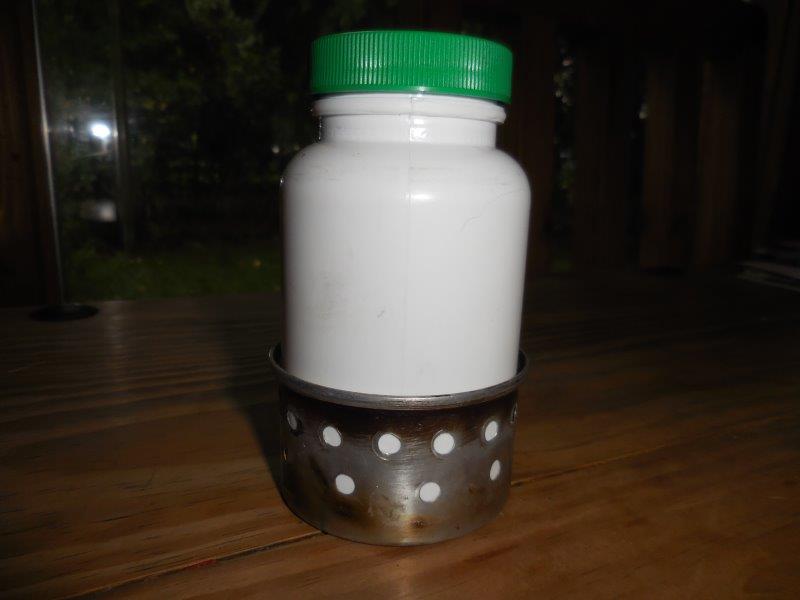
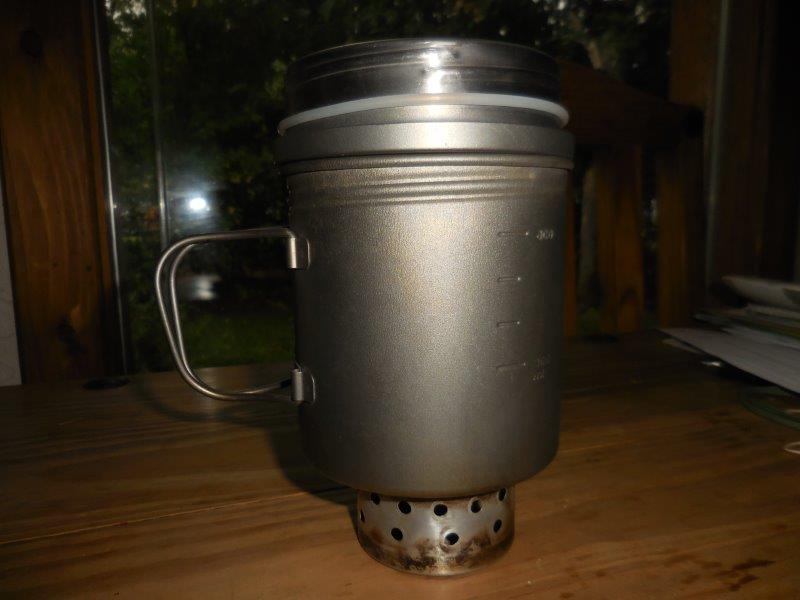
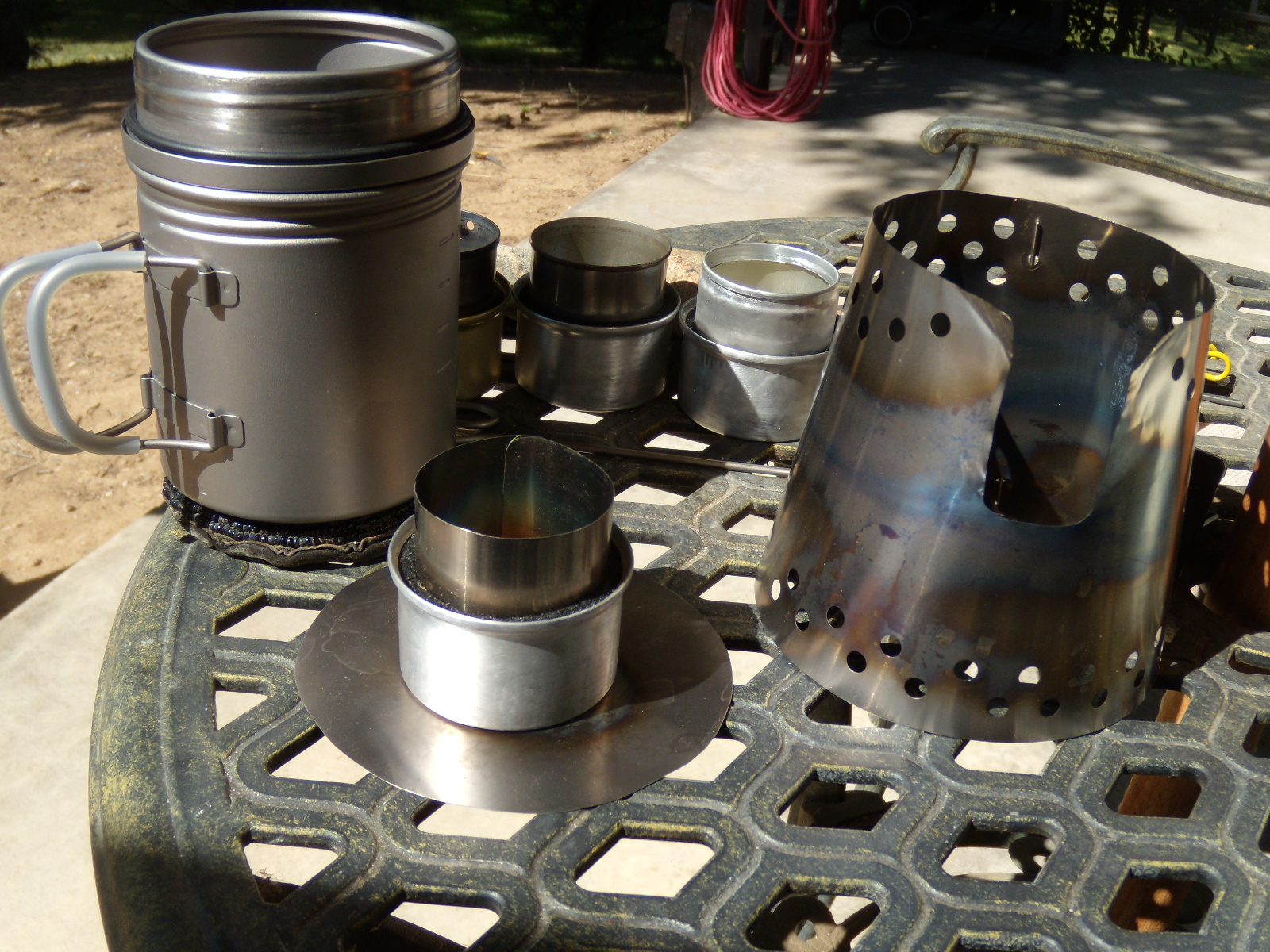
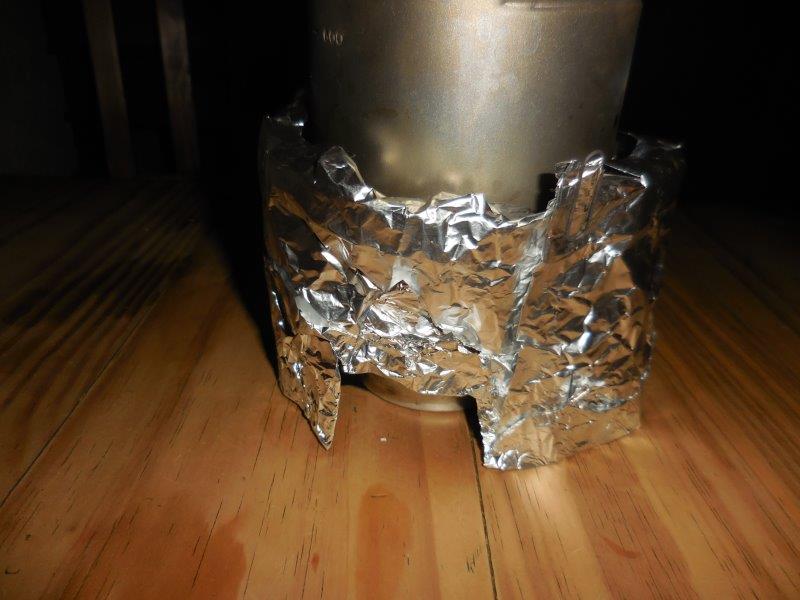
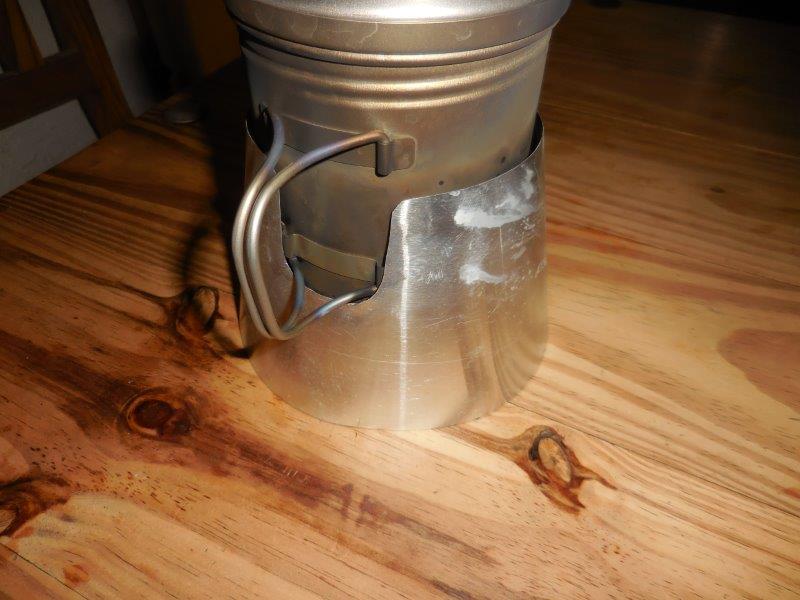
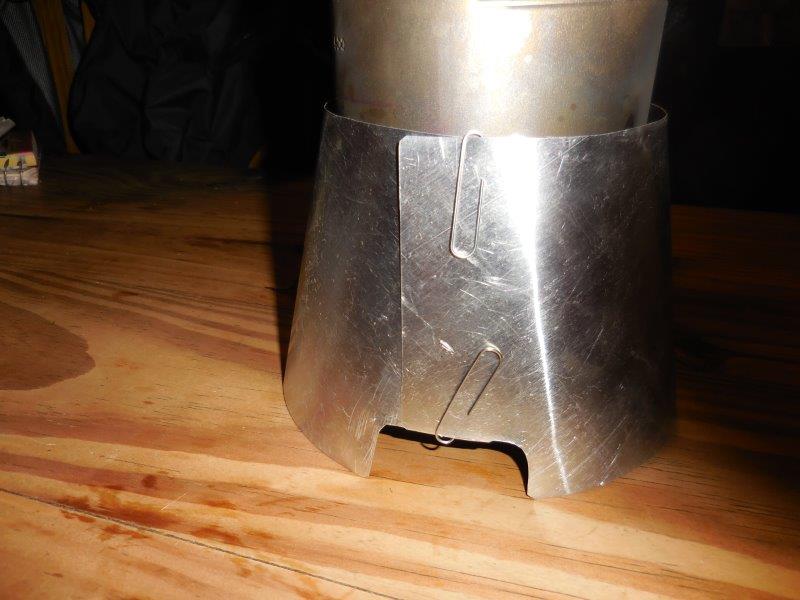
Zelph’s Fancee Feest stove might work a bit better. The wick inside the cat food can will bring the flames closer to the center of the pot, and the integrated pot stand will guide the flames upward. While it’s true that a wider pot (like an MSR Titan Kettle) would be more efficient, I have had decent luck with a similar stove that I came up with myself, and it works OK with my BOT 700 pot. Here’s what it looks like:

Zelph and I both came up with the same stove design nearly 10 years ago. He uses a wick of fiberglass and a pot stand made of titanium foil. My wick is simply a strip of carbon felt, with a ti foil strip for the pot stand.
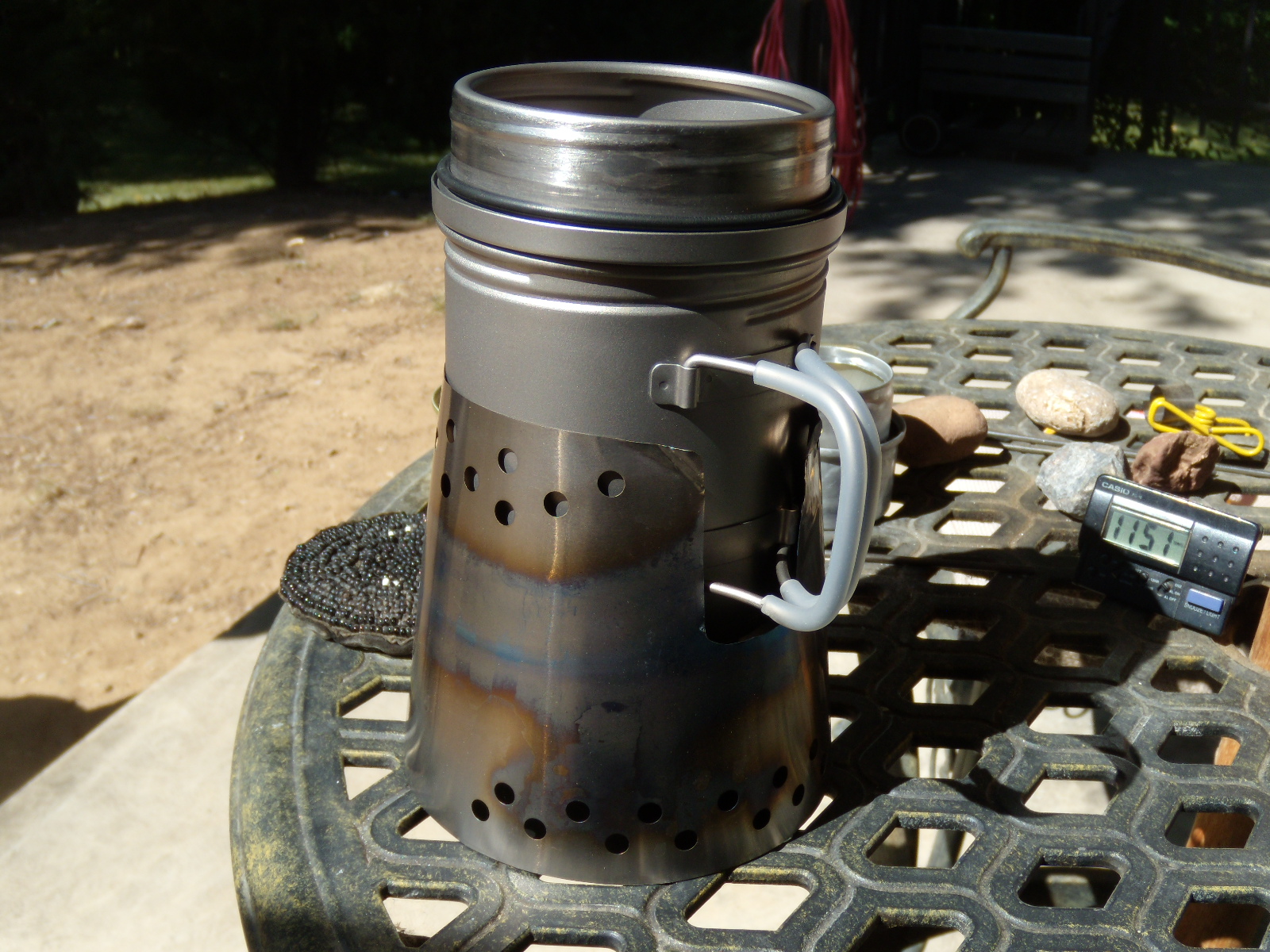
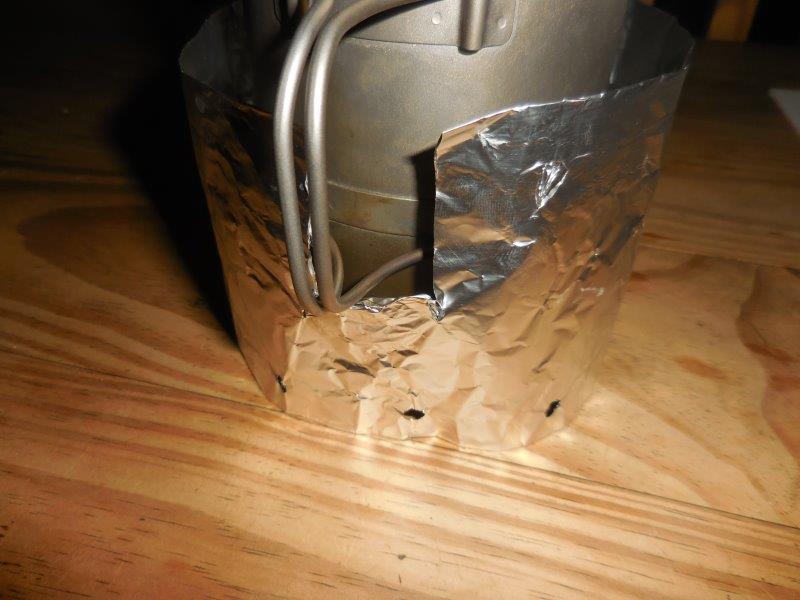
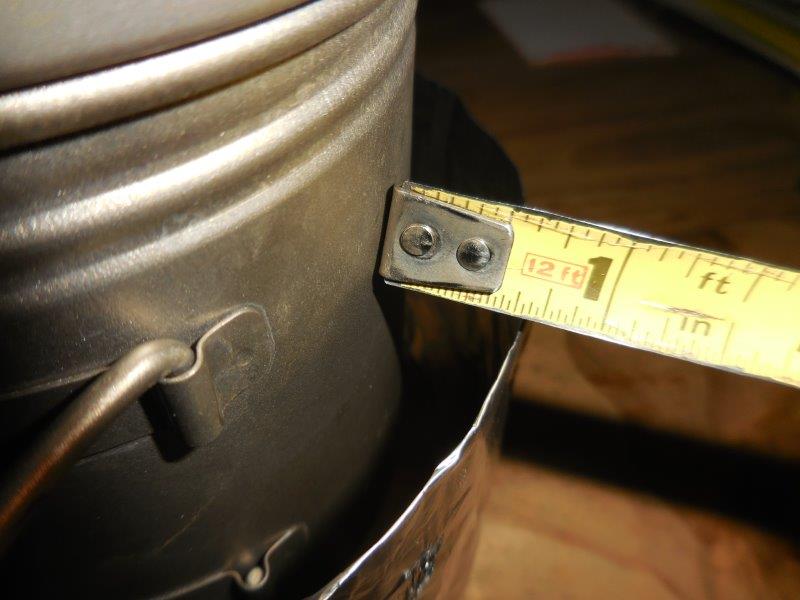
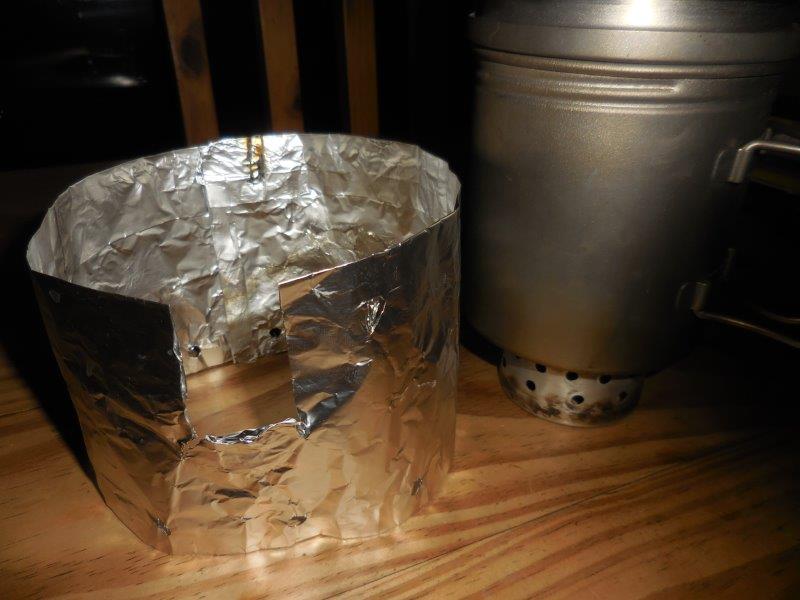
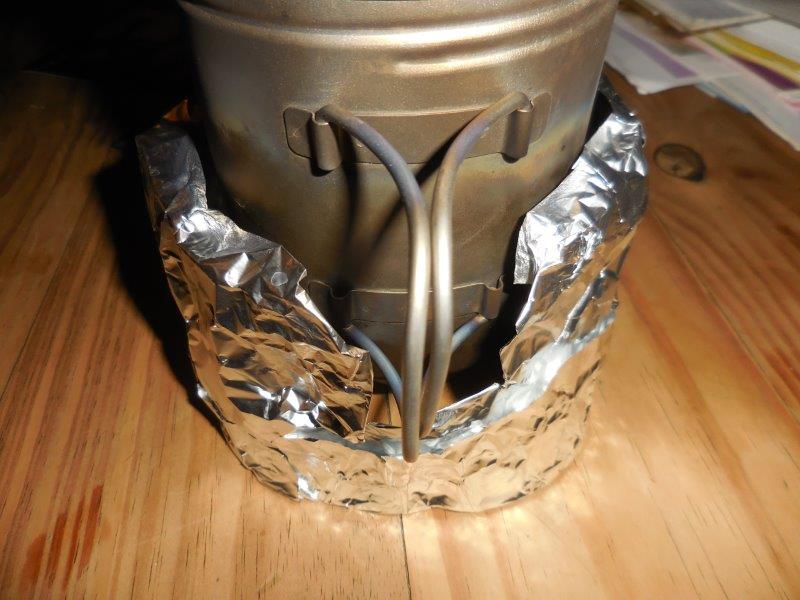
The use of a wind screen is critical, in my opinion, for both alcohol and Esbit stoves. It also helps when using a canister stove in breezy conditions. Here’s my alcohol/BOT setup, using a MYOG cone that just happens to work with several pots that I use:
In the background of the first photo, you will see several iterations of the same stove, where I replaced the titanium foil pot stand with various cans that have the perfect diameter to fit inside the carbon felt strip–a tomato paste can (steel, .92 oz.), a Dole’s pineapple juice can (slightly lighter steel), and an aluminum Perrier drink can. The steel cans are the most bomb proof, and the Dole’s is .82 oz. The Perrier can is the most fragile but it’s the lightest (.51 oz.). My ti version is pretty light as well at .53 oz., and it’s well able to support 2-3 cups of water weight without deforming.
OK, so that was too much information. The point here is that you need to have a more narrow flame pattern so that the flames don’t go up the sides of the pot, and also that the use of a wind screen is important.
The BOT 700 is an interesting pot, isn’t it?