Topic

Separate post asking for deep stream crossing boot drying advice

Viewing 25 posts - 1 through 25 (of 29 total)
PostedMay 15, 2021 at 8:46 am

I have gotten a lot out of everyone’s response to camp shoes & chairs post.  Thanks!

Since changing over to boots after rolling an ankle (yes, I’m working my ankle to strengthen it as well & may reintroduce trail runners if/when appropriate) I have not had any stream crossings that were deep enough to exceed my boot height.  I have Salomon Quest 4D gore-tex boots & have a trip in a week that has a couple mid-shin crossings.  I do not bring camp or crossing shoes & am asking for advice on best practices here.  I guess this means best way to dry out &/or coexist with wet gore-tex boots.  I’ve got bread bags for in camp & will remove the insoles (great advice from you on giving the feet a break w/o designated camp shoes.  I won’t be putting wet boots by the fire either (likely no fires on this trip anyway).

Net/net – crossing with water coming in over top of boots & continuing to hike many miles – any advice for on trail & in camp solutions?  TIA!  Steve

Jenny A BPL Member
PostedMay 15, 2021 at 9:04 am

Wet GoreTex boots…ugh.  They take a long time to dry and are not pleasant to wear when wet.  Best to not get them wet, but if that isn’t possible, you might try wearing gaiters for the crossings.  They won’t keep all water out, but if you anchor them securely under the arch and cinch them tight, you might not get as wet.

When my same boots as yours do get wet, I remove footbeds at camp and orient everything so that sunlight shines inside the boot and helps to dry things.  That presumes it is not night and there is sunshine.  I find the weight of a pair of Crocs is easier to deal with than wet boots for days, but that is not the advice you are seeking.

Kevin Babione BPL Member
PostedMay 15, 2021 at 9:11 am

Here’s a link to a thread with some thoughts:

Quick Stream Crossing Options

In it you’ll see a photo of me demonstrating what NOT to do…

I suggest to the OP in that thread that he get some polycro and make some “overboots” out of them using duct tape to seal it and perhaps on the sole to protect the polycro a bit as you walk through the stream.  It doesn’t look like he ever tried it, but I’ve kept the idea in the back of my mind.  I hike in trail runners and just walk through streams, but my buddies like their Goretex boots and cannot get them wet.  If you have time it wouldn’t be expensive to make and try the polycro overboots (or you could use turkey roasting bags or trash compactor bags).  I really believe the key would be some sort of duct tape sole.  Then use a short bungie or rubber band to hold them up just below the knee.

Paul Wagner BPL Member
PostedMay 15, 2021 at 9:50 am

Seems like a lot of work to avoid carrying some lightweight camp shoes that can get wet.  I use Crocs that weigh less then a pound, and work for all of the above.  Saves me creating overboots out of garbage bags, taping up the soles with duct tape, drying out boots, removing insoles, tightening down gaiters, and wondering about what like would be like with a pair of comfortable camp shoes after a day on the trail…

Jerry Adams BPL Member
PostedMay 15, 2021 at 9:56 am

walk across barefoot – except that can cut your feet, depends on the stream

remove insole and socks.  walk across.  dump out all water.  find a nice place to sit and dump out any more water, squeeze water out of any foam in the boot, let your feet dry out.  Put insole and socks back in.  Then, it won’t be too bad, wet but not squishy.  That night put dry socks on.  Next day the boots won’t be too wet.  Dry out the wet socks over the course of the day – put on outside of pack.  Don’t accidentally drop them.  The second day the boots should be pretty dry.

Or, a lot better to not get them wet.

Kevin Babione BPL Member
PostedMay 15, 2021 at 11:10 am

@balzaccom – I’m with you, which is why, after my colossal trash bag failure, I just walk through the streams.  My feet dry pretty quickly while hiking and I’m quite happy walking around camp in my normal trail shoes with the laces loosened.  The only time that gets annoying is when I start hiking with my pack on the next morning only to realize about 50 feet down the trail that I never tied my shoes!

I’m more curious for my friends who also don’t bring crocs or other camp shoes but refuse to get their boots wet.  I’ve been 20-30 minutes ahead of them while they try to find a dry way to cross the many small streams we have in the PA mountains.

obx hiker BPL Member
PostedMay 15, 2021 at 11:35 am

^^ What Jerry said only when you’ve dumped out the boots and got them as un-wet as possible on the other side of the stream; put on dry socks and then over them something tough like a bread-bag and walk on.

The bag may get a few small holes but your feet and socks will stay basically dry while the boots are drying. With trail shoes this works  usually within a couple of hours the shoes are dry enough to lose the bags. With boots you ought to be able to drop the bags the next morning anyway. If you’ve got a second or third crossing the same day….. take the bags off first.

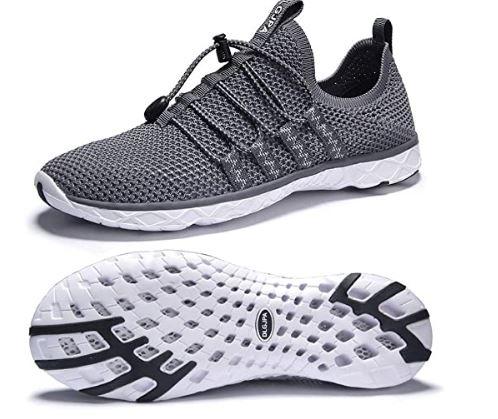
A few weeks back I did a section of the MST in NC betw. Grandfather Mt. and Linville Gorge including the Linville River (about a 100 yards following the shoals) that had about a crossing a mile. I lost count. But for that one I carried light water shoes with thin neoprene socks so I had something I could wear between crossings if (when) they were close together.

Still a PITA. I think Kevin’s idea above might be worth a try but the problem there seems to be likely tearing the polychro.

I appreciated the sole on those water shoes crossing usually rocky bottoms. Get the smallest size you can fit into and the ones with lacing. Also make OK camp shoes and dry really fast. You could just dedicate/sacrifice a pair of socks instead of the neoprene but I was out when it was still cold so opted for the neoprene.

Dan BPL Member
PostedMay 15, 2021 at 1:40 pm

If you absolutely know you will be crossing deep water, that might be the time to pack some water shoes. As noted above, the best alternative is to remove socks and insoles while crossing.

PostedMay 15, 2021 at 5:00 pm

Lots of regional responses here. I’ve found back East it’s usually possible to cross streams without taking off shoes. Not as much the case here in Montana.

I use Salomon Quest 4D’s elk hunting if it’s warm. They always come off for stream crossing even with snow on the ground. Ditto tall leather insulated boots or low trail hikers.

Goretex sucks when wet. Crossing barefoot is asking for trouble. Croc’s are a bit heavy.

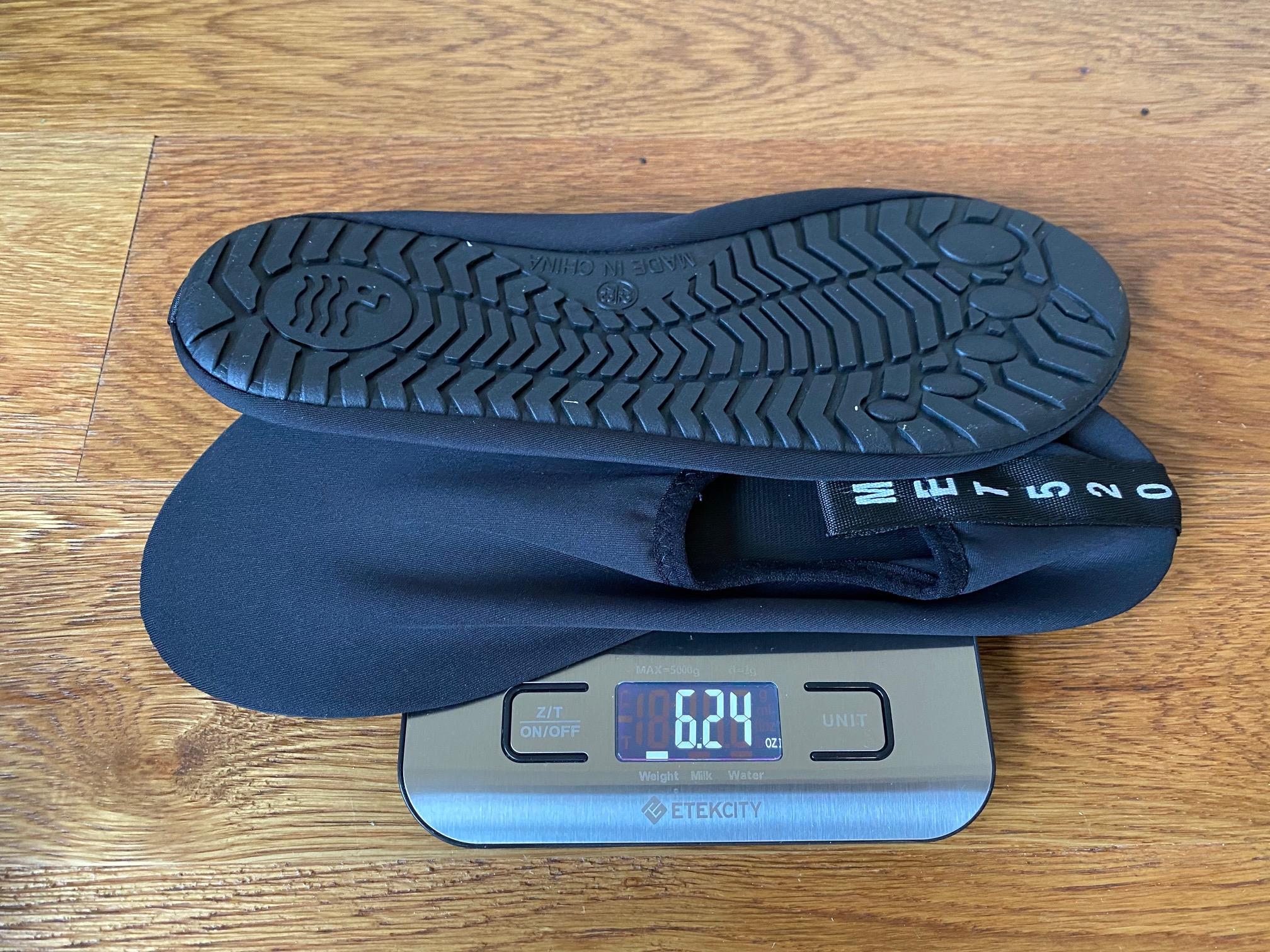
I use a “Croc-like” shoe off Amazon that weighs 6.6 oz’s.

Recently picked these up off Amazon… they pack flat!

Link . BPL Member
PostedMay 15, 2021 at 5:14 pm

Do you need waterproof Goretex boots for a reason? Something more breathable would dry quicker and let your feet breathe  MEN’S LONE PEAK HIKER  at about half the weight of the Salomon boots.

Dan BPL Member
PostedMay 15, 2021 at 5:46 pm

let your feet breathe

Reminds me of that 1970s Hush Puppies commercial … “Mah dawgs cain’t breathe in shoes!”

:-)

PostedMay 15, 2021 at 6:44 pm

@annapurna – my reason is I own them, like them & have tapped my budget to upgrade everything else in my kit :)

maybe Lone Peak next go-round.

Steve

Randy Martin BPL Member
PostedMay 15, 2021 at 11:50 pm

Either walk across in bare feet or walk across with socks on (more grippy) and wring out the socks good after crossing

Link . BPL Member
PostedMay 16, 2021 at 8:39 am

Steve, I sent you a pm with a clickable link for you.

Bruce Tolley BPL Member
PostedMay 16, 2021 at 8:54 am

If you are recovering from a severe ankle injury, I doubt the wisdom of walking barefoot over terrain where you cannot see where you are placing your feet like a stream crossing.

Why keep the goretex mids?  Oboz and Merrell make mesh mid boots that will dry out while walking.

You could try short gaiters which would physically stop water from entering the top of the boot but there would be other entry points for the water such as the tongue of the boot and the seams.

Jerry Adams BPL Member
PostedMay 16, 2021 at 9:38 am

I like goretex mid height boots

I like that it keeps dirt and stuff from my feet.  And I like merino socks for warmth and comfort.  With breathable shoes, my socks get wet and take a long time to dry.

Breathable shoes and thin socks are a little better than merino socks, they’ll dry after a while.  On some trips, if it’s hot, and there are deeper stream crossings, then this works.  It’s convenient to just cross the stream without having to look for a log or rocks.  But then my feet get filthy.  And there are many topics about how to prevent your feet from getting blisters from being wet.  With goretex you don’t have to worry about this.

On trips I do, I can usually easily cross any streams without my mid height boots getting full of water.  With a good WPB lining, my socks will only be slightly damp at the end of the day.  After a while, the WPB lining will quit working and lose it’s waterproofness, so I just use on dry trips.

A lot of people prefer goretex, many people prefer breathable.  Try both and see what works for you.


obx hiker BPL Member
PostedMay 16, 2021 at 9:49 am

Under 6 oz. per for size 9. Only recommended as per situation stipulated by initiator of thread. I too prefer to walk dry but just not possible in every case and initiator specified personal orthopedic concerns with lows and mids.

^^ And what Jerry said above. Except I can’t tolerate goretex above @ 65.

water shoes

jscott Blocked
PostedMay 16, 2021 at 10:10 am

I have a pair of MLD (I think) Event gaiters that go up to my calf.  they weigh almost nothing. They allow stream crossings over the top of the boot IF I can splash through fairly quickly. Otherwise I take my boots off and use a pair of very light pool shoes to cross.

I get blisters if my feet are wet so I'[m pretty careful. I don'[t find it that hard to keep my boots dry. There does come a time when wearing boots in a tricky crossing is required. then I do what Jerry does.

PostedMay 16, 2021 at 11:33 am

Having done a number of off trail trips in Alaska involving stream crossings, muskegs, etc., my philosophy is to wear trail runners and DT socks and walk with wet feet.  It’s just too much work to do otherwise.  I have a second pair of dry socks for camp and I dry my wet socks by hanging them and sleeping with them.  I’ve found that my socks and shoes will dry out if I’m hiking in dry conditions after a stream crossing.

Rex Sanders BPL Member
PostedMay 16, 2021 at 1:23 pm

What @mr_squishy said, except in wetter parts of California. Maybe wear thin neoprene socks on days with repeated crossings.

As a long-time whitewater raft guide and guide trainer, don’t even think about crossing streams barefoot or in loose or slippery shoes. Saw others get hurt many times.

Be very careful crossing any moving stream or river that looks like it might be deeper than your knees. I could say lots more.

— Rex

obx hiker BPL Member
PostedMay 17, 2021 at 9:54 am

^^ You mean like warning people that if you get your foot caught and fall you cannot overcome the downstream flow and die a horrible death in relatively shallow water? Hence “feet up butt down?”

Why not warn people. It’s a real concern and happens all the time. 

Viewing 25 posts - 1 through 25 (of 29 total)
Loading...