Hello everyone !
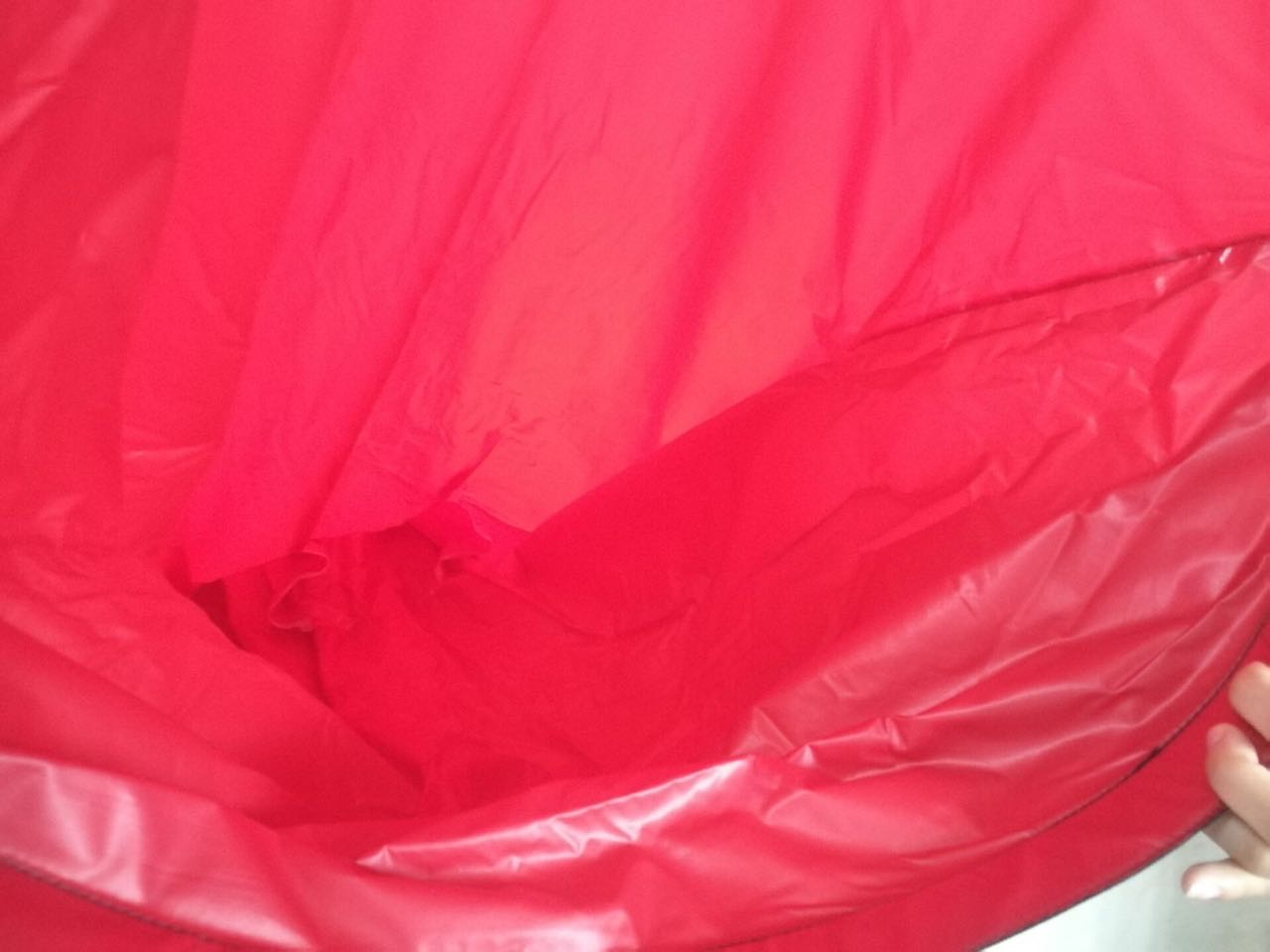
I’m trying to design the perfect air mattress/air lounger (see below) and I would need some help to choose the right fabric. Most of the bags on the market use a PE inside bag, that is either sewn+welded or double taped inside the enclosure (sorry, I’m From Europe, it may be not the right terms :). This PE bag will contain the air and give the final shape to the product.
The main issues are :
- It’s heavy
- The general shape of the bag is limited by the shape of the PE bag
- It often leaks
So I’ve decided to go without it ! For this I would need some quality polyester or Nylon fabric that is (theoretically) double coated, one coating on the woven outside and one full coating inside too (see pic below as well)
I’m not a pro, and this thing would be produced “en masse”, so It should be light, resistant to tear, waterproof and support the weight of a full grown adult, I’d say up to 200 kg (450 lb).
I’ve came across a lot of different fabric and coating possibilities for our Ripstop (with hexagon pattern) fabric.
- TPE
- PU
- PUR
- PVC
So first, what is NOT in the list that I should consider? Second, what would you recommend to tell me to avoid? This product will go into the sea, be exposed to the sun, and be used on grass, rocks, sand, dirt, etc, so it should be quiet resistant.
Also, as those coatings are pretty expensive, and we are clearly aiming to a production price 2 times more expensive than any other of our competitors (and still need to be able to eat), is there a way you could rank the strength and durability of those coatings, taking into account the price? We would need the better coating at the cheaper price (yes, I know this sound stupid).
Also, after reading the forum carefully, it seems to me that the base fabric should be chosen carefully. Ripstop is for us the way to go, but would you prefer polyester or pure nylon? What would globally be the difference on the use we are seeking for this product?
To finish, I guess what the Chinese call the “gram weight” is important. I have some difficulties to understand how it works exactly. We had 210 T nylon last year, can someone explain a bit the number and letter meaning. Taking this into account, what would be for you the best “gram weight” for our product?
Thanks for reading this, hope you could help us to create this cool product. We will send free units to the member that would help us the most and certainly a nice coupon for all users of the forum :)
Steve
Thanks a lot!
PS: English is not my first langage, sorry for the mistakes or incorrect use of some words
.