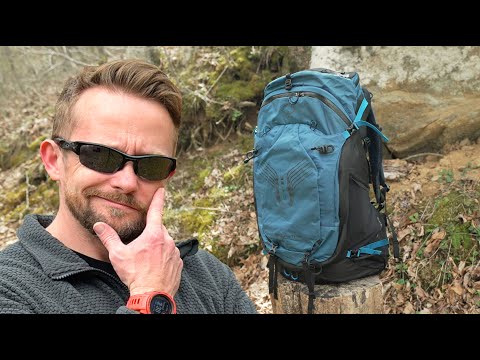
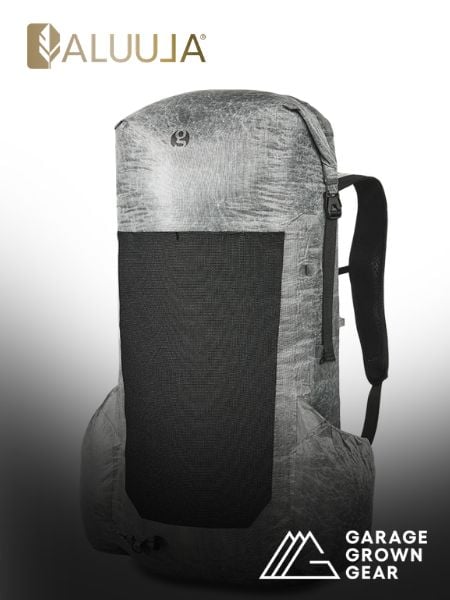
Osprey makes many different kinds of packs; but, this thread was about a particularly heavy and pricey one. So agree with the criticism and even sarcasm. That’s to be expected on Backpacking LIGHT when heavy stuff if touted. That’s why I follow BPL, to find ways to save my back, yet be able to trek both on and off trail in wilderness areas. For folks who want to “haul” heavy loads, it’s their decision, and most if not all of them may eventually suffer the consequences.
In defense of Osprey, they have pioneered packs with suspended mesh backbands, although some models have had very taut backbands that put the center of gravity of the pack way too far back for a comfy carry. Almost as bad as packing way too heavy.
As with tents, I began long ago with modifying packs, and moved on to making my own. The suspended mesh backbands ventilate the back, and if well designed, keep flying insects from feasting there. One of the early packs weighed under 6 pounds and carried the heaviest loads. That’s why the 6.7 lb. Osprey strikes me as ridiculous at any price. But on BPL, one must always consider the sources of threads, as they may emanate from competing marketers. There are much lighter Ospreys, and I use one for day hiking, that even has a suspended mesh backband.
But have learned that my fixation for those backbands is not shared by most on BPL. Possibly for reasons like the overly taut backbands mentioned above. Mine use durable, but flexible mesh, and can be adjusted to bring the pack closer to the back, so the weight is kept forward. Without that, it would be just another bad design.
Another fixation are the sidearms that place all of the weight on the Iliac crests, or hips, and can be adjusted so the open-front hipbelt is at just the most comfortable tightness around the bod, and thus even allow the pack to be carried at different heights. The benefits are great, but the big drawback is the weight of the suspension, including the sidearms.
Sometime ago, Roger Caffin was kind enough the prebend some highly tempered .340 dia. Easton tentpole alloy to enough curvature for sidearms. He bent enough of the shafts to also use in making a frame that would support the adjustable mesh backbands, along with the sidearms. While the Zpacks approach to this is probably the lightest possible, I also prefer hourglass shaped frames that while a bit heavier, insure that the frame maintains its shape, keeps out insects, and supports the sidearms. In this photo, while not of an even lighter hourglass frame, the hipbelt and straps have been removed to show more of the suspension:

Note that besides being made of very light double riptstop nylon, the pack is also quite small by comparison with most of what is seen on BPL. That was the only solution found to keeping it light , in the 1-2 lb. range. But it holds everything needed for up to a week, and have never had a problem finding places to cache resupply food and gear. So no need to carry extra weight. And almost always, it is possible to find a night’s lodging at resupply points, which provide a nice break after a week in the boonies.
The main reason for this post is the belief that most packs, even on BPL, are way too large and heavy, ignoring the possibility of packing much lighter, with much greater comfort, enjoyment and rewards. As the movie stated, “If you build it, they will come.” So hope some will be inspired to market, build, and use smaller and lighter packs. It should greatly increase the possibilities of backpacking for many more years, and enjoying it a whole lot more.