<p style=”text-align: center;”>Ocelot Windscreen</p>
<p style=”text-align: left;”>
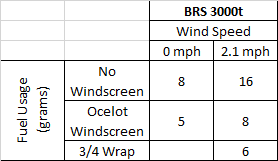
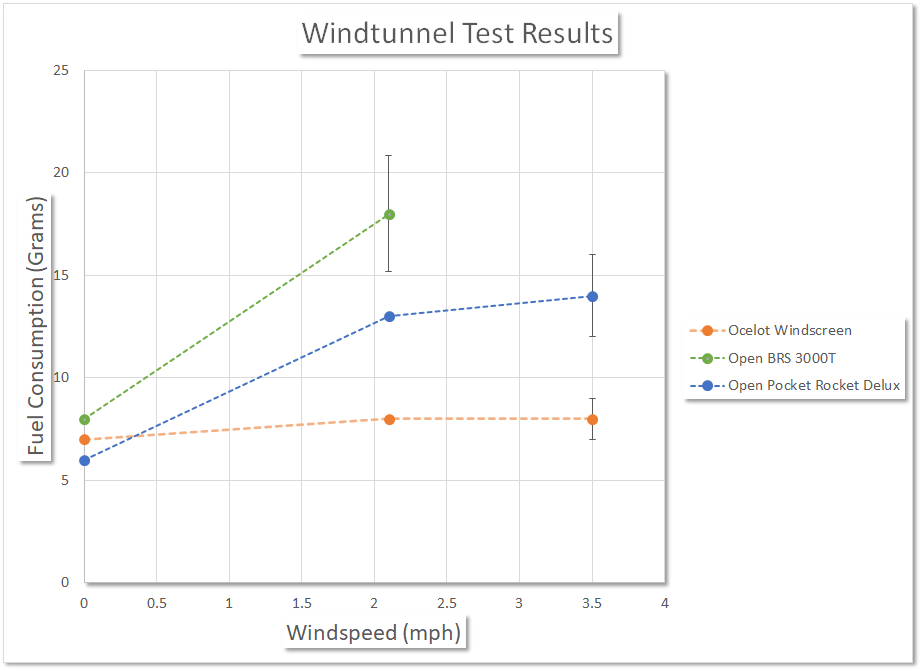
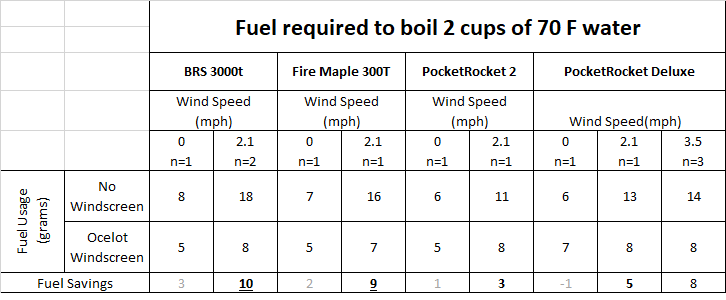
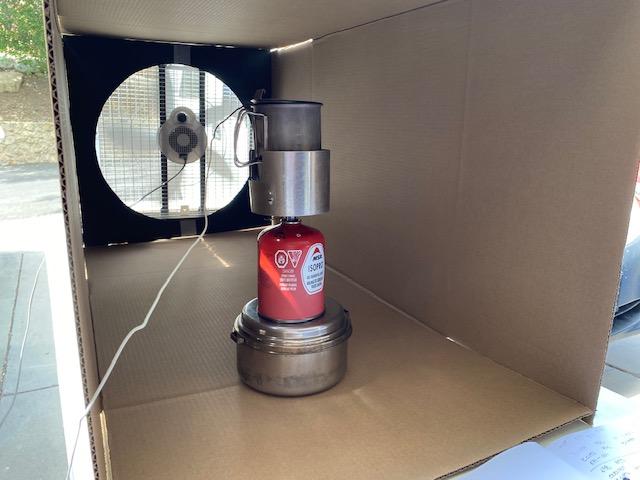
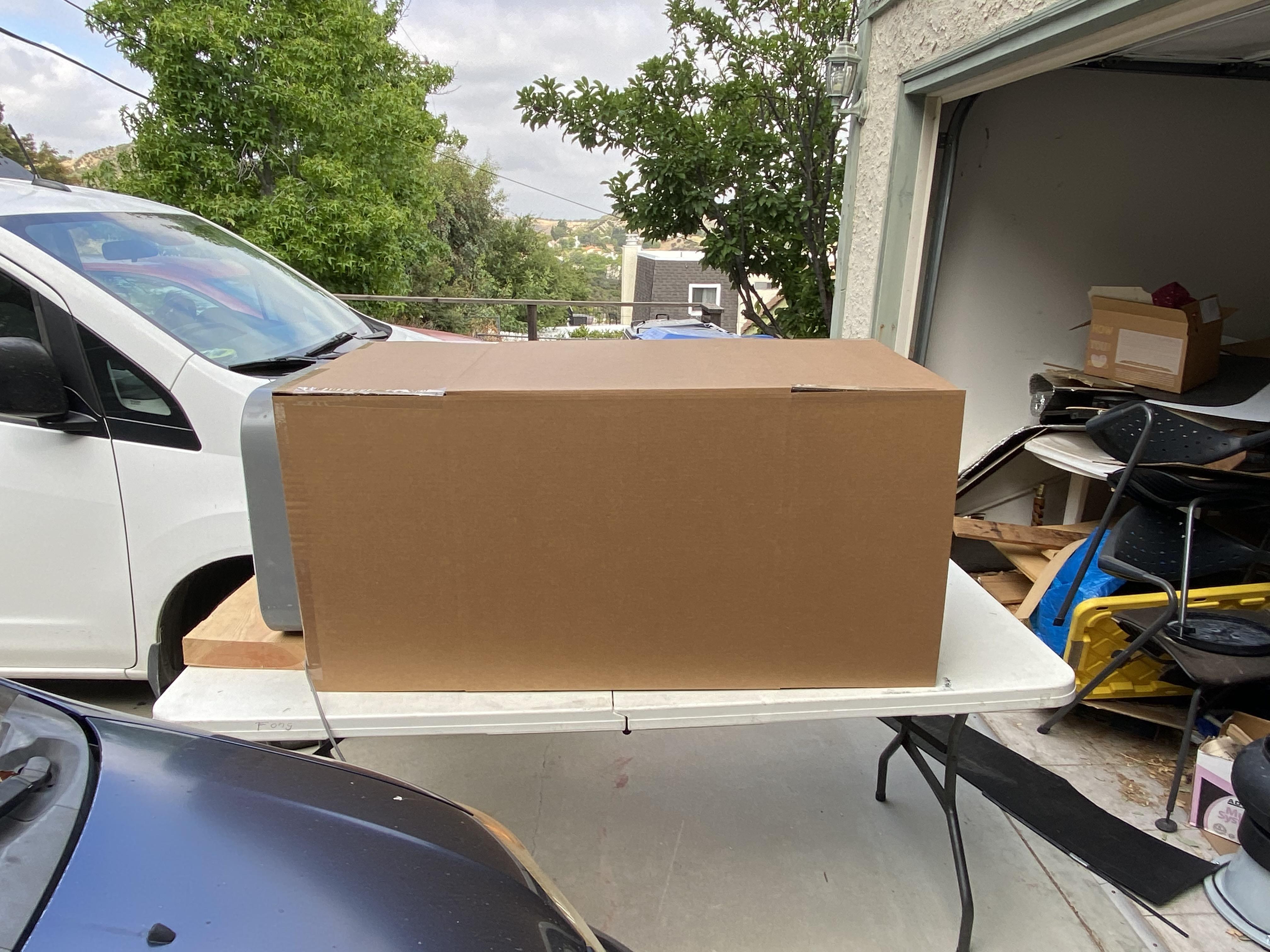
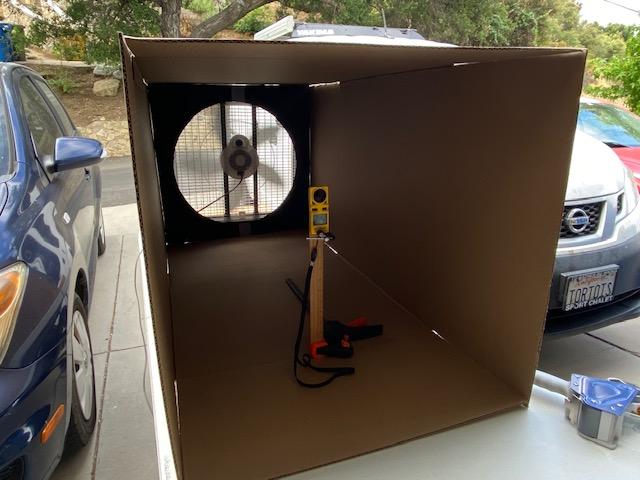
The primary objective is to reduce fuel consumption in the wind. A wind tunnel was created and the initial configuration yielded a steady 2.1 mph airflow. In all test cases, 2 cups of 70 F water was used. Time to boil and fuel consumption was measured. Since it is not possible to repeatably set the fuel flowrate, the flowrate was approximated. I made an attempt not to turn the flowrate high as the objective was fuel efficiency. Given that this was a shake down run, only a single test was run at each condition.</p>

<p style=”text-align: left;”>
The BRS 3000t was selected as the starting point due to the reputation of not being very robust in the wind. I used a Snow Peak Trek 700 as my mug. Note that in one test condition (open & 2.1 mph) the test was halted prior to reaching a boil. The water reached 140 F (the halfway point between 70 F & 210 F and the test had taken 8:30 minutes. Fuel consumption was 10 grams so I doubled the weight assuming linearity of heat transfer. In all probability, this is a conservative guess as the heat transfer rates away from the mug will only increase with higher temperature.</p>
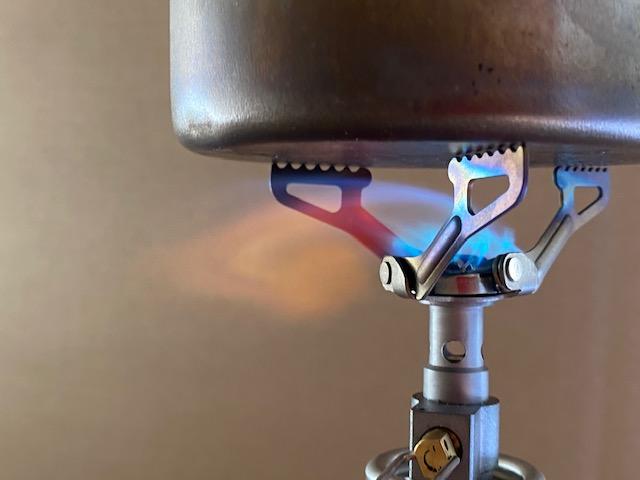
<p style=”text-align: center;”>BRS 3000t flame shape at 2.1 mph wind</p>
<p style=”text-align: center;”>
Test results</p>

<p style=”text-align: center;”>Conclusion</p>
- The test setup seems valid, I may need to consider lowering the airflow in order to obtain cleaner data
- A larger sample size is needed
- At first glance, the BRS 3000t is terrible in the wind. I won’t know more until I compare it with other cannister topped stoves
- There appears to be some efficiency gains in the no wind condition. This could be attributed to keeping the hot gasses in proximity to the mug. This was not an objective to the design, but it is a slight benefit
- There is a lot more work that could be done
My 2 cents