Hi All,
[This is not a commercial product. I don’t sell it or even make it. OK, I made a few prototypes, but I’m sharing the design here in case anyone wants to make their own. I find mine quite useful, and just wanted to share it with the Backpacking Light Community.]
I’ve been tinkering over the years with many DIY projects, and have spent a lot of time thinking about and prototyping windscreens. My need has been to have a windscreen that fits inside my cookpot and is tall enough to cover the full height of the stove + cookpot, as I find this reduces boil times with an alcohol stove quite a bit.
I made a few prototypes about five years ago of this seemingly paradoxical windscreen. It fits entirely inside a Snow Peak 450 cup or similar, yet can cover an 3″ tall / 6″ wide pot sitting on a 5″ tall canister stove, as well as a 6″ tall / 2.5″ wide bottle sitting on a 3″ tall alcohol stove. I call it the SnakeScreen.
The SnakeScreen is a strip of aluminum, ~40″ long and 2.5″ wide that is rolled up in a helical fashion to create a long tube that is placed over the stove and cookpot combination to serve as a windscreen. Slits and tabs along the length of the SnakeScreen interlock to hold the screen together, and the geometry of the strip is such that the tube stands up straight when placed vertically. The screen works with wide or narrow pots–one screen, many pots, so-to-speak. It coils up into a 2.5″ tall cylinder that fits inside any pot or cup I own (quite a few!).
Advantages:
- If you’re using a tall and skinny pot (really a bottle–see video below), the SnakeScreen will cover the entire setup, stove + pot, decreasing boil times and fuel usage.
- If you have different size pots in your rotation (e.g., solo vs. groups), the SnakeScreen will work with both–one screen, many pots.
I should point out that the price of aluminum shim stock has doubled over the last five years, so from a $42 roll (0.006″ thick) that’s 100″ x 6″, you can only get four windscreens… that’s about $11 ea… But think of the fuel savings, LOL.
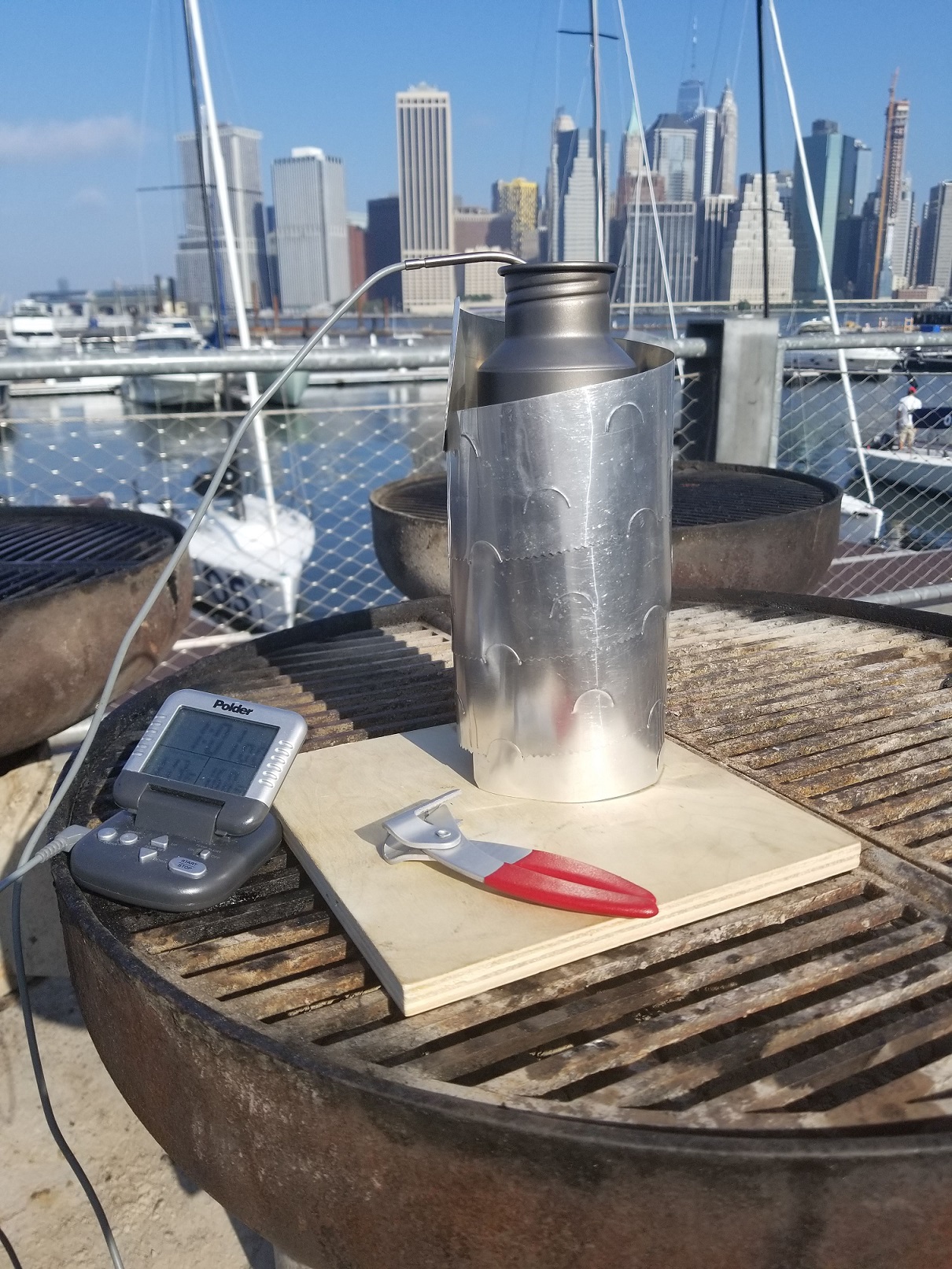
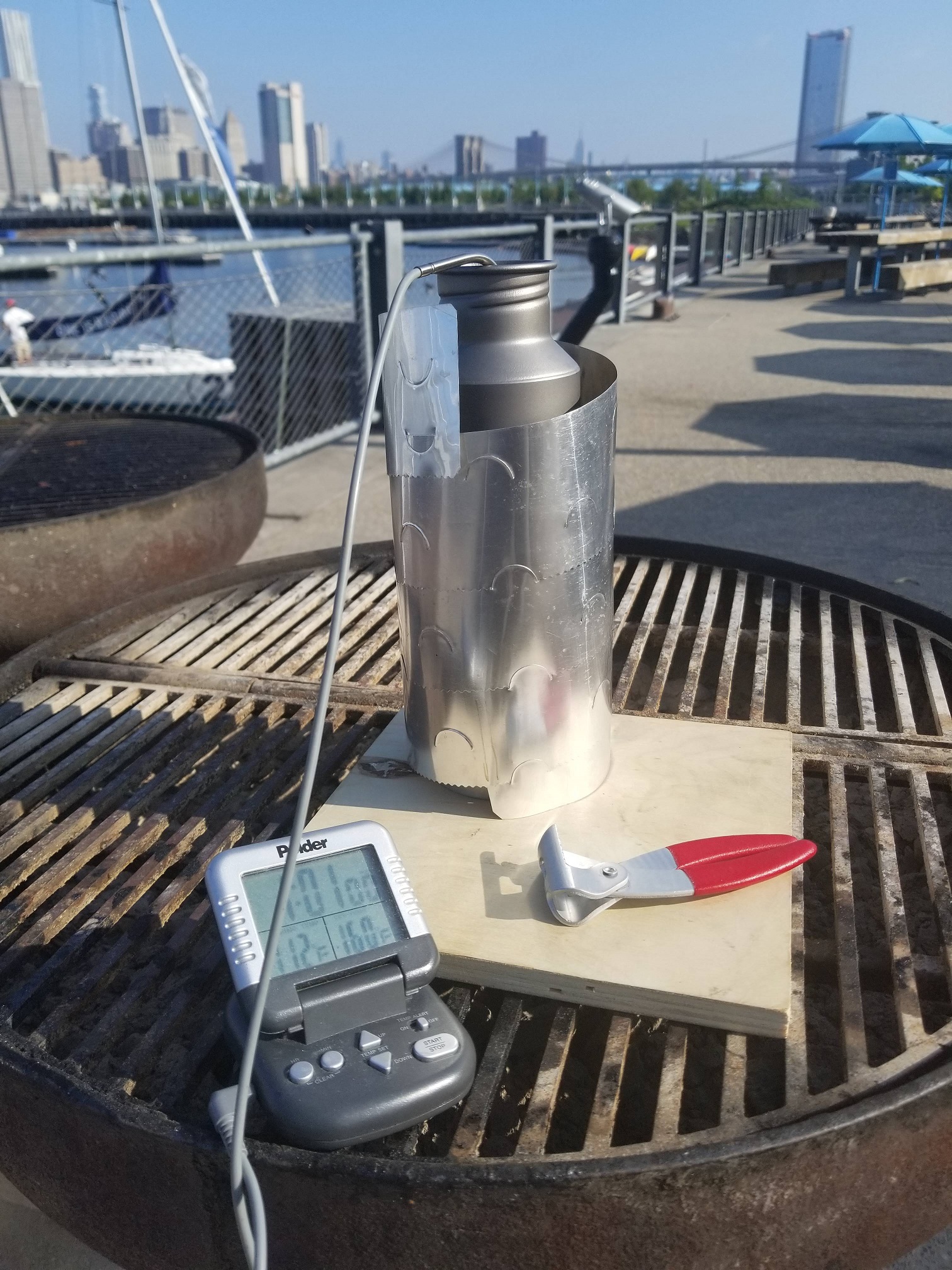
The hardest part of this design was finding a D-shaped punch, which I finally found on Amazon. I used Fiskars craft scissors to cut the bottom edge as this provided more friction within the D-slits.
Video 1, SnakeScreen inside my MLD Trapper’s Mug: https://photos.app.goo.gl/pdWAweV5nzxB86Wq6
Video 2, assembly instructions: https://photos.app.goo.gl/m5YCK1JpcEXdjRYU8
Reply here with Q’s, comments.
Einstein