Topic

Near complete gas canister failure in cold

Viewing 22 posts - 1 through 22 (of 22 total)
Adam G BPL Member
PostedFeb 18, 2026 at 9:38 pm

I recently had a mixed gas essentially fail in the cold and I’m wondering what could have happened.

It was a brand new MSR canister and failed when it was around 20F outside. I screwed it onto my Kovea Spider and it never hissed. I opened the valve and no gas flowed. I tried loosening it and tightening it. I tried inverting the canister before igniting (which is generally a very bad idea). I eventually got it to flow but it barely put out a flame. This was bad because I was melting snow for water.

I tried my friend’s partially empty canister and it worked fine. I then tried using the failed canister at home and it worked fine.

I know that the gases have different pressures and that can cause problems in the cold, and canisters can also completely fail at very low temperatures when the gases don’t vaporize at all. But it wasn’t that cold outside.

Any ideas? Generally, having a nonfunctioning stove is an inconvenience but not being able to melt snow is an emergency. Fortunately, I always have a backup.

PostedFeb 18, 2026 at 10:36 pm

Any way to replicate a 20 degree environment at home? Try with another MSR can in similar conditions. Unless some how a bad batch with all butane was made I’m thinking a valve height error on the can. When cold the valve is not fully opening. I seem to remember the trouble prone Coleman cans sometimes worked at home but in colder temps the height issue occurred and the valve didn’t open enough to work well.

Bob Shuff BPL Member
PostedFeb 18, 2026 at 11:38 pm

MSR should be as good or better than other isobutane mixes, but I understood that 20F is pushing it with canisters in general, especially if the canister is cold.  Warming the canister should help, inside your jacket and/or in warm water. With those tricks and in the inverted canister mode the Kovea should work at 20 and a bit lower, but I have had issues with a spider sputtering when I used it in a tightly enclosed windscreen, which reduced my confidence in the stove overall.

Alan W BPL Member
PostedFeb 19, 2026 at 6:19 am

When 20s F or colder, I typically sleep with cannister for morning reliability, whether using inverted cannister stove or Molder strip with upright.

Even when the added starting warmth is not strictly needed, this helps conserve/prolong the propane fraction of mixture.

Hearing that a brand new MSR cannister didn’t work near 20F strengthens my commitment to the nightime inconvenience. Thanks.

Jerry Adams BPL Member
PostedFeb 19, 2026 at 8:44 am

There are many threads about this problem.

MSR Isopro canisters have isobutane.  It’s boiling temp is 11 F.  There’s a little n butane so maybe the boiling point is 12 F.

You said you opened the valve and eventually got a little flow.  That would mean the actual temp is about 13F.  Or there is more nbutane in the canister than advertised.

There are many ways to get a canister to operate at cold temps.  Putting it your sleeping bag is good.

You can have a bowl of water and put the canister in that.  The water will freeze, so as you heat up water with the stove, you have to put a little of the heated water in the bowl.  When you run the stove, the canister cools from evaporating butane in the canister, so you have to continually warm it.  This is the classic way to operate in the cold.

What I do is use a bic lighter and heat the outside of the canister.  Of course the bic lighter won’t work for the same reason, so you have to heat it in your pocket.  Or against your stomach.  It seems like that would be a bad idea to put a flame to the canister of butane because it would explode, but it’s okay if it’s cold.

PostedFeb 19, 2026 at 9:26 am

The info that had me puzzled was this was indicated as a new can. It should operate for a little bit at 20. Enough to get going before switching to inverted operation.

PostedFeb 19, 2026 at 9:51 am

I tried my friend’s partially empty canister and it worked fine.

Was this tested at the 20 F temperature as well?

Adam G BPL Member
PostedFeb 19, 2026 at 9:57 am

Yes, we were camping together and he just tossed me his. It was definitely in the 20s so I should have had some gas flow. I understand that the gas won’t vaporize much as you approach 0F. I will throw it in the freezer with another one and see what happens. That should be well below 0 F but curious if it would get enough flow to let it burn inverted.

PostedFeb 19, 2026 at 10:14 am

Spit balling here, I suspect that it was some contamination that clogged the valve.  This could be from inside the canister or on the valve body of the stove itself.  The partially used canister as well as the at home test showed that the fundamental system works.  It may be an intermittent problem that could be hard to replicate.  I have done some freezer testing by putting the canister is a bowl of water and freezing the entire assembly.  My 2 cents.

Brad W BPL Member
PostedFeb 19, 2026 at 10:55 am

I have had similar failures at varying temperatures. New can fail at 50f with one known good stove only to work with a very cheap stove a friend had. Failure to work in 20’s with same MSR fuel, same good stove-warmed up can by keeping it on my person-then it worked. These issues don’t happen often-maybe 1/50 or 1/100 uses but they do. I usually dispose of the can when I get home.

Jerry Adams BPL Member
PostedFeb 19, 2026 at 11:54 am

I had a canister that the lindal valve failed.  When I unscrewed the stove, butane leaked out.

I just left the stove screwed on until the canister was empty.

Once, I left the stove screwed on and the canister was empty in the morning.  When it got cold, some metal piece shrunk so it opened up the space between stove and canister. That was just a defective stove.

Dan BPL Member
PostedFeb 19, 2026 at 12:32 pm

Yes, we were camping together and he just tossed me his. It was definitely in the 20s so I should have had some gas flow. I understand that the gas won’t vaporize much as you approach 0F. I will throw it in the freezer with another one and see what happens. That should be well below 0 F but curious if it would get enough flow to let it burn inverted.

The limit is more like 11F, not 0F. And FWIW, most people have their freezer set at about 0F, not well below.

But anyway, while I agree that a canister coming out of the freezer will not generally work, I don’t think that experiment will replicate your anomalous problem at a nominal temperature of 20F.

Roger Caffin BPL Member
PostedFeb 19, 2026 at 4:07 pm

At those temperatures you need a remote inverted canister stove to get any reliability. And it does help to keep the canister above freezing at all times. For why, . . .

It is possible that there was a drop of water in/on the Lindal valve. At those temperatures it would of course be ice. Once the canister got warm, the ice would melt.

Cheers

Adam G BPL Member
PostedFeb 20, 2026 at 8:12 am

Thanks everyone for the ideas. Now that I think about it, the sequence of events were more complicated. I pulled out my stove and gas canister out of the pack. I had that little cap on the canister, pulled it off, and screwed it onto the stove. I turned it on with the canister uprighy and no gas came off. I turned it off, unscrewed the canister, and tried again and no gas came out. I turned it off and tightened the canister and turned it back on and no gas. I turned it off and loosened it a decent amount and no gas when I turned it on. I removed the canister and reinstalled it, and I actually got a flame that time. It wasn’t the strongest but it was ok. I then inverted the canister and the flame stayed around the same size which is unusual. I put on the pot and a few seconds later, the flame went out. I turned it off and then turned it on again and got a tiny flame. I then turned it off again, uninstalled the canister, reinstalled it, and no gas flow at all. At that point I gave up.

Despite your insights, I am still baffled. I’m leaning towards something being defective in the stove valve that only occurs when it’s cold.

Jerry Adams BPL Member
PostedFeb 20, 2026 at 8:18 am

maybe the lindal valve on the canister is defective

nice sequence of steps in your experiment

if a canister is right at the boiling temp, and you shake it, that can increase the vapor pressure a little.  Maybe that explains why it started working a tiny bit.  But MSR Isopro should run fine at that temperature and I think it’s unlikely a batch of canisters would have such a high boiling point

PostedFeb 20, 2026 at 8:35 am

This is fun. Let’s keep beating on it for a while. It does seem like we’ve narrowed it down to issue at the canister valve /stove interface. Debris, ice or shrinkage/tolerance issue as main contenders? So how about dial testing up to 11. Out both stove and can in freezer for a bit to chill then see what happens. Have a shallow bowl of water ready to put the can in as a way to rapidly increase pressure. If it starts off slow and then works fine after a little longer immersion just mark it up as a fluke?

Adam G BPL Member
PostedFeb 20, 2026 at 5:04 pm

So I did some experiments at home to try to sort this out.

First, I put the problematic gas canister in the freezer and let it sit there for a few hours. I pulled it out and connected it up to the stove. To my surprise, it actually turned on with a decent flame. I guess my freezer is above the vapor pressure of at least one of the gases. I have no thermometer to actually measure it.

Next, I put two different canisters in the freezer along with the stove, one brand new one and the one I took on my trip. I left them in there for a few hours, and then tried again. No flow whatsoever on the problematic one but the new one lit right up. So it seems that it is something to do with both the canister and the stove being cold.

Next I put the problematic one back in the freezer with the stove and tried again, with no gas flow. I then put the canister in a water bath and still no flow. I then tightened the connection a bit, and I got some flow. Then I really ratcheted it down, probably more than I should have. I got full flow. Then just to be sure, I connected it to the new canister and I got flow when it was connected in a normal way without really ratcheting it down.

So my conclusion is that when the canister gets cold, part of the valve contracts or some internal piece gets stuck. When the stove gets cold, the little pin may get a bit smaller. Then when I screw it on, the pin just can’t open up the valve on the problematic canister, but works fine on other ones. So essentially, there was probably some sort of QC issue on the canister in terms of manufacturing the valve. I suspect it just sits too low or one of the internal mechanisms just gets stiffer in the cold. This can be fixed by really ratcheting it down, which is not recommended because you can damage the threads.

Interestingly, I actually tried ratcheting it down in the field and it didn’t work. I suspect I didn’t ratchet it down hard enough. I had to torque it to the point that it pretty much wouldn’t rotate anymore.

I’m not going to test every canister this way before I go out into the field. That’s absurd. I will just bring two canisters (as I always do), but I really am surprised that this happened. It was MSR IsoPro. I wonder if this happens with other brands. I’ve used MSR, Olicamp, SnowPeak, and GSI without any problems prior. I bought a remote canister stove which can run inverted to avoid all the finnicky nonsense of getting canisters to work in the cold, but I guess it just didn’t work this time.

People swear up and down that the MSR Reactor is a snow melting machine. It’s the go to stove for the local mountaineering community. When it’s in the 20s outside, that seems to defy the laws of physics, but maybe there is some sort of witchcraft involved.

Roger Caffin BPL Member
PostedFeb 20, 2026 at 5:29 pm

Very interesting. Can you take some photos?
Side-on to show the height of the nipple and at 45 degrees (roughly) to show the metal around the nipple please.

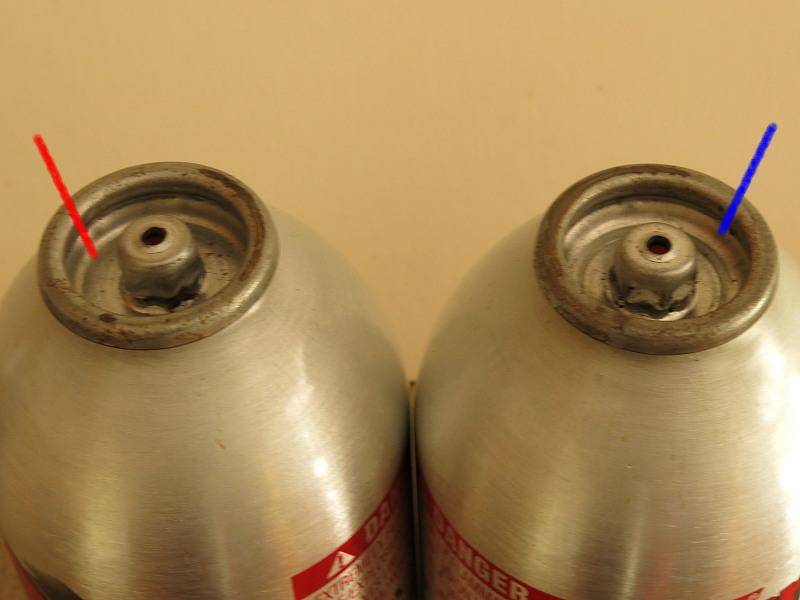
This photo shows a good crimp on the left and a bad crimp on the right. The metal around the nipple should be flat – red arrow to left, but on the right it has been severely dished downwards (blue arrow). I complained to Coleman about the QC and they both admitted the fault and adjusted to crimping machine  to fix the problem.


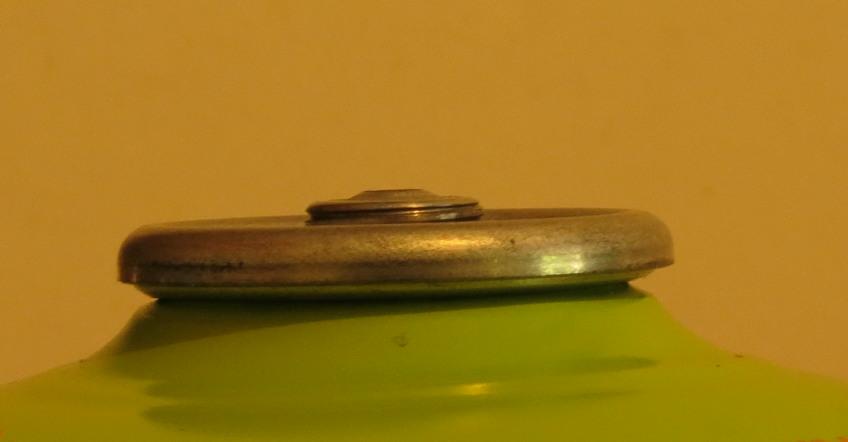
This photo shows a canister with a slightly high nipple in the middle. It should not stick up quite that high, but this amount should not matter. On the other hand, if the nipple is severely depressed below the rim, as in the previous photo with the blue arrow, then you may have problems.

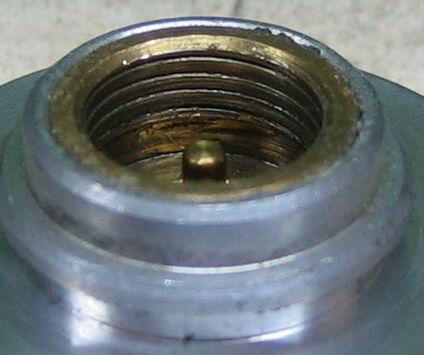
Screwing the stove down hard may solve the problem in the short term, but the rough steel thread on the canister nipple will eventually damage the brass thread in the stove so that it can no longer work, as shown here.

This was a really good Snow Peak GST-100 stove – until it died in the middle of the Pyrenees on one 2-month walking trip there. I had to buy a new stove from a little village, and there was not much to choose from.

All this is why the stoves I make have a seriously different means of connection to any canister (screw-thread, PowerMax, CampinGaz). More $$ to make, but RELIABLE.

Cheers

Adam G BPL Member
PostedFeb 20, 2026 at 5:56 pm

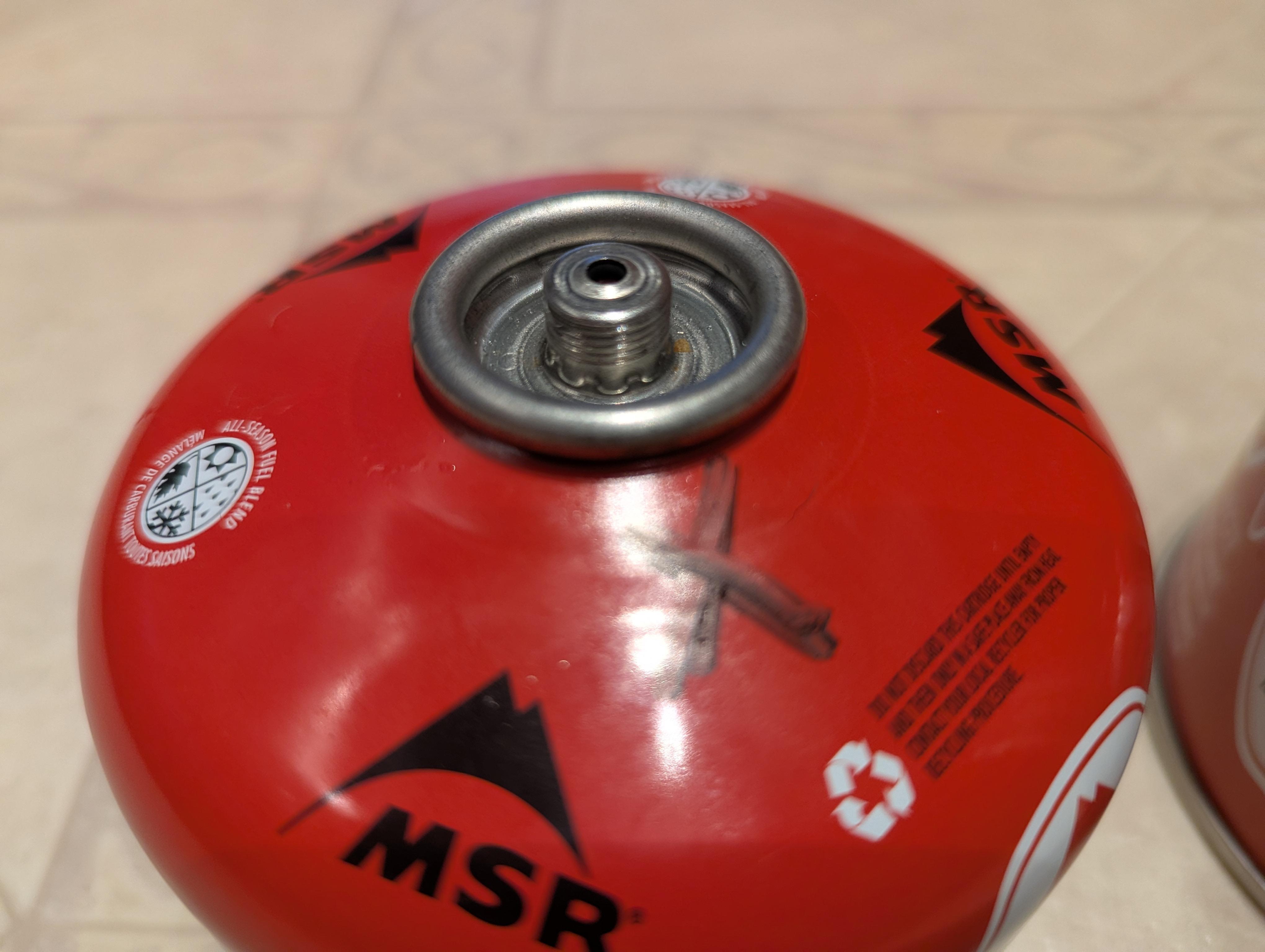
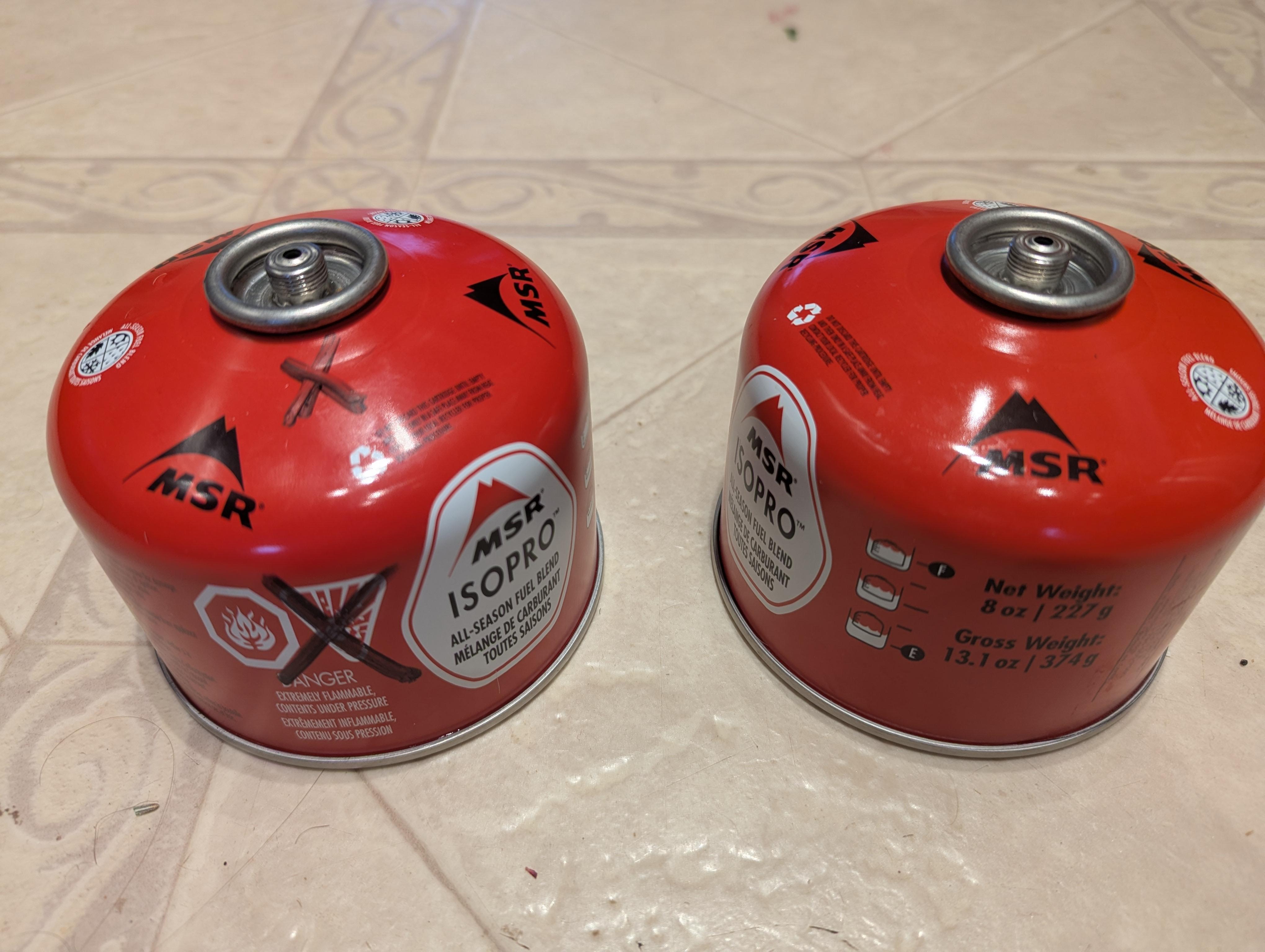
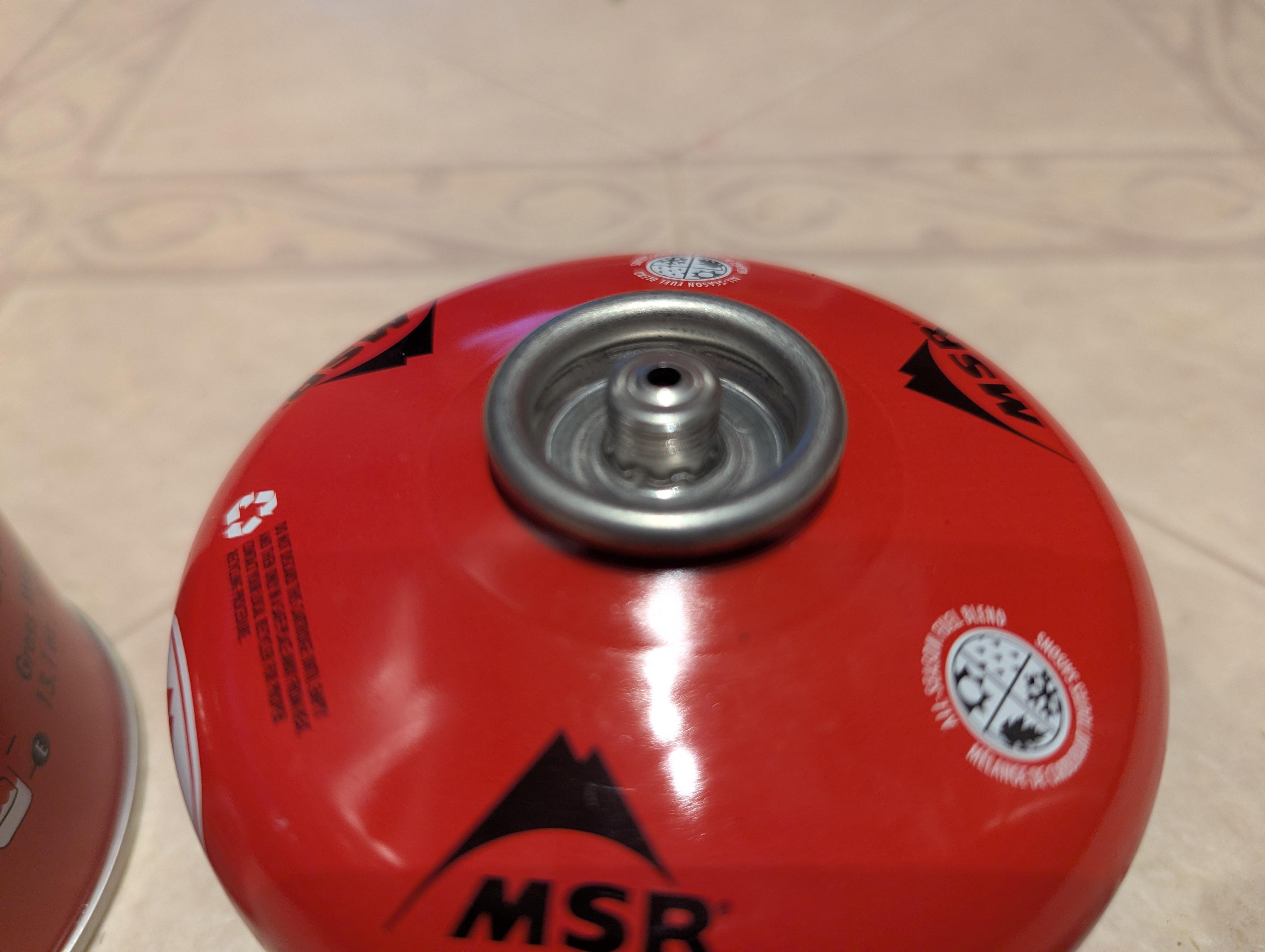
Here you go. The one with the X is the problematic one. I don’t notice any difference, but I’ve never made my own stove or really looked at one carefully before.

Roger Caffin BPL Member
PostedFeb 20, 2026 at 6:00 pm

It is always hard to diagnose across the Pacific, but I must say the first photo looks as though the nipple is badly depressed. In the second photo the canister on the right would seem to be OK? Does this fit?

Cheers

Adam G BPL Member
PostedFeb 20, 2026 at 6:35 pm

As far as I can tell, the external parts of the stoves including the nipple are identical. I suspect that whatever it is, it’s internal.

Are you saying I now need to carry a single #7 buckshot in my kit? That’s going to royally screw up my base weight.

Viewing 22 posts - 1 through 22 (of 22 total)
Loading...