


Companion forum thread to: Naturopathic Sleep Aids for Backcountry Use
Enhance performance and recovery in the backcountry through naturopathic sleep aids including melatonin, theanine, glycine, magnesium & botanicals.
Topic
Become a member to post in the forums.
 .
.
Companion forum thread to: Naturopathic Sleep Aids for Backcountry Use
Enhance performance and recovery in the backcountry through naturopathic sleep aids including melatonin, theanine, glycine, magnesium & botanicals.

I’m not a fan of anything that mutes my senses in the backcountry. I’ve had to wake up to deal with minor issues a few times, and it’s best to be clear-headed when that happens.
Recently I had some serious condensation in my DCF tent. If I hadn’t noticed and opened the vent, I would’ve woken up wet and freezing.
Oddly, while I don’t sleep easily at home, I sleep incredibly well when backpacking. It’s a different kind of sleep—just three or four hours at a time, roll over and repeat.

Interesting article. I don’t agree with the emphasis on naturopathic however. In addition to the fact that manufacturers don’t have to do rigorous testing but can make all kinds of claims for their products, I don’t think there’s anything inherently better about them over “mainstream” products. I also find that a Tylenol and an aspirin taken at mealtime can ease the aches and pains that can keep me awake, with no downside. I take them only as needed, so it’s not a crutch I rely on. A Benadryl is great for getting to sleep but I will have a hangover if I don’t take it early enough. Melatonin however, is awful for me. While it helps me fall asleep, I then wake up over and over again all night, and in the morning have such a terrible hangover, even including the headache! On melatonin I’m then groggy throughout the day, nodding off after lunch, or late in the afternoon. Then completely messed up for the next night.
The points about gear are well taken. Being warm and relaxed enough are essential for sleep, which is why I haven’t switched to a quilt; I want to be fully wrapped in warmth and have it roll with me when I turn over. I don’t really need much of a pillow; my clothes in a stuff sack with a fleece cover is adequate. Usually I’ve hiked hard enough that it’s all I need to get a good night’s rest.
One item not covered is a defensive device of some sort, which some of us do feel the need for, especially in some parts of America. I won’t sleep well if I don’t have something with me to fight back with – I’ll leave the discussion of what tool to carry to another thread. But I do have peace of mind if I am prepared. When you have the lifetime of experience of harassment, actual assaults, and on-going threats, you do what you have to do to stay safe.

<p>I used to take Benedryl. I also used to get leg cramps during the night. I stopped taking Benedryl and the leg cramps stopped, but I never correlated the two. Then I took Benedryl on one trip and the worst leg cramp of my life. I thought to myself, “Huh.” This doesn’t mean Benedryl causes leg cramps, but since I don’t take it any longer, I’ve had zero issues with nightly leg cramps. Anyone else had this issue?</p>
In addition to the fact that manufacturers don’t have to do rigorous testing but can make all kinds of claims for their products,
This used to be a thing, but the industry is pretty well evolved past this now. Lots of independent certification bodies (NSF, etc.) now exist to ensure quality and concentration. A little homework can ensure you are getting quality products.
Melatonin however, is awful for me. While it helps me fall asleep, I then wake up over and over again all night, and in the morning have such a terrible hangover, even including the headache! On melatonin I’m then groggy throughout the day, nodding off after lunch, or late in the afternoon. Then completely messed up for the next night.
These are known side effects of melatonin. Common with too high a dose (overwhelming the liver enzymes responsible for breakdown – and the effectiveness of these enzymes may be genetically-driven). So, take the dose where you experienced this and keep cutting it in half until the symptoms go away. Many users find positive effects from melatonin at doses as low as 0.2 to 0.5 mg. Most melatonin supplements seem to be in the 1g to 5g+ range.
The other issue is that if you are trying to resolve a sleep problem that is *not* related to circadian disruption, melatonin may compound the problem. For regular use, melatonin should be used to complement otherwise low melatonin in your body, resulting from disrupted circadian rhythms. Otherwise, you risk further disruption.
Tylenol and an aspirin taken at mealtime can ease the aches and pains that can keep me awake, with no downside.
Biologically, downsides are not on-off switches; they lie on a spectrum that depends on individual dose, acute repetitive use, and chronic repetitive use. Less downside for lower dose and lower frequency of use. More downside for higher dose and higher frequency use. Again, downsides will be a function of a user’s individual biology.
Experiment, experiment, experiment. And consider context. Everyone’s biology is (a little bit) different.
Also, ignore manufacturer claims. Just focus on the chemistry.
This doesn’t mean Benedryl causes leg cramps, but since I don’t take it any longer, I’ve had zero issues with nightly leg cramps.
Super interesting observation. I couldn’t find anything that specifically ties muscle cramps to Benadryl use, but Benadry is an anticholinergic (inhibits neurotransmitter function, part of its sedative strategy), so maybe there’s something there triggering leg cramps as a result of that mechanism of action…

NSF will verify that a drug is the amount advertised, but they don’t verify that a drug is effective.
I have problems sleeping. My sleep apnea doctor said none of the drugs are effective. Instead, go to bed at the same time every day. Do boring things for a couple hours before bed. Avoid bright or blue light 1.5 hours before bed. Look at bright lights when you first get up. Which might not be all that applicable to backpacking.
I tried melatonin. I think it was 1/4 of a 1g pill. No effect for a couple nights, then, the third night I couldn’t sleep at all.
I think melatonin would be good for jet lag, but not for regular sleep problems.
Thoughtful and thought provoking. I’m going to be re-evaluating my field sleep now! Thanks!
My sleep apnea doctor said none of the drugs are effective.
There are tools *other than drugs* that can be used to manage sleep problems (e.g., lifestyle and circadian rhythm behaviors, as you already mentioned), but this type of statement from a medical professional reflects broader issues from medical practitioners (especially specialists) in our modern-day healthcare system. Lack of critical thinking and failure to recognize all of these things as possible tools with relevance in certain contexts, seems medically irresponsible to me.
Winding down for a few hours before going to bed has had a profound impact on my sleep quality in recent years. +1
In a hiking context, that has motivated me to start hiking earlier, enjoying more quiet time in the early morning sunshine during my first break, and ending my day a little earlier so I can relax in camp before going to bed. I don’t do this every day, but on long trips I definitely try to pepper in this type of day every few days to take a break from dawn-to-dusk hiking.

At home, melatonin works well when my sleep times are irregular. While backpacking, it also works when I’m too over tired to get to sleep.
Taking too much makes the next morning feel like trash. Finding the right dose is important.
Melatonin in a proper dose lengthens REM and gives me wild and vivid dreams that worried me at first but that I’ve since learned to embrace and look forward to
Excuse me while I kiss the sky, thank you melatonin
My sleep apnea doctor said that the only effective treatment for insomnia is CBT-I. That’s where you go to a therapist and talk. cognitive behavior therapy insomnia.
There’s a website that talks about cbt-i. They say it augments cbt-i with a human. I got an idea what cbt-i is based on this. I would have gone to talk to a human but it was during covid shutdowns so I didn’t bother. https://mobile.va.gov/app/cbt-i-coach
This is more general than back country use, but I think it would help with that also.

Does CBD count as a botanical extract? seems to block or interfere with the inflammatory impulse which can help with sore muscles. Not sure if it has a calming effect exactly and here’s what google A-I reports:
CBD is not considered a mild sedative in the traditional sense, as it does not cause sleepiness or incapacitation. Instead of knocking you out, CBD promotes relaxation and can help calm the nervous system, which may lead to improved sleep quality. It’s important to distinguish CBD from its psychoactive counterpart, THC, and be aware that certain combinations of CBD with other sedating medications or substances could increase drowsiness.
Like Jay above not sure I want to be sedated in the backcountry but relaxed is OK. Also sometimes take a third (sliced by pill cutter so not precise) of a cetirizine AKA Zyrtec antihistamine to blunt allergic reactions. A-I says: Plus Side. Causes less sedation than older allergy medicines, like Benadryl. It is long-acting and lasts up to 24 hours.
Downside. Doesn’t control allergy symptoms as well as older allergy medicines. Use cetirizine mainly if drowsiness from Benadryl interferes with function.
I’ve noticed somewhat deeper sleep but like avoiding anti-histamine effects during waking hours so the light dose at bedtime. Seem to wake up just as easily and no grogginess. Usually a pollen season problem and added to pack in pollen season like rabbit-bush in the 4-corners about now.

IMO, one should be very careful in using naturopathic/alternative treatments. While some of them may be safe and effective, many are pure snake oil scams, and some are probably not safe at the doses some people may use them. Certainly, they are not generally evaluated for safety and efficacy to the same extent as pharmaceuticals, so one would really have to do one’s own due diligence to evaluate the scientific rigor of the “studies” that the manufacturer is claiming. And frankly, the vast majority of people are not really capable of distinguishing a legit study from one that is flawed. Moreover, there are important subtleties, like potential drug interactions, that may not be disclosed for supplements and remedies.
The placebo effect is real, and sometimes pretty strong, so you may get a benefit from something even if it’s not really effective. But history is rife with reports of remedies that are not safe … so be careful. When I see some of the people who are often making a lot of money promoting naturopathic or “alternative” remedies (e.g. Dr. Oz), that often tells me all I need to know.
Good points, Dan. Gotta have the data to back up the claims.
My frustration with the wellness industry is the intereptation that “a compound” isolated from “plant X” or whatever “does this thing” – which it does in controlled studies at a dose that’s completely irrelevant to the dose found in the supplement. For this article, I focused my energy on supplements that had a large body of evidence in peer-reviewed medical research, without placebo effects, and with measurable outcomes.
Also, FWIW, pharmaceutical sleep aids, while very successful at “putting your into a sleep state” have some pretty risky long-term outcomes that are largely absent with naturopathic sleep aids – dependency, tolerance, rebound, cognitive impairment, dementia risk (correlation studies), dexterity and coordination impairment, other symptom masking, depression/anxiety (due to how they affect brain function), and immunological impairment. Bioidenticals or endogenous supplements (e.g., melatonin and glycine) and bio-analogous compounds (e.g., theanine) or macronutrient minerals (e.g., magnesium), in particular, have been deeply studied and their risks are low when compared to the laundry list of risks associated with pharmaceutical sleep supplements.
The 2010s started sort of a golden age of pharma research, because a lot of the long-term data started coming in from the first big wave of pharma dev that started in the 1980s, and has started waking up the medical community to some of the long-term risks of putting things in our body just because the FDA said it was ok to so at some point in the past.
So maybe instead (or also):
one should be very careful in using
naturopathic/alternativepharmaceutical treatments
The ship has sailed on most Americans (not sure about Europeans and others) fully believing and embracing unscientific solutions to health problems. Ivermectin cocktail anyone? If we’re taking health care advice from an uncredentialed heroin addict with a brain worm who has turned orange, there isn’t much hope for critical thinking. Measles party perhaps?
As a librarian, I’d also state from experience that many of the “peer reviewed” studies – even those that show up in Medline – are actually predatory journals. It’s a huge problem for science, one that undermines genuine work that could be helpful to many, if more actual unbiased research were funded. But as naturopathy stands, it’s not a legitimate field. Ryan if you want to convince folks about specific options, maybe disconnecting from that business model and focusing on those actual studies would be helpful.
But as naturopathy stands, it’s not a legitimate field
100%. This industry has so many structural problems, including the funding of predatory studies, that it’s often very difficult to sort out.
Again, it always has to go back to data derived from independent studies with no funding conflicts of interest.
Grow your own.
Become a member to post in the forums.
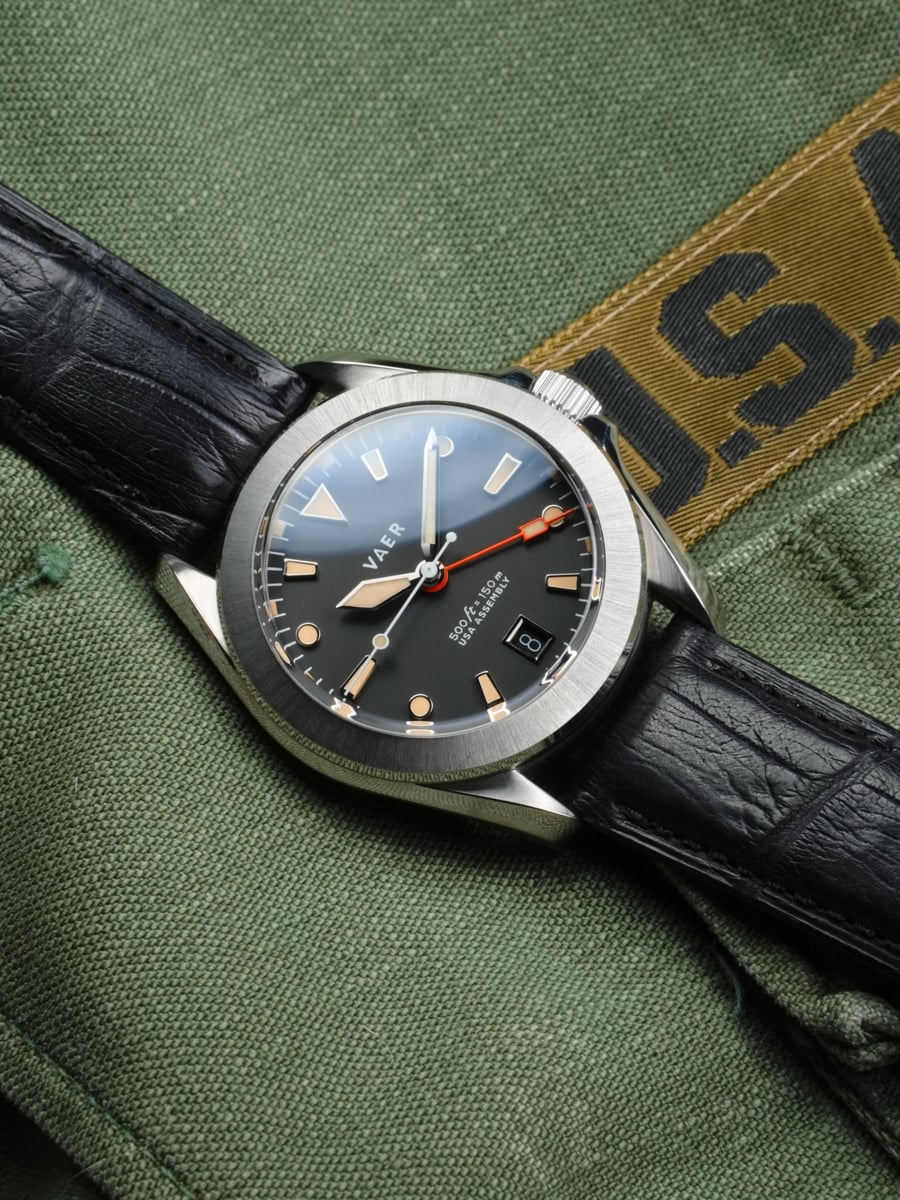 A Cult-Classic GMT Reimagined for Everyday WearInspired by the famously bezel-stripped Rolex GMT-Master worn by Marlon Brando in Apocalypse Now, the G2 Apocalypse turns a piece of 1970s film and watch history into a practical everyday GMT. Its restrained 39mm design pairs a Swiss Ronda quartz GMT movement with sapphire crystal, 150 meters of water resistance, strong BGW9 lume, and USA assembly. The result is an accurate, low-maintenance travel watch with a story collectors will immediately recognize.
 © Beartooth Media Group Inc.
 Loading...