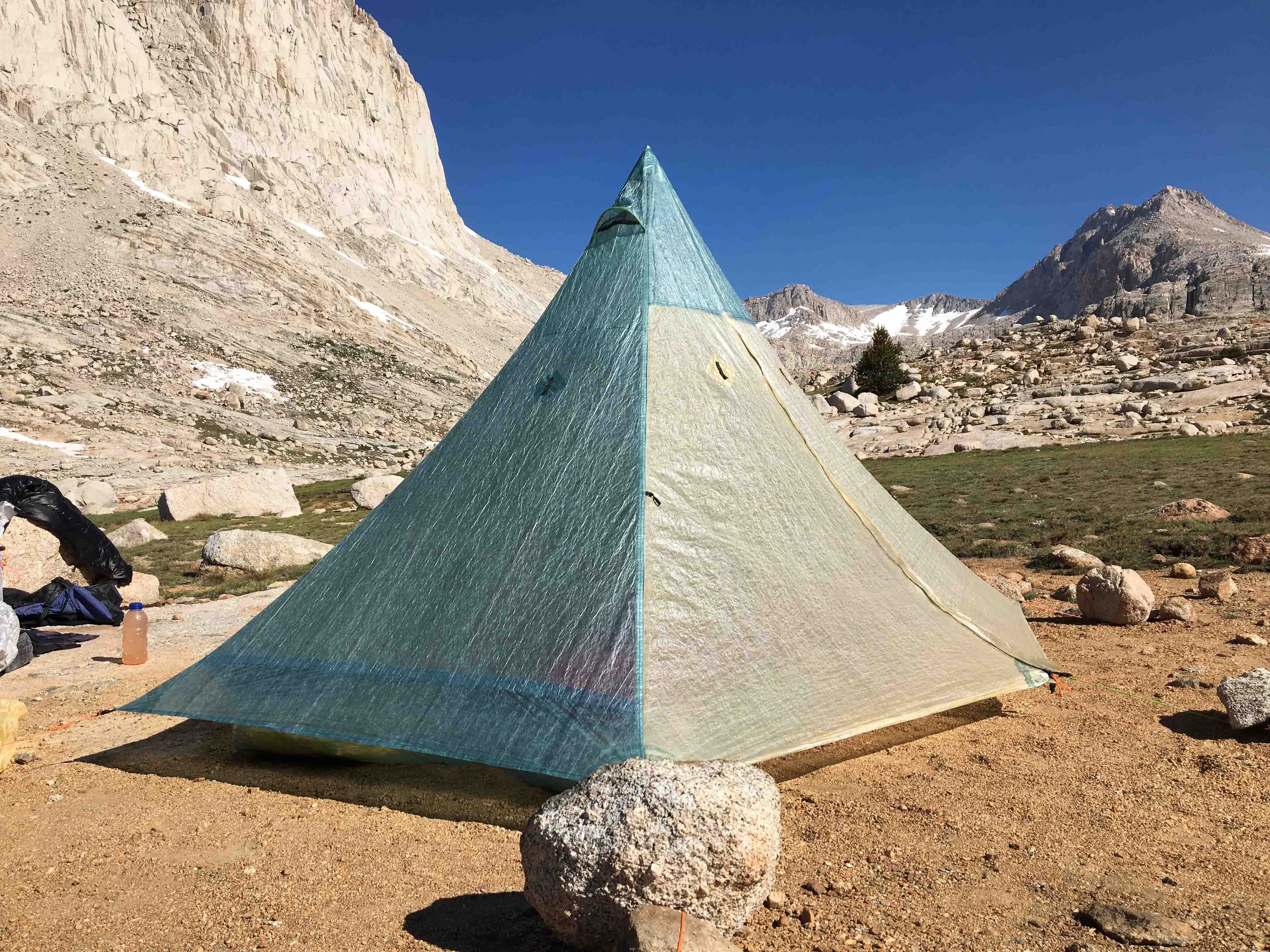
<span style=”font-weight: 400;”>Last winter, while waiting for my ankle to heal from reconstructive surgery, I designed and constructed my 4th DIY 2-person ultralight tent. Motivation and inspiration came from many of the excellent postings here on BPL, as well as a desire to package the many benefits my old Double Rainbow (“DR” from Henry Shires at Tarptent.com) with a DCF (formerly cuben fiber) shell that eliminated the arc pole in favor of a traditional pyramid tent center pole. </span>
<span style=”font-weight: 400;”>Analysis of the CAD design (Autodesk Fusion 360) indicated that the final design would weigh somewhere near 25 ounces. The final, constructed weight, including everything (tent, guylines, sack) weighs 23.6 oz.</span>
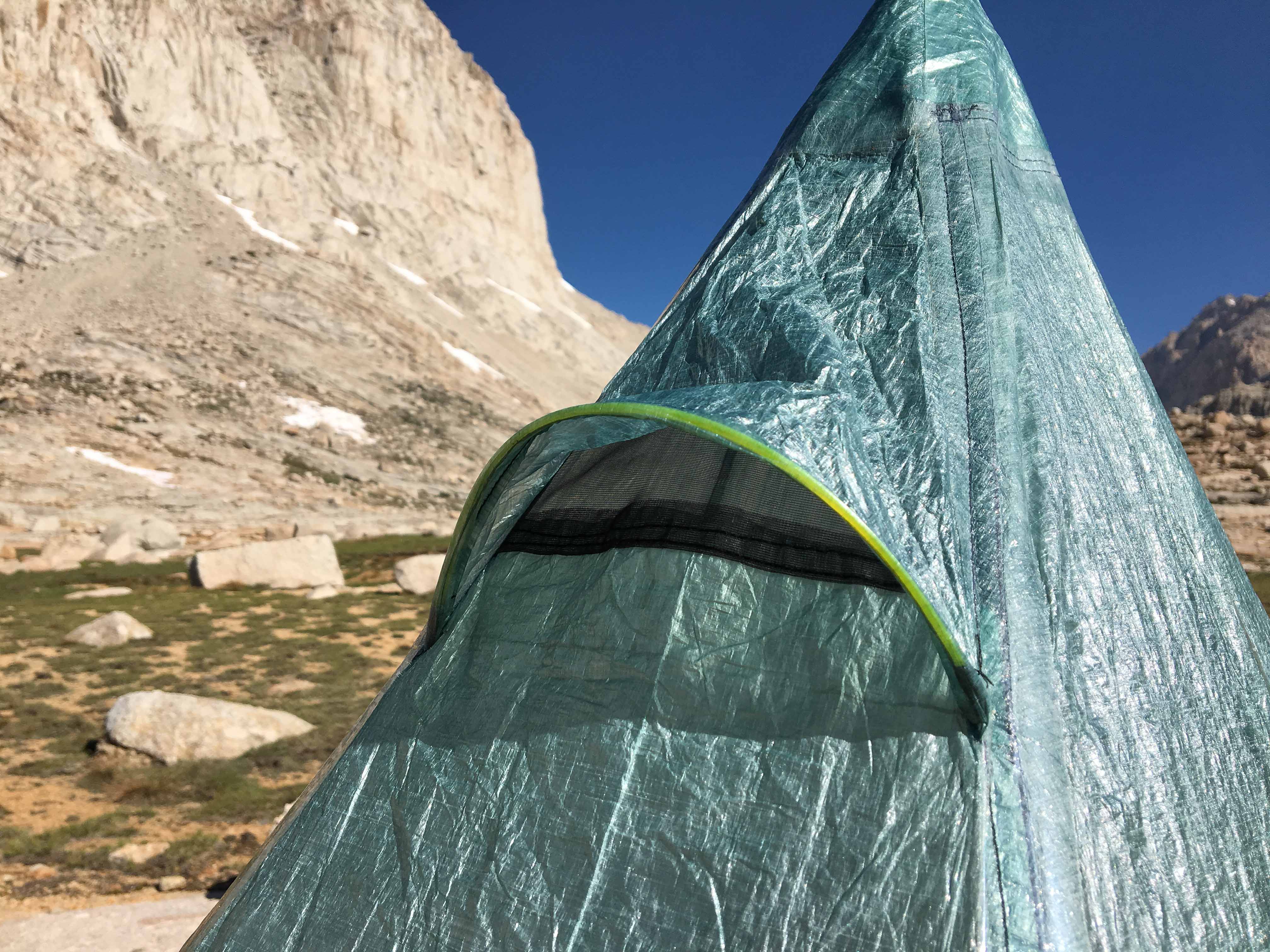
<span style=”font-weight: 400;”>Here’s a shot of the tent set up in one of my favorite spots, high in the Sierras (Ten bonus points if you can hint at the name of this place without giving it away!)</span>
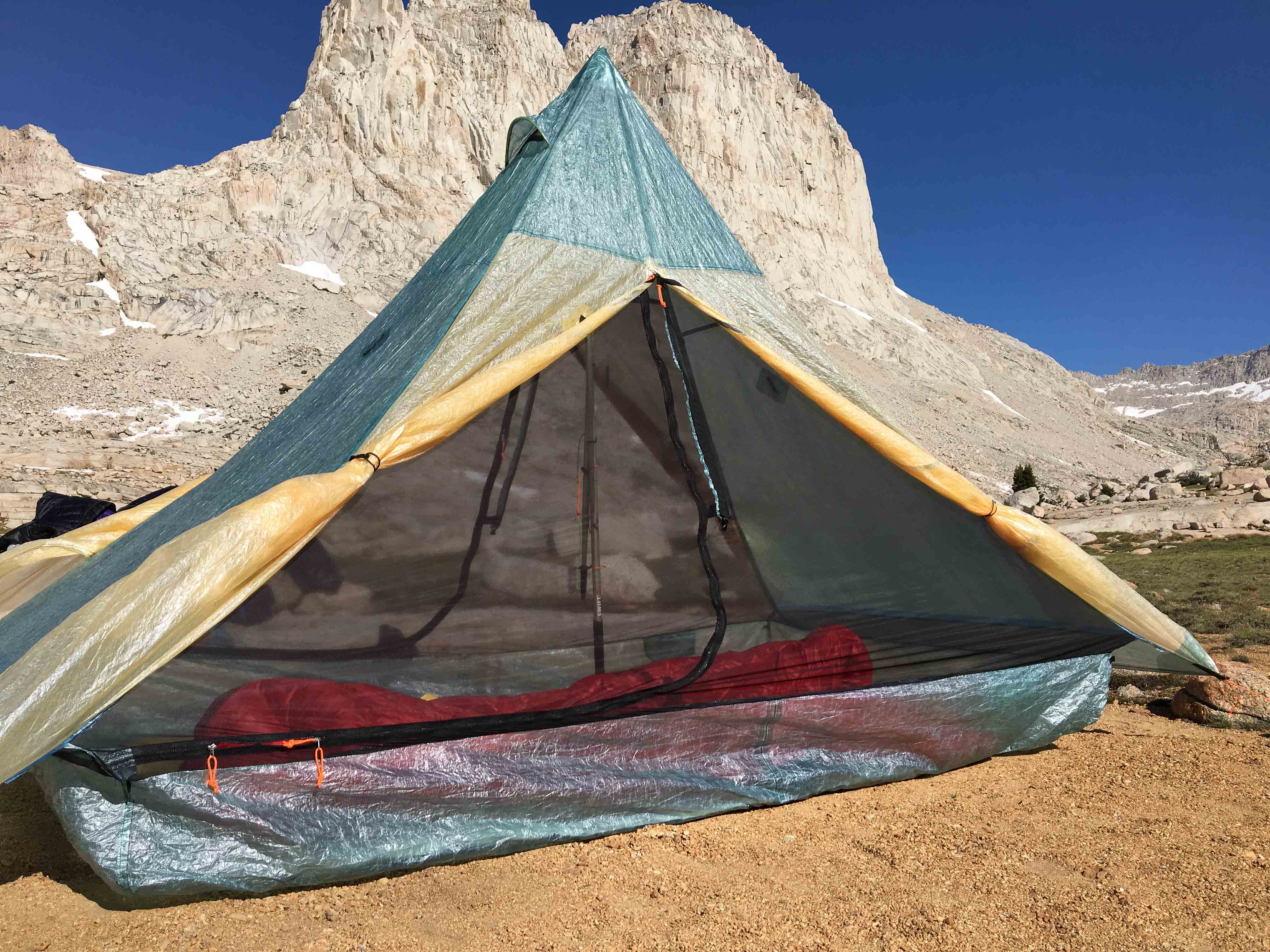
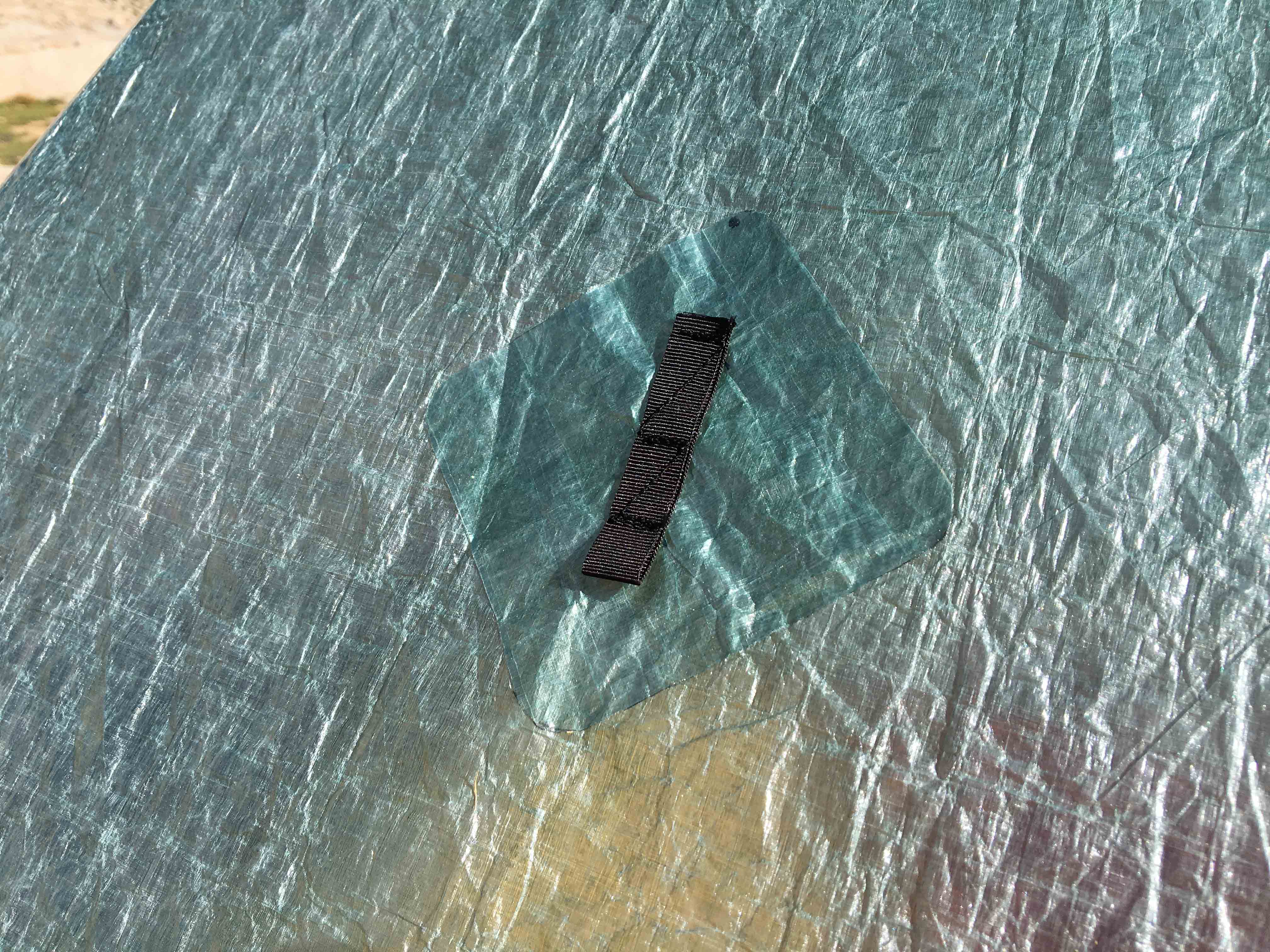
<span style=”font-weight: 400;”>My wife and I slept in the tent 25 nights this last summer, and remained dry and comfortable despite significant monsoon storms many evenings, and wind blowing in all directions. Like the DR, both side entries have two panels that can be rolled back to expose mesh doors, providing ample ventilation and visibility when the weather is favorable. Note that a mid-panel tieout on each mesh door allows the mesh to be tied out, to widen the living area and stabilize the tent in windy conditions.</span>
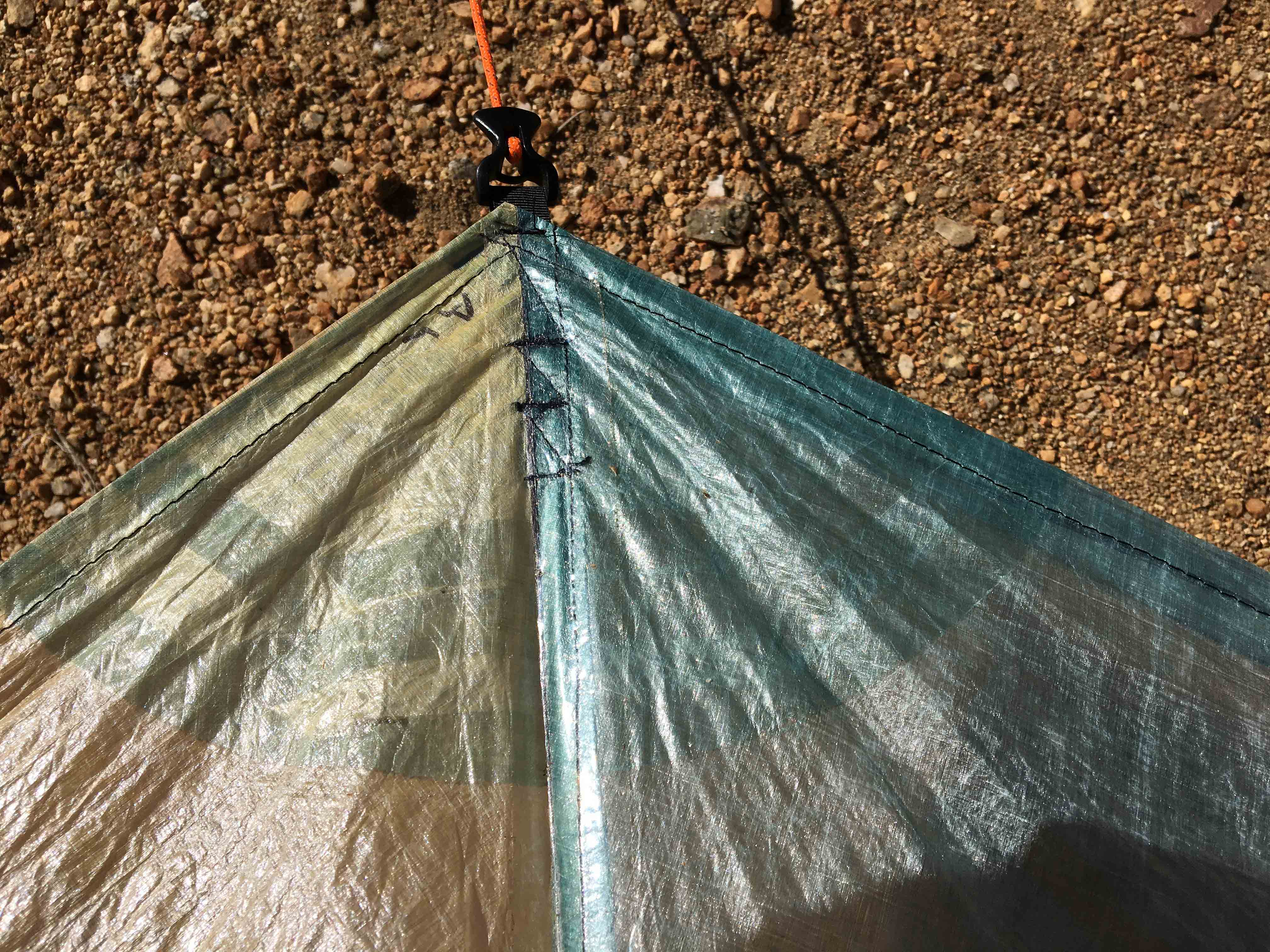
<span style=”font-weight: 400;”>When closed, the catenary cut lines allow wind to move across the tent surface from almost any direction with minimal impact. I was surprised at how well this design sheds wind, particularly compared to my previous “non-mid” designs. I included midpanel tieouts on each side, but I never felt like we needed to used them. Also, I included linelocs on the corner of each door panel, so that when the wind switched direction in the middle of the night, I only had to change the guyline from front to back panel, rather than have to rotate the entire tent 180 degrees. This, combined with the tendency for DCF to remain taunt even when wet, made it possible for us to enjoy torrential downpours and 50mph gusts coming from all directions.</span>
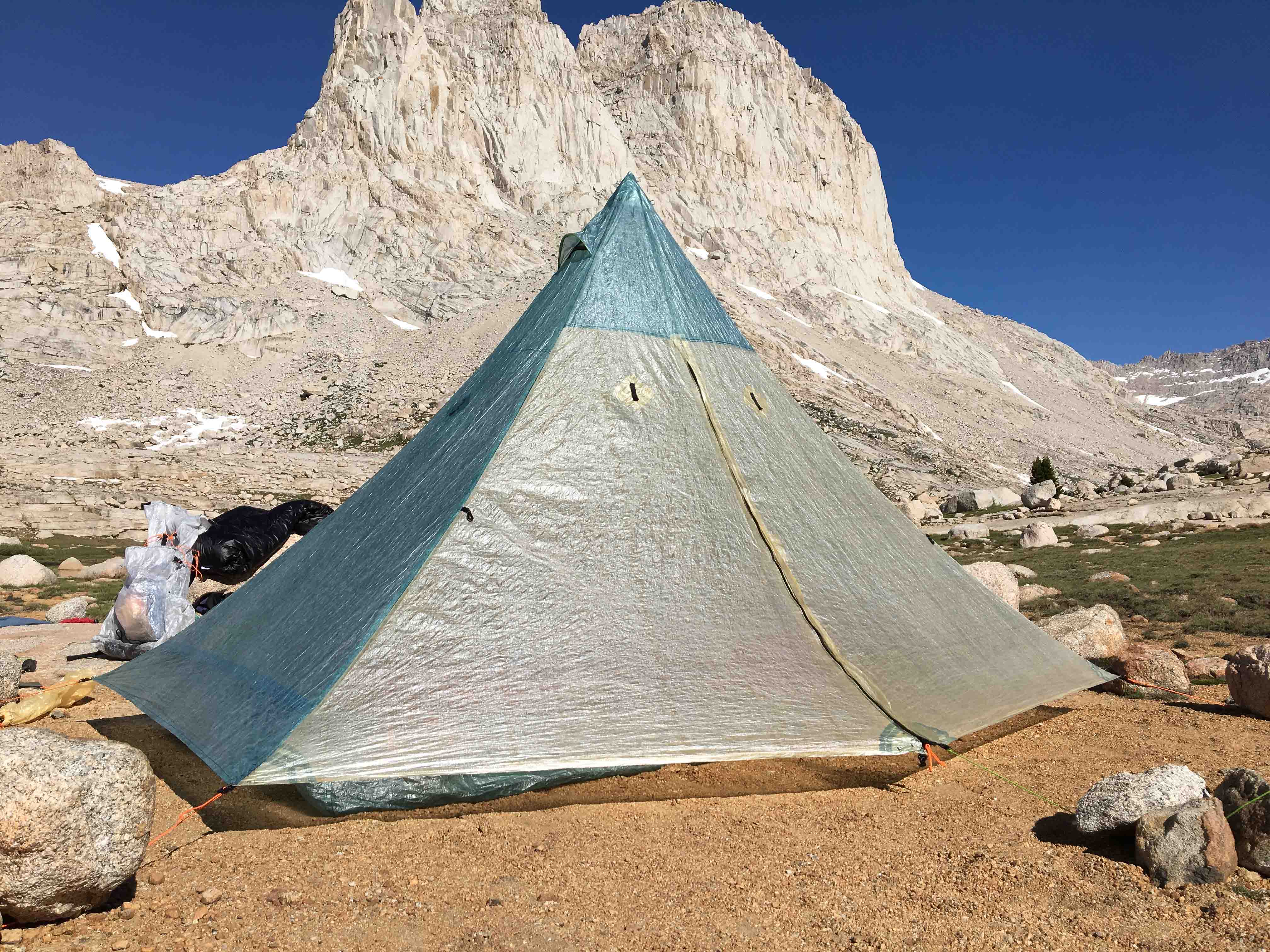
<span style=”font-weight: 400;”>The peak ventilation and the lineloc tieouts are based upon the many great designs here on BPL. </span>
<span style=”font-weight: 400;”>The canopy/shell was sewn from 0.5oz DCF, the bathtub floor from 0.75 DCF, and the mesh netting sides and ventilation from no-see-um netting, all purchased from Joe at Zpacks. </span>
<span style=”font-weight: 400;”>Seams are double sewn (Mara 50 thread) and taped (single sided tape from Quest Outfitters). Hardware and webbing was purchased from Zpacks, Quest and Ripstopbytheroll.</span>
<span style=”font-weight: 400;”>Thanks for reading. I’d love to hear your comments, questions and suggestions!</span>