Pierre,
Assume by omission of the word, “membrane,” you were using the 1.1 oz fabric with a PU coating on one side, and a sil coating on the other. This is around the same coated weight as 30 D silnylon: 1.3-1.4 oz/sq/yd.
Your comment about the weak tear strength suggests that the lighter ‘membrane’ fabric would be even more susceptible to tearing. It would be helpful if you could expand a little on this.
How much of the weakness is due to the polyester material, and how much is due to the PU coating is undetermined. But having done some seams with the new PU coated nylons, such as used on the StoS Escapist tarps, I’m inclined to believe that the polyester material, rather than the newer PU coatings, have more to do with the weakness of the material.
Although Snow Peak has manufactured a light polyester material for its Lago tents that is quite strong and intended for winter camping. However they state that they make it in their own factory, because other light polyester tent fabrics available in the Asian market are not as strong as they desire.
Have not devised a simple tear strength test, and have the same concerns as Roger about how well a canopy of these polyester fabrics would resist tearing in high winds, no matter how well reinforced with patches at stress points.
The one big thing polyester materials have going is the absence of sag in changes of temp and humidity. Less flapping and spraying in wind driven rain, so much drier to occupy and get in and out of in bad weather.
If all we wanted in a tent were reasonably dependable protection in sheltered locations, these concerns might not matter.
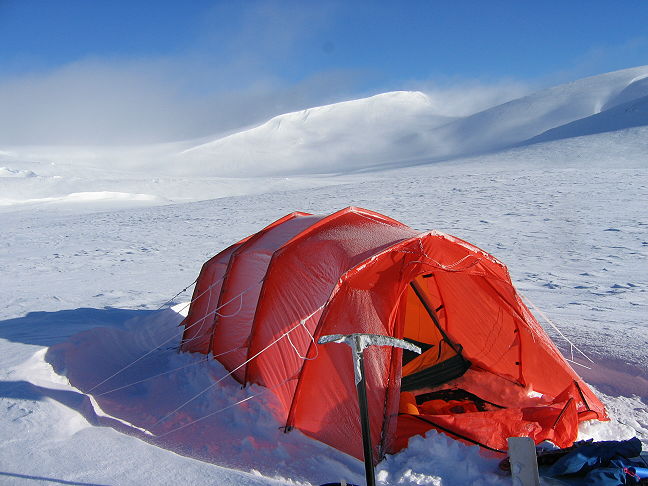
However, given the long stretches of trails in unforested terrain in the mountains of the western US, CAN, AU, and other areas, I think a tent that will withstand severe weather in such locations is probably the gold standard. Dropping down from the CDT in CO, for example, still leaves one in beautiful, but unsheltered terrain, and it is nice to be able to pitch camp without descending for miles out of your way.
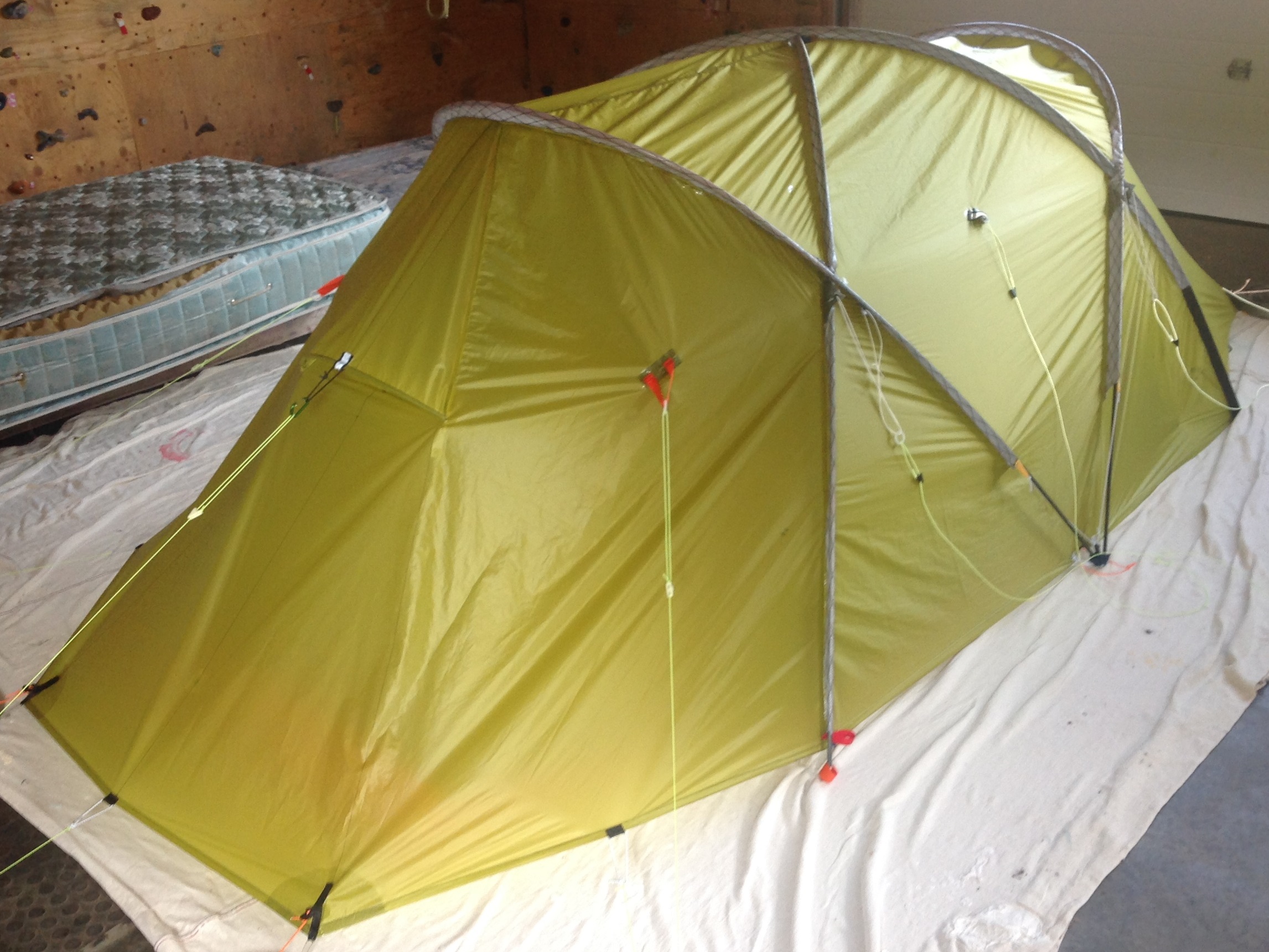
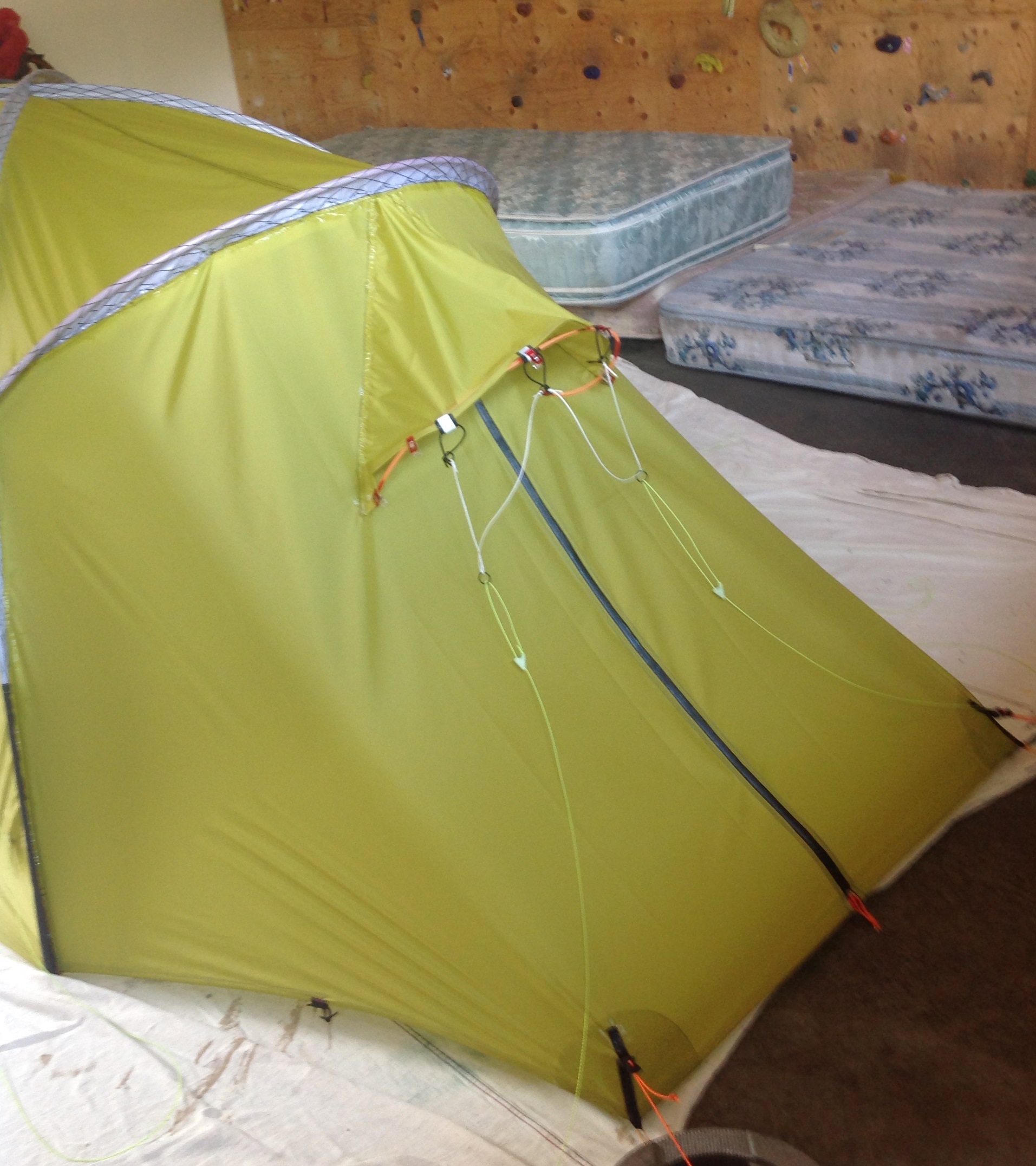
We’ve seen on these forums a couple of UK contributors who have designed and used tents in the Scottish highlands that appear to meet this standard. One was a two hoop tunnel that sloped in the rear foot area, and the others where hard to describe, so will just say “semi-geodesic.” All were made with around 30D silnylon from Extrem Textil, as I recall.
So I think that right now, nylon is the way to go despite the sagging, but with a tent design that counteracts the sagging as much as possible. And for the above reasons, I’m not as concerned about the PU content of the newer coatings on nylon.
One other point: With a little measuring and math, I found that canopies of ‘side entry’ tents that slope down at the foot and head ends run about 40% lighter than tunnels with the same floor area.
With plenty of room to move about in the center of the tent, the lowered canopy over the head and feet is not a big problem, so long as there is an inner of net or breathable nylon to catch condensation and spattering caused by the wind. The 40% difference allows for a tent significantly lighter than a tunnel.
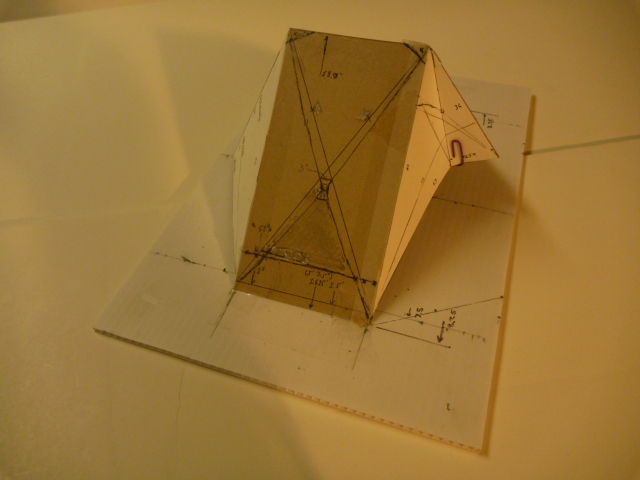
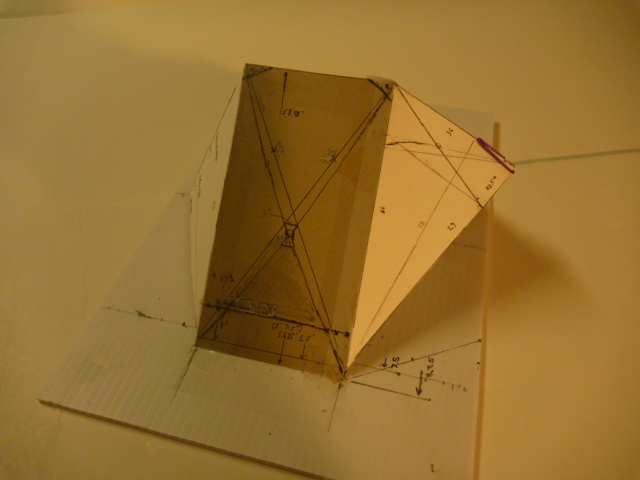
So I think you are on the right track with designs that depart from the classic tunnel shape. You might look at the XX Tarp Tent design I posted on MYOG back in 2011 for some ideas. After many design revisions, including solving pole insertion, I think this approach will yield a much lighter and stable tent, with as few as 4 pegs. But a cross between a MSR Hubba and a Tarptent Moment might also yield a very stable structure without the weight of a ‘geodesic’ frame with multiple pole crossings.
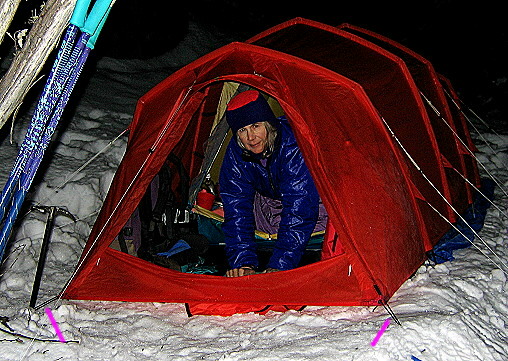
The greatest advantage I see with a tunnel over tents with crossing poles is that the tunnels, even if lower at the head and/or foot ends, can be raised in one motion after the poles are first inserted while the tent is flat on the ground. This is a big deal in high winds. Maybe someone will come up with a tent with crossing poles that goes up with one motion as a tunnel does.
Good luck with your efforts.