Topic

maintenance on an opened sawyer squeeze

Viewing 17 posts - 1 through 17 (of 17 total)
ryan l BPL Member
PostedJan 24, 2024 at 8:56 am

I’ve opened up my sawyer squeeze (there are two tiny holes on each side that can be easily drilled) and am wondering what the best method for cleaning it out is.

Soaking in hot water with vinegar/bleach?

Appreciate any input that anyone with experience has doing this.

Jerry Adams BPL Member
PostedJan 24, 2024 at 9:05 am

There are a lot of threads about this.  If its not clogged, then backflush with water.  If you backflush with bleach, it can interact with minerals in the water and clog the filter.  If it clogged with minerals, then vinegar can be good. Or CLR…

You opened the filter after you drilled the two holes?  Can you now close it back up?  Pictures?

Brad W BPL Member
PostedJan 24, 2024 at 9:47 am

You split the casing? Post a pic so we can see what you are talking about.

PostedJan 24, 2024 at 10:14 am

I’ve opened up my sawyer squeeze (there are two tiny holes on each side that can be easily drilled)

Why would you do this?  What is the point?

Jerry Adams BPL Member
PostedJan 24, 2024 at 10:23 am

why wouldn’t you?

why do people climb mountains?

I just looked at my vintage sawyer squeeze and saw the 2 holes, but haven’t drilled them out yet : )

Brad W BPL Member
PostedJan 24, 2024 at 10:30 am

@Jerry I get doing it on a old-not going to use again-filter. Like opening up a car oil filter to take a peak. I hope that’s what OP is planning. I would never put it back together and use it though.

ryan l BPL Member
PostedJan 24, 2024 at 12:18 pm

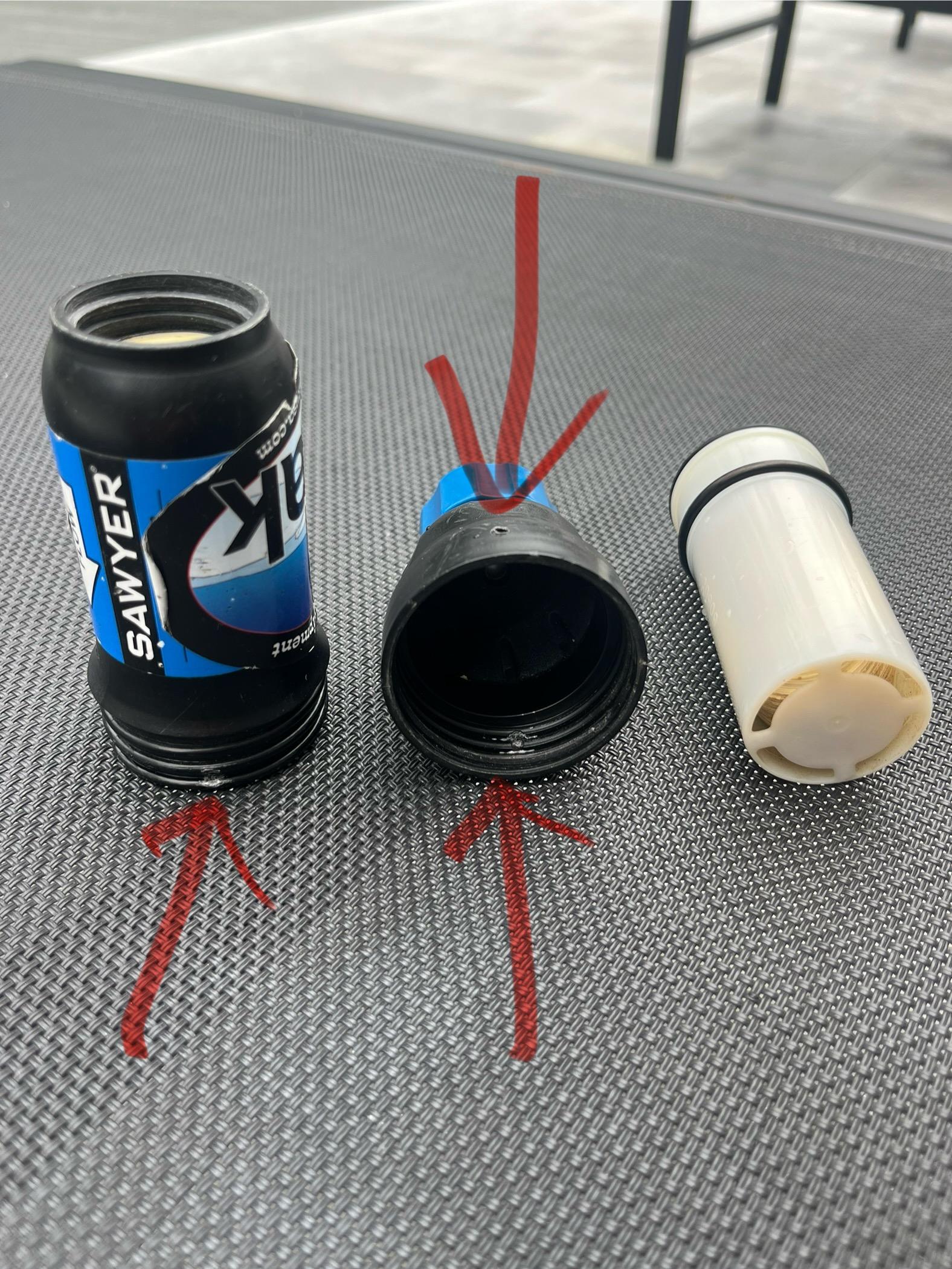
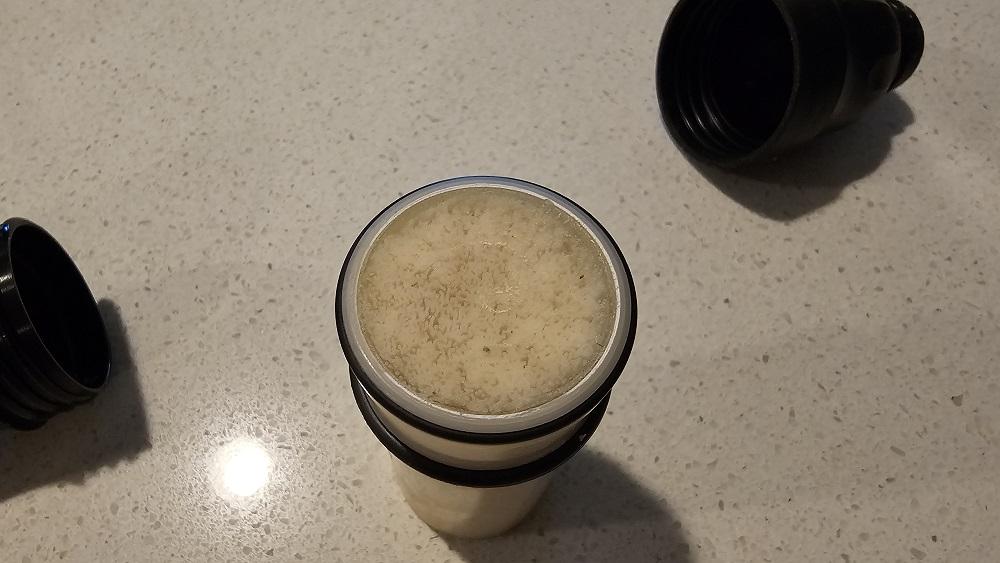
Below is a pic of the filter.

There are two holes on the top portion that have been filled in with plastic by sawyer.  It makes getting access to the filter more difficult but if you look closely at the way it is designed (and are willing to potentially compromise your filter), you can tell it’s easily accessed with a small drill bit.  Once drilled on both sides, you can easily twist off the two threaded sections.

In some ways it’s probably good that sawyer intends for this not to be opened (users potentially not properly closing it after opening) but makes maintenance more difficult.

**arrows pointing to the drilled holes***

filter

PostedJan 24, 2024 at 1:03 pm

It looks like they are relying on an O-ring  seal on the tube.  Technically, if you don’t damage the inside surface, you should be able to re-assemble and use it again.  I wouldn’t: they are pretty cheep and not worth the risk.  My 2 cents.

Jerry Adams BPL Member
PostedJan 24, 2024 at 1:28 pm

it’s kind of an engineer thing to do something just to just figure it out

even if it results in catastrophe

like “I see why that bomb you just set didn’t go off, here, I’ll fix it”

Jerry Adams BPL Member
PostedJan 24, 2024 at 1:36 pm

I tried unscrewing mine without drilling out the holes

my filter is pretty old, the plastic is brittle, if I did anything to it it would probably split

thanks for the pictures

ryan l BPL Member
PostedJan 24, 2024 at 2:44 pm

next step – drill more holes to reduce the weight of the sawyer

Jerry Adams BPL Member
PostedJan 24, 2024 at 3:01 pm

that white case with the o ring on it – that doesn’t seem to be doing anything critical, maybe cut it off just below the o ring.  That could maybe save half an ounce :)

Jerry Adams BPL Member
PostedJan 24, 2024 at 3:05 pm

maybe discard the black pieces to the left and center

then attach something with threads to the bottom of the white piece?

maybe cut off the threads part on one of the black pieces and glue it to the bottom of the white piece – maybe it would save 1.5 ounces.  Hard to get any glue to stick to the plastic

PostedJan 24, 2024 at 3:26 pm

It looks to me like the end of the cylinder makes a “face seal” withth eupper portion of the body.  So the lower portion is needed to apply the axial load.  My 2 cents.

Jerry Adams BPL Member
PostedJan 24, 2024 at 4:23 pm

you can (barely) see the loops of hollow fibers inside the front of the white piece, so the water flows into that (under pressure)

on the top of the left black piece is the inlet.  The white piece goes inside this with the front of the white piece against the inlet

the o ring on the white piece goes against the inside of the left black piece.  The high pressure water is prevented from going to the outlet by that o ring

the high pressure water would tend to spit out the white piece, so the left, outlet, black piece prevents this

it would be tough to attach a threaded piece to the white piece such that it would stay on with high water pressure.  to save an ounce or two.


Jerry Adams BPL Member
PostedJan 24, 2024 at 4:49 pm

it’s eating away at me.  This is all your fault ryan : )

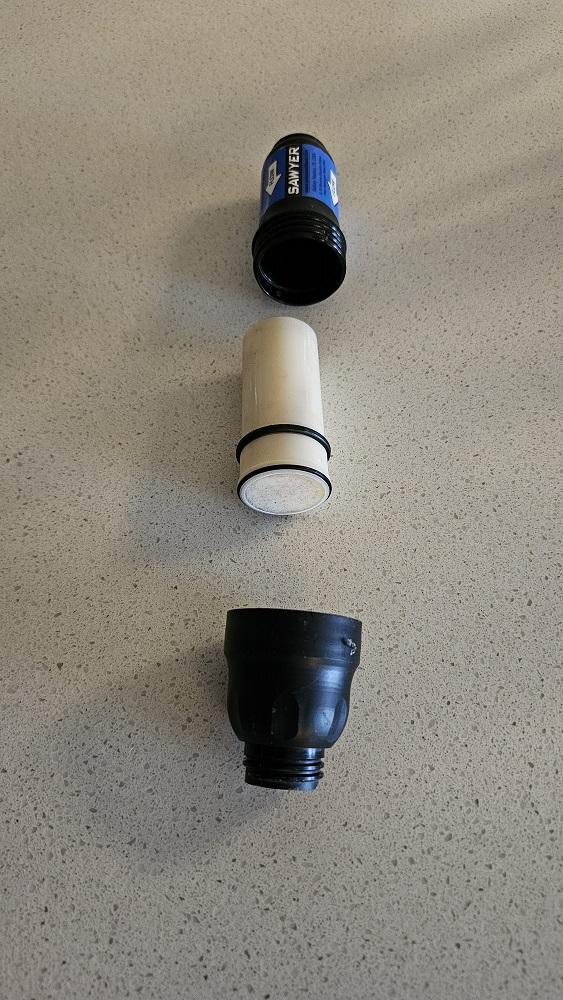
split apart:

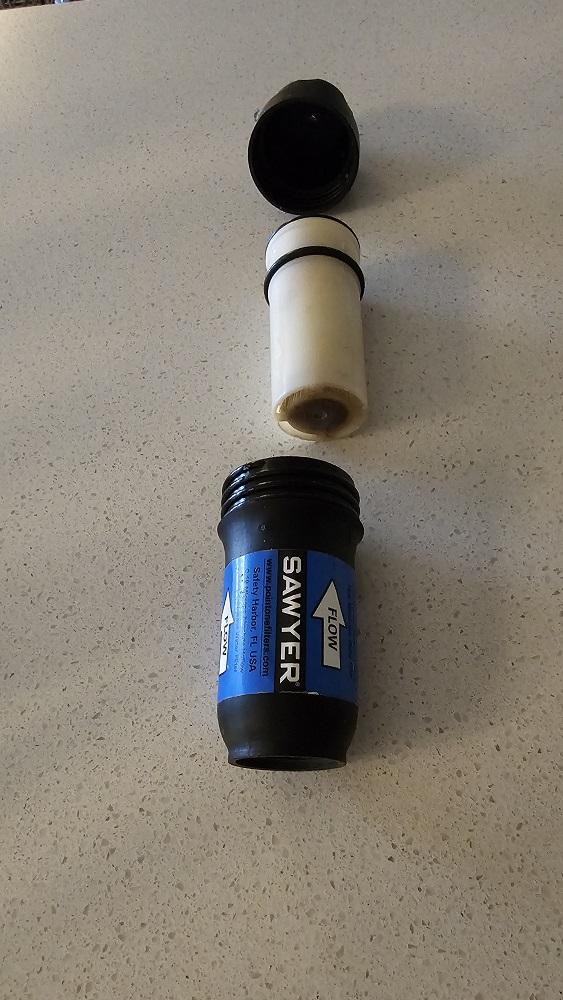
split apart from the opposite direction:

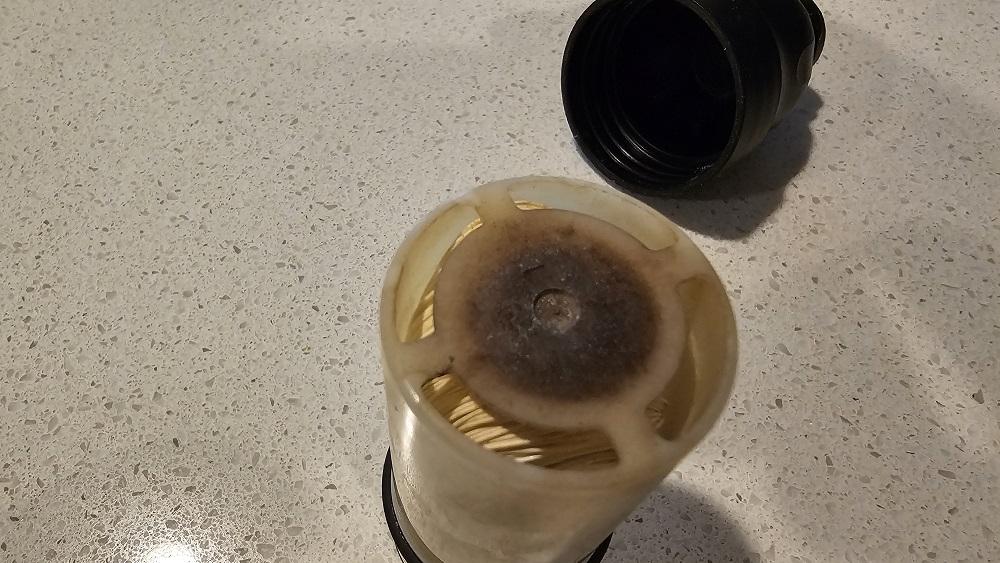
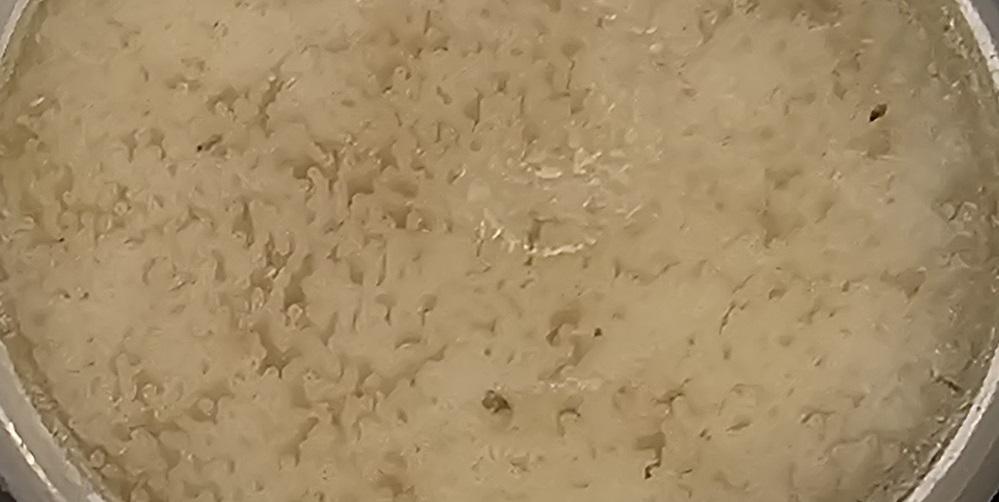
close up on the inlet side of the white piece.  You can see all the little hollow tubes.  The end is rather dirty from years of use.  The hollow tubes don’t look too bad:

There’s the output side of the white piece.  That’s the ends of all the hollow tubes.  They’re glued (?) together and to the inside of the white piece.


zoom in on the ends of the hollow tubes:

I screwed it back together and squoze some water through it.  Seems like it still works.

Viewing 17 posts - 1 through 17 (of 17 total)
Loading...