Topic

Low cost adapter for CV360 or other CampingGaz cartridge without thread.

Viewing 9 posts - 1 through 9 (of 9 total)
PostedOct 22, 2021 at 1:49 pm

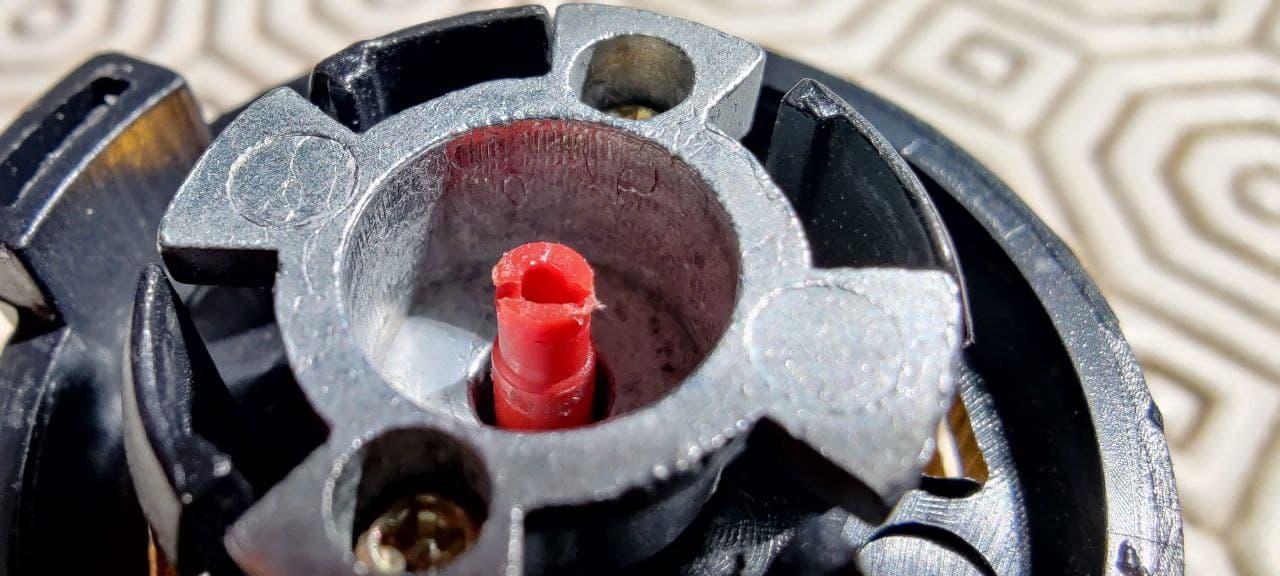
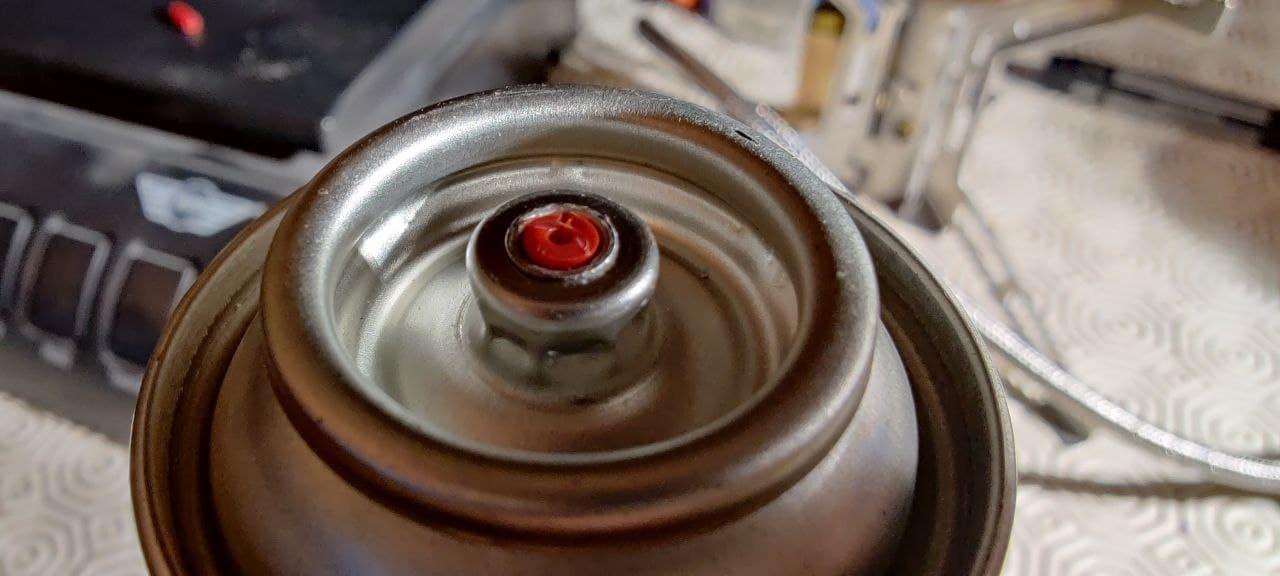
Here is a low cost and light adapter for a 50g CV360 canister (CampingGaz).

The adapter is a modified china adapter to normally use Asiatic cartridges with threaded stoves.

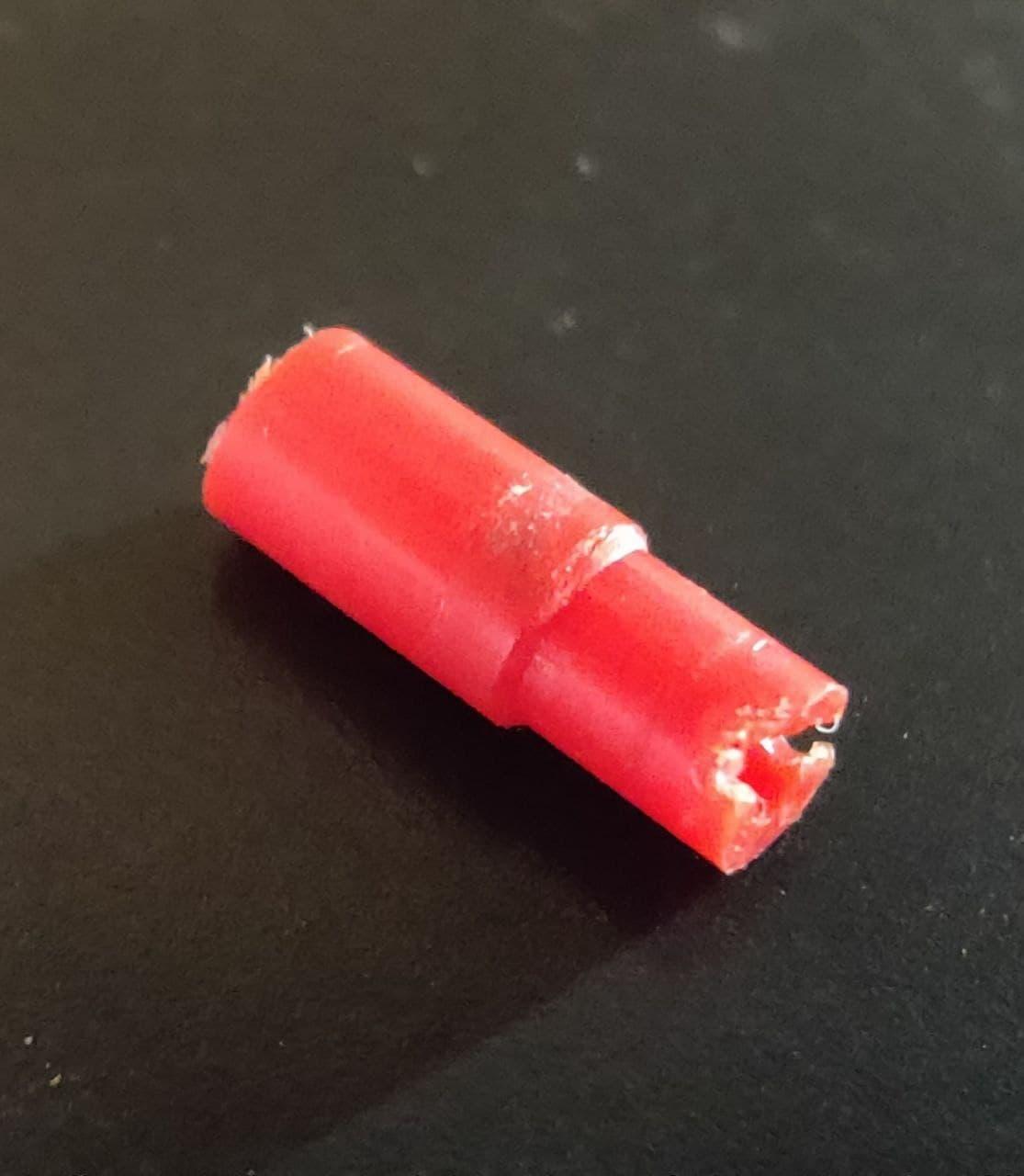
I did add a small tube that come from a lighter filling cartridge. The length of this tube is important to push correctly on both sides of the connection. A couple tries where necessary to find the good fit. Length is 9.3mm. Diameters are : 3.3mm at the adapter side and 2.8mm for the cartridge side. Before to cut it from the lighter filling cartridge, i did make a small transversal hole (0.9mm)  at the end of the small side, then i did cut this hole halfway to get the filling vent at the extremity.

It is important to clear both sides from small plastic chips that could destroy the adapter and cartridge o-rings.

The modification is reversible. Just delicately remove the red tube and you have again a Asiatic adapter. Keep this tube in good shape to avoid leaking.

Carefully check for leaking each time you will be using it.

Probably this will be difficult to make a lighter adapter for both functions at this price level ! Kovea and Jeebel are selling such an adapter for CampingGaz cartridge, but they are single function and about 4 times more expensive.
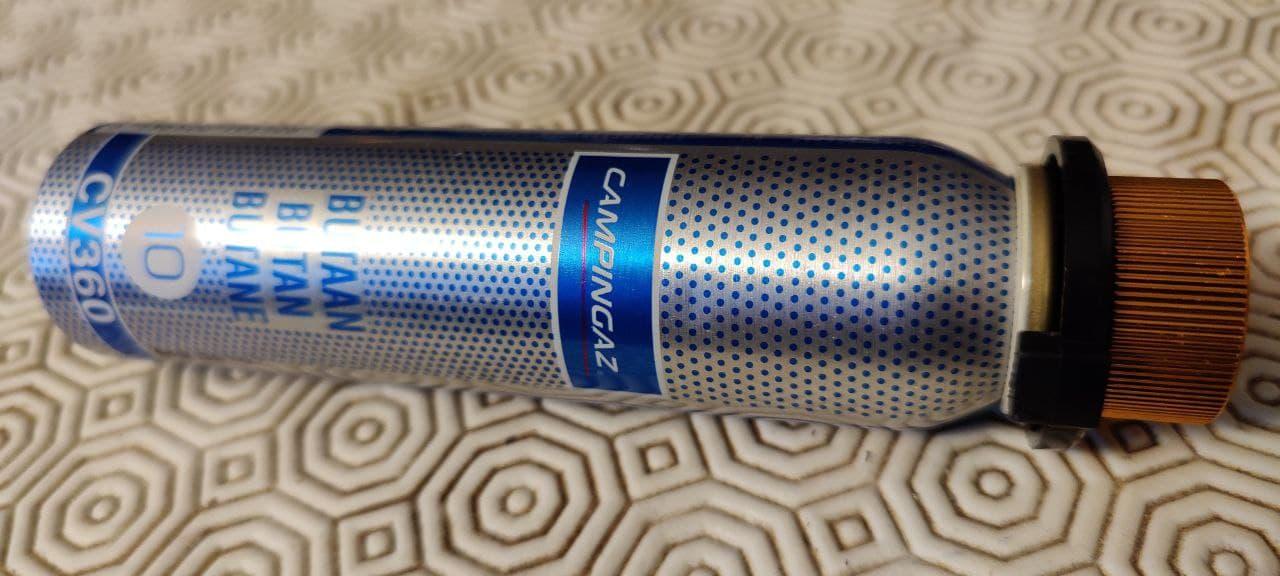
The lighter filling cartridge (empty it before to work on it) where i did source the red tube.
And finally connected on a remote canister stove. The CV360 canister has a lot of cotton wool inside and a couple perforated tubes to allow its use in all positions without switching to liquid feed.

Jan Rezac BPL Member
PostedOct 30, 2021 at 9:32 am

There are similarl (slightly larger) canisters with thread – I wrote about it some time ago.

Originally I got one used, but I found them in an home improvement store since then – they’re sold for use with a small blowtorch.


PostedOct 30, 2021 at 11:47 am

I never saw that one but i know this brand. It’s probably not available anymore, even if a couple sellers seem to still have it in stock.

What is more commonly available here in France is a CG1750 cylindrical canister with a 170g gas load, 70/30 mix, from CampingGaz. it is designed for use with a small torch that will screw directly on the canister.

There is a CG3500 too, around two times longer and two times more capacity.

They can be used for liquid feed, when the CV360 cannot. Their surface to gas volume ratio is different compared to classical camping canisters. This probably reduce a bit the canister cold down during use.

Because of their smaller foot they are probably only usable safely with a remote canister stove in inverted position, and this will ask for a DIY canister stand.


Roger Caffin BPL Member
PostedOct 31, 2021 at 2:39 am

Trust the French to have enough brains to see that the conventional canister design is not good enough for high-propane mixes, and to take the obvious step.

To explain: the very narrow design of the CG300HY can handle a higher pressure compared to the much wider conventional design, so they can put more propane into the mix. The HY model seems to have 35%. It is an ‘obvious’ design step, but of course not suited to upright stoves without some bracing. But then, uprights are for summer use, when plain butane would often do.

Yes, my canister adapter should handle these canisters quite OK. But most other inverted canister stoves should also work with this design.

Cheers

Jerry Adams BPL Member
PostedOct 31, 2021 at 8:16 am

If you’re using a stove upright, adding propane isn’t optimum because almost all of it evaporates in the first half of the canister.  So you can really only use half the canister in cold weather.

I use my “summer” upright with cheap butane (50% n butane, 50% isobutane) down to 20 F.  I could go colder but no sane person camps colder than that : )  If the stove is too slow, give it a couple hits with the mini torch lighter (1.3 ounces).

We are covering the same subject as previously.  Again…

Roger Caffin BPL Member
PostedOct 31, 2021 at 2:31 pm

Hi Jerry

cheap butane (50% n butane, 50% isobutane)
I now have strong doubts about the idea that there is iso-butane in those canisters. As far as I know, the stuff does not occur naturally in gas wells; it is made synthetically, as follows:

Isobutane production is converted from butane (n-butane) in a process called isomerization. The isobutane production process rearranges the atoms into a different molecular configuration.
The component atoms are the same but are arranged in a different geometric structure.
This isomerization happens in something called a butamer unit and includes the use of platinum or another metal catalyst.
In this isobutane production process, only some of the butane is actually converted to isobutane.
After the butamer process, the output mixture goes through a fractionator or deisobutanizer tower that separates the unconverted butane from the isobutane production.

https://www.elgas.com.au/blog/2077-what-is-isobutane-i-butane-is-an-lpg-gas-liquefied-petroleum-gas/

Instead I suspect that so-called ‘butane’ canisters actually have a little propane in them, due to incomplete separation at the gas plant. Unless the n-butane/iso-butane mix from the butamer process is used?

Further, from https://gasone.com/blogs/announcements/butane-vs-propane-vs-isobutane
ISOBUTANE
A blend of both butane and propane fuel, isobutane is the quintessential choice for avid backpackers.

But this is certainly ‘not correct’, as iso-butane is a known industrial chemical.

Who knows?
Cheers
PS: you will also find a huge amount of ignorant rubbish about ‘butane’ on the Internet. I even saw one page which said that propane is MADE from butane. Amazing stuff.

PostedOct 31, 2021 at 3:24 pm

isobutane (I-butane or R600a) is quite expensive, around 10€ for a 420g canister of pure i-butane here. It is a flammable refrigerant like many hydrocarbon. Propane is a refrigerant too, named R-290 :) Propene is R-1270.

In fact a stove canister is a miniature fridge :)


Jerry Adams BPL Member
PostedOct 31, 2021 at 5:03 pm

similarly, pure n butane is very expensive.  It’s used as a refrigerant I think.  It requires many trips through a distillation column.  Each time through the column, there’s a tap that will output a mixture with more n butane, and another tap that outputs a mixture that has more isobutane.  So, to get pure n butane, take the n butane tap output and run it through another column and it’s n butane tap will have even more pure n butane, etc…  Do it enough times and you’ll get it as pure as you want, but that makes it expensive.

N butane has fewer uses.  isobutane is used to make plastic I believe.  They can isomerize n butane and turn it into iso butane.  That is, they can take a mixture that is more n than iso, isomerize it and it will convert some of the n to iso, then run that through a column to pull off the isobutane.

A refinery will get in natural gas that has both nbutane and isobutane.  And they have customers for different products – more or less pure nbutane and isobutane.  They’ll optimize what processing they do to satisfy different customer needs.  If they have a quantity of gas that has more iso or n butane, it would make financial sense to send that through the process to purify.  If the mix was 50% each, that would make more financial sense to use for customers that are filling canisters for camping.

I’ve measure a number of brands of “cheap butane”.  They all have about 50% each of n and iso.  I can determine the boiling temperature by looking at the air temperature and opening the valve of the stove.   If gas flows, you’re above the boiling point.  If no gas flows you’re below the boiling point.  If the gas just barely flows you’re just a bit above boiling.  If you run the stove and it slows down pretty quickly even when the valve is open full, you’re about 5 F above the boiling point.

I’ve noticed that with cheap butane, it works fine at 32 F.  At 25 F it starts fine but slows down pretty quickly even with valve full open.  At 20 F no gas will flow.  Thus, the boiling point is about 20 F, so the mixture must be about 50% isobutane and 50% n butane.

I know there’s no propane in it because it works the same even after I’ve used 3/4 of the fuel.  If it had propane initially, it would have a lower boiling temp initially, then the boiling temp would gradually increase as the canister emptied.

Besides, it’s easy for the refiner to get propane out of the mix because it has such a much lower boiling temperature compared to butane.  And there are other uses for propane so it would make financial sense to remove almost all the propane.  Nbutane and isobutane boiling temperatures are closer together so it’s hard to separate through distillation column.

Roger Caffin BPL Member
PostedOct 31, 2021 at 5:09 pm

Hi Jerry

I know there’s no propane in it because it works the same even after I’ve used 3/4 of the fuel. If it had propane initially, it would have a lower boiling temp initially, then the boiling temp would gradually increase as the canister emptied.

Now that is a very good point, and I thank you for it.
So maybe they ARE using the output of a butamer rig.
It all leaves me wondering why the Chinese canisters I have tried all had so much dust in them. I Dunno!

Cheers

Viewing 9 posts - 1 through 9 (of 9 total)
Loading...