@Lester,
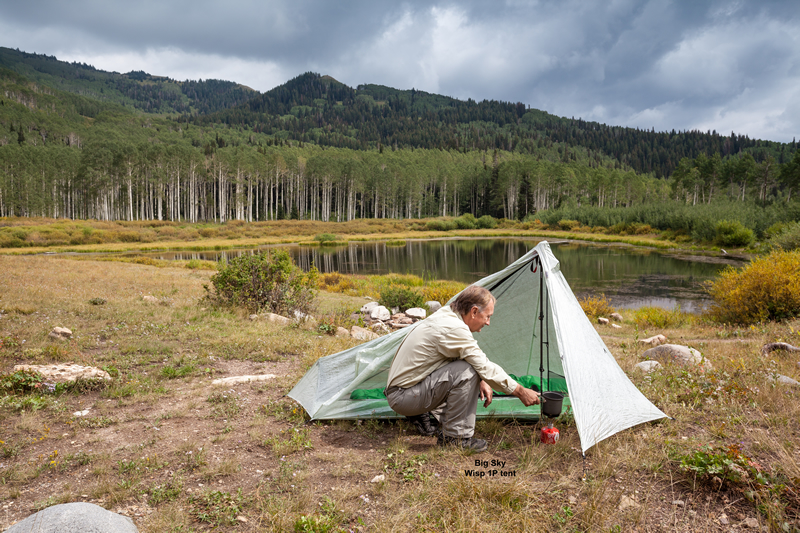
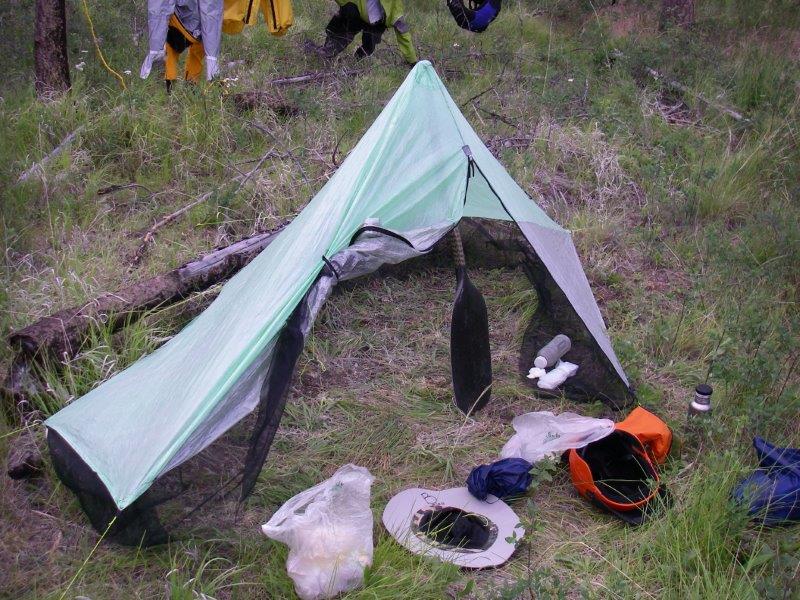
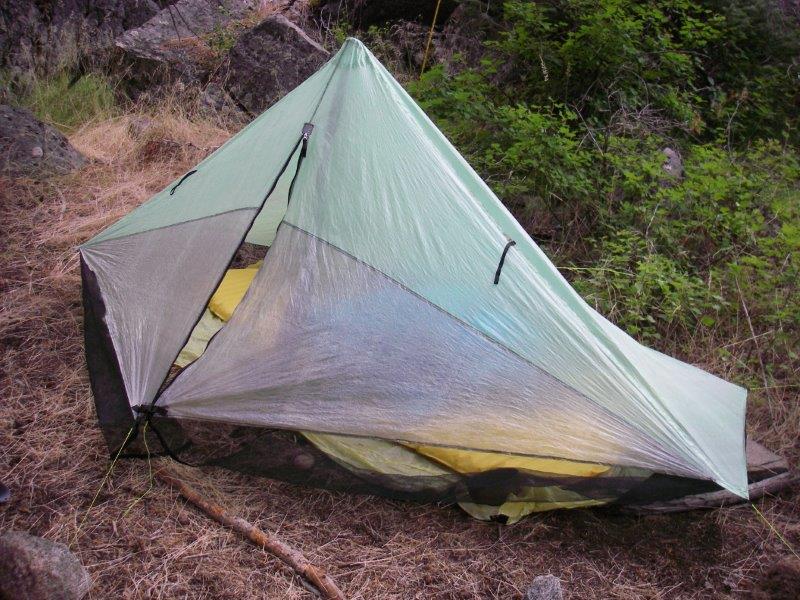
Yes, I’m familiar with that setup, but when I keep doing the math it makes sense just to stick with my Hexamid Solo tent with floor netting. The difference between the tarp (no netting) and the tent is 5 oz. That means that if I wanted to, I could probably shave 1-2 oz of weight by cutting off the floor of my Hexamid tent. I asked Joe about this, and he said this was probably the best way to create a Hexamid tarp with perimeter netting, but he wasn’t a fan of the idea. Insects can sneak in with perimeter netting and there’s a lot of fiddling with rocks, etc., to have it lay flat. At the end of the day, it might just make sense to keep the Hexamid tent intact and have two shelters–a tarp for when bugs aren’t too bad, and a fully enclosed shelter for when they aren’t. My only real complaint with the Hexamid with floor netting is that it sometimes accumulates moisture due to being directly on the ground. It’s not terrible, but it does add some weight when it’s a rainy day and you have to pack up in the morning.
For continuing my Colorado trail hike next summer, I’m thinking of just leaving the Hexamid tent at home and bringing a Hexamid tarp with a headnet. The mosquitoes are the only real problem in Colorado, and they seem to go away after around 8-9 pm when the temps drop into the 40s or 50s. This obviously will depend on whether you are camping near water, such as a lake. I’ve never done tarping before in Colorado, but it seems like it could work if you are up early before they show up again.
If I were hiking in the east, such as the ADKs or worse–the south, I would never go without my Hexamid with full bug protection (or maybe a Solplex–I keep going back to the Hexamid for its ease of setup with one trekking pole which happens to be the same height which I use it for hiking during the day).
Anyone else have experience with tarping in the Rockies?