Topic

Help with sleep system

Viewing 11 posts - 1 through 11 (of 11 total)
Adam Cassis BPL Member
PostedAug 27, 2018 at 3:30 am

In a recent thru hike of the HST, I found my sleep system did not work as well as I remembered when I last used it on the JMT Few years back. I have a ridgerest pad and a golite 30deg quilt. I would get bleacher butt (aka a numb butt) after about 30 to 40 minutes of back sleeping then have to roll onto my side, which would turn into Numb arm if I was able to fall asleep that way. Either way I was waking every 30 to 60 minutes (if lucky) with numbness somewhere. I use the pad to give structure to my frameless golite jam pack otherwise I would have just picked up an air mattress. I was thinking of adding a small neoair xlite to give padding to hips and shoulders for better sleep but that’s doubling up on a sleep pad and carrying an extra 8oz.

Any other ideas or suggestions that do not involve being a different pack? I don’t get out enough to justify the extra cash although the air mattress ain’t free either!

Lester Moore BPL Member
PostedAug 27, 2018 at 5:28 am

You could cut the Ridgerest in half and combine it with a small X-lite when sleeping. For the same weight as a full Ridgerest, you get slightly reduced packing/structure inside your pack, but you get a MUCH more comfy pad for your shoulders, hips and butt at night. For sleeping, you can put spare clothing and non-fragile gear inside your backpack, then put the half-length Ridgerest on top of the pack for your lower legs and feet.

Even if the X-lite + 1/2 Ridgerest ends up weighing more than a full Ridgerest, it’s a pretty good tradeoff to get a better night’s sleep. Feeling refreshed and strong the next day instead of groggy and sore is worth the extra weight.

James Marco BPL Member
PostedAug 27, 2018 at 1:34 pm

Yeah, I hear you. I just had my Xlight start leaking. (Blowing it up every hour and a half was painfull, fortunately, I have an old 3-section Nightlight pad I also use as a pillow.)

Lester was quite correct. I was down to SUL weights, then added stuff back… including the old first generation Neoair when it was just released. A good nights sleep on the trail is more than worth the 12oz! But, in a pinch, there is a lot that you can do. I stuffed about 4″ of forest duff under me. Even when the pad bled out, I remained comfortable. I didn’t even need my pillow. But, typical of so much SUL gear, it is a lot of work compared to simply inflating the neoair. A lot like the old and depreciated technique of using pine boughs. It also adds a lot of insulating value, if needed. For the pads, it worked fine. (Don’t forget your ground cloth or cover.)

One of the things that made me go to the medium length, was the high loft of the neoairs. Again, I used my pack under my feet with the piece of pad over that. It works. For a pillow, I simply take my inside-out compression bag and stuff that full of duff, as a pillow. Again, it takes a couple minutes to sort out the sticks from duff. Anyway, dry clothing or your jacket will also work, but mostly these are in use. A couple gallon sized zip-locks partially filled with air also work as a pillow.

Alex H BPL Member
PostedAug 27, 2018 at 2:18 pm

Adam, sounds like you are getting older like all of us and find a ridgerest not enough anymore.  I am a big fan and user of a 36″ ridgerest combined with a Thermarest prolite XS (36″) with my pack under my feet and legs.  14 oz. for the two, 4.8 R value and if (which it hasn’t in 10 years since using this system) the prolite springs a leak I have the ridgerest still.  A combination of pads is the main idea here and a good one.

Lester Moore BPL Member
PostedAug 27, 2018 at 4:58 pm

Another good combination of pads includes a full length 1/8″ GG Thinlight pad (2.3 oz) and the small TAR X-Lite inflatable (7.2 oz). While hiking, the Thinlight can be folded in sixths into approximately a 10×18″ rectangle to go against your back, either inside your backpack or outside (if you have external back straps or elastic panels to hold it in place). While sleeping, you can put the Thinlight pad under your inflatable X-Lite for puncture protection, just dog-leg the foot end of the Thinlight up onto the top of your backpack for your lower legs/feet.

The 1/8″ Thinlight does not provide much stiffness, so it will provide only minimal structure to your backpack, as you mentioned using for your Golite Jam. However, if you’re anywhere near SUL, then you can probably do a comfortable packing job without a rolled up pad inside your backpack.

I use the above two pads plus a small third pad: a 2-fold segment of a TAR Z-Lite pad (2.1 oz, 10×20″). The Z-lite pad segment functions as a sit pad during the day and is stiff enough to hold its shape on the outside back panel of my backpack. The 1/8″ Thinlight pad gets folded in sixths and put inside the backpack against my back (this plus the 1/8″ pad on the outside provide lots of cushion for the back, especially if you’re lugging a bear can).

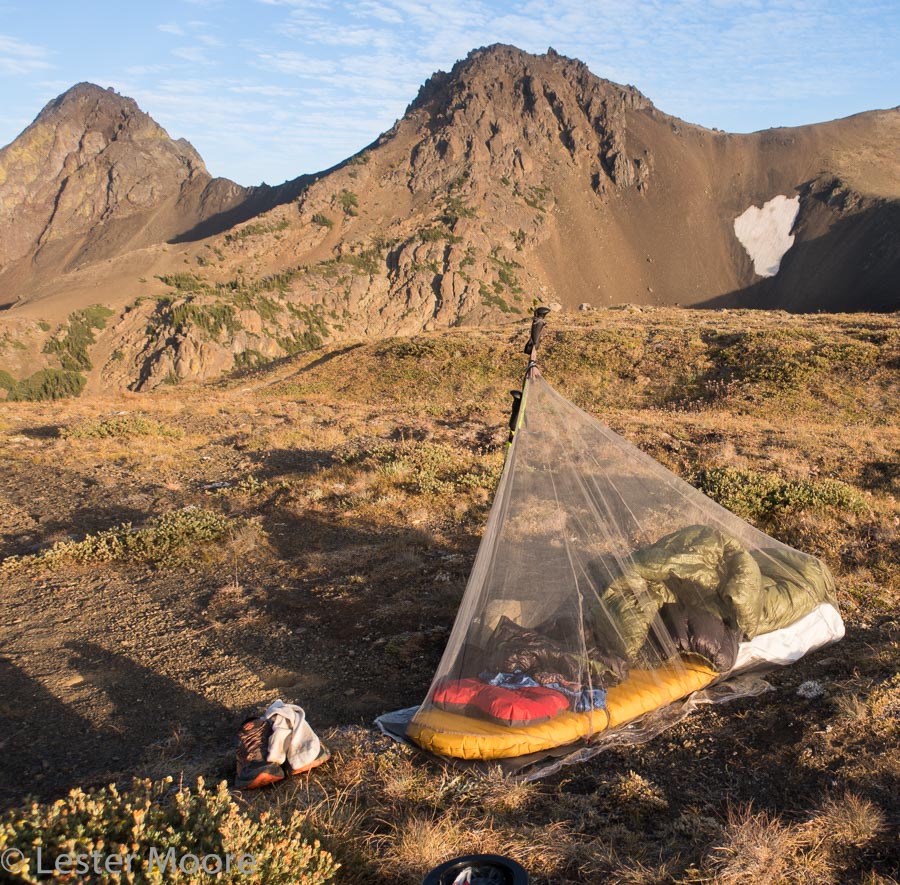
Below is a photo showing the gray 1/8″ pad under both the X-Lite short inflatable and under my backpack (with a polycryo groundsheet under that). The backpack is inside a white trash compactor bag which is used as a pack liner while hiking. I keep the pack inside the liner at night on the theory that it may help prevent rodents from eating the backpack to get salt at night – it has happened a few times at hardened campsites over the years.


PostedAug 29, 2018 at 7:06 pm

I think you need to switch from a pad to a light mattress. Sleeping comfort is paramount for being rested for a good day’s hike. It’s also a psychological boost to know you will have a comfortable sleep.  A few ounces more for a comfortable mattress is well worth it. Same goes for a pack and that’s why I chose an Osprey EXOS 58.

some light weight mattresses:

  1. REI Flash
  2. Thermarest Prolite
  3. one of the BA mattresses (BTW, many complaints that their “insulated” mattresses are cold.)
  4. Sea to Summit
  5. Nemo

For years had a Thermarest Prolite. My current choice for three season into early winter is the REI Flash Insulated mattress (the 3 season version, not the winter version). REI customer service tells me they guarantee the valves and welds. I guess I’m responsible for any holes elsewhere.

Adam Cassis BPL Member
PostedAug 29, 2018 at 7:46 pm

What about an airbeam mat? They make one for sleep but they also make one as a pack frame that weighs 3oz.  I would think I could use this on top of a full length ridgerest.

Had anyone tried the pack frame version as an air mattress?

Alex H BPL Member
PostedAug 29, 2018 at 8:01 pm

As long as it is wide enough to support your full back, hips to shoulders.  I have a GG airbeam mat that works fine in warmer weather but has essentially no R value.

Adam Cassis BPL Member
PostedAug 29, 2018 at 8:45 pm

Does it function well as far as comfort is concerned?  with the airbeam on top of a ridgerest should be plenty warm for most 3 season


Alex H BPL Member
PostedAug 30, 2018 at 12:12 am

It is somewhat more comfortable than my prolite on top of a ridgerest.  Depends on your definition of 3 seasons, for me that means down into the 20’s so it would be a cold sleep.

Adam Cassis BPL Member
PostedAug 30, 2018 at 12:30 am

to this point,, most of  what i’ve backpacking, so i think it would work.

the Airbeam has such a weight/cost savings over the TAR Xlite (3oz/$50 vs 8 oz/$120) if i could make that work it would seem ideal.

Viewing 11 posts - 1 through 11 (of 11 total)
Loading...