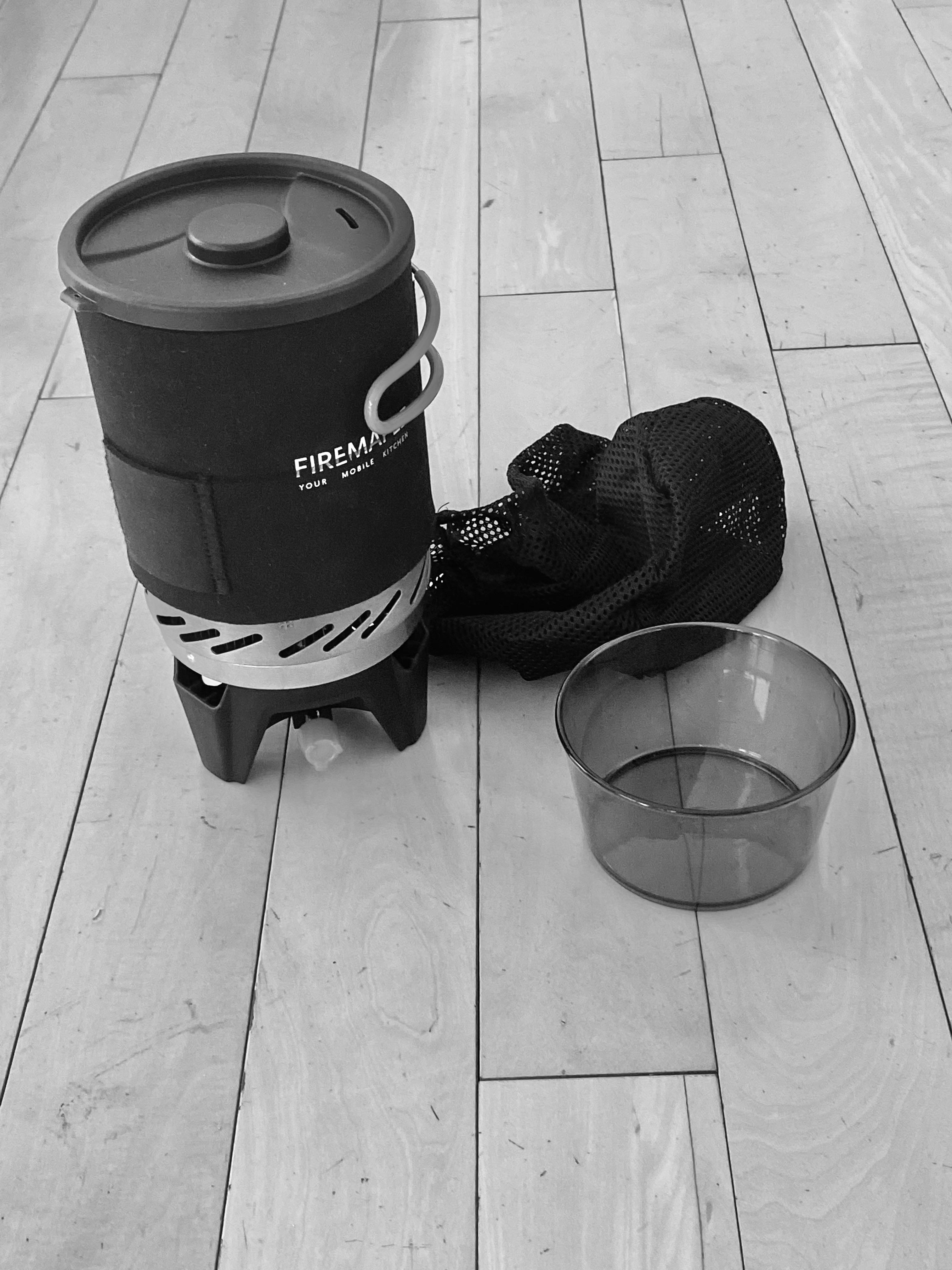
Interim Report: The WideSea HX pot is better than I expected. As far as I can tell, it is merely a fraction of an ounce heavier than the record-holding Sterno Inferno (which has been selling on eBay for absurd prices recently). The HX pot weighs about 4 oz more than a 600ml titanium mug (but would decrease if I did surgery similar to Jon’s above).
Goal: Efficient burn without the weight of a heat exchanger (HX) pot.
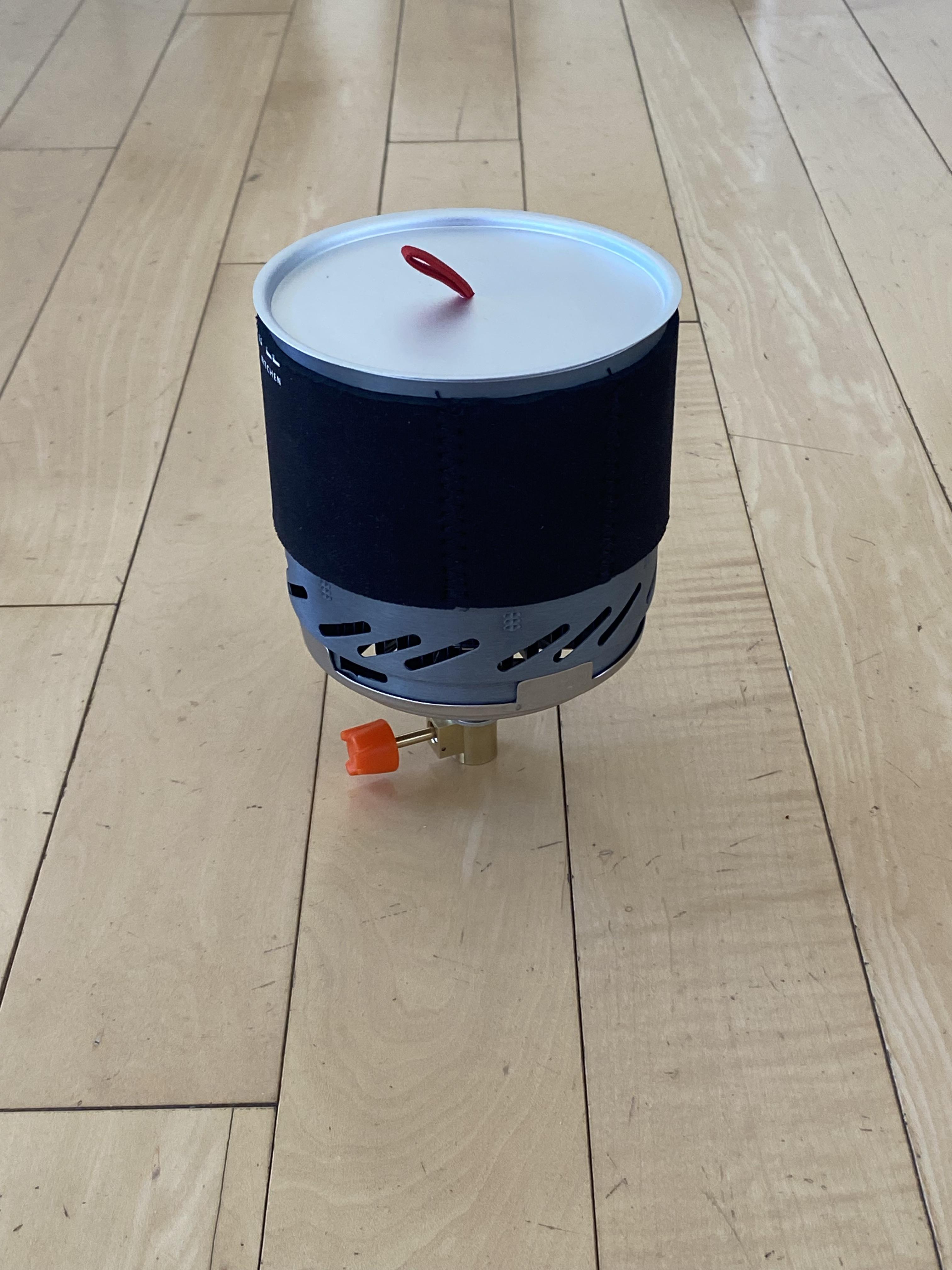
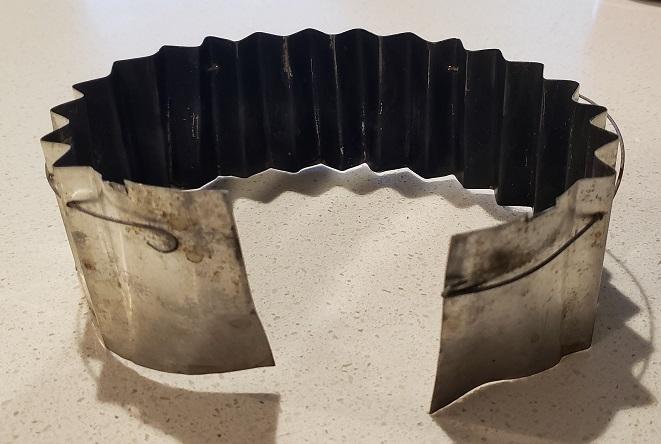
Hypothesis: My rough estimate is that the WideSea HX adds about 80 sq cm of surface area. It also focuses the flame. A heat shield that heats the sides of the WideSea non-HX pot/mug adds more than twice that surface area. Unless other factors are involved, the heat shield should be more efficient.
Based on (small) 200-ml boils, I’m getting about the same efficiency (in grams of fuel per boil) with the heat shield. Boil times have been slightly longer with the heat shield vs the HX pot; possibly due to lack of the flame-focusing effect of the HX pot.
Next tests: Larger water volumes and more test runs for hopefully improved accuracy.
Refining the goal: Right now, my unoptimized prototype heat shield weighs more than the HX pot’s added weight, so no real benefit yet. In order for this to be a success, the heat shield must weigh less than the HX penalty of 2 -4oz (depending on which non-HX pot). Not sure how much I can shave off yet, so TBD.
TLDR: The heat shield concept works, but requires a lighter (more expensive) pot as well as a lighter heat shield in order to save much system weight. It remains to be seen whether this experiment will be worthwhile in the end. Clearly the WideSea HX delivers good performance per dollar. The 4-ounce weight penalty only sounds like a lot until you compare it to the weight of a single freeze-dried meal (roughly the same).