


Interesting. Thanks for the response.
Topic
Become a member to post in the forums.
 .
.
Interesting. Thanks for the response.

just a reminder that all this fun stuff about sil has been known on BPL for longer than a decade ….
from jim woods old page back in 2005 …


http://jwbasecamp.com/Articles/DryGear/index.html
http://jwbasecamp.com/Articles/Silnylon1/
;)
and maybe a reminder that just as not all wool or vanilla ice cream is the same neither is silnylon.
I though you knew better than that….
well franco …
the primary purpose is to keep the water from going in … i mean really, if sil fails at that the point is moot
i noticed that tarptent upgraded their sil in recent years to a higher HH
as a note my aliexpress 3F elcheapo 100 dollahz tent easily passes the squeeze tests … and theres no leakage/misting on 50mm+ rain days

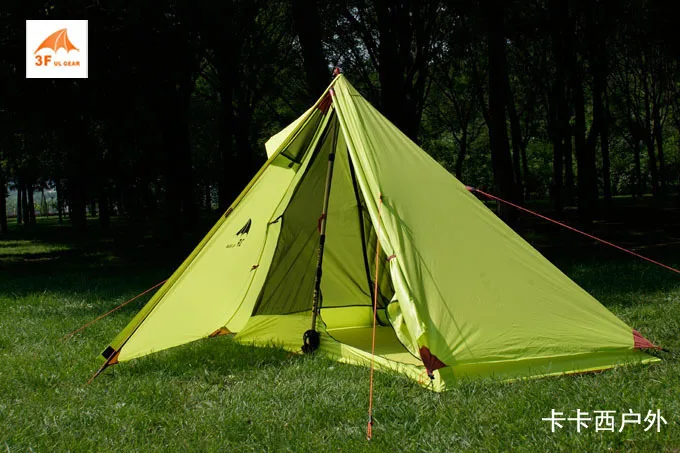
they claim a 3000-5000mm HH depending on the fabric … who knows
basically if an el cheapo chinese tent maker can pass the test at least when fairly new … theres absolutely no reason or excuse for better manufacturers not to meet the same specs
;)
“i noticed that tarptent upgraded their sil in recent years to a higher HH”
you have just contradicted yourself with that comment…
have you not noticed that Goretex/eVent/Cuben Fiber etc all have also changed over the years ?
So how relevant is your comment about silnylon tested in 2005 compared to what is available now ?
Are you informing or just trolling ?
franco …
are you really trying to argue???
its simple richard posted the “balloon test” … and i merely pointed out that jim woods has had that test for the last decade … as well as comments on the subject of sil degredation
what exactly am i “contradicting” here ???
the testing is “relevant” as jim showed how to test sil for “waterproofness” a decade ago and richard showed the same test on this thread …
are you threatened by a “balloon test” ???
jims test and the leakage of low HH …

richards test … same leakage of low HH

;)
Your comment inferred that all silnylon is the same.
The fact that Tarptent has changed the fabric in use to one with a higher waterhead suggests that not all silnylon is the same…
NO FRANCO
please dont makeup words and attribute em to me
heres EXACTLY what i said
just a reminder that all this fun stuff about sil has been known on BPL for longer than a decade ….
from jim woods old page back in 2005 …
<div></div>
the test and the degredation of sil that were in the last few comments prior to your attempts to “argue” were on EXACTLY this topic … this is what jim woods page was linked and screen captured on
considering that i own and use
we can probably safely say that i dont think all sil HH are “the same” … since i specifically bought the terra nova and trekkertent for the higher HH for the rainy PNW shoulder seasons
all this stuff on HH and sil degradation has been known for many many years …
the difference is that richard now provides actual TESTED scientific numbers
;)

Interesting.
The fact that Silnylon degrades significantly over a relatively short period of time/use may have been well known to veterans of BPL, I would suggest it is not widely known throughout the lightweight backpacking community. It certainly was not known to ME, and I’ve been lurking/reading on here for at least three years. “Misting” has been discussed before, but I feel like I was led to believe it wasn’t a problem with the higher quality silnylon used by some manufacturers (TT, MLD). I am now very glad I spent the money (and took on the extra weight penalty) to get the solid inner with the TT Stratospire 2 I purchased in July.
Jeff,
you may want to read this thread :
https://backpackinglight.com/forums/topic/44516/
to get a better idea on how to understand those figures.

Richard, thank you for the response and the work here.
A question about the RBTR WPB 10D fabric. I’m thinking this fabric is ideal for a western US rain jacket, where infrequent and brief storms prevail. The kind of storm I just wait out until it’s over. I’m pretty sure I’m understanding the graphs, but I just wanted to confirm this fabric would fit this application well?
Matthew S.,
Yes, it will fit your stated application.
Is Tarptent still using 30D? What is their new HH?
Still 30D , very similar to the grey version in the chart at the start of the thread.
If we find a lighter fabric that has similar tear strength and waterhead we will use it.
Richard,
Regarding your reply to Paul Mclaughlin:
“The WPB option I tested has a water vapor permeability value of ~26,507 g/m2/24 hrs (JIS L 1099 : 2012, B-1). It is a conventional 2.5 layer PU technology that utilizes solid state diffusion through the coating; it requires the moisture level in the jacket to be nearly saturated in order for the water molecules to optimally move through the PU.”
That sounds to me as though the material would not work well for a tent wall, at least not for a dry one. Can you advise if that is about right? Thanks.
Sam,
If the tent volume was small and you maintained a significant pressure gradient the thin 2.5 layer PU should work FAIR.
Single wall EPIC or eVent tents have an average .25 – .50 CFM and based on the above conditions work GOOD.
High quality double-wall mountaineering tents with a 70+ CFM inner (typical) and based on the above conditions work GREAT.
Thank you, Richard, for your reply post. Sounds like an inner is in my future. It would only add about .8 oz/sq/yd to a ~1.1 oz/sq/yd canopy with polyester from RBTR, which totals to around the weight of the lightest Epic. Have never been able to find eVent fabric in that weight range which was not black, silver, or some other color not wished for a tent. The RBTR light green tea is very nice, when they have it.
Become a member to post in the forums.
 Vaer C4 Tactical Field SolarDurable timepiece for wilderness users - 20ATM (200m) water resistance, 120-click bezel, 316L SS casing, sapphire glass, solar-powered, Epson VS-42 Japanese movement, C3 Lume, USA assembly.
 © Beartooth Media Group Inc.
 Loading...