Richard,
Thank you very much. Some great info here for upcoming projects.
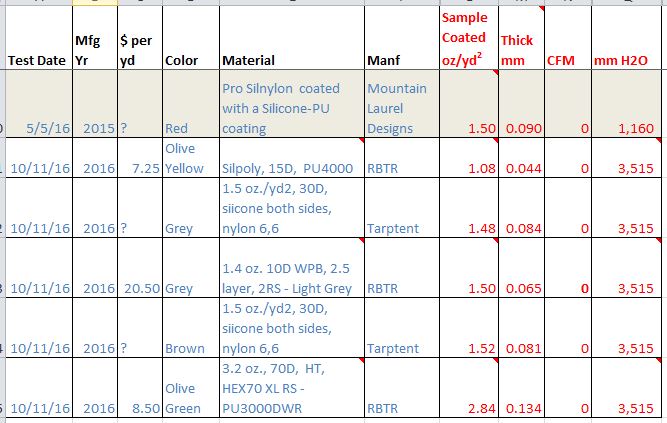
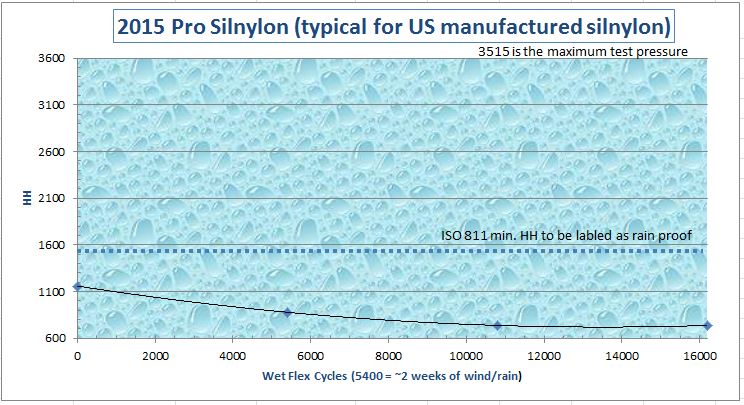
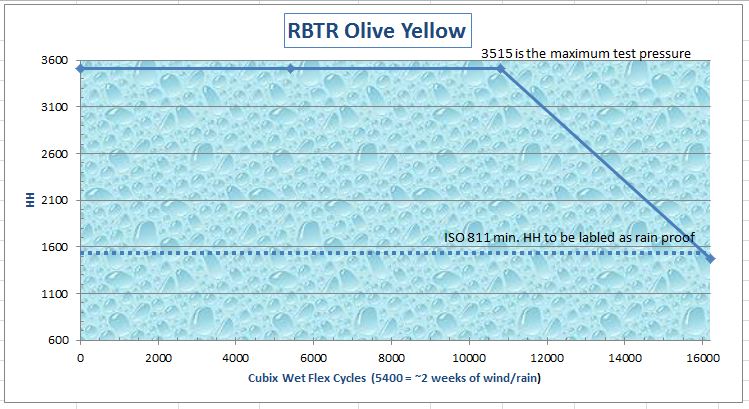
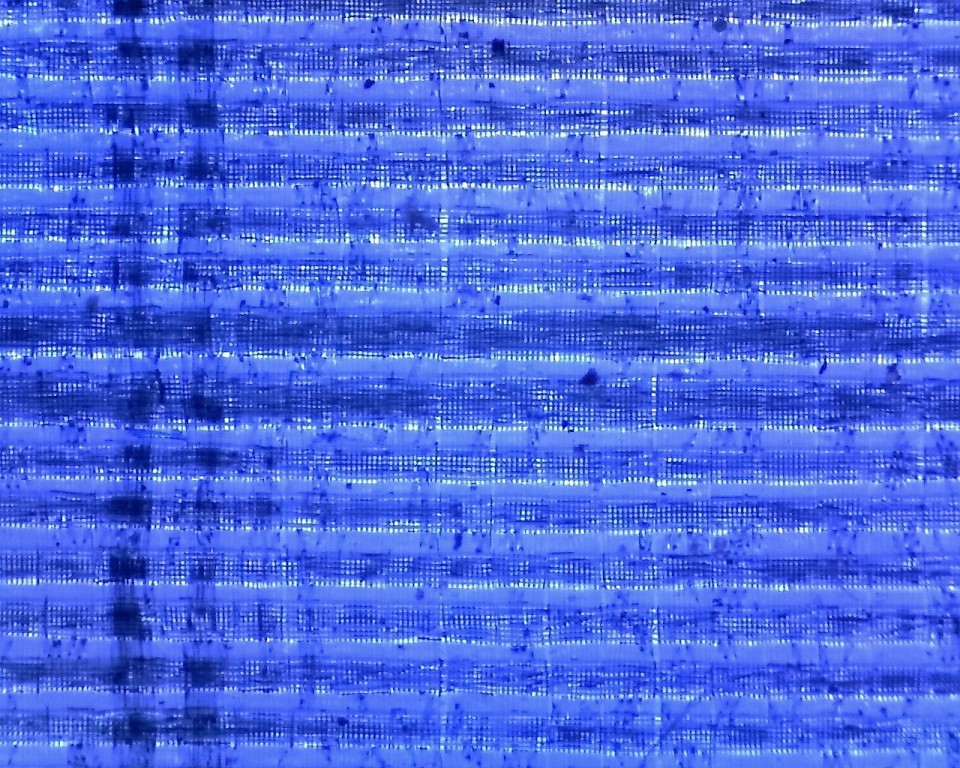
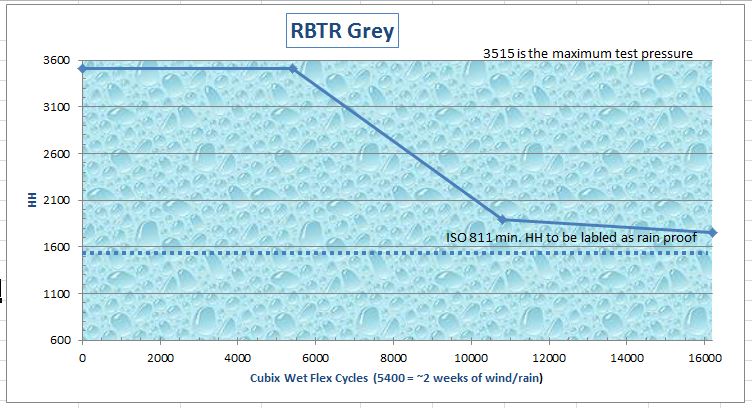
The RBTR Membrane PU2000 (discontinued) and PU4000 are of equivalent weight, and both test out to over 3000mm HH after 5.400 wet flex cycles. I wonder if they are the same fabric, notwithstanding the labeling. Noticed that you did not test out to nearly as many flex cycles on the PU2000 in your test of a year ago. I think I would be OK with using this material for awnings and vestibules outside the occupied sleeping area inside a tent; that is, outside the bug-protected area. The polyester should be much less prone to sagging than nylon, thus preserving vestibule and awning space for storage, cooking and eating in extremely foul weather. I know – some will cry bear, and advise carrying a separate cook area tarp.
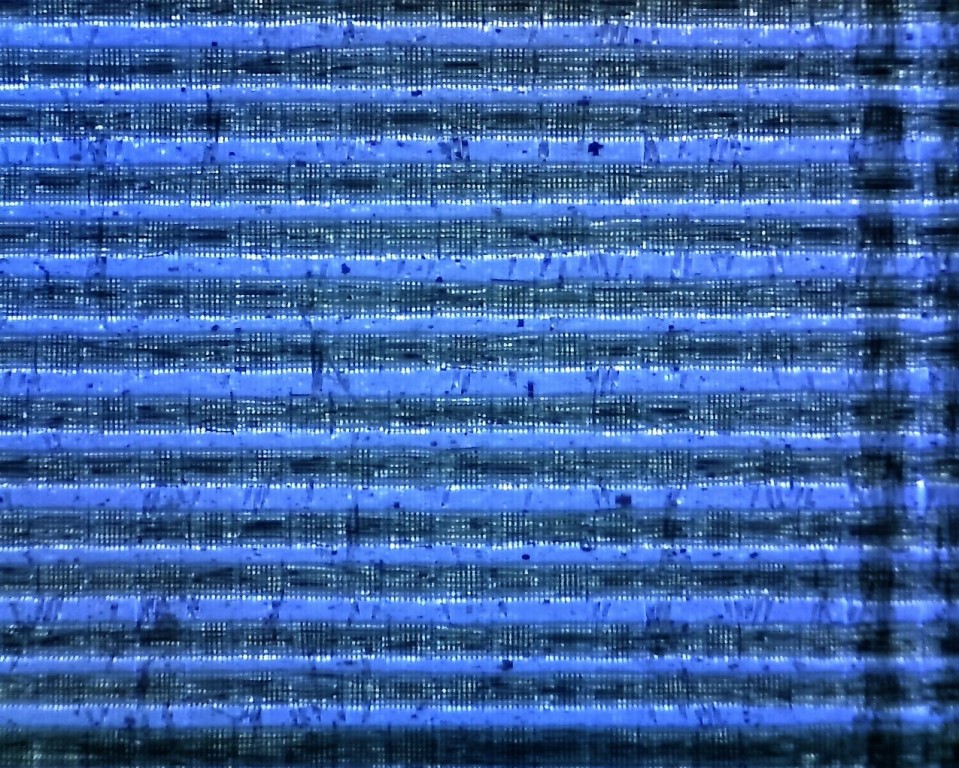
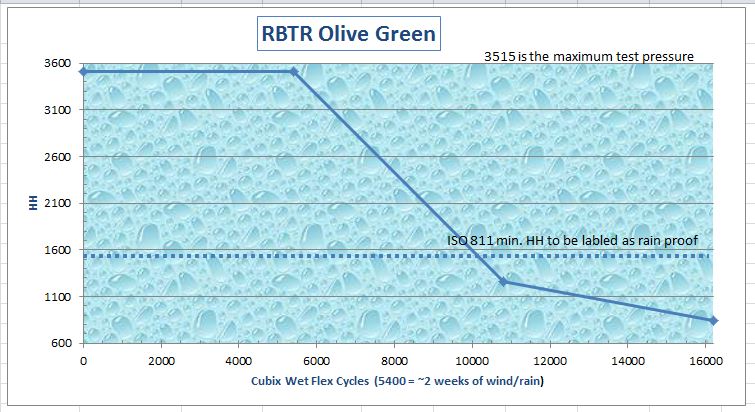
The test of the RBTR WPB rip stop nylon is encouraging also, as its loss of HH levels out substantially around 11K flex cycles, maintaining above 1500HH; so I think I will try it for the canopy over the occupied sleeping area of a tent. Generally, WPBs will not work on a tent canopy, but after looking at the test specs published on RBTR, I think this may be worth a try.
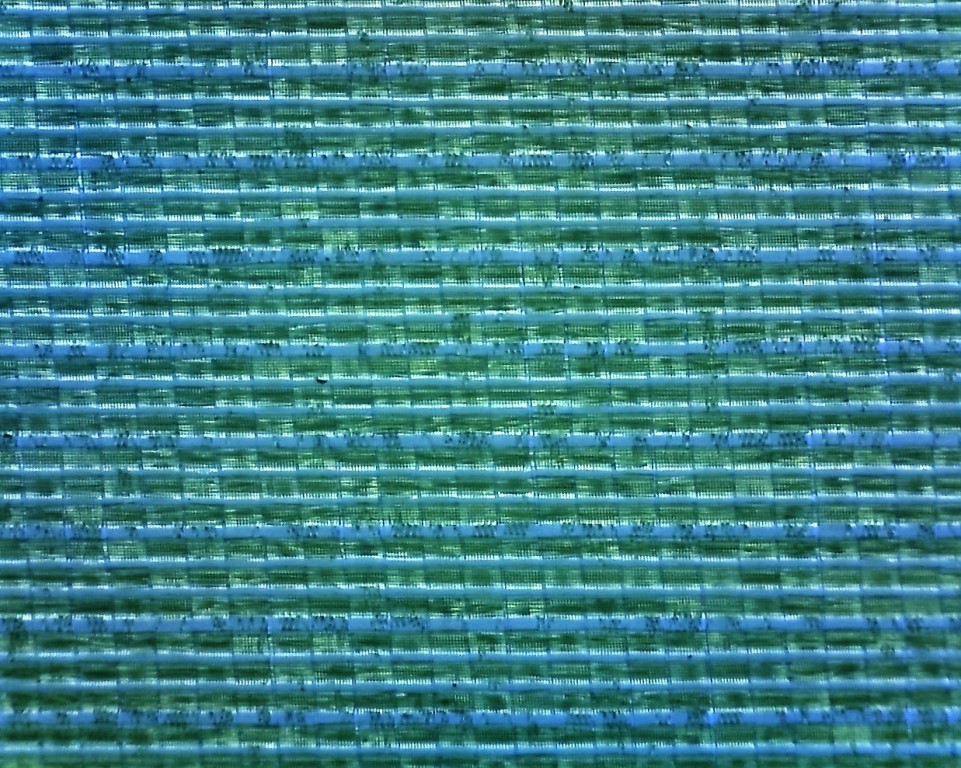
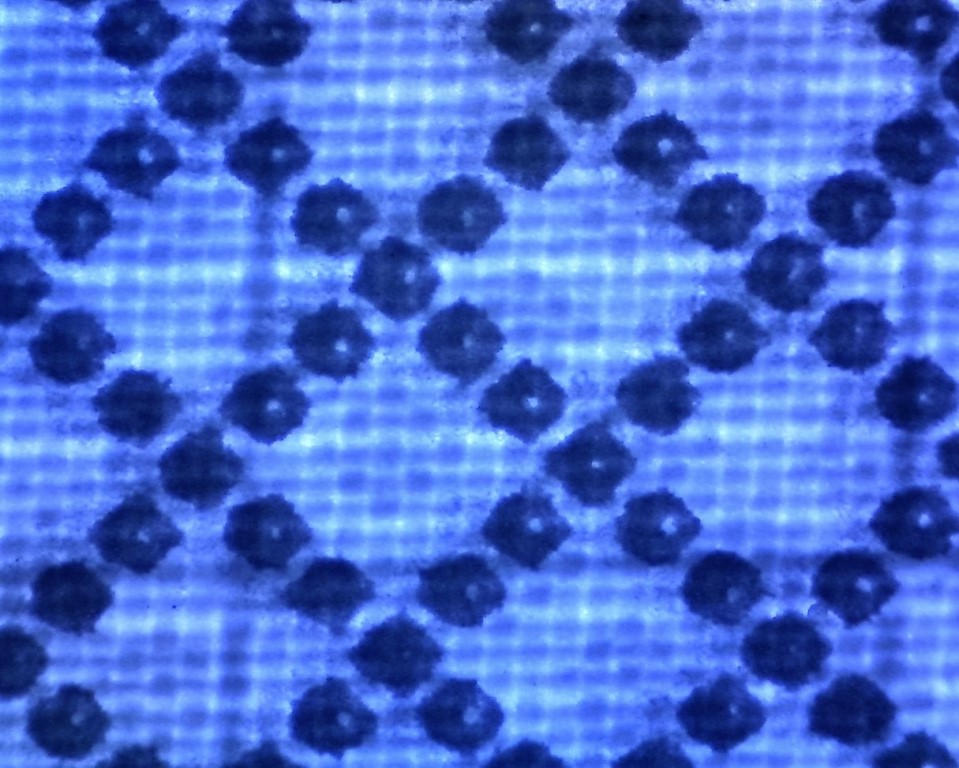
The test of the RBTR very light hexstop fabric, intended for a SUL pack, was disappointing, however; given the rapid decline in HH after 5000 flex cycles to well below 1000HH – not the level of waterproofness I’m looking for on a pack.
All in all, very helpful to me, and I hope to other MYOGers.