Evolution of a Stove System for HX pots: Chapter 1
I decided to define and focus my efforts on a stove system for HX pots. The initial thread can be found here (Chapter 0).
https://backpackinglight.com/forums/topic/a-diy-version-of-teh-jetboil-stash/
What I may have discovered in an effective way to efficiently heat water in an HX pot. JetBoil has been actively trying to reduce the weight of some of their cooking systems to reach the UL market: The Stash being the latest effort. The first impression is that they seem to have gone backwards with a “traditional” canister topped stove with built in notches to support he stove. Performance in the wind has not been evaluated and JetBoil claims that the performance will be similar to ordinary Canister topped stoves. To me, that means that you get the 20% efficiency increase due to the HX design and the normal fuel efficiency degradation when the wind blows.
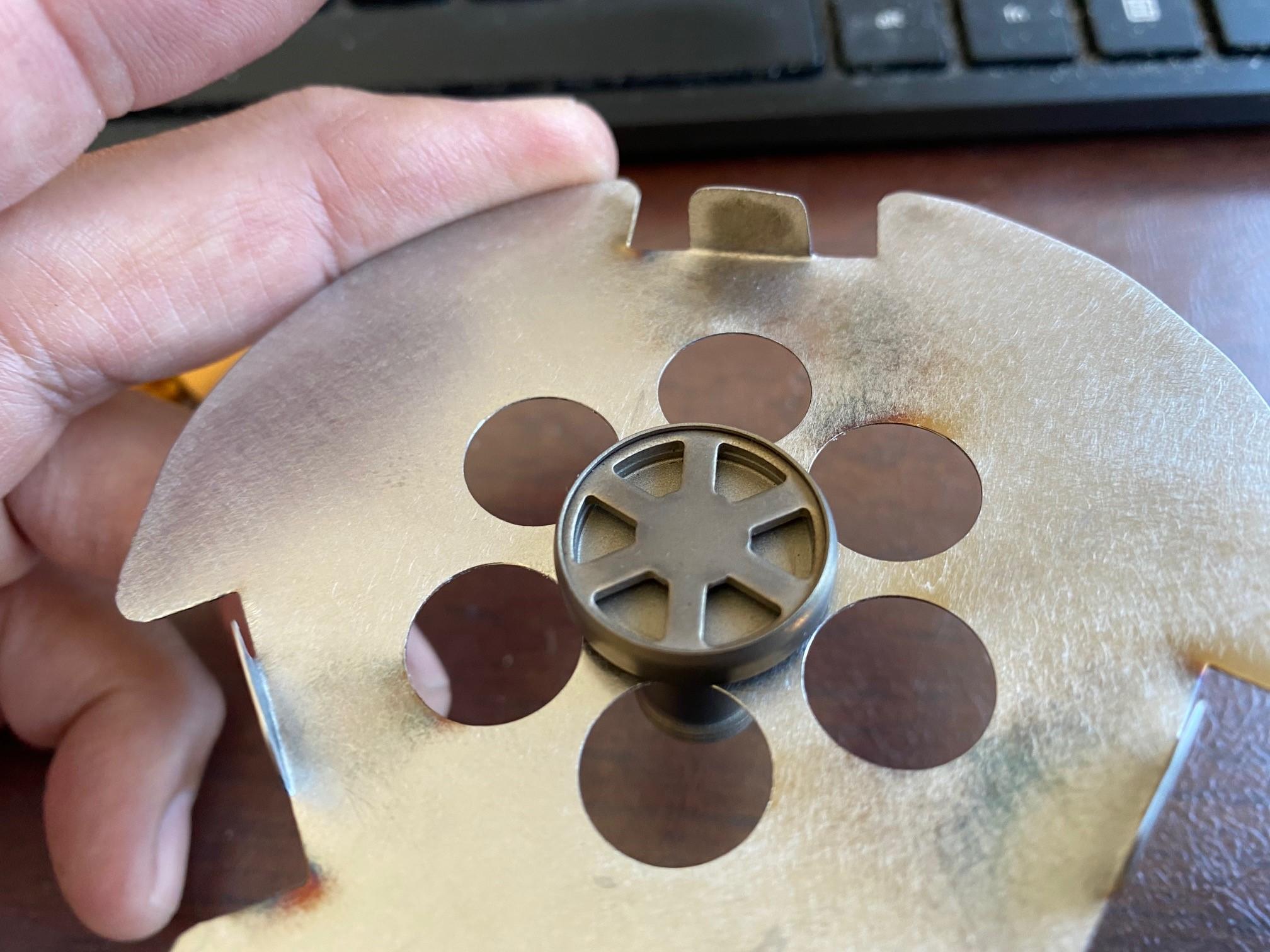
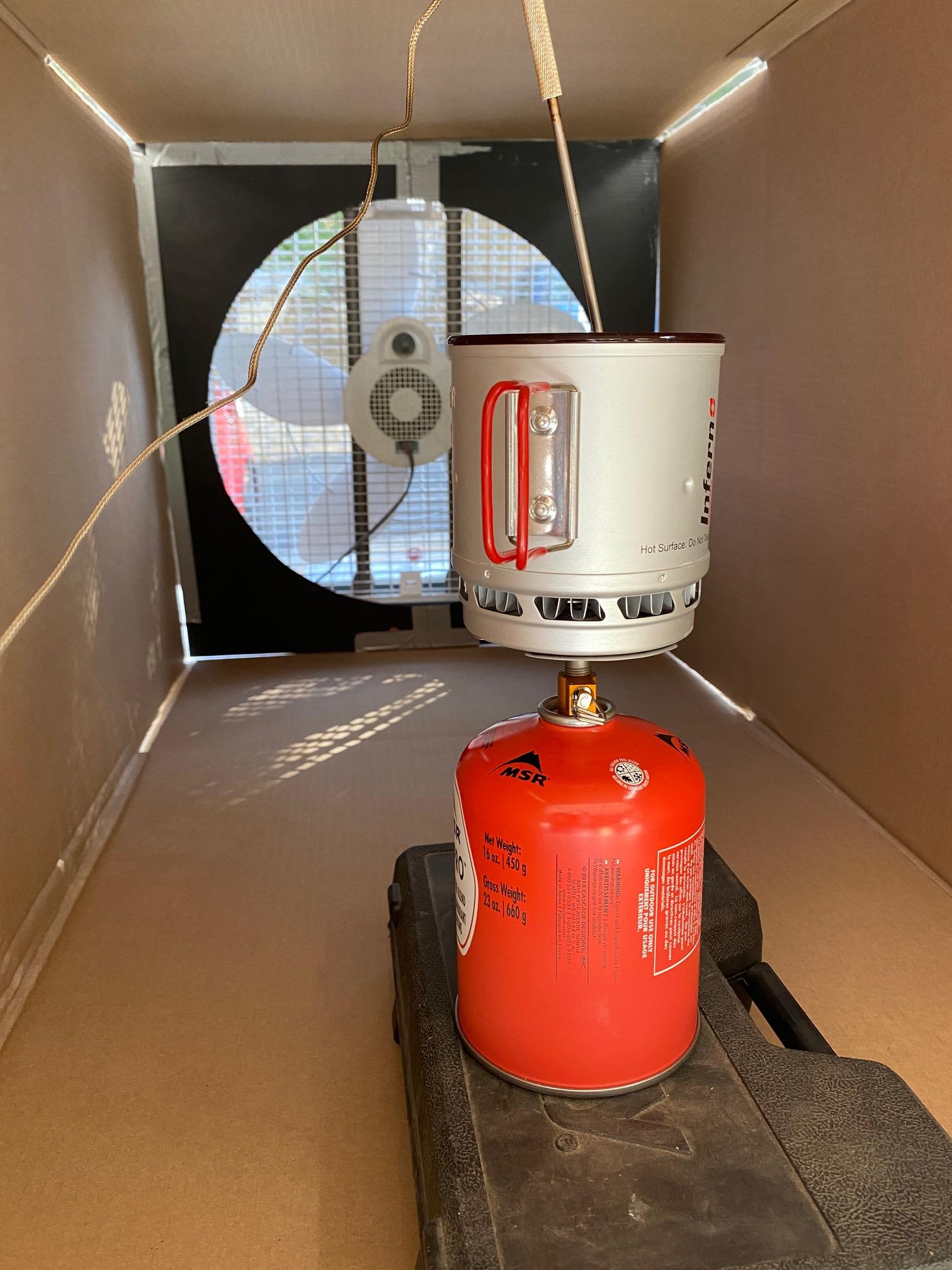
As I own a number of canister topped stoves, I have been wanting to experiment with HX pots and purchased a Sterno Inferno for about $22. Additionally, I have a FireMaple 300t which lends itself to easy modifications. The first prototype provided good results, the second prototype was similar, but closer to a real prototype.

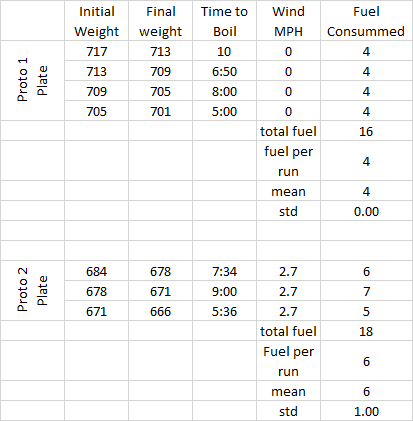
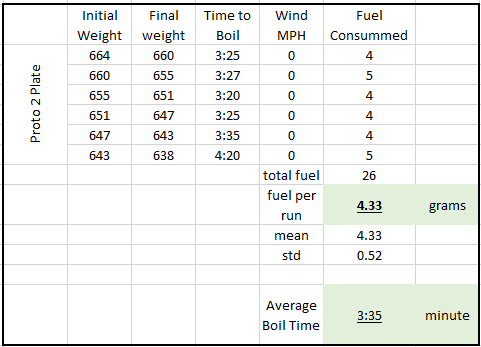
All of this is moot if the system had ordinary performance in the wind. I set up my wind tunnel and obtained the following data. All testing was done using 2 cups of 70 F water. The stove/canister was measured before and after testing. Keep in mind that my scale has a 1-gram resolution. In general, I look at the initial and final weight of the system after all of the runs have been completed. At least 3 runs were conducted at each state with cool down times between each run.


Raw data

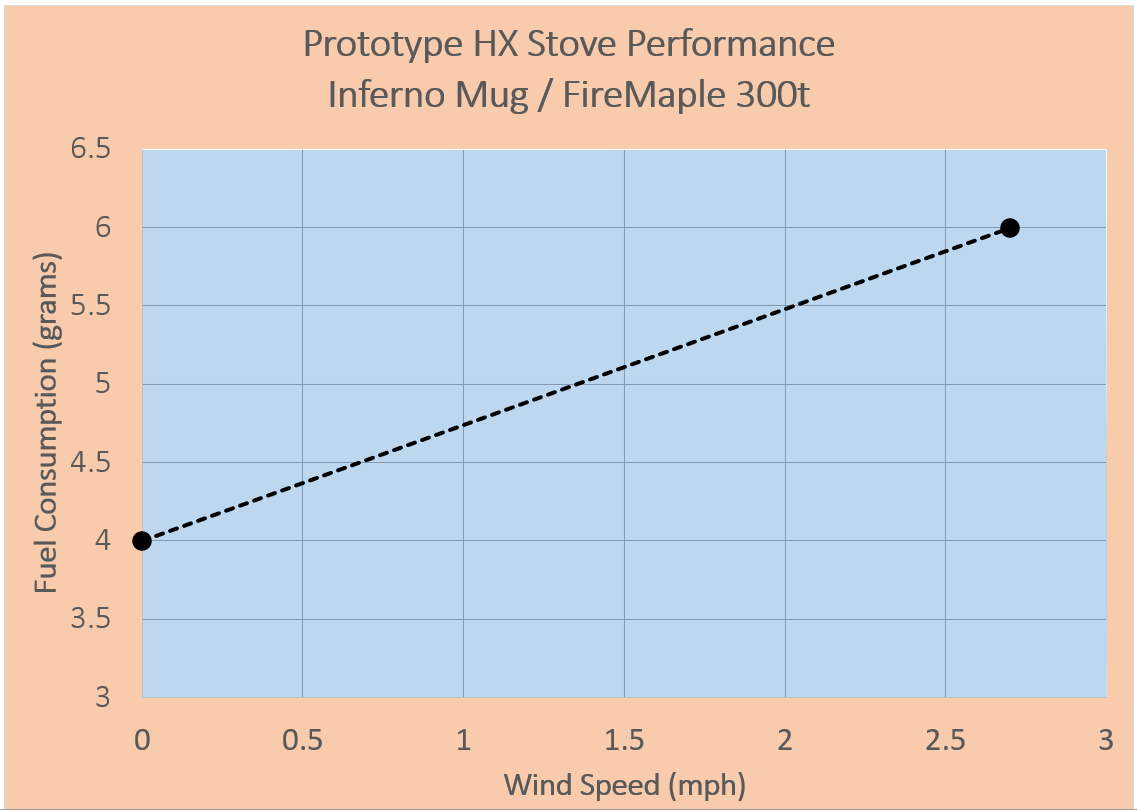
Basically, the burner plate and Fire Maple 300t achieved good fuel efficiencies at calm conditions: 4 grams of fuel to boil 2 cups of water. With the wind speed of 2.7 mph, the fuel consumption increased by 50% to 6 grams to boil 2 cups of water.
Why I think it works.
- Unlike a lot of other systems, the bottom of the HX is completely covered and the air inlets are perpendicular to the direction of the wind
- The air inlet ports probably choke some of the available air flow
- The radial configuration of the HX fins block the wind
- The net positive pressure of the burnt gasses probably push air out of the fins thereby keeping the flame coupled to the pot

I had an interesting observation. I was trying to obtain a couple of “fast” boils and was unable to do so as the flames from the Fire Maple would lift off of the stove. I am using a brand new 16 oz isobutane canister and the pressure may be high. I have observed this before when using a propane canister with a Lindal Valve adapter. In the long run, this may be a good thing as I am interested in efficiency and not speed.

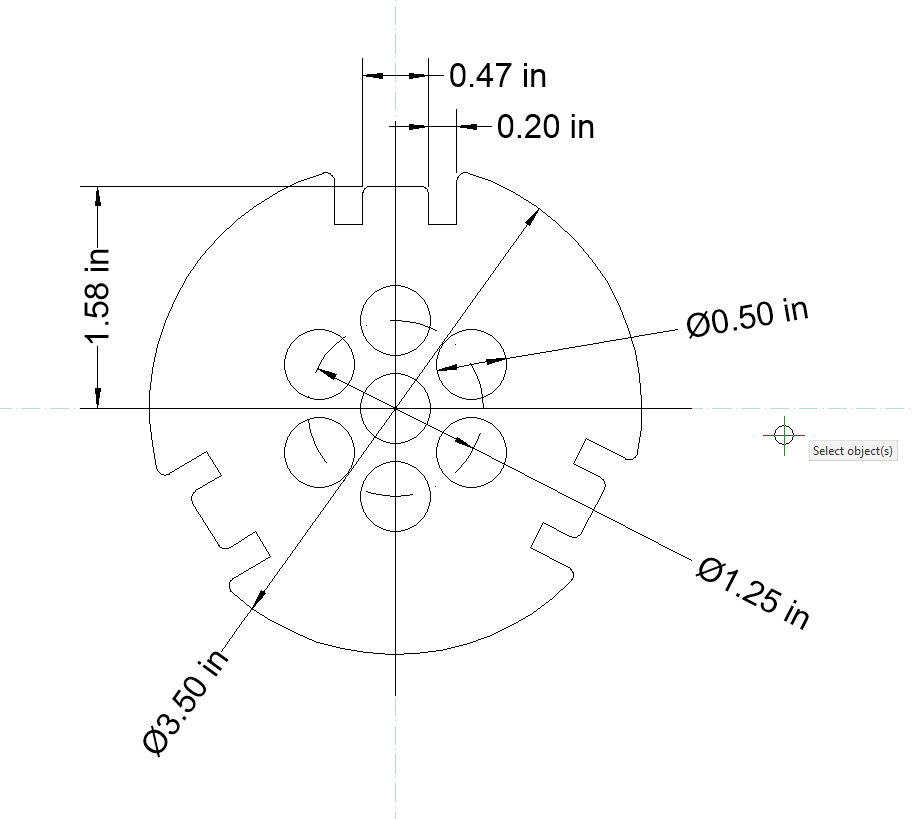
My plan is to keep this as a DIY project as mainstream users are probably not ready to modify their stoves. Currently, the burner plate is made of 0.012” SS. IT may make sense to switch to a thicker aluminum plate, but this is the material that I have on hand. As the design stabilizes, I plan to share the physical dimensions of the plate. As I said in the previous thread, if you would like to see a design for other HX pots, I will need the following dimensions. If it works out, I may waterjet some prototype parts for people who want to experiment withthe design.
- OD of the base of the pot
- ID of the bottom opening
- Distance between the bottom of the mug and the bottom of the HX Assembly
Best regards,
Jon