


Companion forum thread to: Episode 117 | Snowshoe Sizing
In episode 117 of the Backpacking Light podcast we’re going to learn how to size snowshoes, minimize sinkage, and save energy for your next winter adventure in deep snow.
Topic
Become a member to post in the forums.
 .
.
Companion forum thread to: Episode 117 | Snowshoe Sizing
In episode 117 of the Backpacking Light podcast we’re going to learn how to size snowshoes, minimize sinkage, and save energy for your next winter adventure in deep snow.

I’ve always sized my snowshoes a little on the smaller side, preferring the nimbleness of small decks over the occasionally sloshing through deep snow. I *love* racing snowshoe-sized decks (16 to 18″) but definitely not in deep powder. I *want* to own 4 pairs of snowshoes – a small racing model, a more standard backcountry model (22′) , a tundra model (30″+), and a mountaineering snowshoe with really aggressive traction and a short deck. But I don’t want to buy, store, and maintain 4 pairs!
So my question is this: if you could only own ONE pair, what would it be and why? And if you absolutely needed/wanted a 2nd pair, what would you add to your arsenal?

Do tails help for those days when the powder is too fresh?
I have a pair of MSR Denalis. They are something like 25″ snowshoes with, I think, 8″ tails. I haven’t needed the tails, but they appear that they would add some extra float.
Agreed that skis are better sometimes, but what do you do when a trek goes places that deserve both?

I think the easy answer to the ultimate do it all snowshoe would be the MSR Lightning Ascent 22″ or 25″ (depending on average body+pack weight) with the add-on 5″ tails ready to be put on before the trip depending on conditions.
I’m not aware of anything else on the market that would come close to being such a versatile product.
The second “snowshoe” would be Hok skis or real skis depending on your local terrain and skill level, or whatever specialized product most makes sense for your particular use case.

Though I don’t have experience with other types of shoes, I agree with Eli’s thoughts on Lightning Ascents, especially with regard to add-on tails. My only hesitancy would be that the latest models have a goofy one-size-fits-most binding that I doubt will fit feet too far off normal. Maybe I’m wrong, but I’m glad I have the older, more fiddly, more tunable kind.
I came across a few reports of Lightning Ascent early failure but that might just be a side effect of their high popularity.
I use 25″ Tubbs Flex VRTs because I needed climbers and wanted shoes I can bash bushwacking. They’ve been great, great grip on ice and climbing. I miss being able to add tails for more float when conditions require it, but I love the BOA bindings for faster on/off. They haven’t froze up on me yet but I avoid tromping them through water.
I used to use longer (maybe 30″?) old school tube framed shoes but kept braking the bedding straps while bushwacking, fixing them with the rivet gun and strips taken off an old leather belt. I liked the float, but better like being able to bush bash and climb in shorter/lighter/more durable shoes. Trade offs but more ideal for my kind of use.
I’ll add a third vote for Lightning Ascents. They have a very good and aggressive traction that works extremely well in icy conditions.
I jinxed it. Broke the Tubbs Boa adjuster off today. Taking back my MSR shade
Become a member to post in the forums.
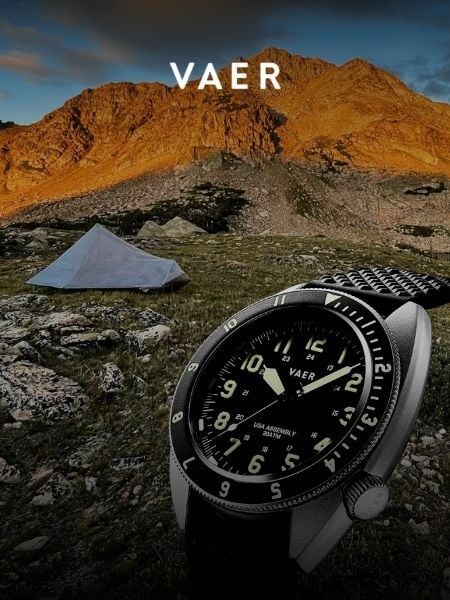 Vaer C4 Tactical Field SolarDurable timepiece for wilderness users - 20ATM (200m) water resistance, 120-click bezel, 316L SS casing, sapphire glass, solar-powered, Epson VS-42 Japanese movement, C3 Lume, USA assembly.
 © Beartooth Media Group Inc.
 Loading...