


Did they stop using Dridown? Can’t seem to find anything on their site about it anymore
Topic
Become a member to post in the forums.
.
Did they stop using Dridown? Can’t seem to find anything on their site about it anymore
Also why did EEs laundering directions say no heat drying? Was that for the sake of the down, down treatment, the shell or DWR? They were the only sleeping gear I knew of that didn’t allow at least low to medium heat.
Never mind
Mark – Don’t take it personally…The “Report” button is accidentally clicked quite often and there’s no “unclick” option. I’m willing to bet the person who did it doesn’t realize it happened.
I like that the laundering instructions are printed on the EE cotton storage bag. It doesn’t leave any questions about how to clean your quilts. I don’t know about the Dridown – EE is pretty responsive to questions when you email them so that’s probably what I’d recommend.
Thanks Kevin
Jenna (Enlightened Equipment)
Apr 19, 2021, 1:20 PM CDT
Hello Mark,
In our effort to create the highest quality quilts, we are in a continuous state of improving, testing, and listening to our customers. Most recently, this effort has led us to switch from using treated down to using untreated down. While both down types have their pros and cons, ultimately the situations where treated down excels are infrequent.
Treated down does perform well when submerged or exposed to extreme wetness, but in the most common encounters with wetness (condensation, damp footbox, wet spots, etc…), we’ve found that treated and untreated down quilts perform similarly.
After lots of testing and experimentation, we’ve also noted increased loft, durability and comfort from our new untreated down quilts, and feel untreated down provides a more premium product for our customers. While treated down is quality down, we feel its’ beneficial elements are infrequently encountered, potentially overstated, and overshadowed by some of the aforementioned benefits provided by untreated down.
The reason you cannot apply a heat setting to dry our quilts is not the down but the ultralight fabric and hardware. You will melt, shrink or damage the material.
Kind regards,
Jenna
Nice – A complete and well-written response from them. They do take customer service seriously and it shows.
I had emailed them in early February when their lead times were 6-8 weeks. I was just over 6 weeks from a trip and asked if I ordered two quilts immediately if they could try to have them to me in time for my trip. It was Jenna who responded:
While we would love to help get what you need for your adventure, we adhere to a strict first in, first out policy to make sure we are fair to all of our customers and their adventures. We just cannot guarantee any specific dates and with the increase in demand for outdoor gear, our lead times are currently 6-8 weeks!
I appreciated their honesty and held off ordering my two quilts (a top quilt and an underquilt). Then, a week before my trip, they posted that they had 20-degree Revelation quilts in stock for immediate shipment. I ordered one and had it for my trip. I’ll buy the underquilt at another time.

Hmmm a very nice email saying they are cutting costs.
K2
I’m not so sure about that. Somewhere I remember hearing or reading that the down treatments were applied to rinse waters after washing and it made drying easier/cheaper. I’ve had mixed feeling about treated down from the get go and questioned if it would be an improvement or the opposite and actually hurt the life and loft of the down. Being a skeptic I’ve wondered if we might see problems. I’ve recommended marmot bags to a few looking for budget bags and hope that don’t come back on me but really there are only high end bags that are not using treated down. I appreciate the response from EE but kinda find it humorous about the NEW untreated down bags and the testing of. Are these somehow different from the bags we had before the treated down bags? And I kinda remember a few years back hearing about the testing of the treated down that was a major improvement over untreated down.

Does anyone know the actual chemicals used to treat down, and their environmental impact? If they are like so many “forever chemicals” used for water and stain resistance that would be an excellent reason to go with untreated down.
Some suggest that treated down might not stay lofty as long as untreated down over time – if someone has a link to data proving this, I’d like to see it. Some say that treated down is a bigger environmental impact than untreated down – while this is likely true, I’d then ask, is it an unmanageable impact, or one that is truly causing substantial harm by an objective standard? I’d like to see the evidence. One thing I am certain of – untreated down will cost the supplier less to procure than treated down. It has been shown that treated down has some qualities that are useful in some circumstances, but probably not useful enough for the supplier to consider paying a premium for it. EE is paying less to make their quilts, and charging the same, because they can. Then all it takes is a nice story the EE is happy to send out, without any evidence supporting my the claims. I am not for or against the use of treated or untreated down as long as it’s a reputable supply and does what it says it will do.
The additional anecdotal evidence suggests that laundering a treated down bag often resulted in “clumping” that was difficult to remove during the drying process.
Don’t think it’s a coincidence that two of the most well respected down bag makers, Feathered Friends and Western Mountaineering, have never used treated down (to the best of my knowledge) in any of their products.
I also don’t think it is coincidence. I just happen to believe that both WM and FF did not ever see a marketing advantage in using more costly treated down in their products. Other brands seem to also be coming to that conclusion. I would never expect any company to honestly tell its customers that cost was a factor in the material selection.
Relevant: sleeping bag designer Michael Glavin’s comments on “Down Versus Synthetic” in this interview.
https://backpackinglight.com/interview-with-gear-creator-michael-glavin/
Down is naturally hydrophobic. The only way to get down to absorb water is to expose it and push the water into the down. …
— Rex
Rex, it seems odd that he would make that statement, and then all the Zenbivy products use treated down?
Zenbivy/Glavin explains the decision here:
https://zenbivy.com/pages/lets-talk-about-down
When down is first harvested from a duck or goose, it is water repellant – natural oils on the plumage make water fall away so that it can keep insulating. When down is processed and washed, some of these oils are removed. There have been improvements in washing methods to remove less of these naturally water-repellant oils, but generally DWR (“durable water repellant”) treatments are used to restore down’s natural ability to repel water.
No doubt poorly-informed market expectations play a role, too. “This bag has DWR down, it must be better.”
The more I learn about the backpacking gear industry, the more decisions I see driven by unexpected and unrelated issues. The world is imperfect on many levels.
— Rex
I totally agree Rex! As I mentioned before, I used some treated down in my latest MYOG because it was available at a good price, and I believe it will function well for my needs. I have a certain disdain for markets who will waffle back and forth on an issue to fish a few more sales out of people bent on buying the latest and greatest. The bicycle industry is a prime offender of this tactic, and I can see this treated vs untreated down topic as a potential way for the outdoor equipment market to operate similarly.
“to fish a few more sales out of people bent on buying the latest and greatest”
No one holds a gun to the “people bent on buying”.
Why blame vendors when the problem is the consumer? Always “caveat emptor”.
Become a member to post in the forums.
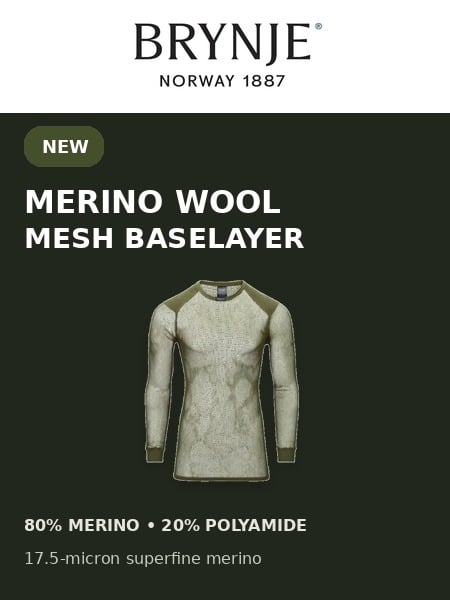 Tactical Wool Thermo ShirtSuperfine merino wool-blend mesh baselayer with a slim unisex fit and densely knitted shoulder panels for pack-carrying comfort. Weighs 4.9oz | 140g
 © Beartooth Media Group Inc.
 Loading...