Topic

Dealing with hot weather – evaporative techniques

Viewing 14 posts - 1 through 14 (of 14 total)
Stephane G BPL Member
PostedApr 14, 2024 at 10:42 pm

What are the options to generate evaporative cooling? My current approach is to douse water over buffs — one over my head, another around my neck. They dry fairly quickly, which is perhaps a good sign (faster evaporation means more cooling), or perhaps an indication that they hold very little water to begin with suggesting that a more absorbent fabric might be more appropriate. (ex: a micro-fiber towel)

As heat waves are becoming the norm, I’d like to gain some understanding of the factors at play.

If you know of useful sources, please let me know.

David D BPL Member
PostedApr 15, 2024 at 12:03 am

I try to pace things so that I’m sweating, and wear a classic outdoors button shirt (Silver Ridge Light) open in front.  The air motion from moving briskly evaporates the sweat in front nicely, helping cool more than a half zip or closed hiking shirt.

When I’m kayak fishing and out in the direct sun for hours, I find dunking a light nylon hat in water helps a lot

PostedApr 15, 2024 at 8:58 am

I hike in the Sierras (typically hot and dry).  It’s probably heresy, but I typically will hike in a cotton T-shirt: yeah, I know the death fabric.  I’ll also dip my hat into streams and get my hair/head wet.  My 2 cents.

David Thomas BPL Member
PostedApr 15, 2024 at 10:46 am

I’ve pondered and practiced this a lot, most often within the GCNP during Spring and Summer hikes back up from the Colorado River.

A basic $1 cotton bandana is the baseline in my mind.  Cheap, multiple-purpose, can be sourced at any Walmart.  I much prefer to cool myself by applying water externally than to sweat out that amount of water (and electrolytes) – it is less draining and, at the end of the day, I’m less sticky with dried sweat.  Along the BA or NK, there are numerous spots to dip such a cloth into a stream and doing so reduces the amount of water I have to treat and drink.  I drape the wet bandana over the back of my neck and THIS IS THE IMPORTANT TIP: flip it over every minute.  The side against your skin gets warm, the exposed side gets cool, so keep flipping it over.

I’ve also used a strip of micro-fiber towels (I long ago ordered a big MF towel and have, for 15 years, been trimming off custom sizes for different purposes).  The MF cloth dribbles less water down my chest which is neater, but sometimes, I want more of me wetted out.  At least the MF can be squeezed nearly completely dry and put away when the sun goes down while one should stop wetting the cotton bandana somewhat in advance of cooler temps.  The MF doesn’t seem to work quite as well for cooling my neck as the folded cotton bandana.

I’ve also used a men’s button-down collared cotton dress shirt (I set aside the lighter colored ones when retired from daily office wear).  Water from the wetted bandana transfers to the cotton shirt and more of my upper body is getting that evaporative cooling.  While wet cotton is lower SPF than dry cotton, it’s still far better than bare skin and the collar and long sleeves help minimize UV exposure and I haven’t had a problem with sun exposure through such wetted cotton clothes even through they’re pretty thin fabric.  But, even more than the bandana, you need to stop wetting it out before the desert temps drop in the evening or you’ll have a damp shirt going into the evening.  When I time it correctly, it gives me great cooling during the heat of the day and also functions a bit as a warmth layer in the evening / night.

I remove my hat for 10 seconds every few minutes to let the sweat evaporate off the top of my head and let the sweat band cool down.

As Jon mentions, dunking one’s head in a stream helps and it’s also nice for washing the salt off your skin and face.

I find it’s 10-15F cooler under a sunbrella and it is far superior UV protection than relying on sunscreens.  I wear a LS fishing shirt with epaulettes that button and let me secure the sunbrella into one of the large cargo chest pockets and through an epaulette leaving it hands-free.

David D BPL Member
PostedApr 15, 2024 at 11:57 am

IME if I’m heavily sweating anyway (usual case), I get better evaporative cooling with an open front shirt vs letting a closed shirt soak with sweat.  Of course throwing water on beats all but it adds a lot more water stops that I prefer to avoid and would rather jump in water near camp at the end of day regardless, to facilitate a good night’s sleep.  My 2 cents Canuck (looney pesos)

Jerry Adams BPL Member
PostedApr 15, 2024 at 2:17 pm

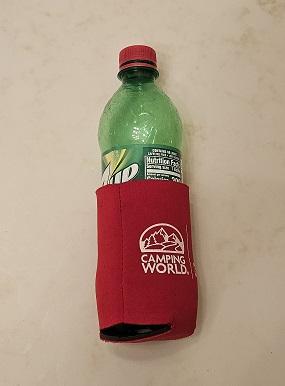
I got this tchotchke from Camping World

Put a water bottle in it

It’s made from 1/8″ open cell foam.  Get it saturated with water.  After 6 hours the contents were about 6 F colder than ambient – evaporative cooling

David Thomas BPL Member
PostedApr 15, 2024 at 6:00 pm

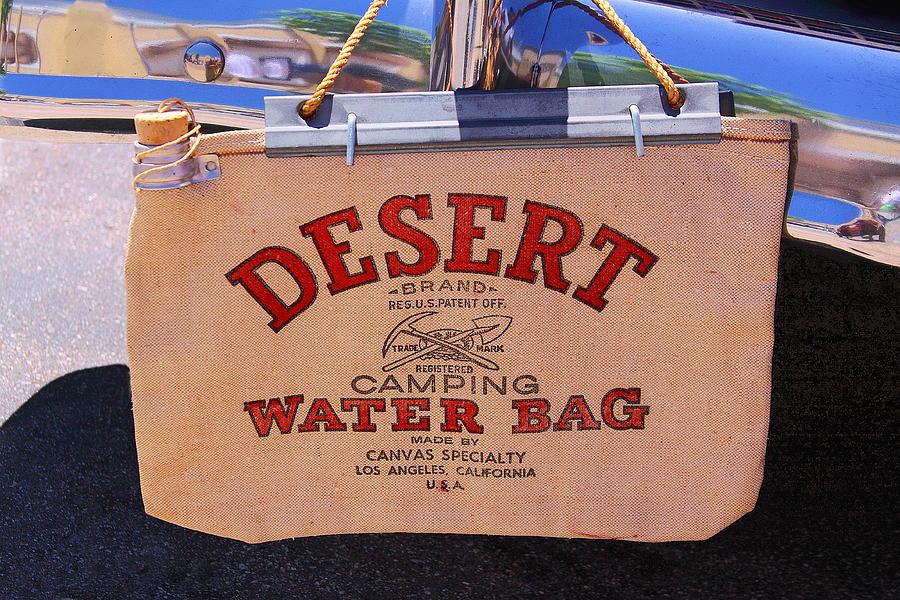
Once in the 1970s, on a family vacation in the Owens Valley, in summer, we brought my grandfather’s “Desert Water Bag” hung off the front of the Ford Galaxy 500. 

In that dry climate, at highway speeds, it’s a great way to make some cool water with a lovely canvas-y flavor.

On future trips, we resumed our use of a Styrofoam cooler with ice from the hotel to keep drinks, cheese and lunch meats cool.

They later went to nylon covers:

but in 1972, the BSA aluminum 1.5-quart canteen (nicely dimensioned to completely fill a backpack side pocket) came with a cotton cover for evaporative cooling.  It worked reasonably well at that due if kept in the shade with some breeze.

Bill Budney BPL Member
PostedApr 15, 2024 at 8:52 pm

I, too, have hiked many Summer miles in a (loose) cotton dress shirt or T-shirt. It was fine.

Recently I have been enjoying ultralight polyester, like OR Echo, Polartec Power Dry Lightweight, Capilene Cool, or Athletic Works’ lightest T-shirt.

Nick Gatel BPL Member
PostedApr 16, 2024 at 12:53 pm

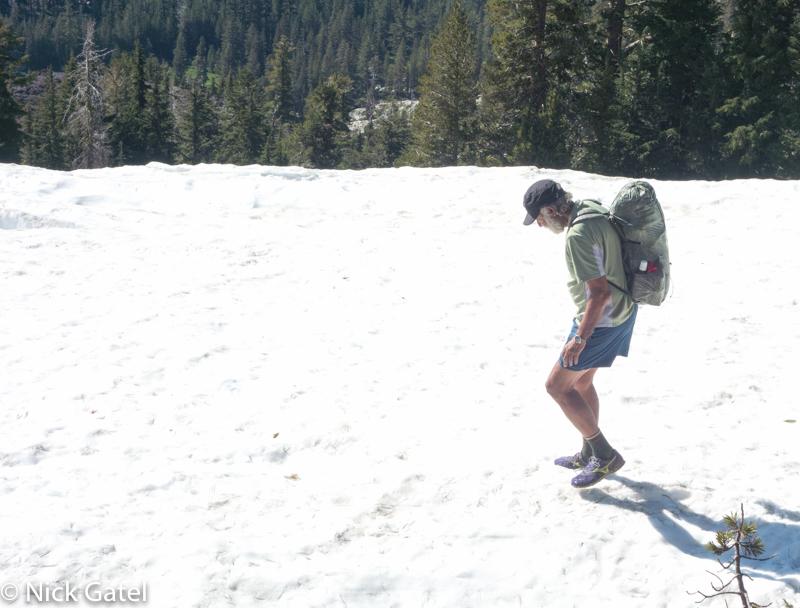
I live in a hot desert. In summer, when working outside, I wear a thick cotton T-shirt (Pro Club brand, 6.5 oz yd). I don’t wet it, just let evaporation work as it gets wet. When the temps get around 120° F (48.9° C) I go inside.

For backpacking I use Rail Riders Echo Speed T, 4.59 ounces (been discontinued for years).

I think it is some kind of polyester. Very loose weave and the side panels are mesh. I use these often, even when everyone else is wearing long sleeves.


In hot weather you just aren’t going to be cool when hiking. Embrace it ;-)

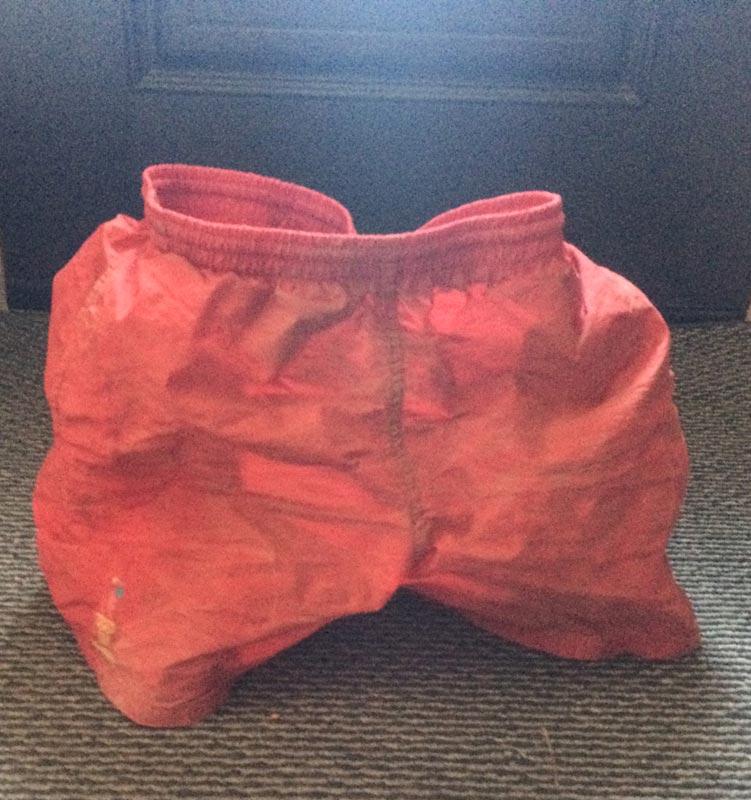
These shorts have so much body salt, they stand up on their own. This was after a week-long desert trip. Can’t waste water rising clothes or soaking bandannas and other items when in deserts. My wife made me take them off when I got inside the house (see the front door in the background). On these kinds of trips, when I get home, she makes me strip off my clothes at the door and immediately take a shower. She usually does most of our laundry, but refuses to get near my clothes after a trip like this.

Terran BPL Member
PostedApr 16, 2024 at 2:20 pm

When it’s 120*, there’s a 1 o’clock breeze, or you can move to Colorado.

AK Granola BPL Member
PostedApr 16, 2024 at 10:04 pm

Those shorts have a life of their own, Nick! too funny. A deer’s dream?

In really hot weather, I dip my shirt and hat as often as possible. Hands and feet if I stop for a break. Or even submerge myself. I tried one of those bandanas with the filler that soaks up water, but it was just annoying. But ultimately you’re going to be hot, so just paying attention to water and electrolyte intake is most essential. An early start and siesta are also good strategies. That nap at midday is soooo relaxing. I also find that after a few days, I seem to adapt better than at the beginning and even enjoy the heat. I do get heat rashes though on my ankles and feet, that last for weeks. Never found a solution for that.

And this will sound really weird, but I have found that drinking a hot coffee or tea midmorning actually seems to cool me down. When we honeymooned in Indonesia, we hiked midday from a bus stop down a thick forest trail, full packs, very hot and very humid. When we arrived at our lodging, they spritzed us with scented water and flower petals and served us hot tea. Strangely, the tea seemed to help cool us down and we drank it the rest of our trip. Probably all in our heads but it seems effective. Would have preferred a cold beer, but there was no refrigeration!

jscott Blocked
PostedApr 17, 2024 at 12:18 pm

Hiking  at altitude in the Sierra means that, mostly, temps max in the 80’s F. And  cool off a lot as soon as the sun goes down. However, hiking at altitude–7,000-12,000 feet–also means that sun exposure is extremely high. Cotton is great for cooling, but it’s near useless for protection from the sun. Yes, you may not burn, but other cancer promoting rays go right through. no effective SPF fabric is made with cotton. So I wear a Sunday Afternoon SPF hat and an SPF shirt and nylon pants. The shirt and pants are mosquito proof, so that’s an added benefit. And during bug season (which is typically sunny) I wear this:

https://www.sunprecautions.com/product/48100

You can pull the drape up over your nose in snow, or especially in a swarm of mosquitos. They can’t bite through. So your neck, ears and face are protected from the nasty buggers. The drape hangs loose and can be dunked in a river for cooling purposes.

Sun protection is crucial, and more so in hot weather. Cotton helps  with cooling, but fails for sun protection.

Viewing 14 posts - 1 through 14 (of 14 total)
Loading...