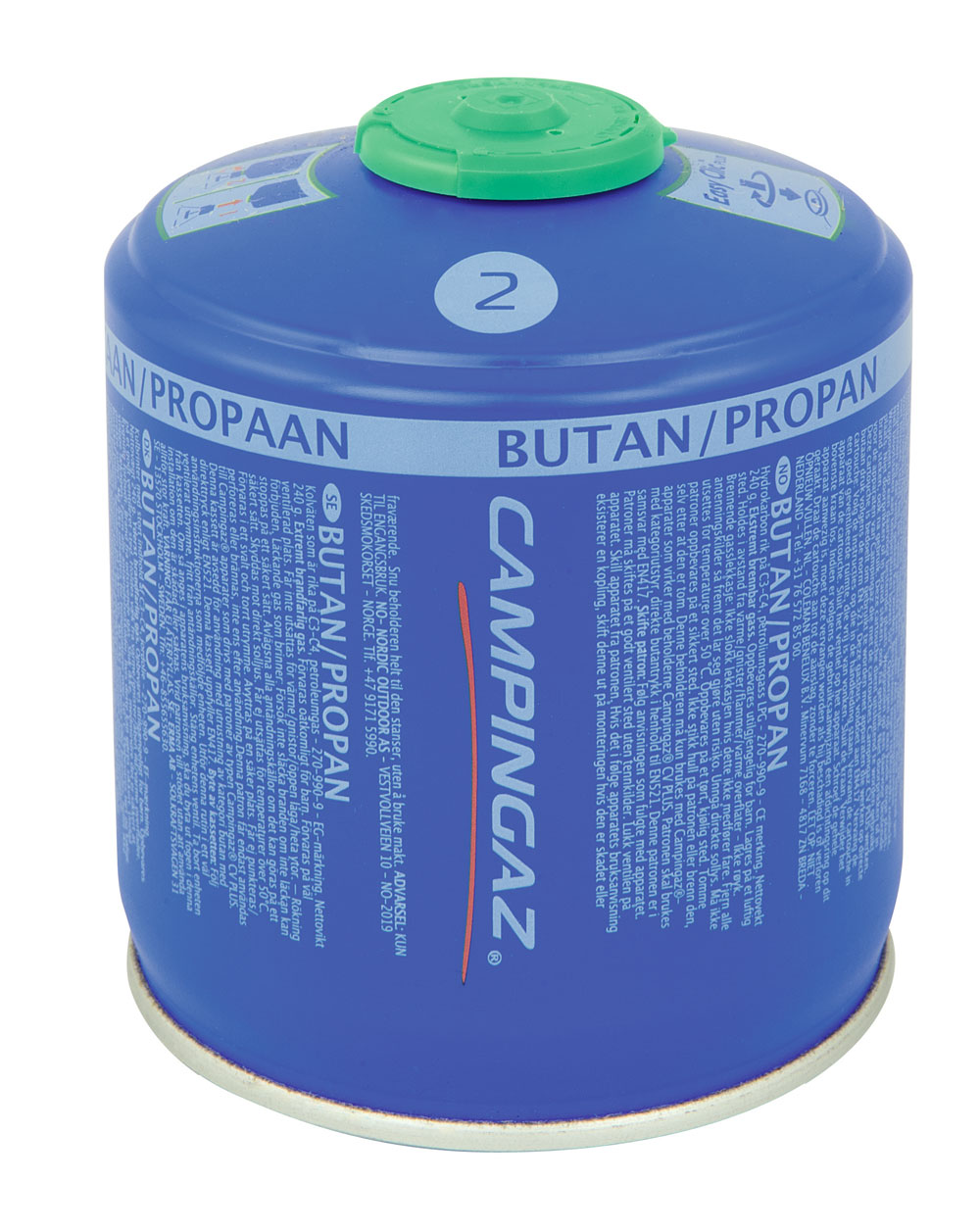
OK, I’ve done it. Roger is likely asleep right now, but when he sees this he will absolutely cringe at my materials and methods. I think my results are fairly accurate, but I won’t pretend that this is a highly scientific exercise.
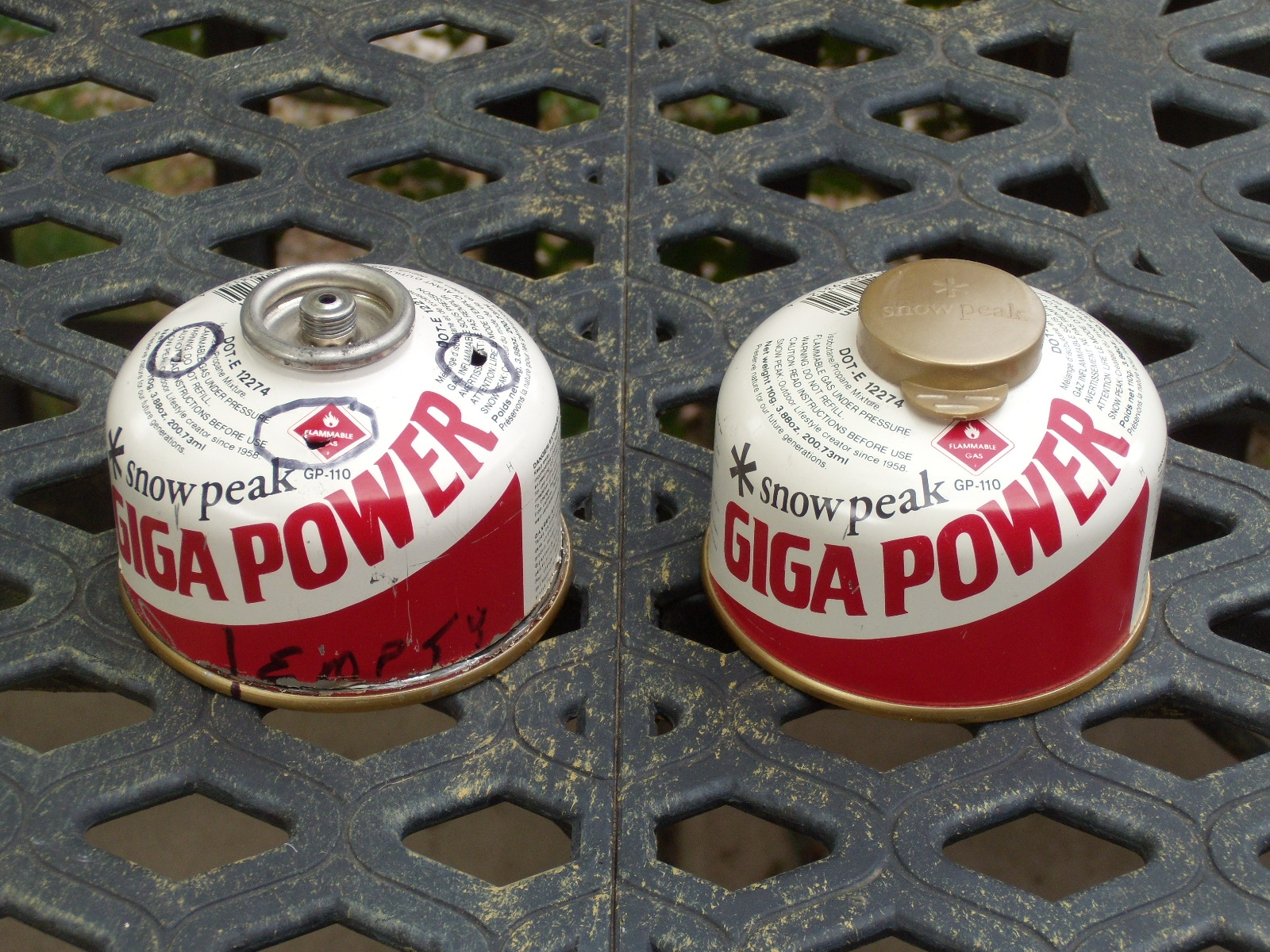
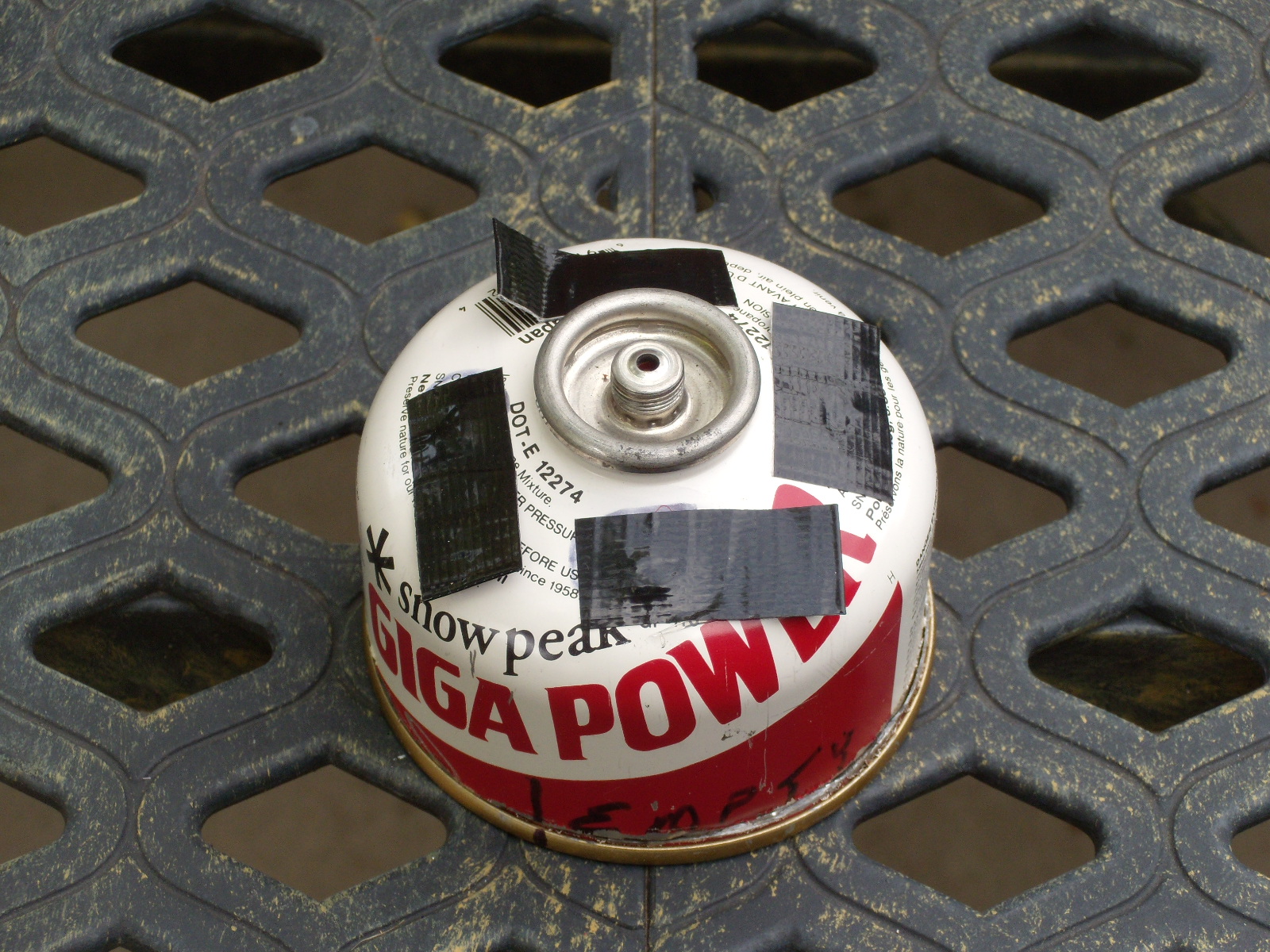
First off, the canister used–a Snow Peak 110 gm one from back when they were made in Japan (ah, the good old days, when an empty canister weighed just 3.0 ounces) The photo shows the empty test canister on the left, and a full one on the right (yes, I’ve hoarded a few of the lighter ones for posterity).

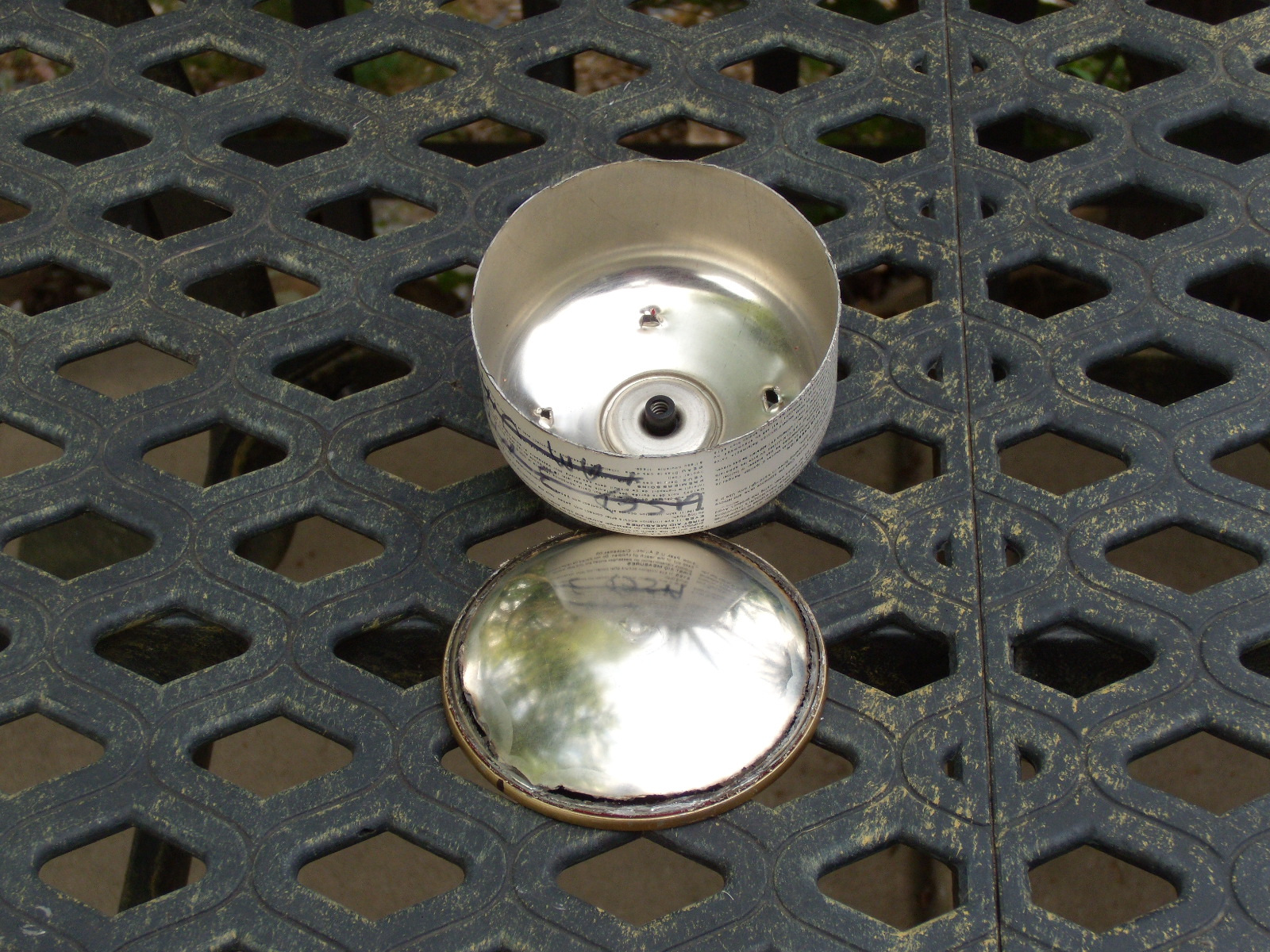
But this is no ordinary empty 110 gm. canister with vent holes marked for the recycling people to see. A few years ago I wanted to see what the inside of a canister looked like, so I cut the bottom off one to see what I could see.
The bottom of the lindal valve is somewhat interesting, no? But then there’s the need to close those holes to make them waterproof. I chose to employ a very high tech material for this purpose. It’s called duct tape.
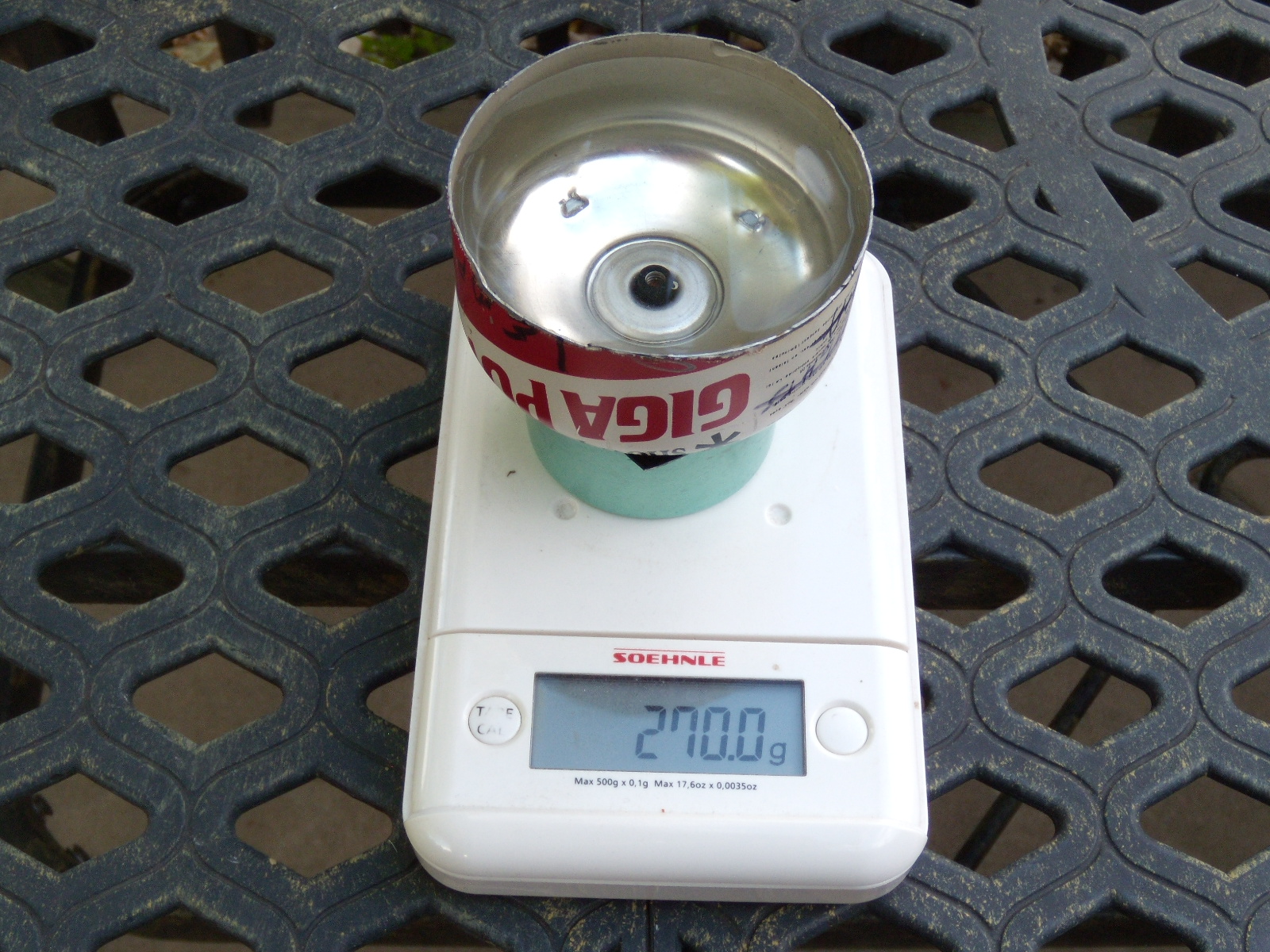
To be able to set the inverted canister top on my scale, I used an empty cat food can to set it on. After taring out the cat can, the canister body (sans bottom base) weighed 49.8 grams. I filled up the inverted canister with distilled water, and I then carefully placed the concave canister bottom on the canister body to displace the excess water. After drying the water that spilled out onto the outside of the canister body, I re-tared the cat food can and placed the canister with water on. The new weight of canister top and water was 270.0 grams.
I double checked the volume of the water in the canister by decanting it into a clean 8 oz. alcohol dispensing bottle, then pouring it into a 30 cc measuring cup. As close as I could tell, there was exactly 220 cc of water, which confirmed my earlier weight measurement. So it looks like the total interior volume of a 110 gm. canister is 220 cc, assuming that 1.0 gram = 1.0 cc of water.
OK, Roger, it’s now up to you to calculate how much n-butane Bob gets to put into his empty 110 gm. canisters with a reasonable margin of safety.