Topic

Clean BeFree Filter in Field with Sodium Percarbonate?

Viewing 25 posts - 1 through 25 (of 29 total)
Casey Bowden BPL Member
PostedJun 22, 2021 at 3:01 pm

My wife recently brought our BeFree filter back to life by adding a half teaspoon of Sodium Percarbonate to a small glass of warm water and letting the filter sit in it for about 30 minutes. Note that other cleaning options such as swishing, shaking and even using CLR did not work. Also, the filter integrity is still intact as I can’t blow through it.

Any reason not to bring a tiny amount of Sodium Percarbonate on backpacking trips to clear the filter in case it slows to a trickle in the field?

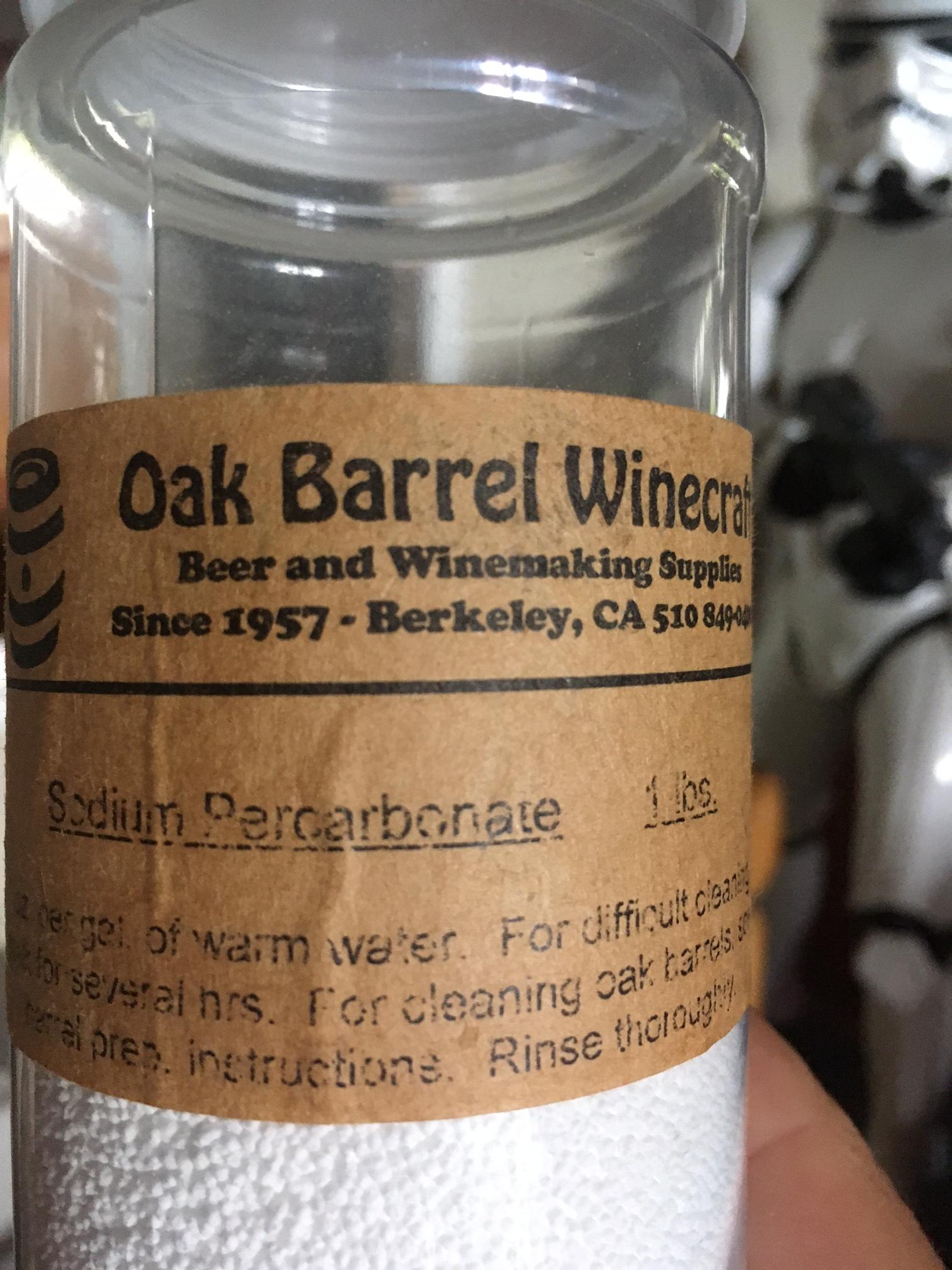
For reference, the Sodium Percarbonate my wife used (see photo below) was purchased at our local wine/beer craft store and is used for cleaning wine/beer bottles and equipment.

bottle

Brad W BPL Member
PostedJun 22, 2021 at 4:21 pm

Then you do what with the left over solution? Just because you can’t blow through it doesn’t mean the filter wasn’t compromised. The oxidizing agent may be doing enough damage to let something harmful through.

Casey Bowden BPL Member
PostedJun 22, 2021 at 4:45 pm

Good point Brad. I’m hoping that some of our more chemistry minded friends chime in.

Chris R BPL Member
PostedJun 22, 2021 at 4:48 pm

Releases hydrogen peroxide, decomposes to water fairly quickly. We used to dose ponds with it to counteract organic pollution that was depleting oxygen and killing fish

Casey Bowden BPL Member
PostedJun 22, 2021 at 4:58 pm

Here’s the specific procedure I’m proposing to restore flow to a BeFree filter in the field:

  1. Add 1/2 teaspoon (2.5 ml) of Sodium Percarbonate to 1 1/2 cups (350 ml) of warm water.
  2. Let filter sit in solution for 30 minutes.
  3. Swish/shake filter in untreated water for 1 minute to remove residual Sodium Percarbonate.
  4. Squeeze 1 liter of untreated water through the filter (don’t drink this water).

Assuming the filter passes the blow test after this: a) will it effectively treat water and b) has enough Sodium Percarbonate been removed from the filter with this rinsing procedure for safe drinking?

PostedJun 22, 2021 at 5:08 pm

Sodium percarbonate, NaC2O6, or Na2CO4.  Decomposes in aqueous solution to hydrogen peroxide and sodium carbonate.  It is a strong oxidizing agent.  Sodium carbonate is often used as a food additive so it is probably harmless.  the H2O2 does the disinfecting. Some people brush their teeth with that, so I assume it is harmless in small amounts.  If you are worried about drinking the weak hydrogen peroxide solution you can wait for it to dissipate: overnight.

Brad W BPL Member
PostedJun 22, 2021 at 5:10 pm

@Casey I think whether the filter media is compromised by the cleaning agent may be a tough thing to answer without some lab work.

Manfred BPL Member
PostedJun 22, 2021 at 6:57 pm

Hi Casey,

we use Vinegar with success. Our BeFree was completely clogged after our recent Grand Canyon trip. Putting it into a solution of 1/3 vinegar and 2/3 distilled water for 30 minutes got it back to life. We ran a liter of distilled water through it afterwards to flush the vinegar out. Of course we do this at home after our trips and I realize you are making a suggestion for servicing the filter in the field. I thought I mention it anyways, since you didn’t mention vinegar under the methods you tried before using sodium percarbonate.


PostedJun 24, 2021 at 11:21 am

I wouldn’t use any chemicals or acids to clean it.  In my experience it’s not necessary and may damage it.  I’ve noticed on a couple of trips that it seemed clogged the first time I used it, but OK after that.  IMO the problem is hard water deposits on the filter tubules.  Before and after a trip I soak/swish it in distilled water and that fixes it.  I dump out that distilled water and run some fresh through it.  Works for me.

Casey Bowden BPL Member
PostedJun 25, 2021 at 9:45 am

Bob, thanks for your input. I tried to clean mine with distilled water but to no avail…

Matthew / BPL Moderator
PostedJun 25, 2021 at 9:52 am

If vinegar works then I wonder if one could carry powdered white vinegar as an on the trail fix?

Manfred BPL Member
PostedJun 25, 2021 at 9:58 am

Matthew,

That is a great idea for longer treks! After looking at the ingredient list at the link you provided I wonder what potential impact the other ingredients (maltrodextrin and food starch) could have on the filter. I would feel better about trying without those ingredients, but I might still try this at home and see what happens.

  • Ingredients — Spray-dried white distilled vinegar, maltodextrin, modified food starch
Chris R BPL Member
PostedJun 25, 2021 at 11:52 am

I wonder if citric acid powder would be sufficient?

Brad W BPL Member
PostedJun 25, 2021 at 11:55 am

At that point I think a Sawyer that can be backflushed thoroughly in the field to restore flow is the best choice.

Matthew / BPL Moderator
PostedJun 25, 2021 at 1:07 pm

Good point Manfred. Honestly I didn’t look at the ingredients list and I suspect they might introduce new problems.

Casey Bowden BPL Member
PostedJun 25, 2021 at 2:22 pm

Bob, thanks for reminding me what Katadyn says about cleaning the filter. I’m hoping that their recommendation is drafted by the lawyers rather than the scientists/engineers.

Speaking of the latter, I’ve sent PM’s to David T. and Roger C. asking them to chime in on this thread…

Bruce Tolley BPL Member
PostedJun 25, 2021 at 3:02 pm

” IMO the problem is hard water deposits on the filter tubules.”

I had always assumed that the filter manufacturers recommended cleaning the filters with dilute solutions of household bleach or solutions created with chlorine dioxide pills because the various critters that the filter filters out: protozoa, bacteria and other large microorganisms and other biomass remain inside the filter.  If you do not clean and sanitize the filter regularly, the micro-critters start to grow and clog the filter, esp. the small diameter hollow fiber class of filters.

Seems like sodium percarbonate address the micro-critters, not hard water deposits

Roger Caffin BPL Member
PostedJun 25, 2021 at 4:09 pm

powdered white vinegar
No such thing really. Vinegar is acetic acid, and you can’t powder that.
Can you find a mix which might turn into acetic acid when water is added? Dunno. Sounds risky.

EDIT: turns out that you can actually get ‘powdered vinegar’ off the shelf, so I was wrong. I think it relies on some chemical reactions:

boil vinegar with baking soda until the liquid evaporates entirely, but you can also dehydrate the solids from the bottom of a bottle of vinegar, or soak stale bread in vinegar, and let it dry out in a very low-temperature oven before grinding it into a powder in the food

Somewhere along the way you get some ‘diacetates’ formed, and then some of them decompose onto acetic acid in use.
Mind you, I have yet to see any solids in the bottom of a bottle of vinegar here, so who knows what the bottle started with? You will also get a lot of advertising warfare between different brands – as might be expected. There are various additives used to stabilise the result and to stop it clagging up.

I live and learn.
<end edit>

Are any of the chemicals quoted above likely to damage the membrane tubes? Doubtful, but that might depend on how clogged they are and what pressures are used. To be sure, residuals inside the tubes might still hold bugs and wogs, so cleaning them out would be good.

Biased opinion (I am always biased): forget filters: they block up. That is how they work. Use UV, the way many water boards and cities do (and the military). The Steripen ones meet the full EPA requirements. There are other brands, and some of them do NOT quote performance against the EPA Standards: avoid them! Ignore their blandishments.

Also watch out for some things which claim to meet the EPA specs for bacteria but do not mention viruses. A lot of filters are like that. You are just as likely to get sick from viruses as from bacteria. The problem with viruses is that they are VERY small compared to bacteria, and MUCH harder to filter out.

We have extensive research and review articles on water treatment, filters and UV.
Search on “water treatment caffin” and start reading.

Cheers

Brad W BPL Member
PostedJun 25, 2021 at 4:37 pm

I read another post that a 48 hour soak in vinegar ruined the Befree. It must be susceptible to acidic damage.

David Thomas BPL Member
PostedJun 26, 2021 at 4:00 pm

I use Sodium Percarbonate around the house a few times a month in the form of OxiClean laundry detergent.  It hasn’t harmed any of the normal clothing fibers (cotton, nylon, polyester, linen) that we’ve used it on and it has remove or at least minimized the stains we were using it for.

So I’d be about 87% comfortable with using it to clean out a water filter.  I doubt it would change the effective pore size of the filter.  I’d hope their filter material could tolerate very long exposures to the slightly oxidizing effects of chlorinated municipal water supplies so it should handle a moderately oxidizing solution for 30 minutes, but I don’t know what material they use for the filter (and 92.4% of statistics are made up on the spot).

Casey pinged me with a DM.  I haven’t been on BPL much because I went some part-time to full-time work June 1st.  I’m Director of Renewables at our utility now and there’s a lot more going on in that space than there ever was with local toxic-waste sites.

Casey Bowden BPL Member
PostedJun 28, 2021 at 9:04 am

Thanks David. Always appreciate your input, especially the thought process.

Roger, do you bring any water treatment backup in case your Steripen malfunctions?

Roger Caffin BPL Member
PostedJun 28, 2021 at 4:52 pm

do you bring any water treatment backup in case your Steripen malfunctions?
Short answer: no.

Longer answer: most of the water we see where we go walking could probably be drunk untreated. We often don’t bother taking the Steripen (or anything else) with us.

Even longer answer: I have used most of the ‘standard’ Steripen units sold, and apart from the very first early-production one I have never had any problems. That first unit had a small design fault: wrong processor chip (too power hungry), and once that was replaced the record is perfect.

Cheers

PostedNov 3, 2022 at 10:00 am

I used a tea spoon of powdered citric acid in a cup of warm water and left my totally clean but blocked BeFree for 2 hours. It might not need that long but it worked perfectly after that and passed the integrity blow test. Maybe any acidic solution works as the block might simply be calcium carbonate deposited when it dries out.

Viewing 25 posts - 1 through 25 (of 29 total)
Loading...