“… they don’t have an easy way for me to create catenary curves.”
“But even given that, from pictures it would seem that a less pronounced curve up top may result in a more taught and wind resistant side wall on a tent.”
As noted by several above, these issues have often come up in the past on BPL, and address ‘parabolic’ curves that increase the curve as it approaches the curve center. This was said to maintain a taut roofline, and as the OP notes, seems logical.
But what about the weave of the fabric, important to maintain elasticity in order to keep a taut canopy. DCF and TNT have little stretch, are rigid, and have little elastic. In good weather the best silnylon may do well; but does not hold its shape when soaked, so is the most vulnerable in nasty weather.
This leaves an evenly woven polyester, or silpoly. But the quality varies greatly, which led me to borrow from Yama tarps; or from the slightly heavier Extrem Textil silpoly to handle heavier winds.
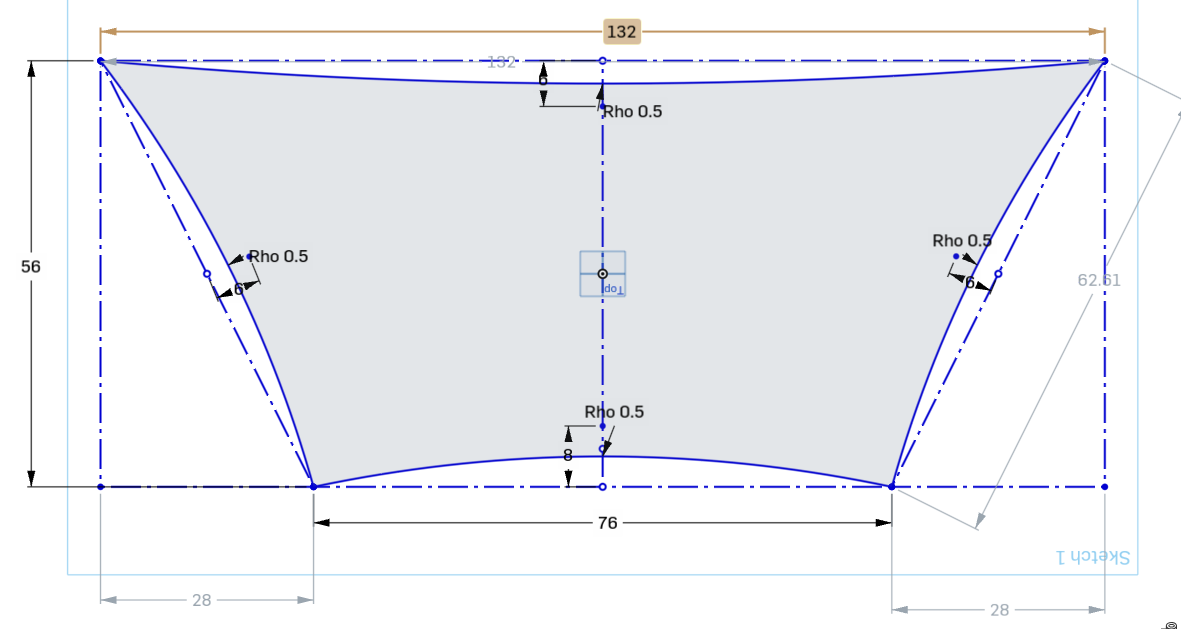
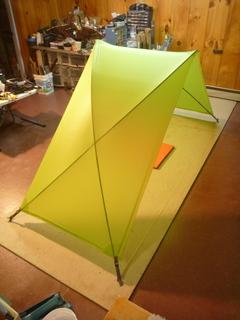
And to make a tarp frame, as the OP’s diagram shows, it is not just the roofline that may need to be curved. As your diagram shows, there will be slanted edges from peak to ground. If you are using trekking or end poles, you could pin the peaks, fix and erect the tarp, stake out the corners, and see how taut the leading edges are. If too loose, you can create a curved template from a slightly curved rod, and use it to mark, cut and sew the indentations shown on your diagram.