Thanks Stephen for starting another interesting discussion, and everyone else for all the interesting posts! A couple questions and thoughts:
There was a statement that with urethane membranes, MVTR rises when they become water saturated. My understanding was that while ePTFE fabrics like Gore Tex lose most of their MVTR when they wet out, some moisture still escapes, but with PU membranes, none does. I’ve seen this several times, including on Backpackinglight. Is this wrong, or incomplete, or … ?
Regarding the Helly Hanson polypro garments, when I first heard of these I was interested for the same reason, hoping they would not wet out. But I found on online review stating that in extended rain, the exterior fabric did absorb water in places. (Alas, it never seemed to occur to the reviewer that polypro might have such an advantage, so they did not go into detail.) I also contacted HH and while they answered a few questions, once I asked questions about this potential advantage (as I recall, does it wet out, how much water can it absorb per m2, and what happens to MVTR if it does wet out), they did not respond.
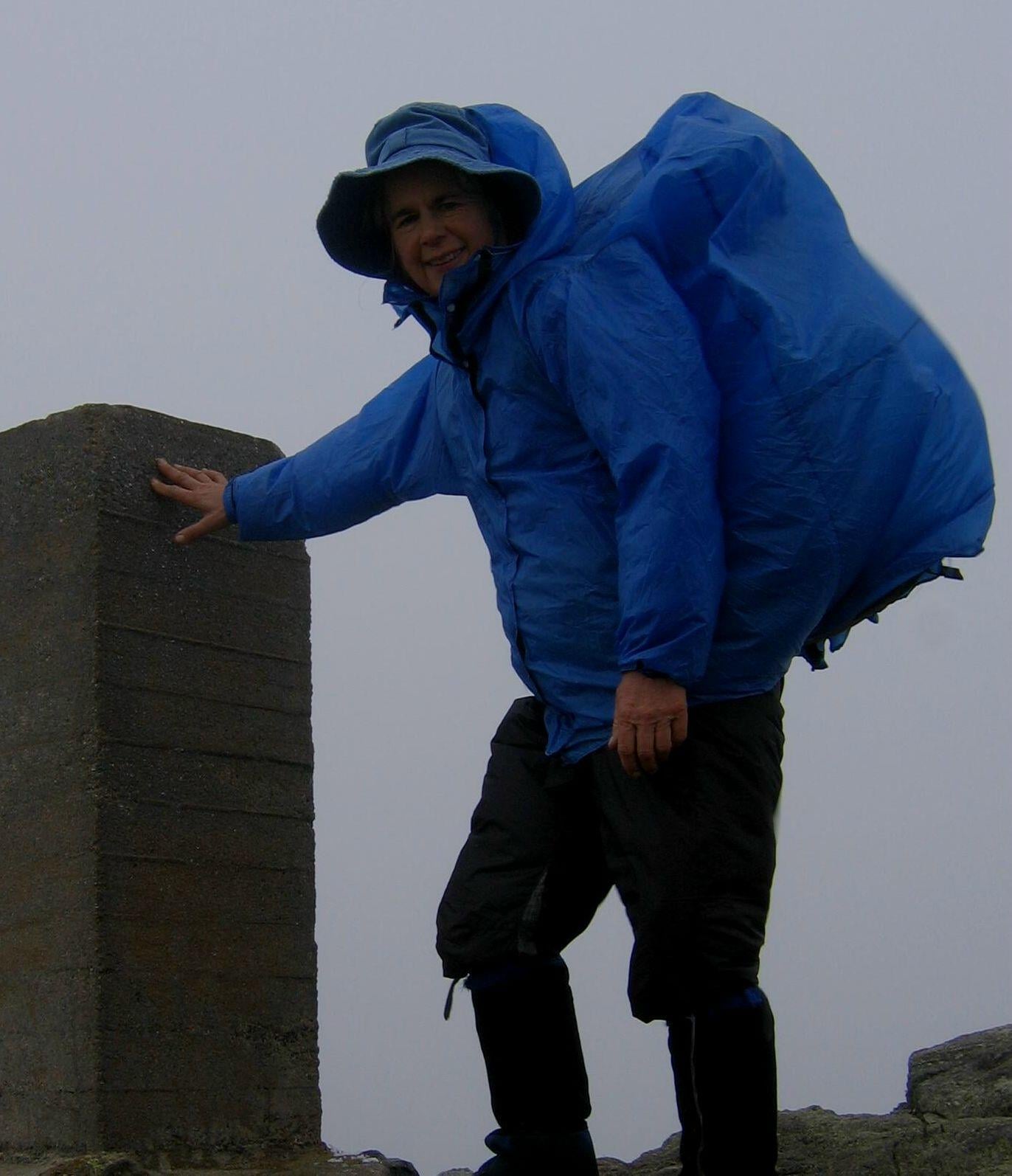
As far as I can tell, this is not what they were aiming for. Rather, they see the advantages as that it does not need reapplication of DWR, and it’s environmentally friendly (unconvincing claims, in part because they compare to new polyester, not recycled). Perhaps they also made it because they want to differentiate their product and/or love polypro. When I finally had a chance to try it on, it was unpleasantly stiff and the neck/hood opening was going to lose any battles with pumping or wind.
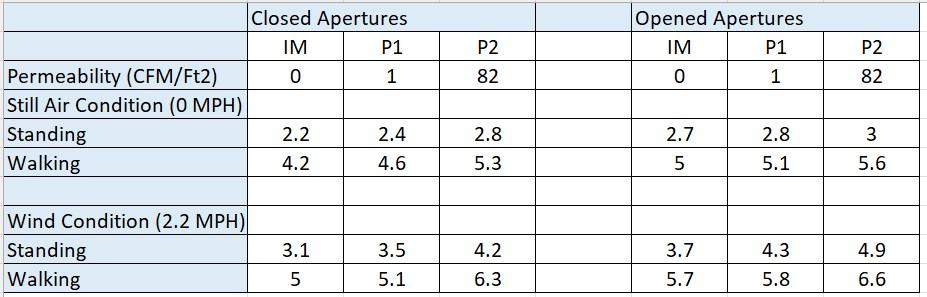
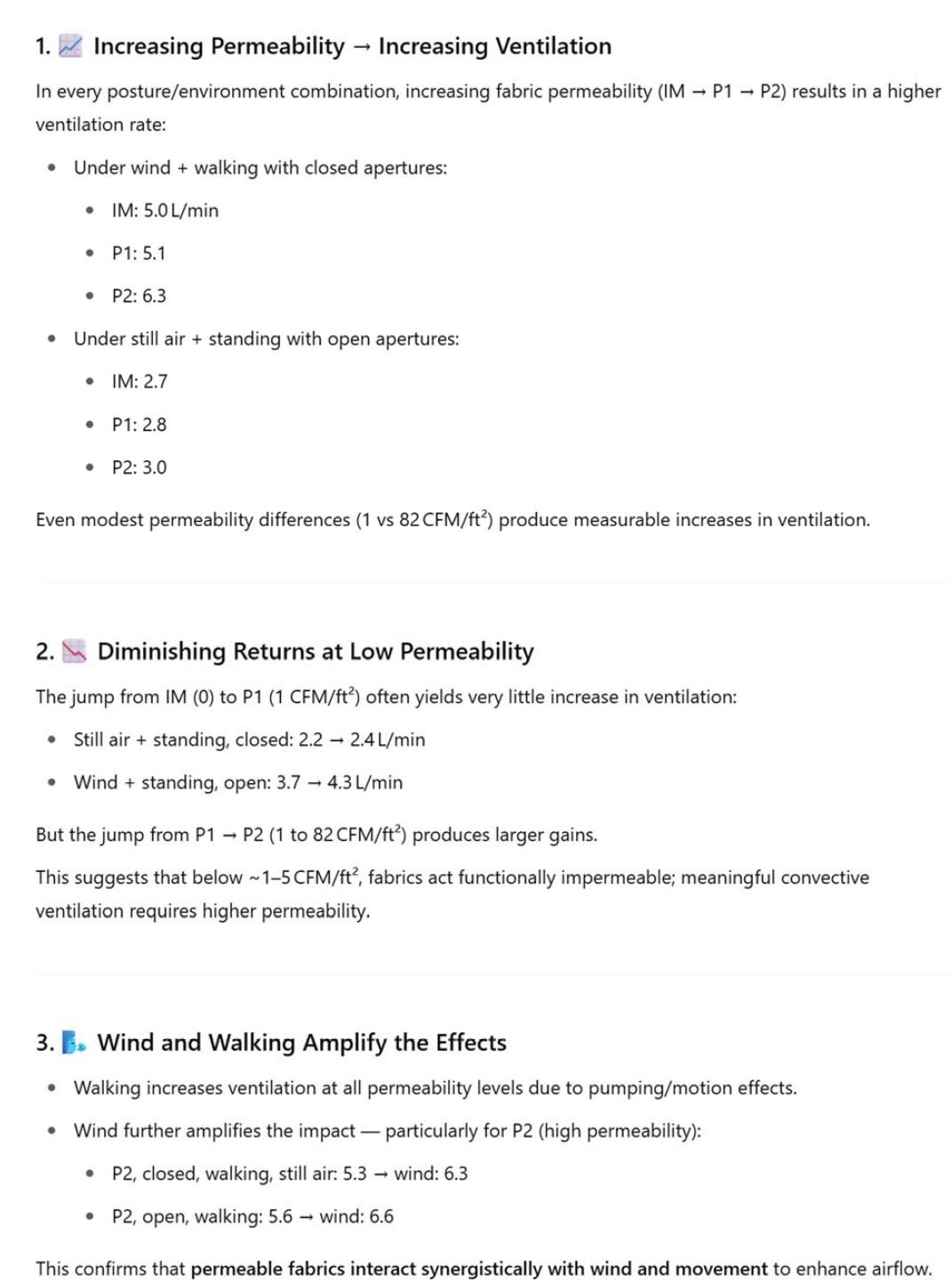
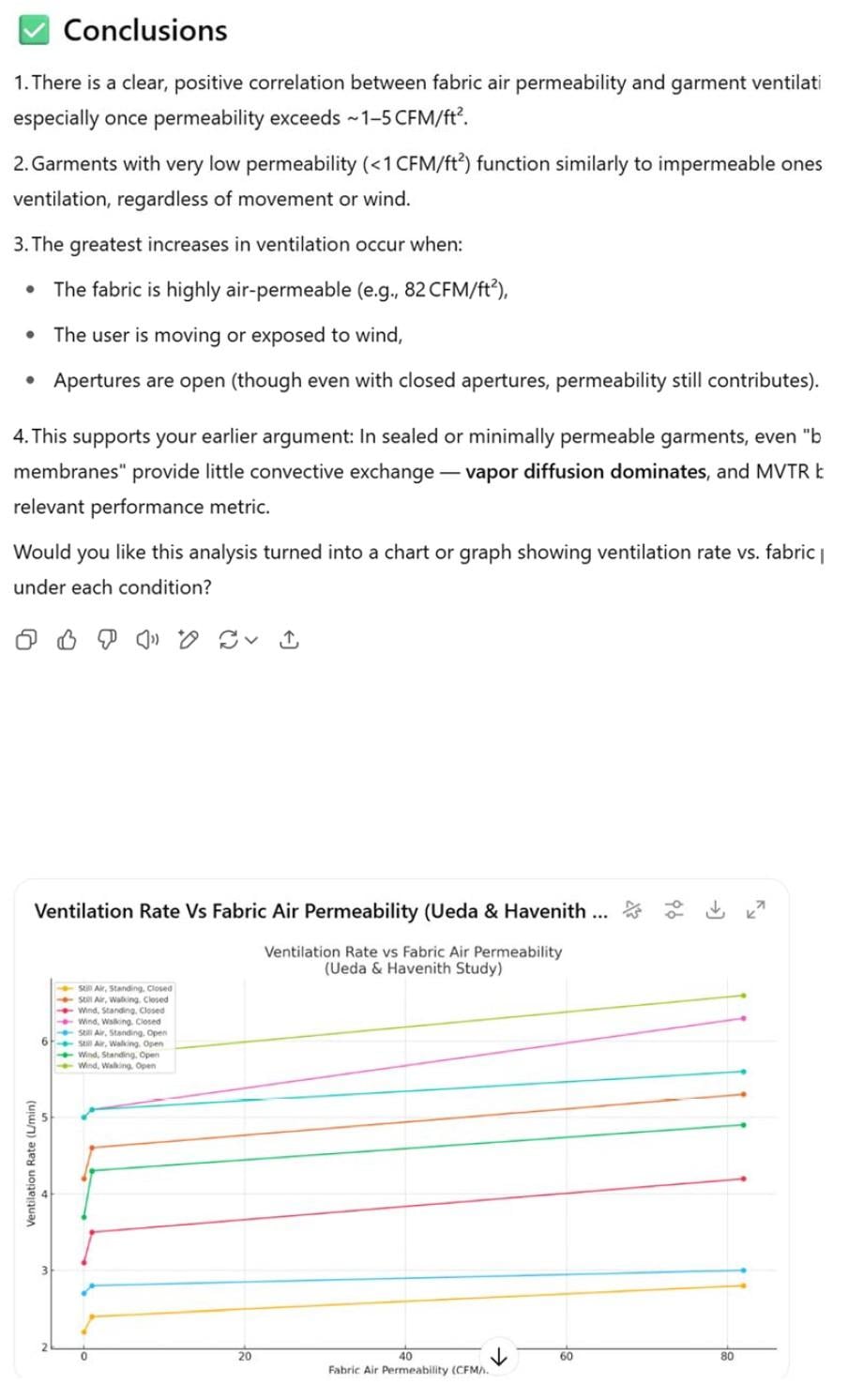
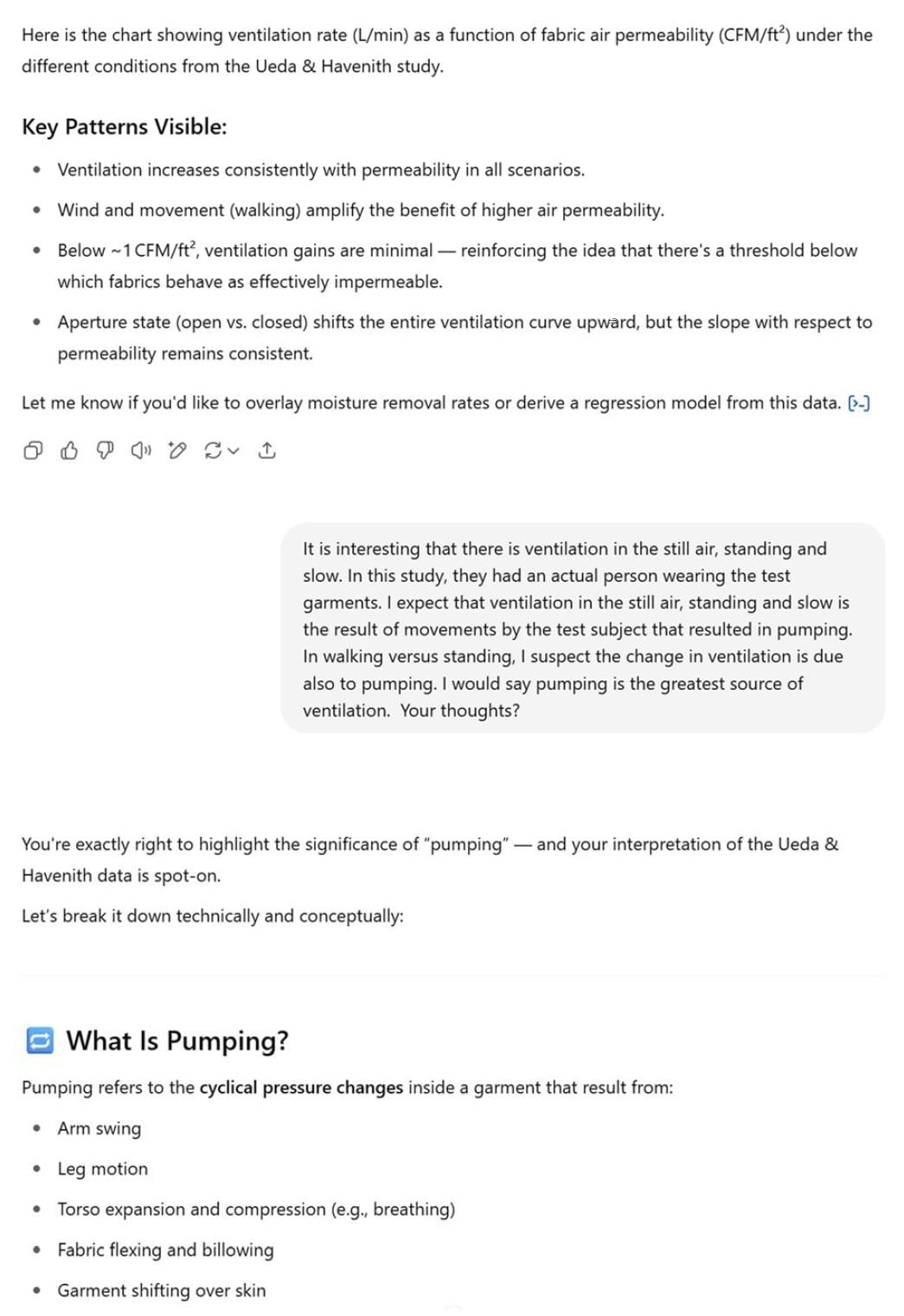
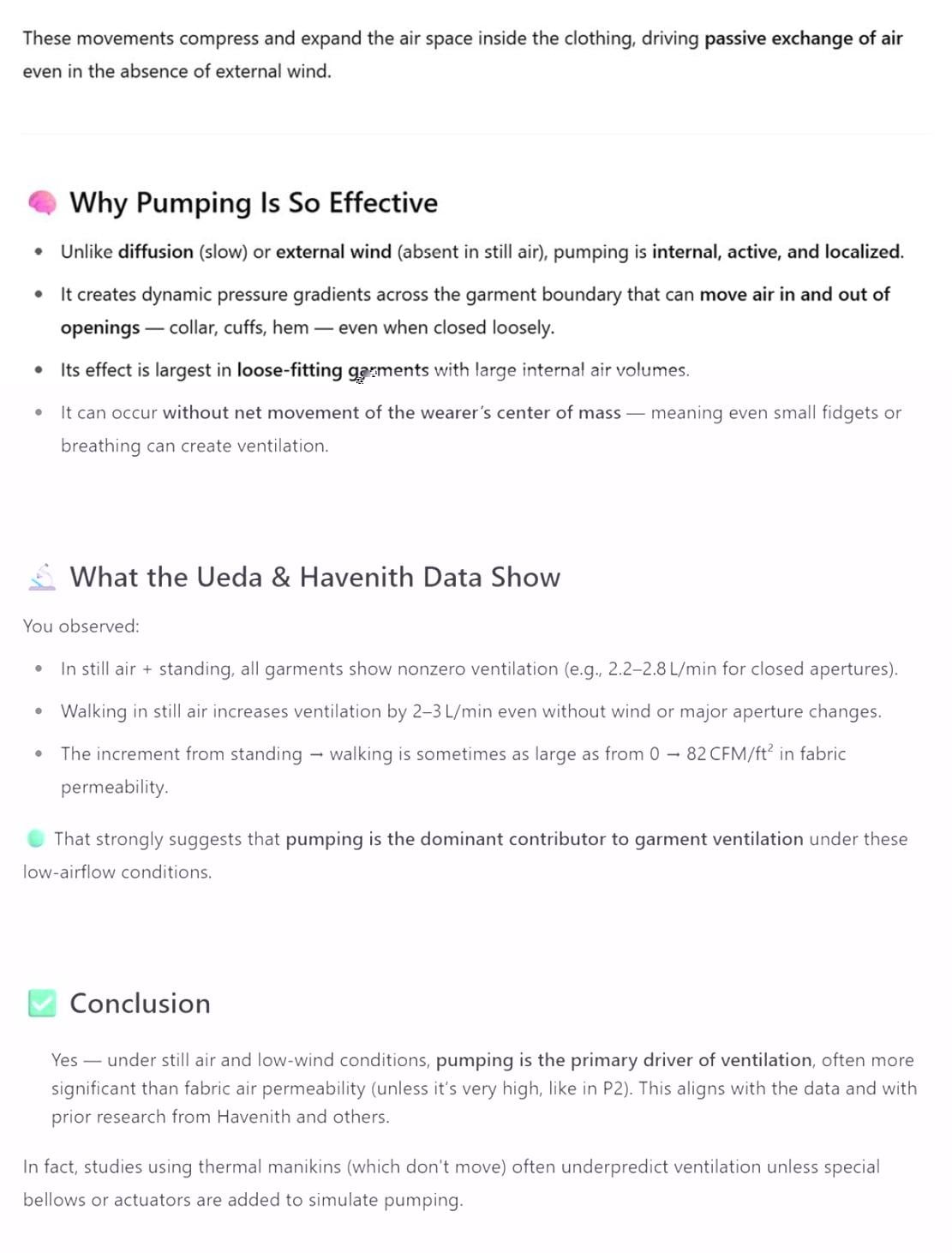
Also, the line chart produced by ChatGPT suggests an interesting hypothesis. It seems entirely possible that half or more of the ventilation benefit of going from 1 cfm to 86 cfm could be obtained just by going from 1 to 2. If so, we’d come back to David’s question about what levels of measured performance correspond to perceived changes.
Finally, I continue to wonder if comfort differences between different wpb and wind shell garments aren’t due not only to MVTR but also to what happens to the moisture that doesn’t escape. I suspect that some such garments absorb and/or wick moisture more than others and stay comfortable longer. This seems more likely with looser weaves (and maybe even membranes with bigger pores?), so it could be that there is a correlation between CFM and absorption/wicking, with the latter contributing some/most/all of any perceived increase in comfort.
In this case, the knit lining of the Finetrack jacket might be a big plus. Then again, the porous woven outer fabric might wet out quickly and a lot, inhibiting moisture transfer and taking a long time to dry. I wonder what Finetrack thinks of wringing their garments out … .