


Brad, my testing is consistant at 70 degree starting temps. Stovebench testing has to have set parameters.
Topic
Become a member to post in the forums.
 .
.
Brad, my testing is consistant at 70 degree starting temps. Stovebench testing has to have set parameters.

Brad, my testing is consistant at 70 degree starting temps. Stovebench testing has to have set parameters.
Dan, yes, I’ve been clear on that from the beginning.

I like that modification Chris. I believe you mentioned that previously.
yeah, 2 g of fuel used isn’t useful without knowing temperature rise of the water.
Usually, when I heat water, it starts pretty cold. Maybe 40 F or something. If I had a target end temp it would be 195 F or so. And if I’m comparing two conditions, like with and without windscreen, I’ll normalize with the actual temperature difference. If my target was a 155 F temperature rise, but I only did 150 F on a particular test, I’ll multiply the measured fuel used by 155 / 150 and use that for comparison.

A simple way of looking at it is that you need ~5 grams of fuel to raise 2 cups of water from 70F to 212F so that is about 5 grams to raise the temperature by ~150 F or 30 F per gram of fuel. So for every 30F lower than 70 F (water at 40 F) you need to use 1 gram more fuel.
Stove Efficiency is simply the Energy required to boil water/Energy available. Once you know the Efficiency, you can calculate fuel consumption based upon water volume, water temperature etc.
Energy required to boil water Mw*cp*ΔT
Mw=Mass (g)
Cp= Specific Heat Capacity (4.186 J/gC)
ΔT =difference in temperature (C)
Energy Available (Isobutane) Specific Energy*Mass
Energy Density (isobutane) – (45208.8 J/g)
Mg = Mass of gas (g)
Efficiency = (Mw*cp*ΔT)/(Specific Energy*Mg)
A stove boiling 2 cups (473 ml) of 70 F water to 209 F using 4.9 grams of fuel has an efficiency of 70%.
Now what happens if you are boiling 500ml of 45 F water at 10,000 feet, how much fuel is required?
The boiling point of water at 10,000 feet is 194 F (or 90 C) with a starting point of 45 F (7.2 C)
0.74=(500g*(4.186 J/gC)*(90C-7.2C))/(( 45208.8 J/g)*(Mg))
0.74=(473*4.186*82.8)/(45.2088*Mg)
Solving for Mg = 5.5 g of fuel
My 2 cents
I was told there would be no math…

Reviving an old thread here. I recently did some experiments with the Kovea Spider and the Fire Maple Petrel G2 mug (750 ml). With Fire Maple adding slots to these Petrel Series, it has opened up a lot of possibilities. As I have stated in the past, I am a big believer in HX mug improving wind resistance. That and Remote Fueled stoves seemed to be under appreciated. Well, the Kovea coupled with the Petrel and a good windscreen yielded impressive results in high winds. I was able to boil 500 ml of 68 F water using less than 6 grams of fuel. So, looking at the OP, it’s not the windscreen, it’s the HX mug. Now, the Kovea Spider is a great stove, but heavy at 170 grams. The ideal light weight system may be swapping this stove out for Roger’s amazing V7 stove. My 2 cents.


<p style=”text-align: left;”>I just wanted to pop in and say thanks to BPL members for this thread and similar ones. I used concepts learned here for turning a 300 gallon livestock tank into a hot tub heated by an old 60,000btu CampChef double burner. I didn’t go as far as soldering a heat exchanger on, but I insulated the sides and lid, kept wind at bay and encouraged heat to spread out over the whole bottom. I bet I will save tons of fuel in the long run. Kicking myself for not weighing the fuel used to get it from 50 to 125 so I could figure the efficiency on this scale. Next time. Thanks again.</p>
Become a member to post in the forums.
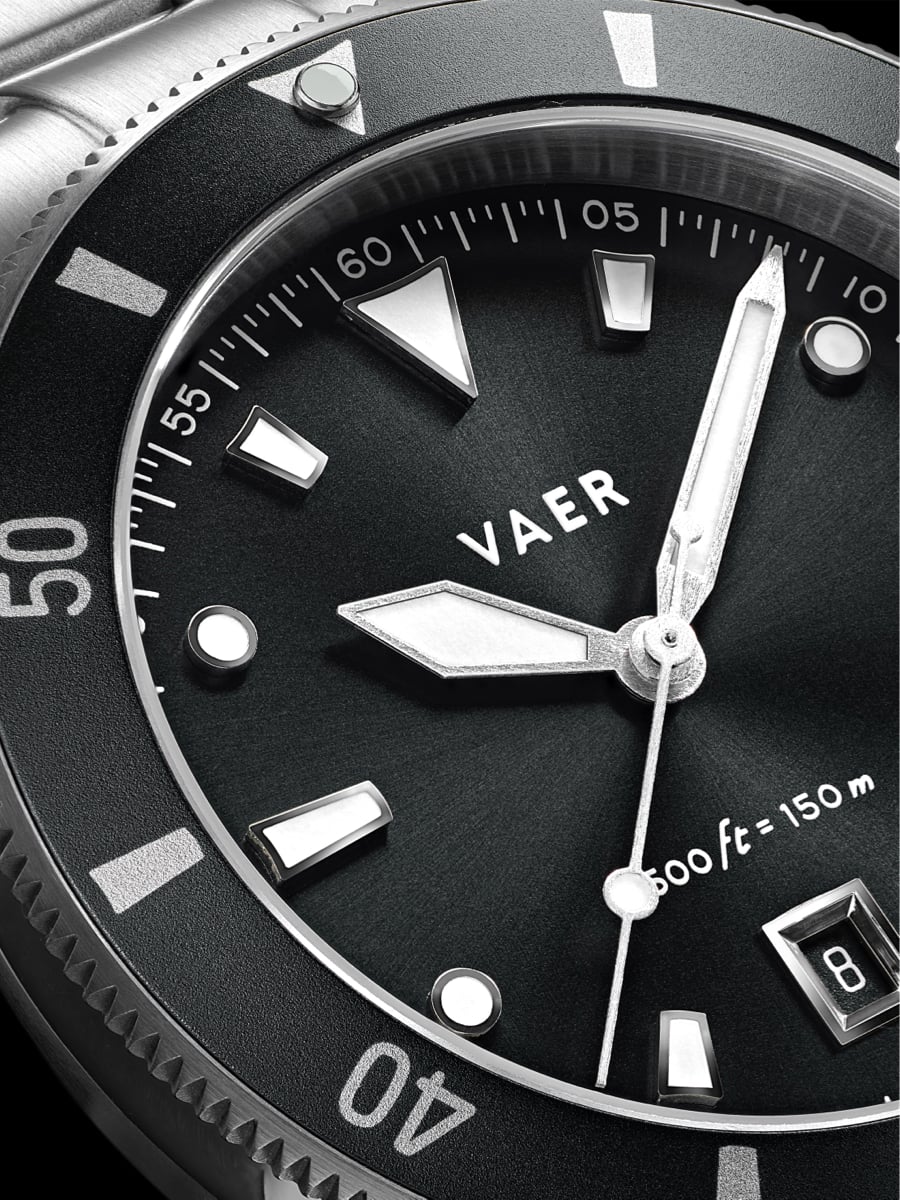 DS2 Meridian: Vintage Dive Style, Everyday ReliabilityInspired by the streamlined "skin diver" watches of the 1960s, the DS2 Meridian combines vintage proportions with the durability of a modern everyday tool watch. A reliable Japanese Miyota quartz movement delivers set-it-and-forget-it accuracy, while 150 meters of water resistance, a locking screwdown crown, sapphire crystal, and strong Super-LumiNova make it ocean-ready. Available in multiple case sizes and starting under $250, it's an approachable way to get classic dive-watch styling without sacrificing everyday practicality.
 © Beartooth Media Group Inc.
 Loading...